Louisiana Bond Forfeiture
Description
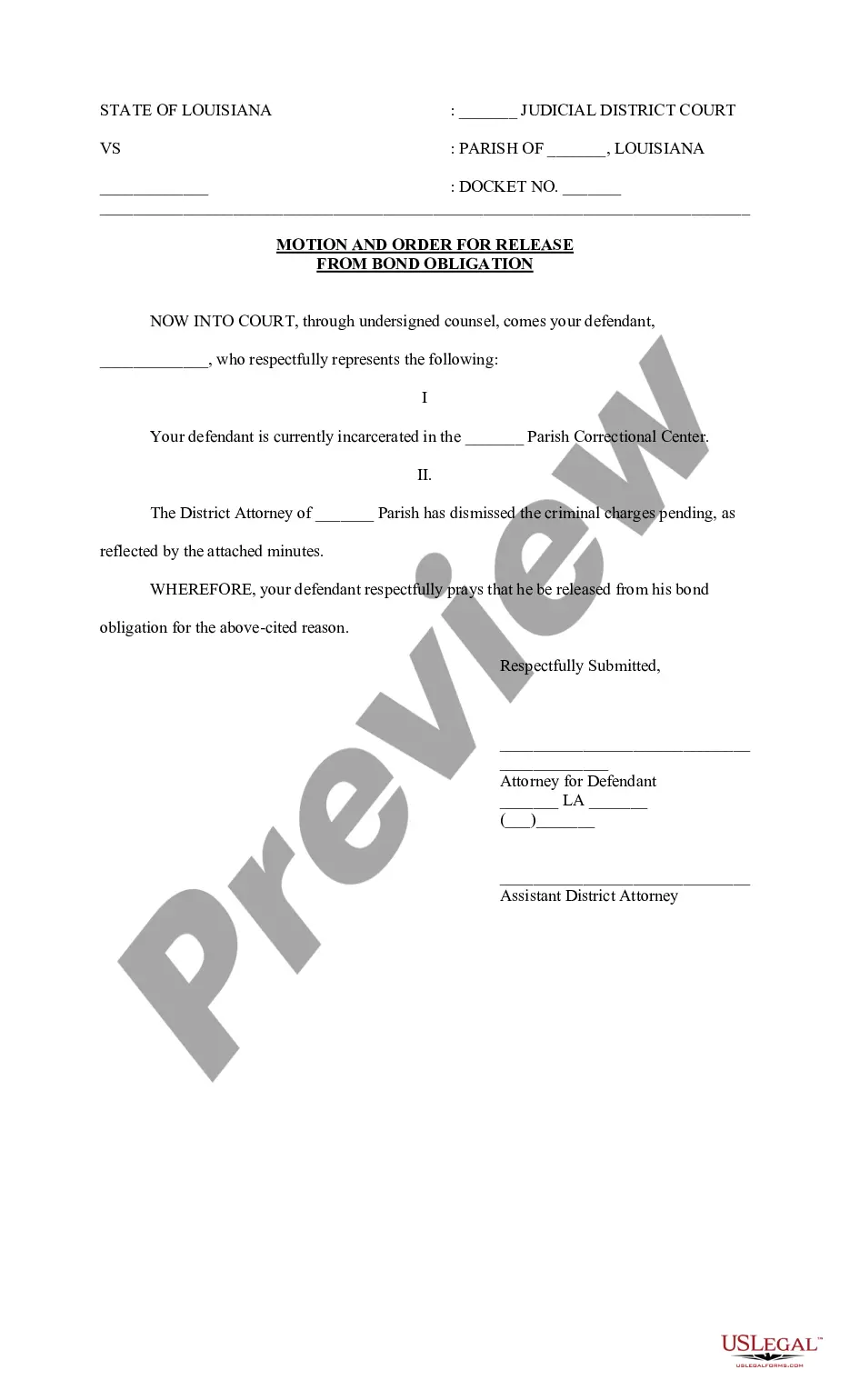
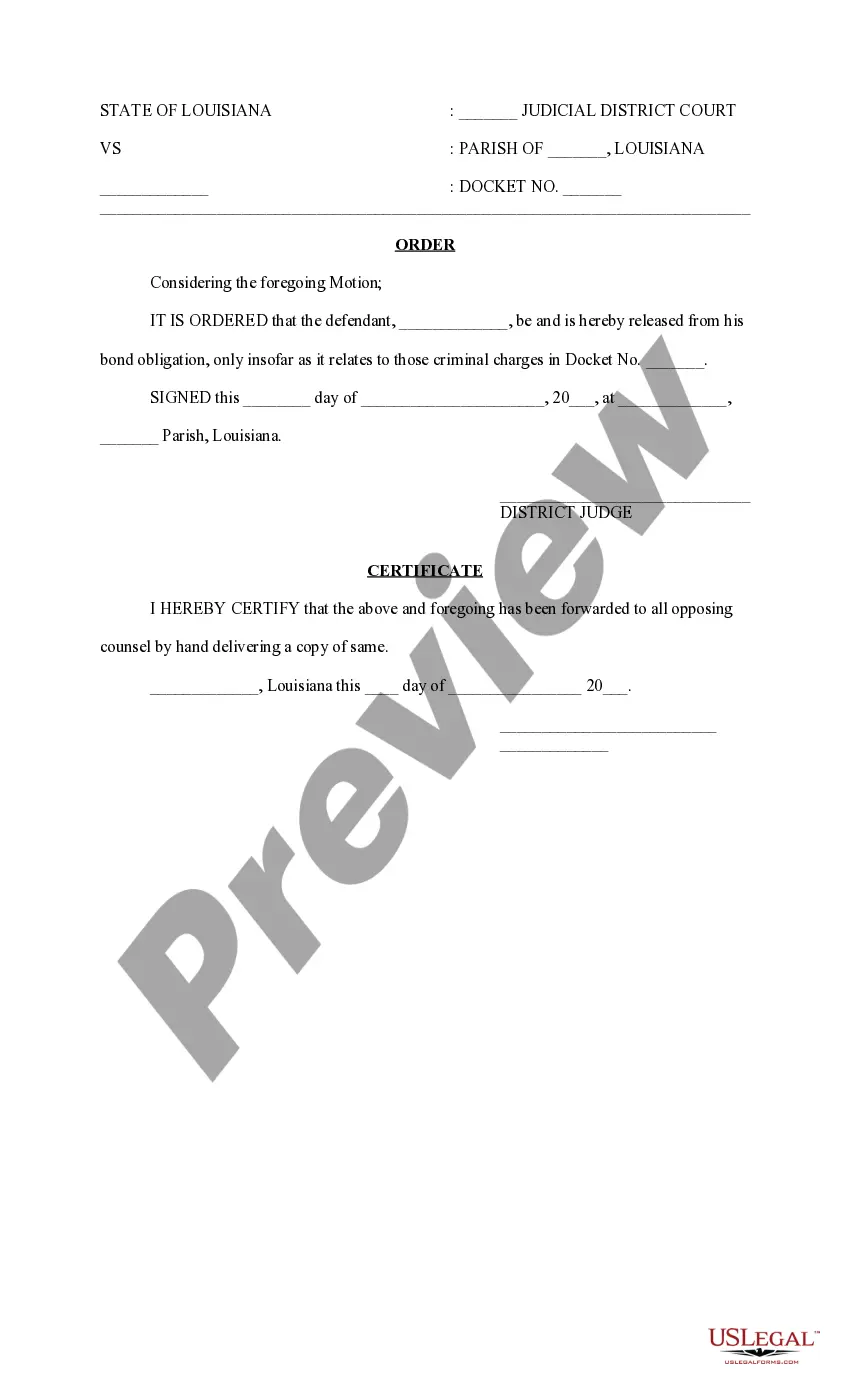
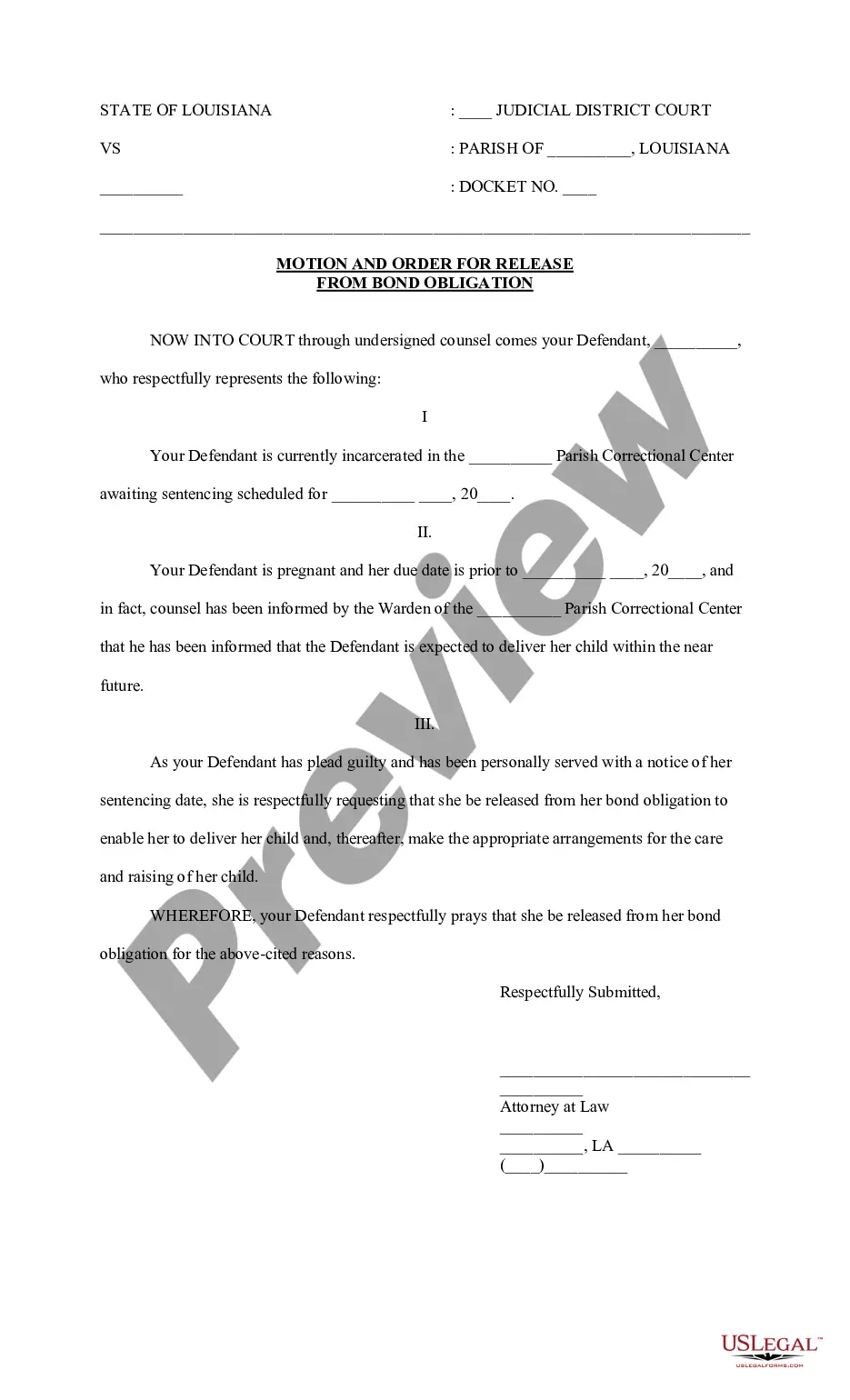
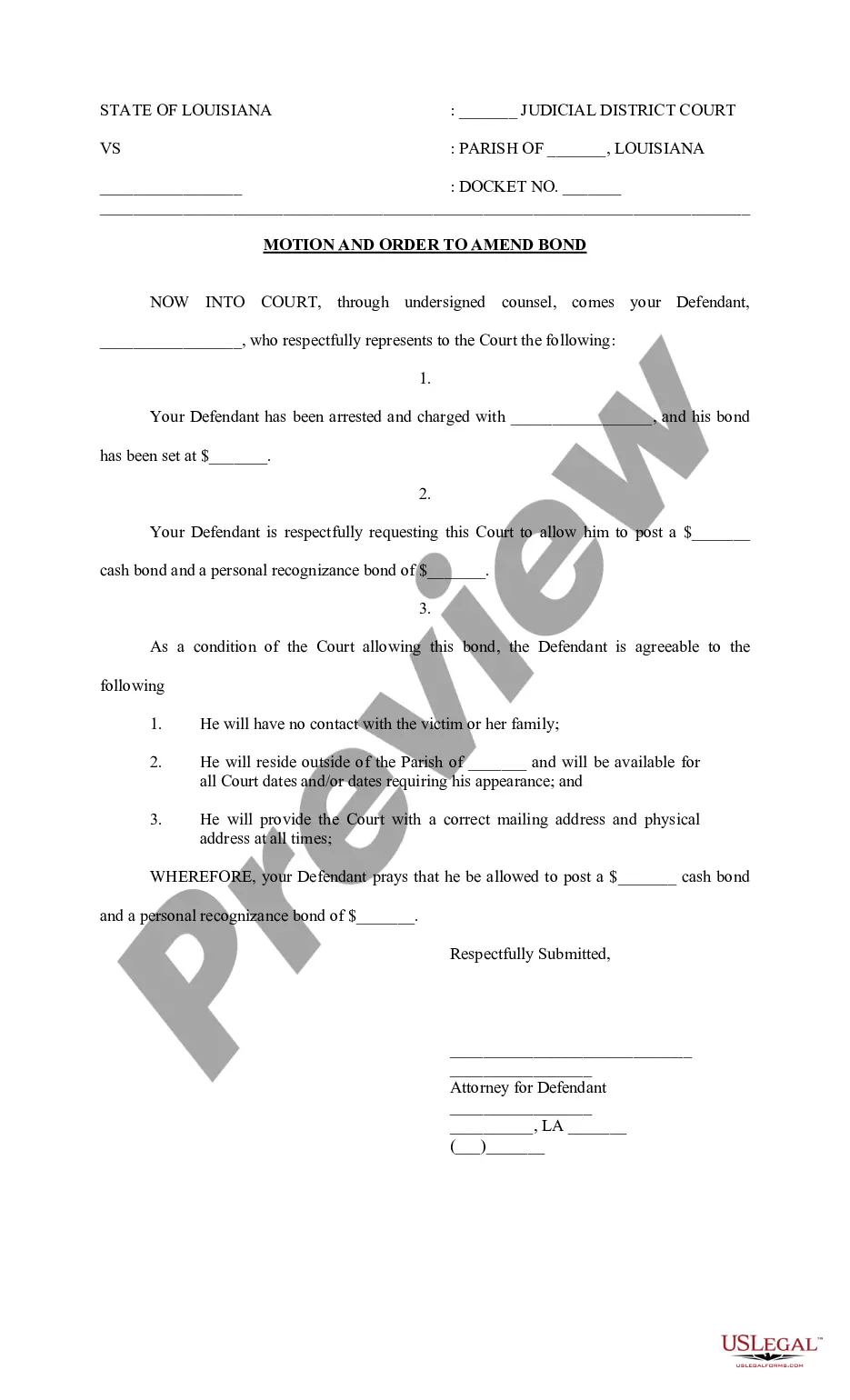
Get your form ready online
Our built-in tools help you complete, sign, share, and store your documents in one place.
Make edits, fill in missing information, and update formatting in US Legal Forms—just like you would in MS Word.
Download a copy, print it, send it by email, or mail it via USPS—whatever works best for your next step.
Sign and collect signatures with our SignNow integration. Send to multiple recipients, set reminders, and more. Go Premium to unlock E-Sign.
If this form requires notarization, complete it online through a secure video call—no need to meet a notary in person or wait for an appointment.
We protect your documents and personal data by following strict security and privacy standards.

Make edits, fill in missing information, and update formatting in US Legal Forms—just like you would in MS Word.

Download a copy, print it, send it by email, or mail it via USPS—whatever works best for your next step.

Sign and collect signatures with our SignNow integration. Send to multiple recipients, set reminders, and more. Go Premium to unlock E-Sign.

If this form requires notarization, complete it online through a secure video call—no need to meet a notary in person or wait for an appointment.

We protect your documents and personal data by following strict security and privacy standards.
Looking for another form?





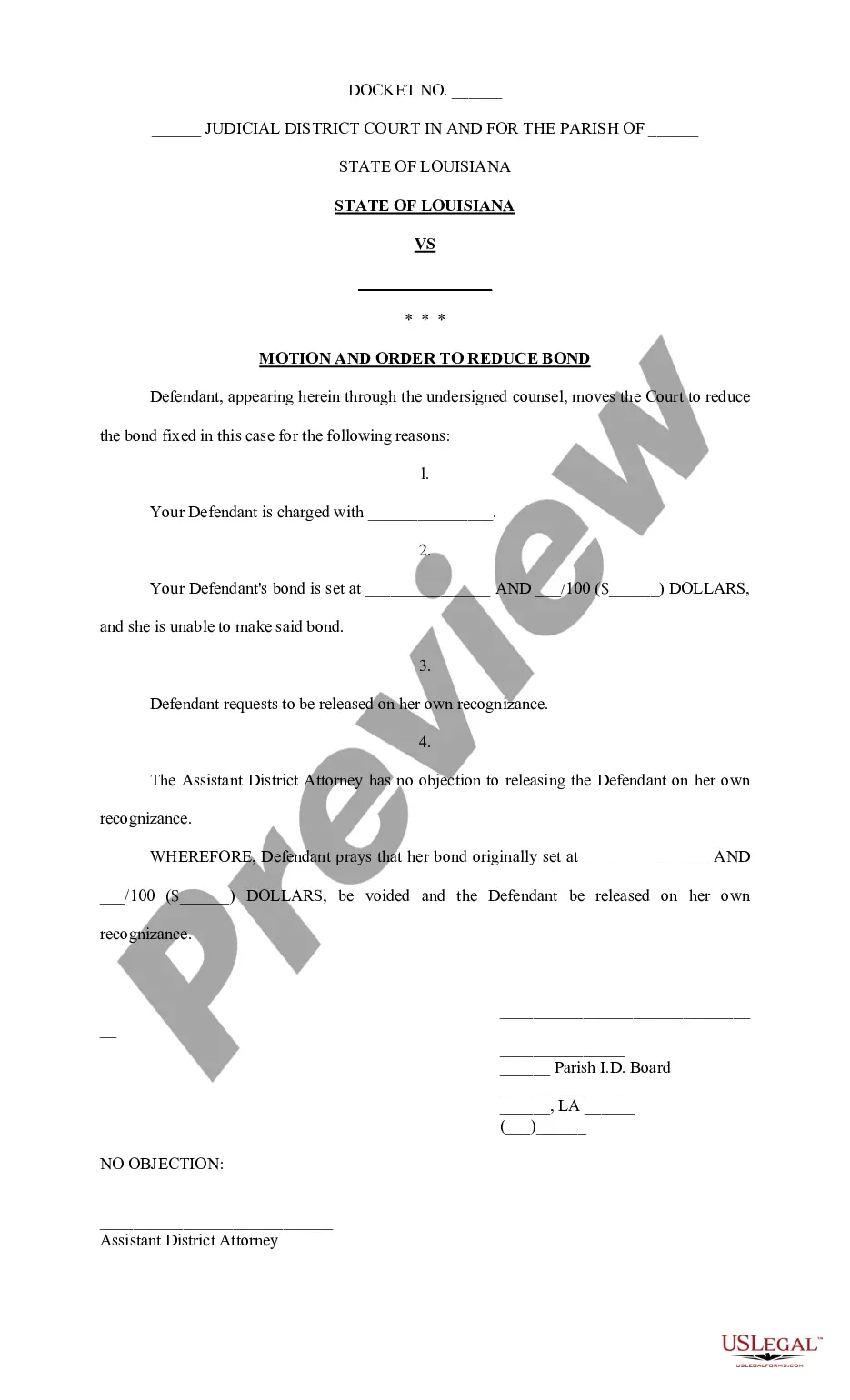
How to fill out Louisiana Motion And Order For Release From Bond Obligation?
Handling legal documents can be exasperating, even for well-informed professionals.
When seeking a Louisiana Bond Forfeiture and lacking the time to commit to finding the correct and updated version, the procedures can be challenging.
US Legal Forms accommodates all requirements you may possess, from personal to business documents, all in one location.
Employ cutting-edge tools to execute and manage your Louisiana Bond Forfeiture.
Here are the steps to follow after accessing the form you need: Confirm that it is the correct form by previewing it and reviewing its description.
- Access an extensive repository of articles, guides, handbooks, and materials pertinent to your situation and requirements.
- Conserve time and energy in searching for the documents you require, using US Legal Forms' advanced search and Preview tool to find Louisiana Bond Forfeiture and download it.
- If you have a monthly subscription, Log In to your US Legal Forms account, search for the form, and download it.
- Check the My documents tab to discover the documents you previously saved and to organize your folders as needed.
- If it's your first experience with US Legal Forms, create a free account and gain unrestricted access to all the benefits of the collection.
- Utilize a comprehensive online form repository, which could significantly benefit anyone looking to handle these circumstances efficiently.
- US Legal Forms stands as an industry pioneer in online legal documents, featuring over 85,000 state-specific legal forms available at any moment.
- With US Legal Forms, you can access state- or county-specific legal and business documents.
Form popularity
FAQ
Court terms and conditions One of the conditions you must meet before a court grants your bail bond is an assurance that you will be living in your current address at least until your case is heard and determined. With such conditions, you will need the court's permission before leaving your state.
Provided that where such penalty is not paid and cannot be recovered in the manner aforesaid, the person so bound as surety shall be liable, by order of the Court ordering the recovery of the penalty, to imprisonment in civil jail for a term which may extend to six months.
Bond forfeiture is the enforcement of a guarantee. This can apply to any bond but the best example is the bail bond. Most commonly, bail bonds are forfeited when a defendant misses a court date. The bail bondsman or bondswoman must then pay the outstanding bail.
The Bond Forfeiture Division forfeits a criminal defendant's bond based on his/her failure to appear. There are five types of bonds: Commercial (Insurance Company/Bondsman), Cash, Property, Personal Surety and Release on Own Recognizance.
If the defendant shows up for their court date, the bondsman gets back the entire amount of the bail. The inmate won't get any money back since the 10% premium is payment for the bail bondsman's services. If the inmate fails to show up, all financial obligations to the bonds agency fall on the defendant.