Child Custody Issues After Divorce
Description

Get your form ready online
Our built-in tools help you complete, sign, share, and store your documents in one place.
Make edits, fill in missing information, and update formatting in US Legal Forms—just like you would in MS Word.
Download a copy, print it, send it by email, or mail it via USPS—whatever works best for your next step.
Sign and collect signatures with our SignNow integration. Send to multiple recipients, set reminders, and more. Go Premium to unlock E-Sign.
If this form requires notarization, complete it online through a secure video call—no need to meet a notary in person or wait for an appointment.
We protect your documents and personal data by following strict security and privacy standards.

Make edits, fill in missing information, and update formatting in US Legal Forms—just like you would in MS Word.

Download a copy, print it, send it by email, or mail it via USPS—whatever works best for your next step.

Sign and collect signatures with our SignNow integration. Send to multiple recipients, set reminders, and more. Go Premium to unlock E-Sign.

If this form requires notarization, complete it online through a secure video call—no need to meet a notary in person or wait for an appointment.

We protect your documents and personal data by following strict security and privacy standards.
Looking for another form?









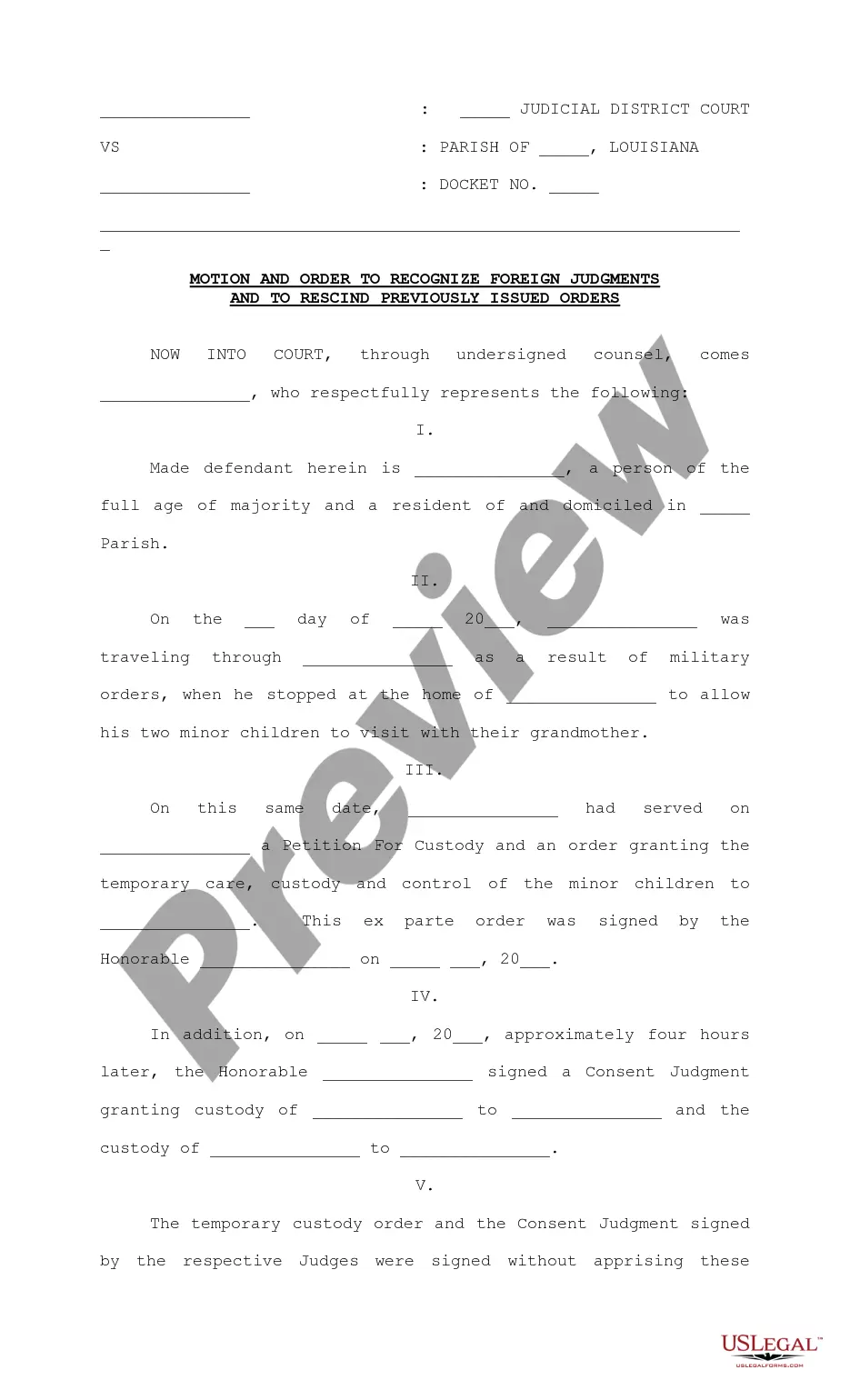
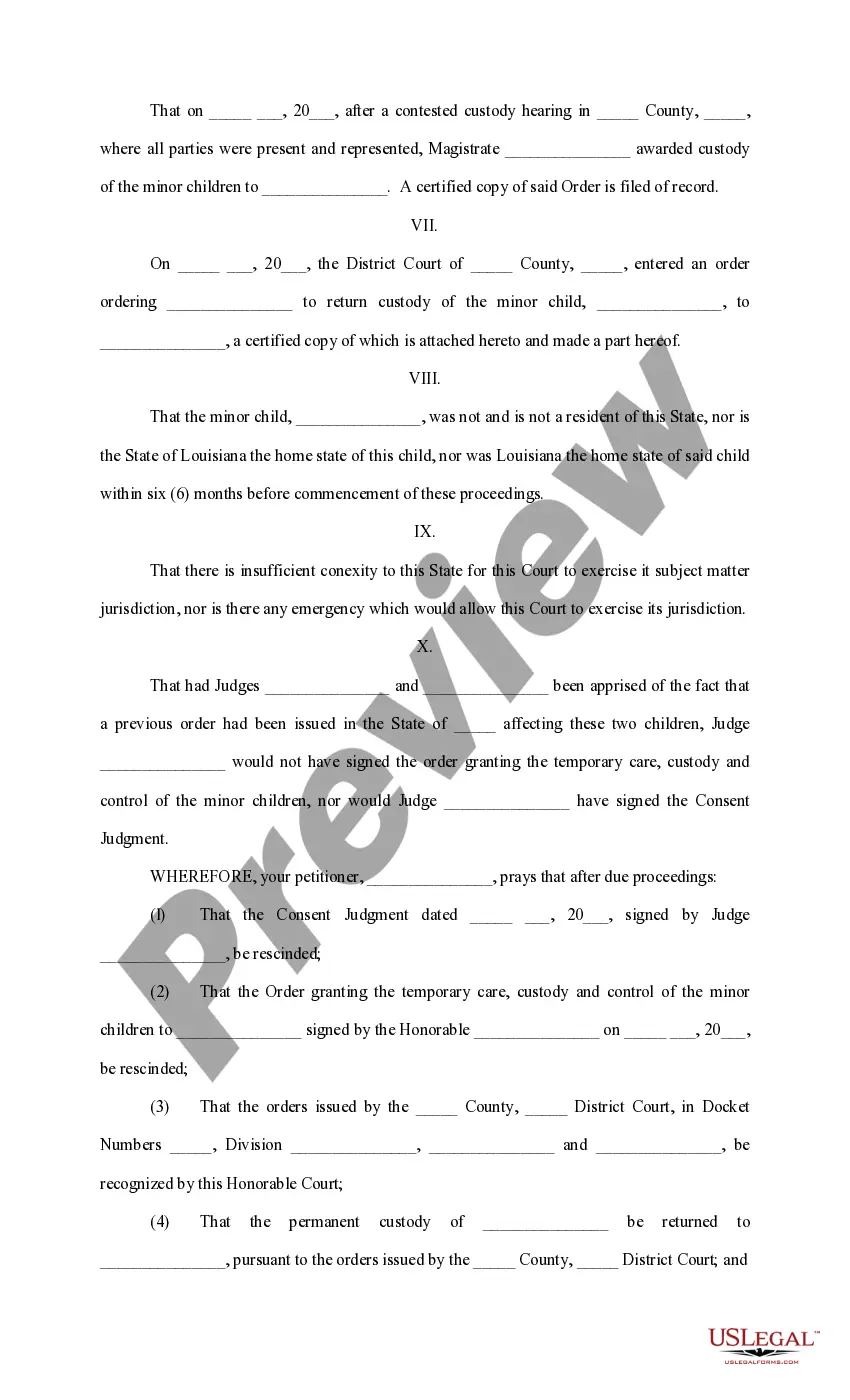
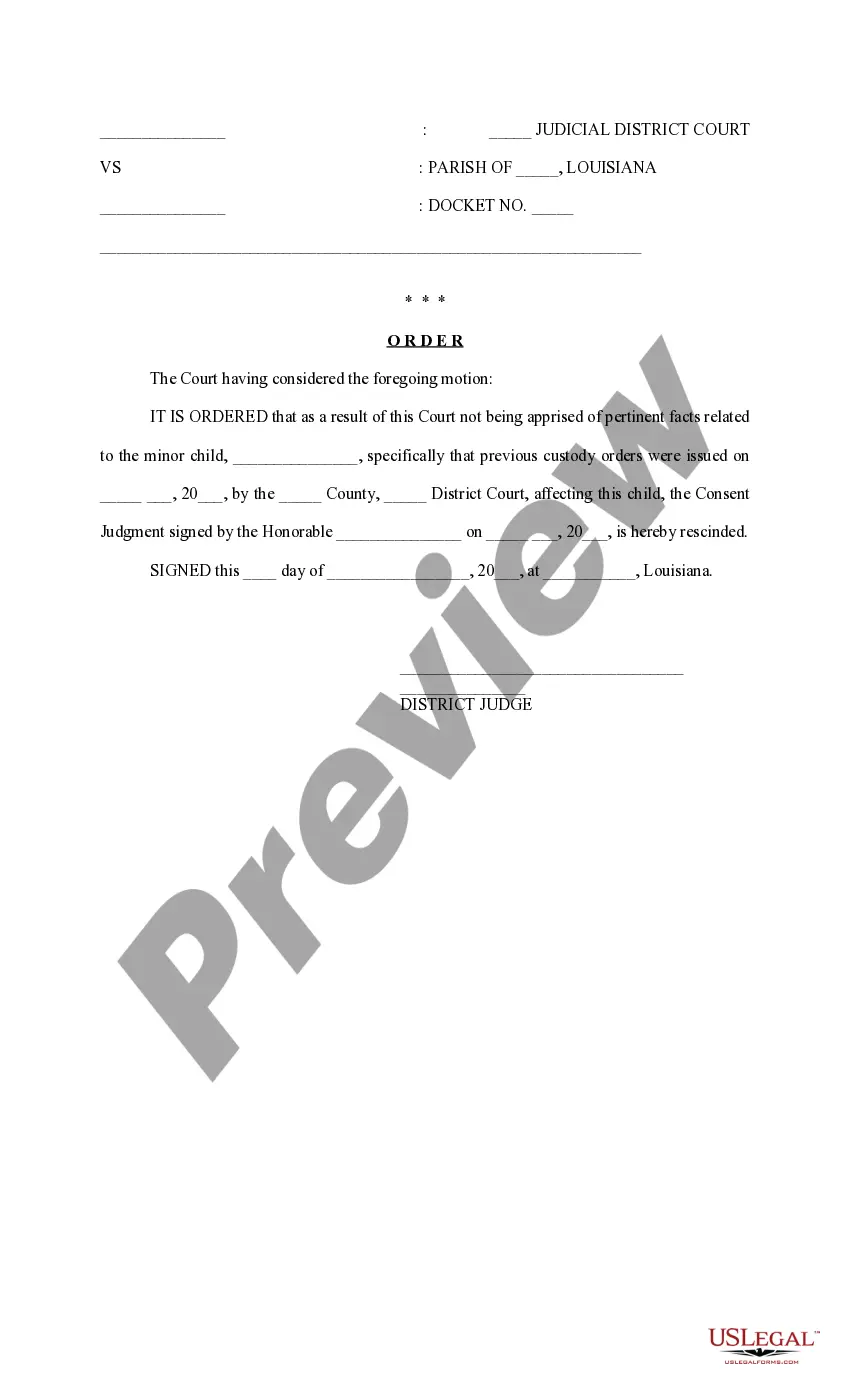
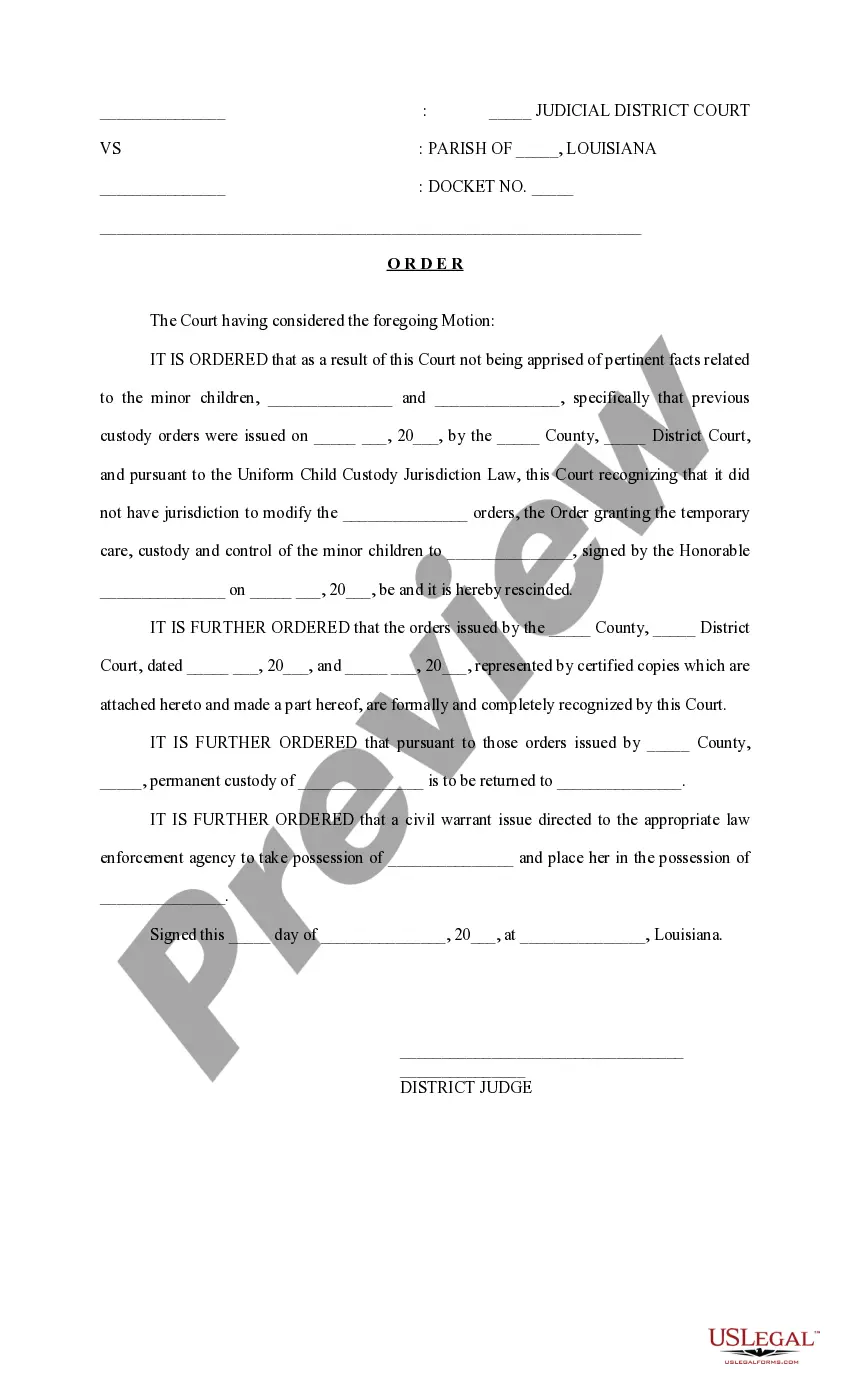
How to fill out Louisiana Motion And Order To Recognize Foreign Judgments And To Rescind Previously Issued Orders (Custody)?
- If you're a returning user, simply log into your account to access and download the necessary form templates. Verify that your subscription is still active, and renew it if required.
- For new users, start by previewing the available forms and reading the descriptions. Ensure you select the correct document that aligns with your jurisdiction's requirements.
- If the initial template doesn't meet your needs, utilize the Search tab to explore additional options until you find the one that fits.
- Once you've identified the right document, click the Buy Now button and select a suitable subscription plan. You'll need to create an account to unlock our extensive library.
- Finalize your purchase by entering your payment details, either through credit card or PayPal.
- After payment, download the chosen form to your device. You can also revisit it anytime via the My Forms section of your account.
US Legal Forms stands out with an extensive online library of over 85,000 fillable forms. Users can access premium experts for guidance, ensuring that each document is completed accurately and in accordance with legal standards.
Don't let child custody issues after divorce complicate your life. Start using US Legal Forms today to access the resources you need for clarity and confidence in your legal matters.
Form popularity
FAQ
When speaking to a judge, clearly express your commitment to your child's welfare. Highlight your parenting strengths, such as your stability and involvement in their life, while respectfully acknowledging your co-parent's role. You can mention specific plans that demonstrate how you intend to support your child's needs, offering a clear picture of how you envision a beneficial arrangement. This clarity is crucial when addressing the complex child custody issues after divorce.
One of the biggest mistakes in a custody battle is underestimating the importance of documentation. Failing to keep records of your involvement in your child's life or neglecting to provide evidence that supports your parenting capabilities can hurt your case. Moreover, ignoring the emotional needs of your child during this process can be detrimental. Prioritizing these factors can help you navigate child custody issues after divorce more effectively.
During a custody battle, it's wise to avoid derogatory comments about your co-parent, as this can damage your credibility. Also, don’t make statements that question the child’s safety or well-being without basis. Instead, focus on expressing your genuine desire to provide a loving environment; you'll want to communicate your dedication to resolving any child custody issues after divorce positively and productively.
During a custody battle, being uncooperative with your co-parent can reflect poorly on you. Judges may frown upon behaviors such as badmouthing the other parent or trying to alienate them from the child. It’s crucial to maintain a respectful attitude and focus on collaborative parenting, as child custody issues after divorce hinge largely on demonstrating a commitment to shared parenting responsibilities.
In a custody case, issues that might harm your position include failing to demonstrate stable living conditions, a history of substance abuse, or having unresolved legal matters. If you show a lack of involvement in your child's life, it can also negatively impact your case. Judges prioritize the child's best interests when reviewing evidence, so it's essential to highlight your commitment to their well-being.
Certain behaviors can significantly damage your credibility in custody court, particularly concerning child custody issues after divorce. Exhibiting inconsistent parenting, displaying aggression, or neglecting parental responsibilities can negatively impact how the court views you. Moreover, any history of substance abuse or legal issues may raise concerns about your fitness as a parent. Being aware of these pitfalls can help you navigate the legal process more effectively.
Building a strong child custody case requires proper documentation and a clear understanding of child custody issues after divorce. Start by gathering evidence that shows your reliability as a parent, such as witness statements, school records, and any relevant communications. Additionally, consider using resources like USLegalForms to create the necessary legal documents that present your case professionally. A well-organized approach can improve your chances of success.
Many factors can hurt your position in a custody battle, especially child custody issues after divorce. Failing to adhere to court orders, engaging in negative behavior, or having unresolved personal issues can impact your case. Additionally, poor communication with your ex-partner may lead to conflict that judges find concerning. Taking proactive steps to improve your situation can make a significant difference.
Judges focus on the best interests of the child when deciding child custody issues after divorce. They review the child's living situation, each parent's ability to provide for the child, and the child's relationship with both parents. Additionally, judges consider any evidence of parental conflict or stability in the home. Understanding these factors can help you prepare your case more effectively.
One of the biggest mistakes in a custody battle is failing to prioritize the child's best interests. Engaging in conflict with the other parent can further complicate child custody issues after divorce. Instead, fostering cooperation and addressing concerns maturely will create a more positive environment for your child. Remember, a collaborative approach often leads to better outcomes for everyone involved.