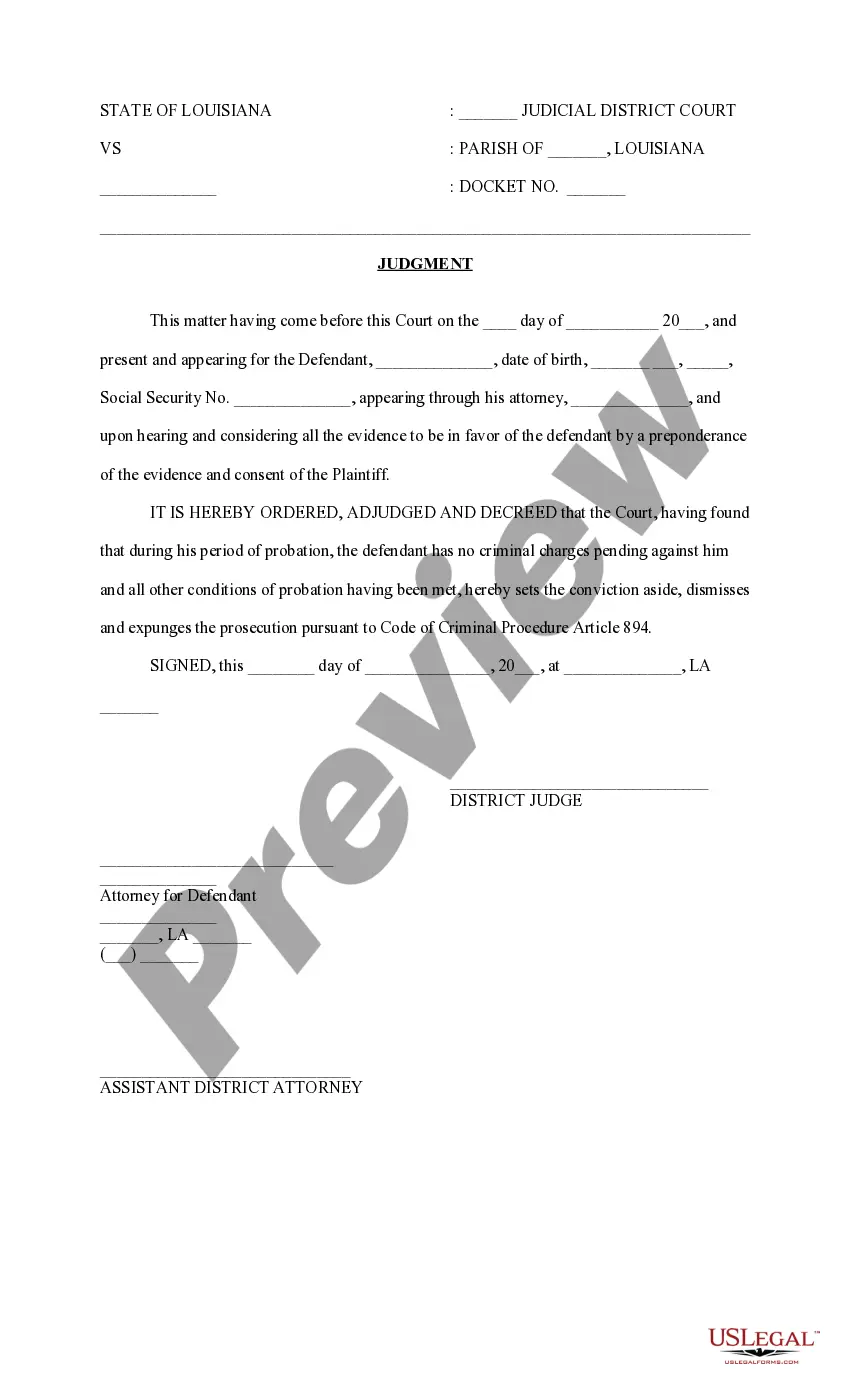
Expunged
Description
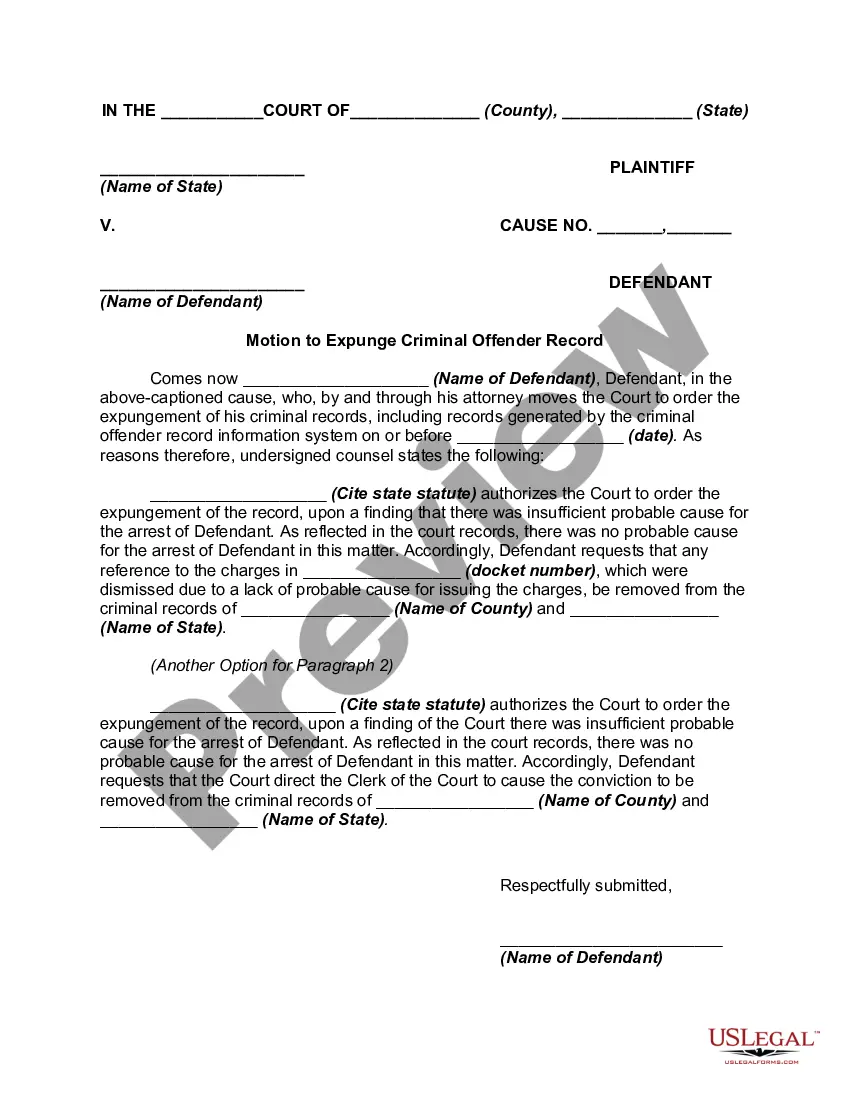
Get your form ready online
Our built-in tools help you complete, sign, share, and store your documents in one place.
Make edits, fill in missing information, and update formatting in US Legal Forms—just like you would in MS Word.
Download a copy, print it, send it by email, or mail it via USPS—whatever works best for your next step.
Sign and collect signatures with our SignNow integration. Send to multiple recipients, set reminders, and more. Go Premium to unlock E-Sign.
If this form requires notarization, complete it online through a secure video call—no need to meet a notary in person or wait for an appointment.
We protect your documents and personal data by following strict security and privacy standards.

Make edits, fill in missing information, and update formatting in US Legal Forms—just like you would in MS Word.

Download a copy, print it, send it by email, or mail it via USPS—whatever works best for your next step.

Sign and collect signatures with our SignNow integration. Send to multiple recipients, set reminders, and more. Go Premium to unlock E-Sign.

If this form requires notarization, complete it online through a secure video call—no need to meet a notary in person or wait for an appointment.

We protect your documents and personal data by following strict security and privacy standards.
Looking for another form?

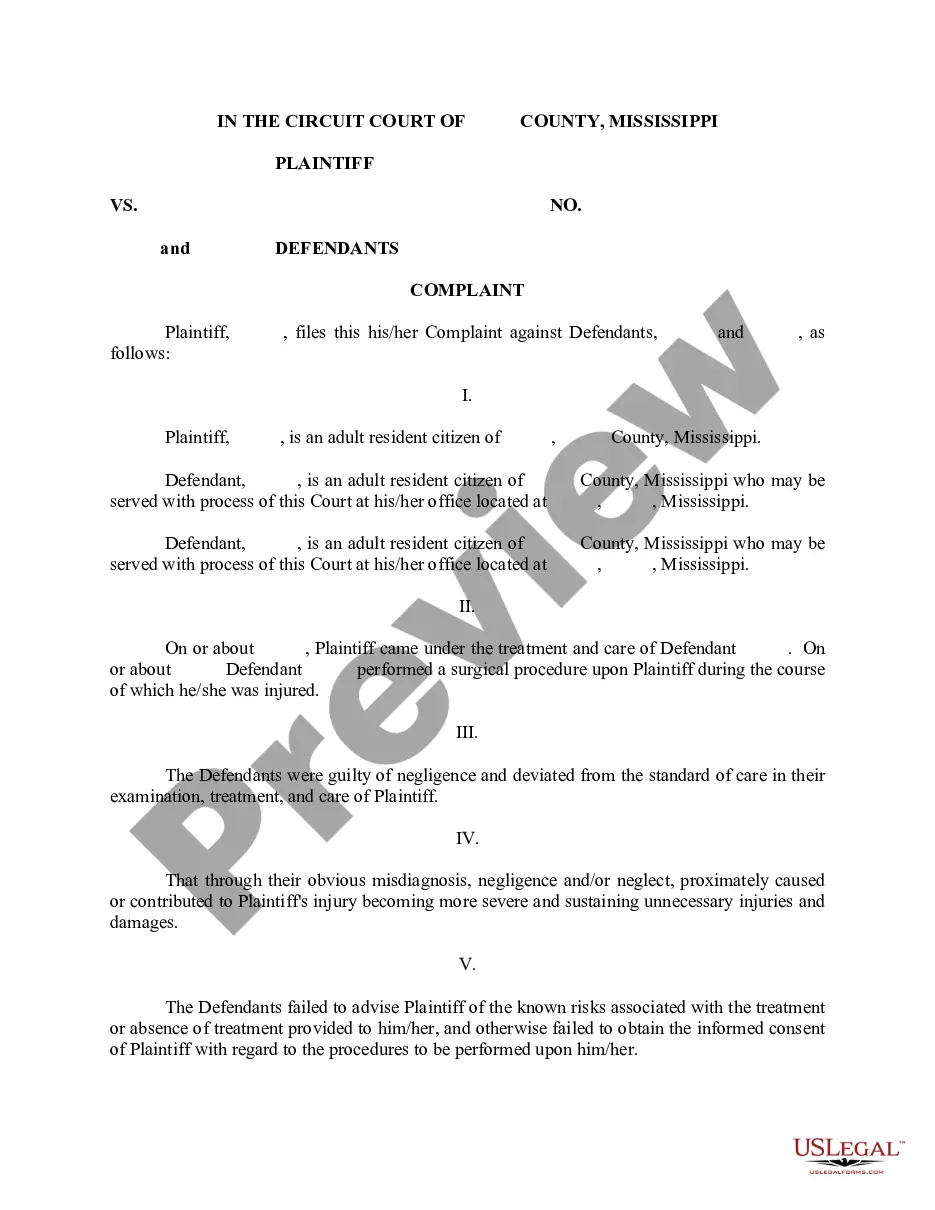

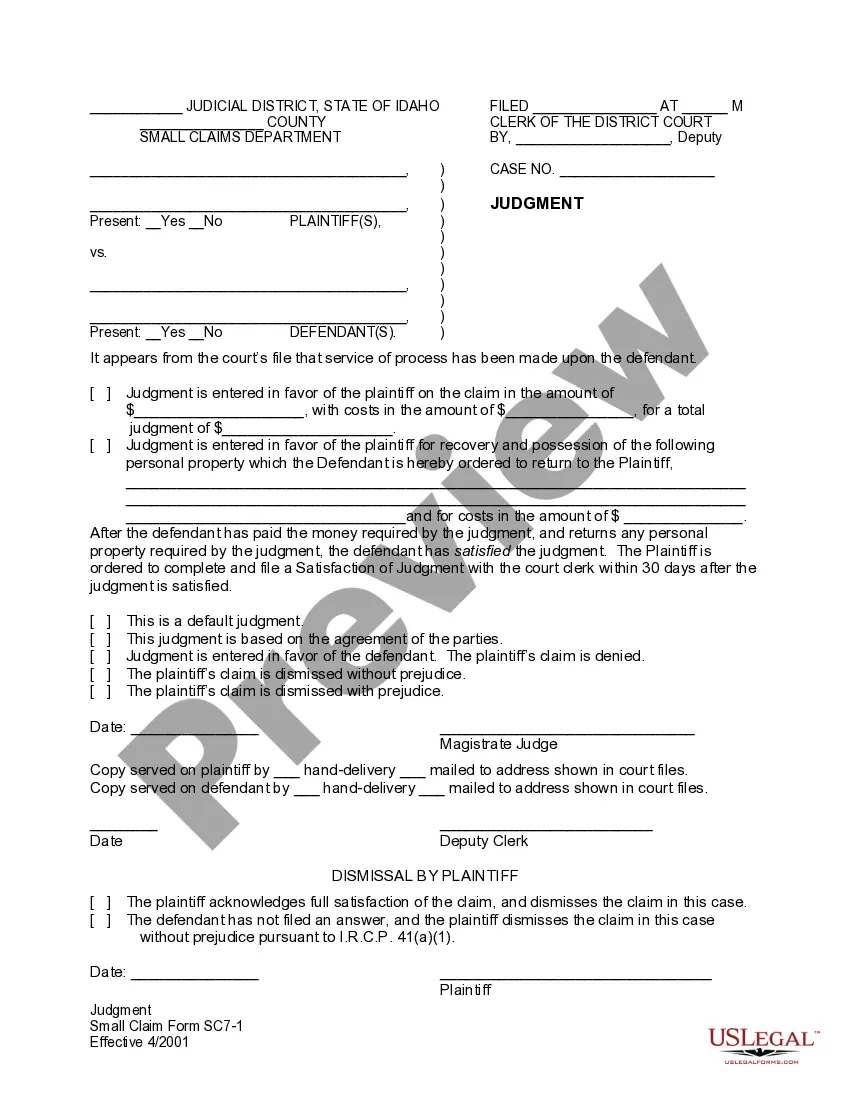
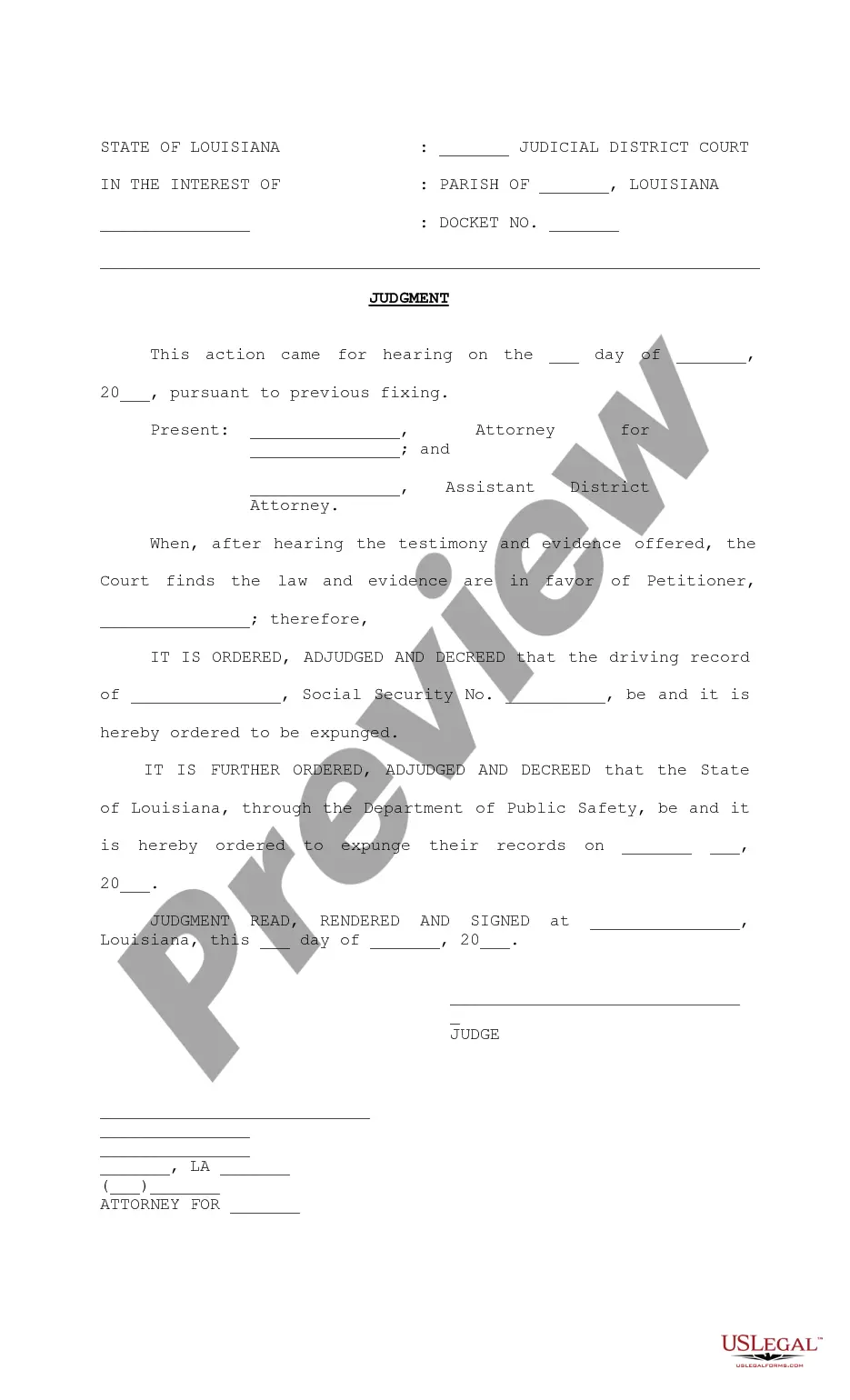
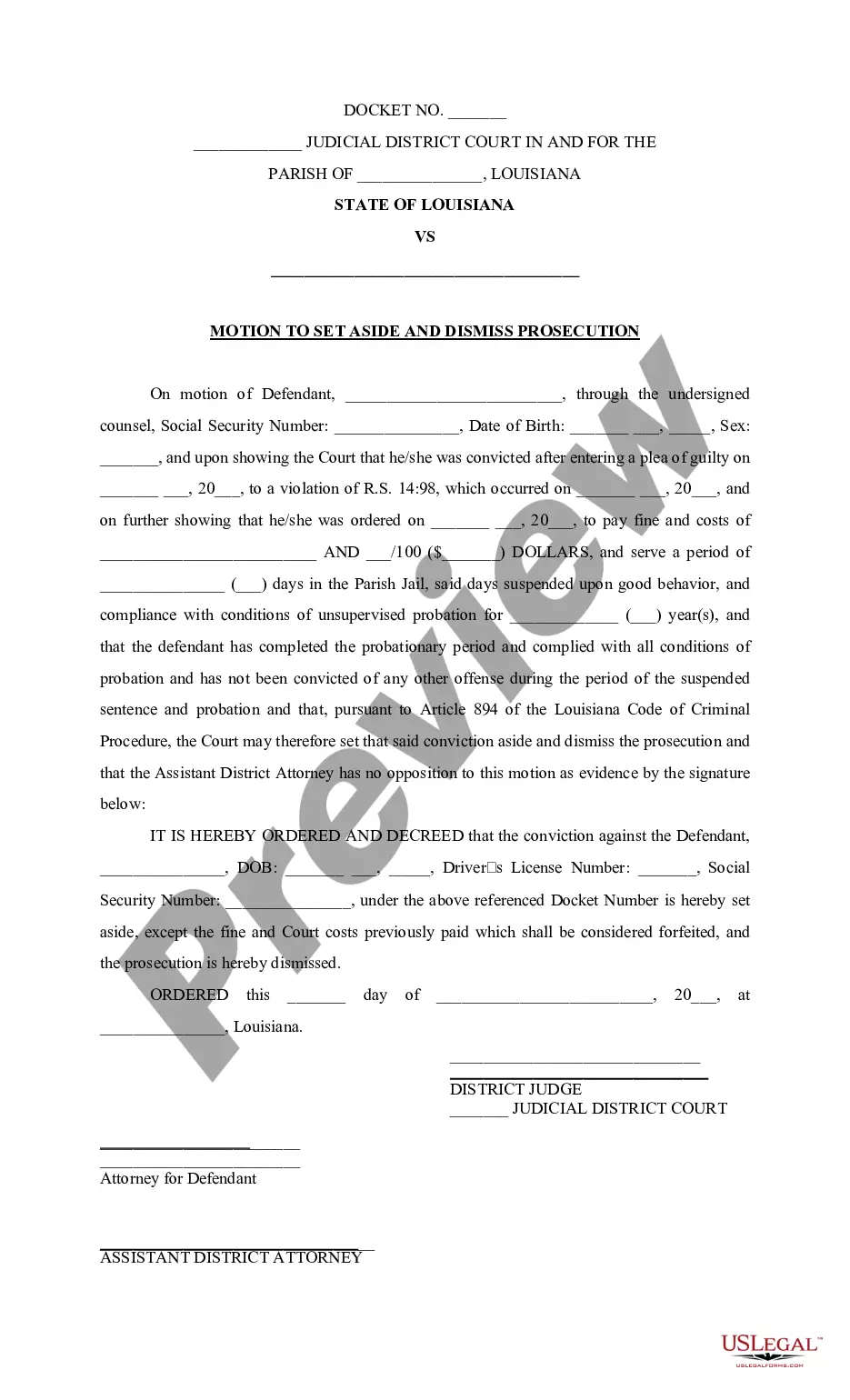
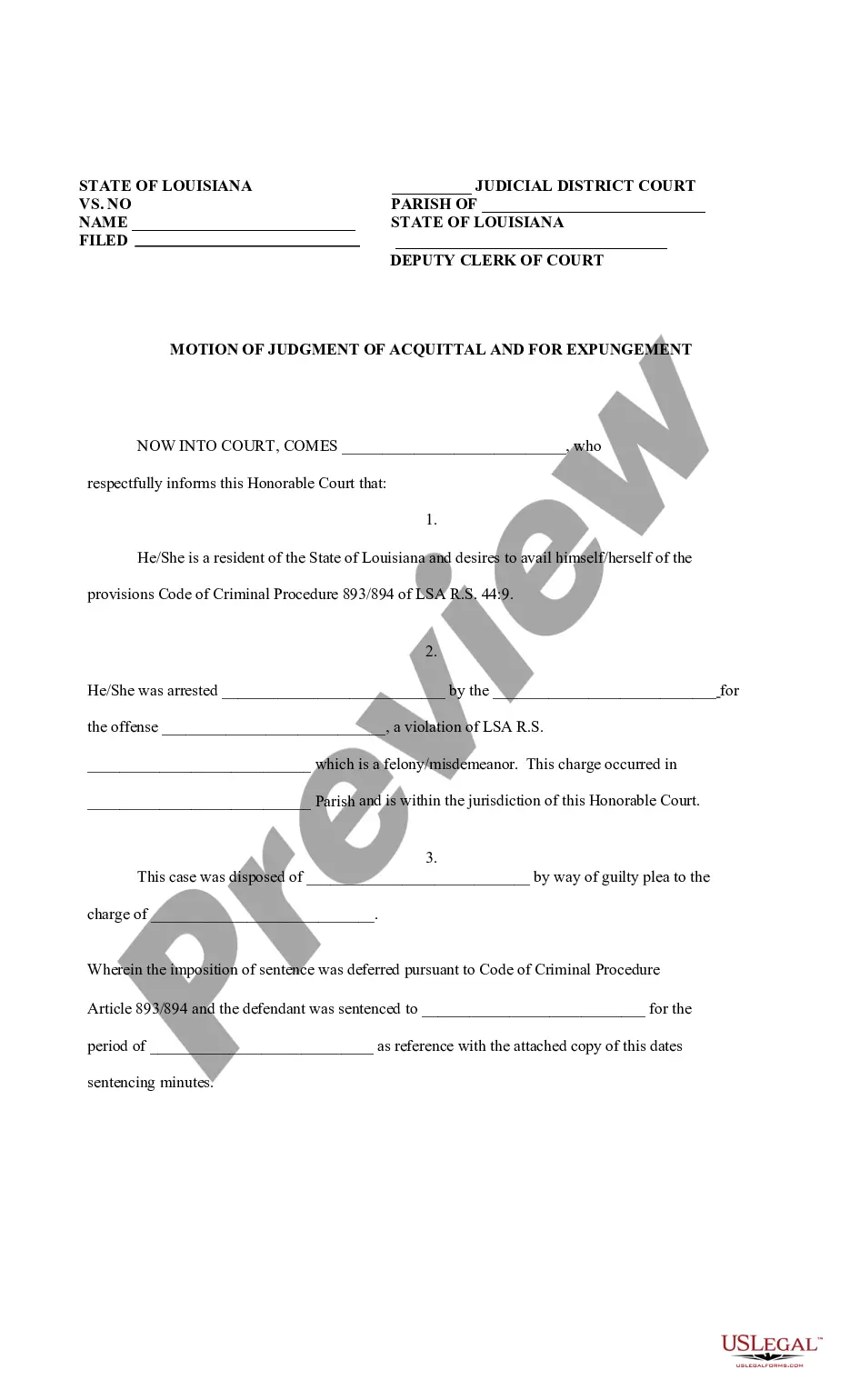
How to fill out Louisiana Judgment To Set Aside Conviction, Dismiss And Expunge Prosecution?
- If you are a returning user, log into your account to download the required form template directly to your device. Ensure your subscription is active; renew if necessary.
- For first-time users, start by exploring the Preview mode and form descriptions. Verify that you have selected the correct document that complies with your local laws.
- Should you need a different form, use the Search feature at the top to find the appropriate template. Once located, proceed to the next step.
- Purchase the document by clicking the Buy Now button and selecting your preferred subscription plan. You'll need to create an account for full access to the library.
- Complete your purchase by entering your credit card information or logging into your PayPal account.
- Download the form to your device for easy completion. You can also access it anytime in the My Forms section of your account.
By following these steps, you can efficiently utilize the extensive library of over 85,000 fillable and editable legal forms available through US Legal Forms.
Take control of your legal needs today and get started with US Legal Forms for a seamless experience!
Form popularity
FAQ
Minnesota allows for the expungement of many offenses, including certain misdemeanors and non-violent felonies. You may be able to expunge crimes like some theft offenses, drug possession violations, and other minor offenses. Each case has specific eligibility criteria, making it vital to seek guidance to determine if your crime can be expunged. Utilizing resources from platforms like US Legal Forms can assist you in navigating this process efficiently.
In Minnesota, a felony conviction can stay on your record indefinitely unless you take steps to have it expunged. The duration can affect your employment, housing, and other opportunities. However, after a certain period, you may apply for expungement to clear your record, depending on the nature of the felony. Therefore, understanding the timeline and options available is essential.
In Minnesota, certain crimes are not eligible for expungement. Serious offenses such as murder, criminal sexual conduct, and some felony-level offenses often remain on your record. Additionally, convictions for theft and gross misdemeanors may also be ineligible for expungement. Knowing what cannot be expunged helps individuals focus on their options.
To expunge means to remove or erase something from a record. In legal terms, when a record is expunged, it is treated as though it never existed. This process can help individuals move forward without the burden of past mistakes affecting their future opportunities. Understanding how the term 'expunged' applies to your situation is crucial for achieving a fresh start.
In Texas, not all cases can be expunged. Generally, cases involving felony convictions, certain misdemeanor offenses, or cases that resulted in a conviction typically cannot be expunged. It's crucial to understand the specific rules governing expungement, as they can vary. Consulting resources on US Legal Forms can help clarify what you can and cannot have expunged in your individual situation.
Yes, you can attempt to expunge your record yourself in Texas. However, navigating the legal system can be complex, and proper documentation is essential to ensure a successful outcome. Many people find it beneficial to use platforms like US Legal Forms, which provide guidance and resources for the expungement process. By using the right tools, you can increase your chances of effectively getting your record expunged.
The timeline for an expungement in NJ can vary, but generally, it takes about six to eight months for the whole process. After submitting your application, you may experience a few weeks of waiting for the court to process your request. Once the expungement is granted, it may take additional time for the records to be officially cleared from all databases. To streamline this process, using resources like US Legal Forms can help you with the necessary paperwork and provide guidance.
In Kentucky, individuals with certain misdemeanor and felony convictions may be eligible to have their records expunged. Specifically, first-time offenders and those with eligible charges that have been dismissed or resulted in a verdict of not guilty can apply for expungement. Additionally, there are specific waiting periods based on the type of conviction before you can pursue having your record expunged. Understanding these eligibility criteria is crucial for a successful expungement process.
While it's not mandatory to hire a lawyer for an expungement in NJ, having legal assistance can simplify the process significantly. A lawyer can help you understand the specific requirements, gather necessary documents, and navigate any complications that may arise. By ensuring everything is done correctly, you increase your chances of getting your record expunged efficiently. Ultimately, the expertise of a lawyer can be a valuable asset in achieving a successful outcome.
An example letter for expungement should begin with your contact information and the date, followed by addressing the appropriate court. Clearly state your request for expungement, citing your case number and explaining why your record should be cleared. Include relevant details about your case, such as the nature of the offense and evidence of rehabilitation. Using US Legal Forms can provide you with a clear template to help structure your expungement letter effectively.