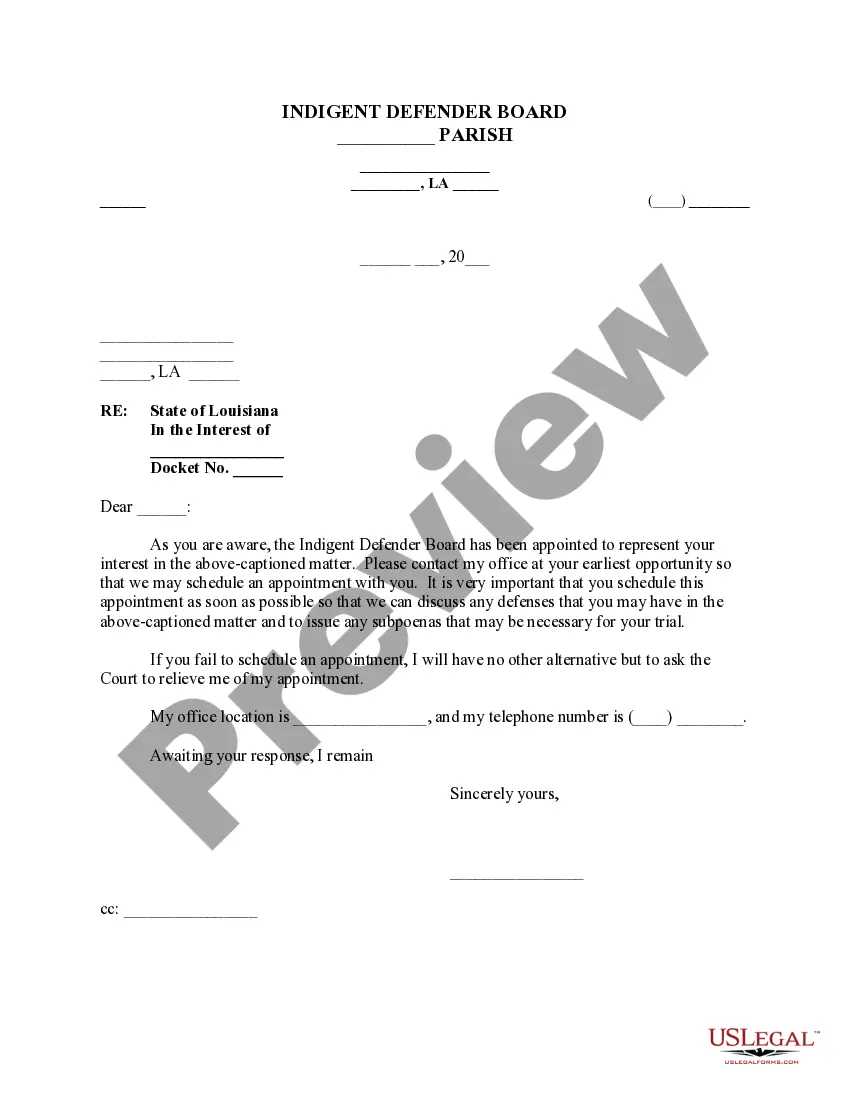
Appointment Of Attorney
Description

Get your form ready online
Our built-in tools help you complete, sign, share, and store your documents in one place.
Make edits, fill in missing information, and update formatting in US Legal Forms—just like you would in MS Word.
Download a copy, print it, send it by email, or mail it via USPS—whatever works best for your next step.
Sign and collect signatures with our SignNow integration. Send to multiple recipients, set reminders, and more. Go Premium to unlock E-Sign.
If this form requires notarization, complete it online through a secure video call—no need to meet a notary in person or wait for an appointment.
We protect your documents and personal data by following strict security and privacy standards.

Make edits, fill in missing information, and update formatting in US Legal Forms—just like you would in MS Word.

Download a copy, print it, send it by email, or mail it via USPS—whatever works best for your next step.

Sign and collect signatures with our SignNow integration. Send to multiple recipients, set reminders, and more. Go Premium to unlock E-Sign.

If this form requires notarization, complete it online through a secure video call—no need to meet a notary in person or wait for an appointment.

We protect your documents and personal data by following strict security and privacy standards.
Looking for another form?
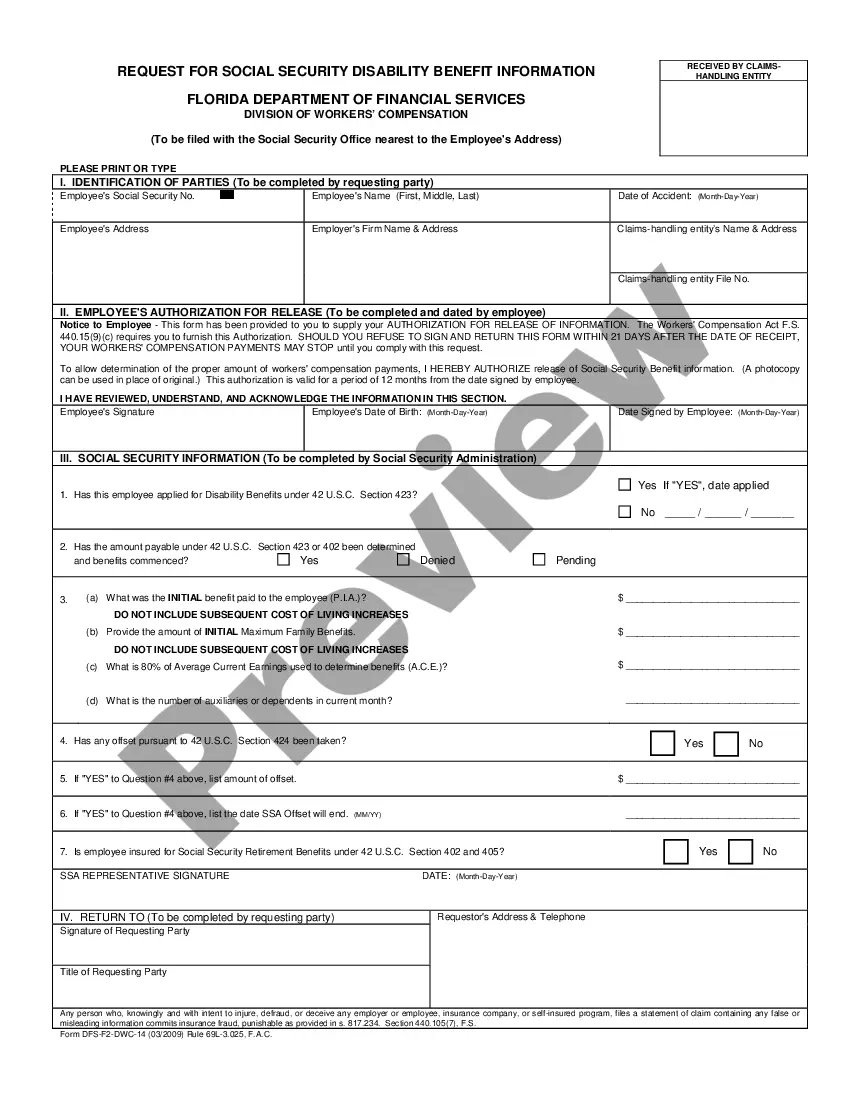






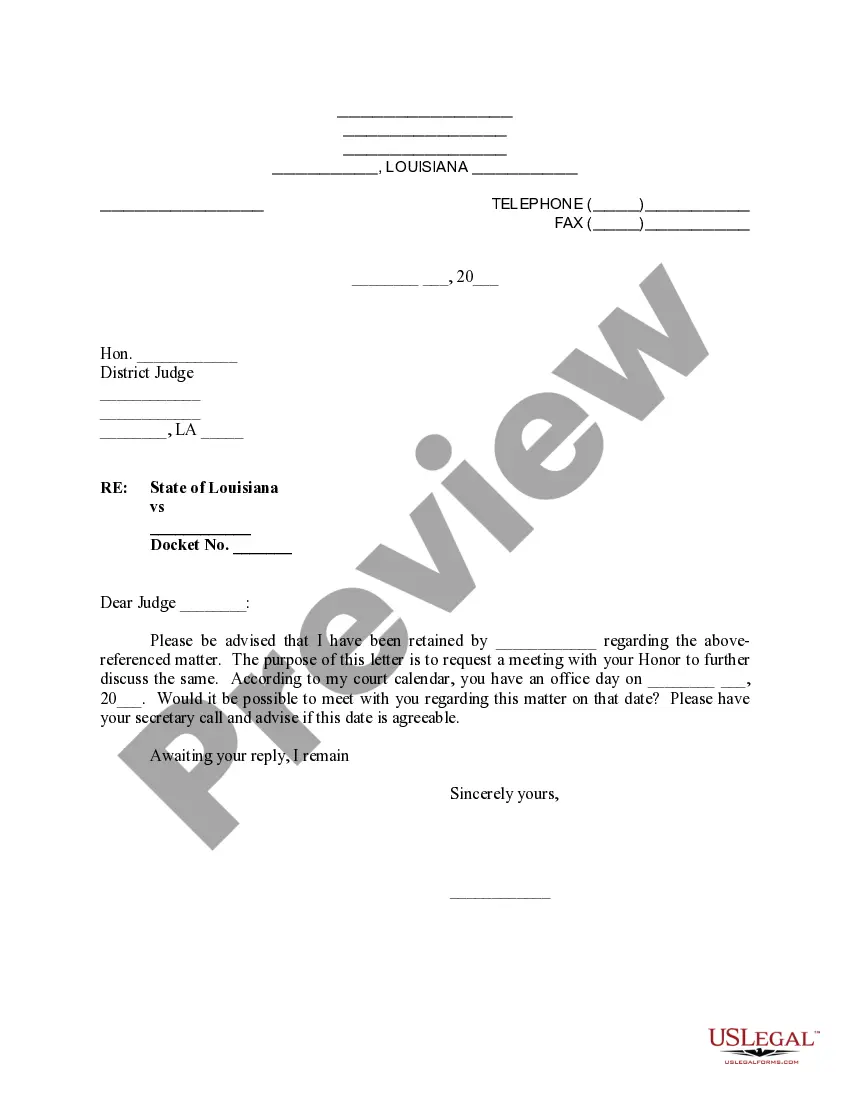
How to fill out Louisiana Letter To Indigent Defendant Regarding Appointment As Attorney?
- If you're an existing user, log into your account and download the necessary form by clicking the Download button. Ensure your subscription is active; renew it if necessary.
- For new users, start by checking the Preview mode and form description to confirm that your selected form meets your needs and complies with local laws.
- If you identify any discrepancies, utilize the Search tab above to locate a suitable alternative form.
- Purchase the document by clicking the Buy Now button and selecting your preferred subscription plan. Account registration is required for library access.
- Finalize your purchase by entering your payment details, either through credit card or PayPal.
- Download your form to your device for completion, and access it anytime via the My Forms menu in your profile.
By following these steps, you can efficiently acquire the necessary legal forms for your appointment of attorney needs through US Legal Forms.
Start your legal journey today! Explore our vast resources and empower yourself with precise legal documents.
Form popularity
FAQ
When hiring an attorney, start by expressing your need for legal assistance and outlining your specific situation. Make inquiries about their experience and approach to handling your case. This conversation is crucial, as it paves the way for a successful appointment of attorney that meets your needs.
Filling out power of attorney paperwork involves clearly defining the powers you wish to delegate and identifying the agent or attorney-in-fact. It’s essential to follow state-specific requirements, which can often be found on legal platforms like US Legal Forms. A well-prepared document ensures a smooth appointment of attorney process.
The proper name for a lawyer can include terms like 'attorney,' 'practitioner,' or simply 'lawyer.' Use the term that fits the context of your conversation, and remember that 'attorney' is commonly used in legal contexts. If you are discussing an appointment of attorney, 'attorney' is your best choice.
To request a court-appointed attorney, you generally need to complete a financial affidavit demonstrating your inability to afford a lawyer. This is often submitted to the court before your hearing. The court will then determine whether to grant an appointment of attorney based on your financial situation.
The proper way to refer to an attorney is to use terms like 'counsel' or 'legal representative,' depending on the situation. When mentioning their role, it’s beneficial to specify their expertise, such as 'family law attorney' or 'criminal defense lawyer.' This clarity aids in understanding when considering an appointment of attorney.
In formal correspondence or court settings, you can address an attorney as 'Mr.' or 'Ms.' followed by their last name, or simply as 'Attorney' followed by their last name. For instance, you might say 'Attorney Smith.' This respectful approach is advantageous when seeking an appointment of attorney.
The title you use for a lawyer can depend on context, but typically, they are called 'attorney' or 'lawyer.' Both terms refer to a person qualified to practice law and represent clients. In formal settings, using 'Attorney at Law' is highly respected.
Directing yourself to a lawyer begins with understanding your specific legal needs. You can start by researching attorneys who specialize in your area of concern, whether it’s family law, criminal defense, or civil rights. Reach out to legal referral services, like the ones provided by uslegalforms, to find qualified attorneys near you. By clearly stating your situation, you can ensure that the right legal professional assists you with your appointment of attorney.
U.S. Attorneys are chosen by the President of the United States, with recommendations also coming from local officials and lawmakers. This collaborative process ensures that the selected U.S. Attorney reflects the needs and values of the community they serve. It’s an essential step in the appointment of attorney that impacts federal legal proceedings.
The selection of a U.S. Attorney involves a nomination by the President followed by confirmation from the Senate. The President evaluates potential candidates based on their legal expertise and commitment to justice. This selection process guarantees that the appointed attorney embodies necessary professional integrity and capability.