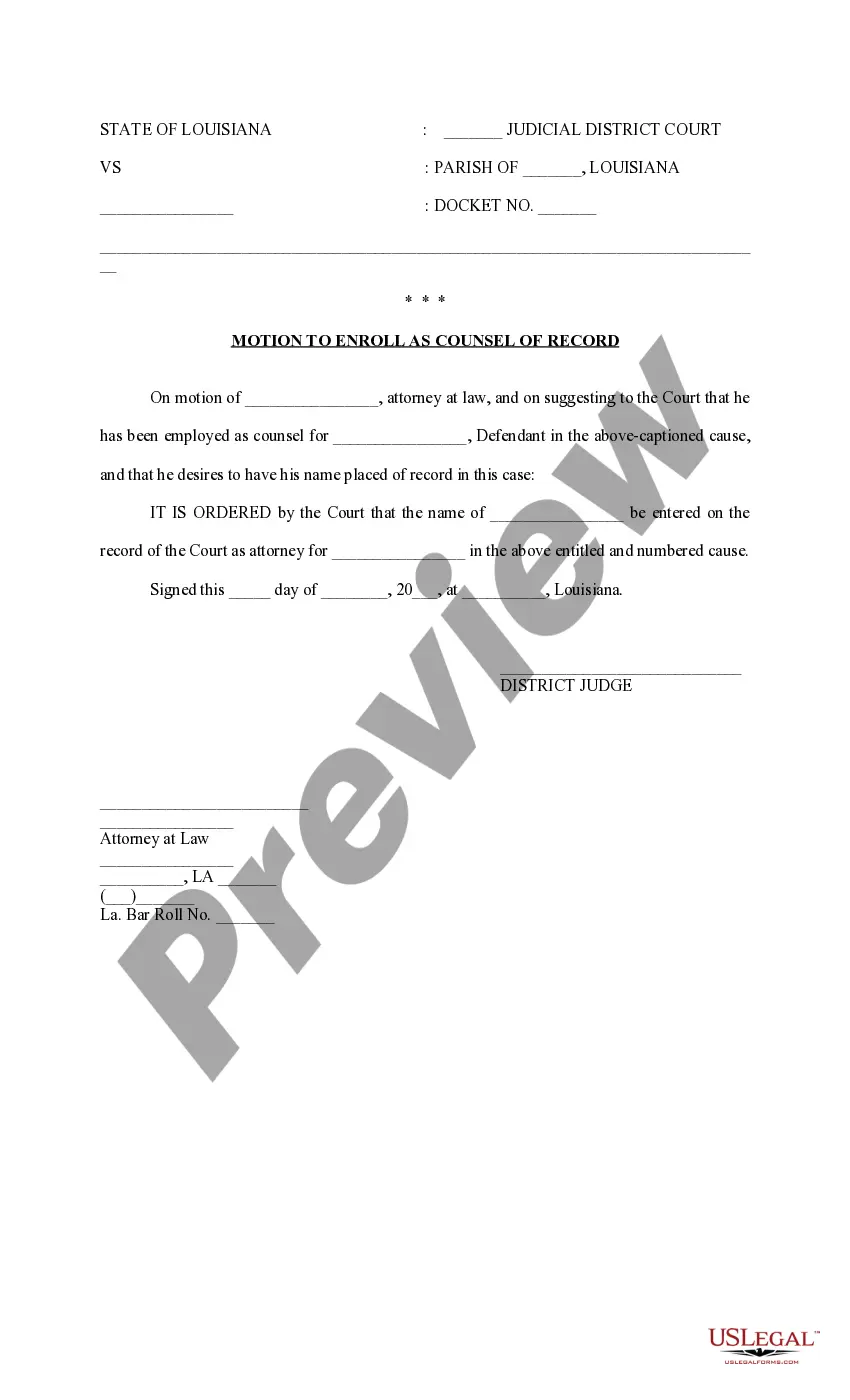
Motion To Enroll As Counsel Louisiana Form
Description
Get your form ready online
Our built-in tools help you complete, sign, share, and store your documents in one place.
Make edits, fill in missing information, and update formatting in US Legal Forms—just like you would in MS Word.
Download a copy, print it, send it by email, or mail it via USPS—whatever works best for your next step.
Sign and collect signatures with our SignNow integration. Send to multiple recipients, set reminders, and more. Go Premium to unlock E-Sign.
If this form requires notarization, complete it online through a secure video call—no need to meet a notary in person or wait for an appointment.
We protect your documents and personal data by following strict security and privacy standards.

Make edits, fill in missing information, and update formatting in US Legal Forms—just like you would in MS Word.

Download a copy, print it, send it by email, or mail it via USPS—whatever works best for your next step.

Sign and collect signatures with our SignNow integration. Send to multiple recipients, set reminders, and more. Go Premium to unlock E-Sign.

If this form requires notarization, complete it online through a secure video call—no need to meet a notary in person or wait for an appointment.

We protect your documents and personal data by following strict security and privacy standards.
Looking for another form?

Form popularity
FAQ
Rule of Professional Conduct 1.9 addresses conflicts of interest in legal representation. This rule protects clients by ensuring that attorneys do not represent opposing parties in similar matters. When completing the Motion to enroll as counsel Louisiana form, understanding this rule is vital to uphold ethical standards. Awareness of this rule helps build trust and integrity in your legal practice.
Rule 9.10 focuses on the representation of clients in legal matters, detailing how attorneys should interact with the court. It is important to formally enroll as counsel by completing the Motion to enroll as counsel Louisiana form, as this enables you to represent your clients effectively. This rule helps to maintain professionalism and clarity throughout legal proceedings.
The 90-day rule in Louisiana refers to the timeframe within which a party must take certain actions in litigation. This period is crucial for filing motions or responding to various court orders. As you navigate this, using the Motion to enroll as counsel Louisiana form helps ensure you meet deadlines efficiently. Adhering to this rule can significantly impact your case outcome.
Rule 9.9 governs the obligations of attorneys regarding the notification of their clients. It emphasizes the importance of keeping clients informed about their case status. When enrolling as counsel, you will need the Motion to enroll as counsel Louisiana form, which reinforces this obligation. Knowledge of this rule is essential for maintaining a good attorney-client relationship.
Rule 9.3 in Louisiana District court outlines the procedures for enrolling as counsel. To effectively apply, you should complete the Motion to enroll as counsel Louisiana form, which ensures your representation is formally recognized. This rule helps streamline the process, ensuring clear communication among attorneys and the court. Following this rule can save time and prevent potential issues during litigation.
To file a motion in Louisiana, you must prepare the appropriate legal documents and submit them to the court where your case is pending. This process often requires knowledge of specific legal requirements and deadlines. For those looking to navigate this process smoothly, utilizing a Motion to enroll as counsel Louisiana form ensures that you have proper assistance throughout your legal journey.
The 72 hour rule in Louisiana applies to certain criminal cases, emphasizing the need for an arraignment within 72 hours of arrest. This rule safeguards a defendant's right to a swift judicial process. If you need timely legal representation, filing a Motion to enroll as counsel Louisiana form can help ensure you have the right advocate before this timeline expires.
Rule 9.13 in Louisiana addresses the procedures for withdrawing from representation. This rule ensures that attorneys follow a structured process when terminating their client relationship. If you find yourself in this situation, understanding how to navigate the rules can help you effectively use the Motion to enroll as counsel Louisiana form to secure new legal representation.
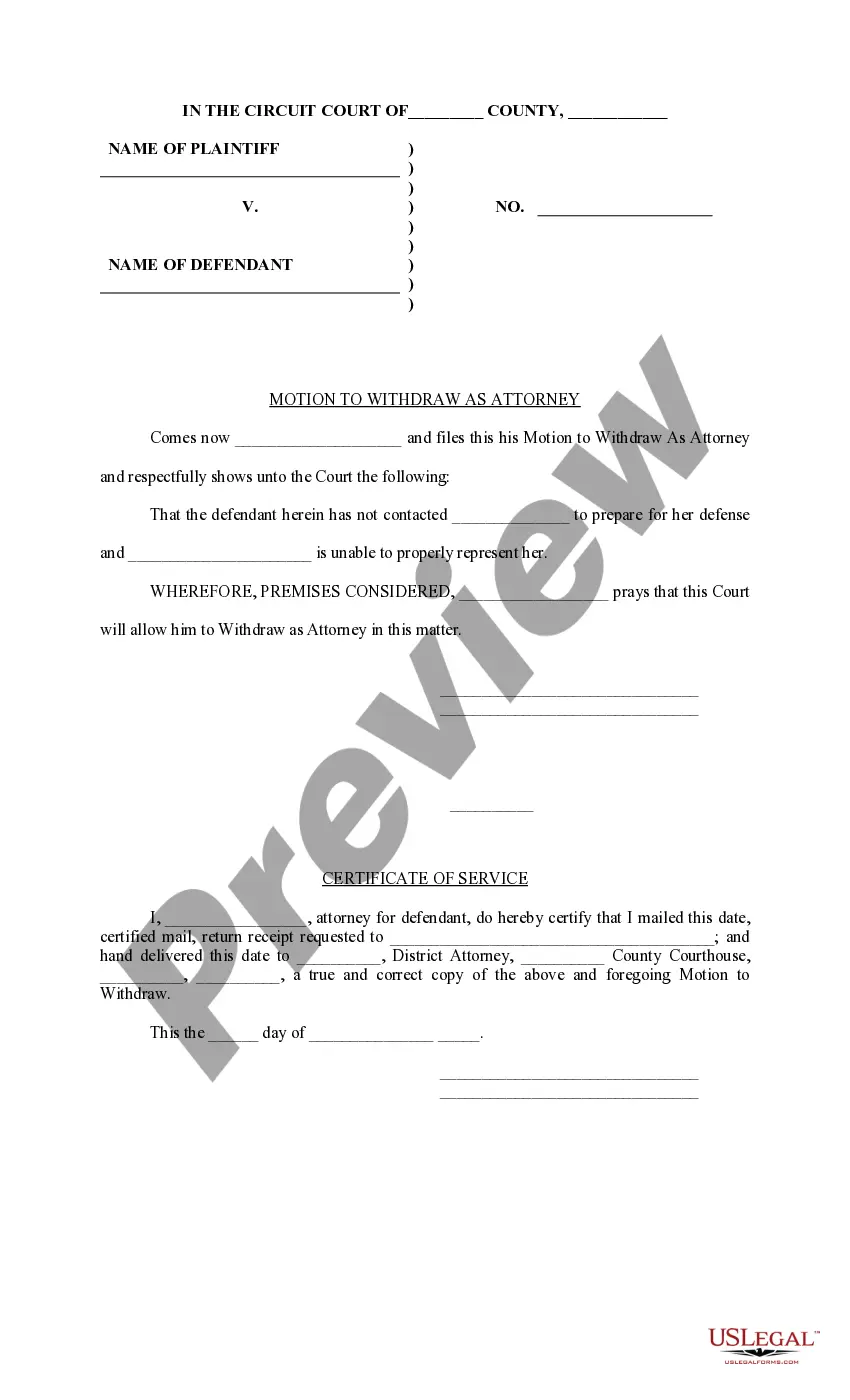
A motion to substitute in Louisiana allows a current attorney to withdraw and another attorney to take over the representation of a client. This procedure enables clients to change legal representation if they are not satisfied with their current attorney. When pursuing this option, you may need to file a Motion to enroll as counsel Louisiana form for your new attorney.
The 5th Amendment guarantees the right to counsel during custodial interrogation, ensuring protection against self-incrimination. In contrast, the 6th Amendment secures the right to counsel during criminal prosecutions, allowing for legal representation at trial. Understanding these distinctions is vital, particularly when considering a Motion to enroll as counsel Louisiana form.