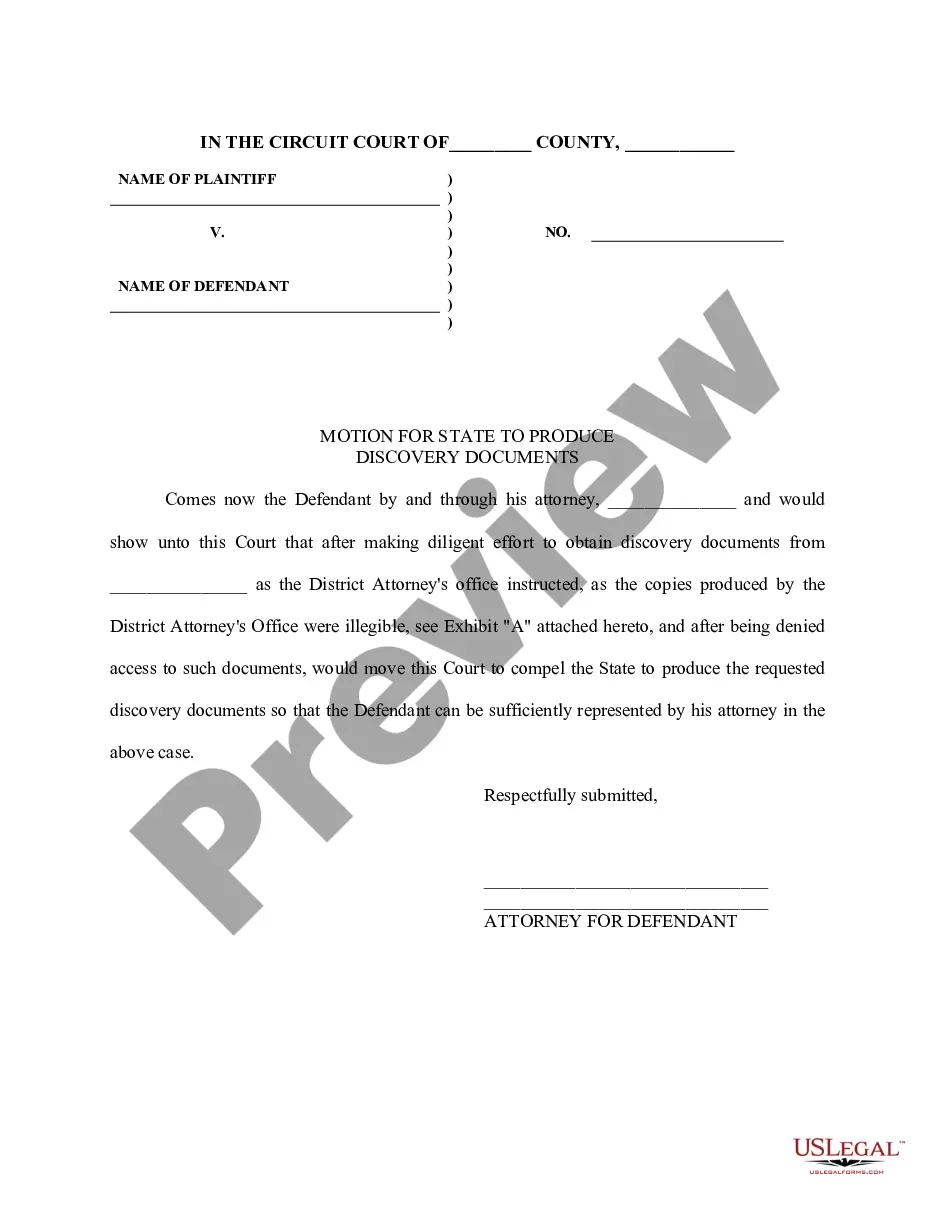
Motion For Discovery Example With Motion
Description
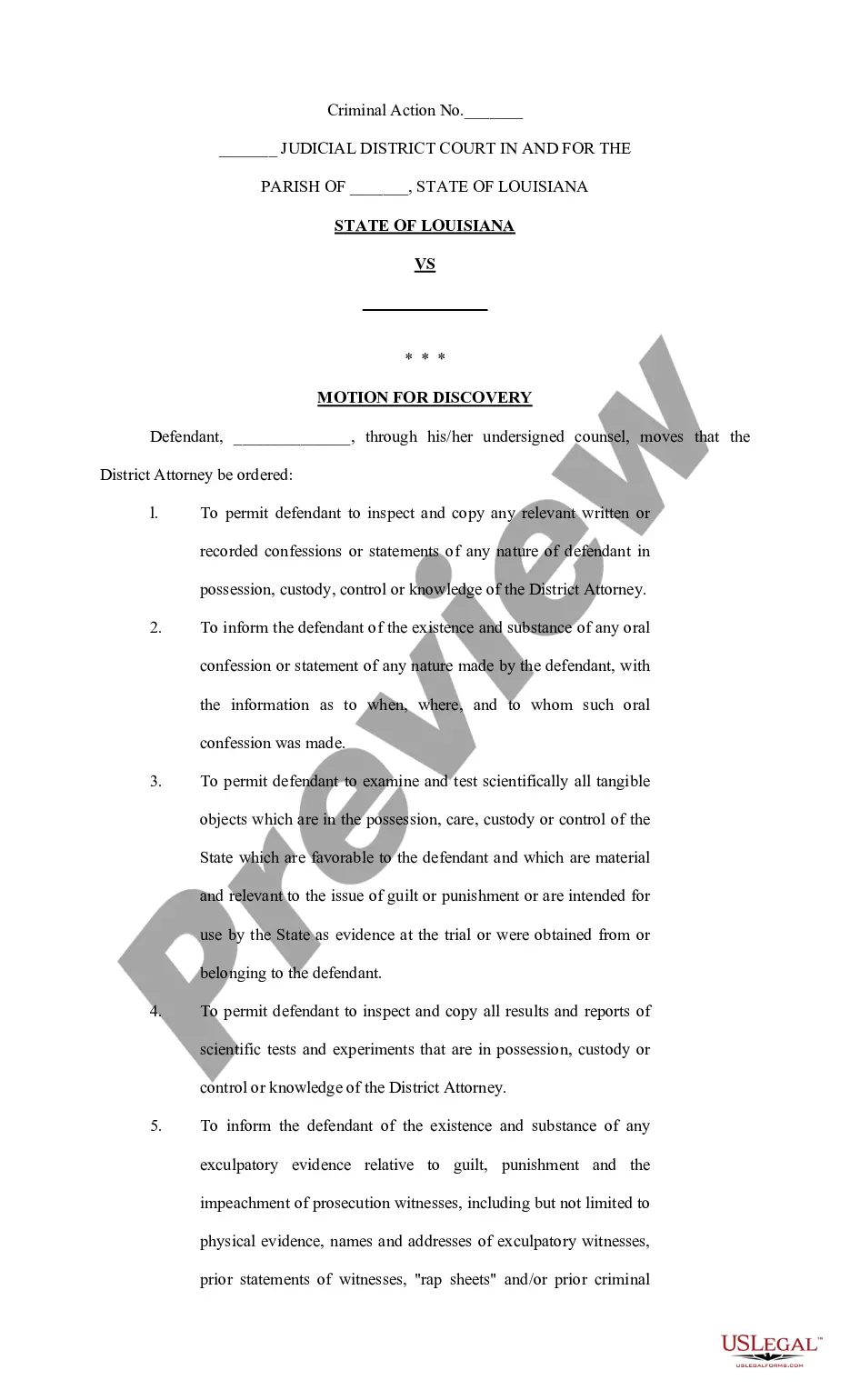
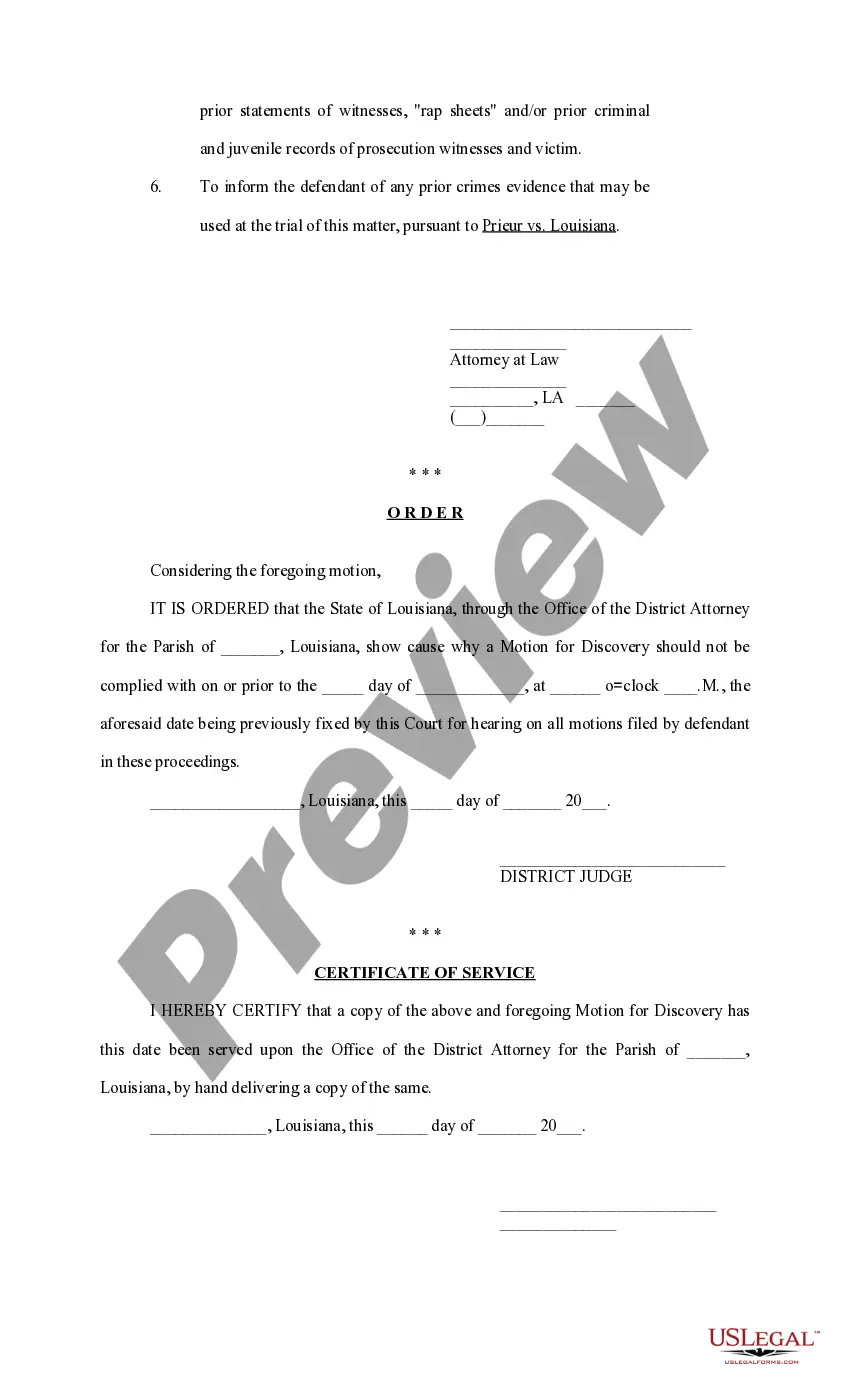
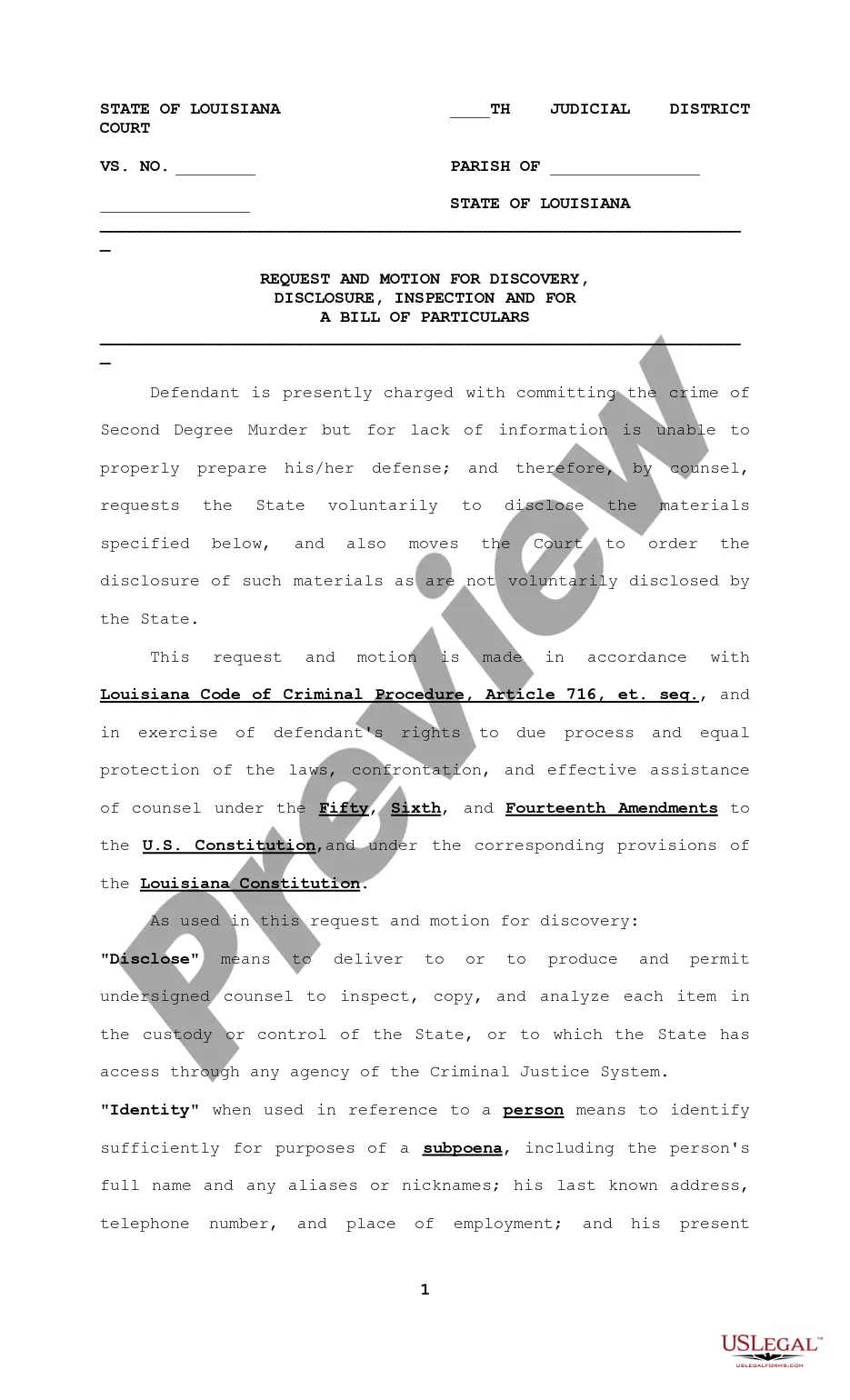
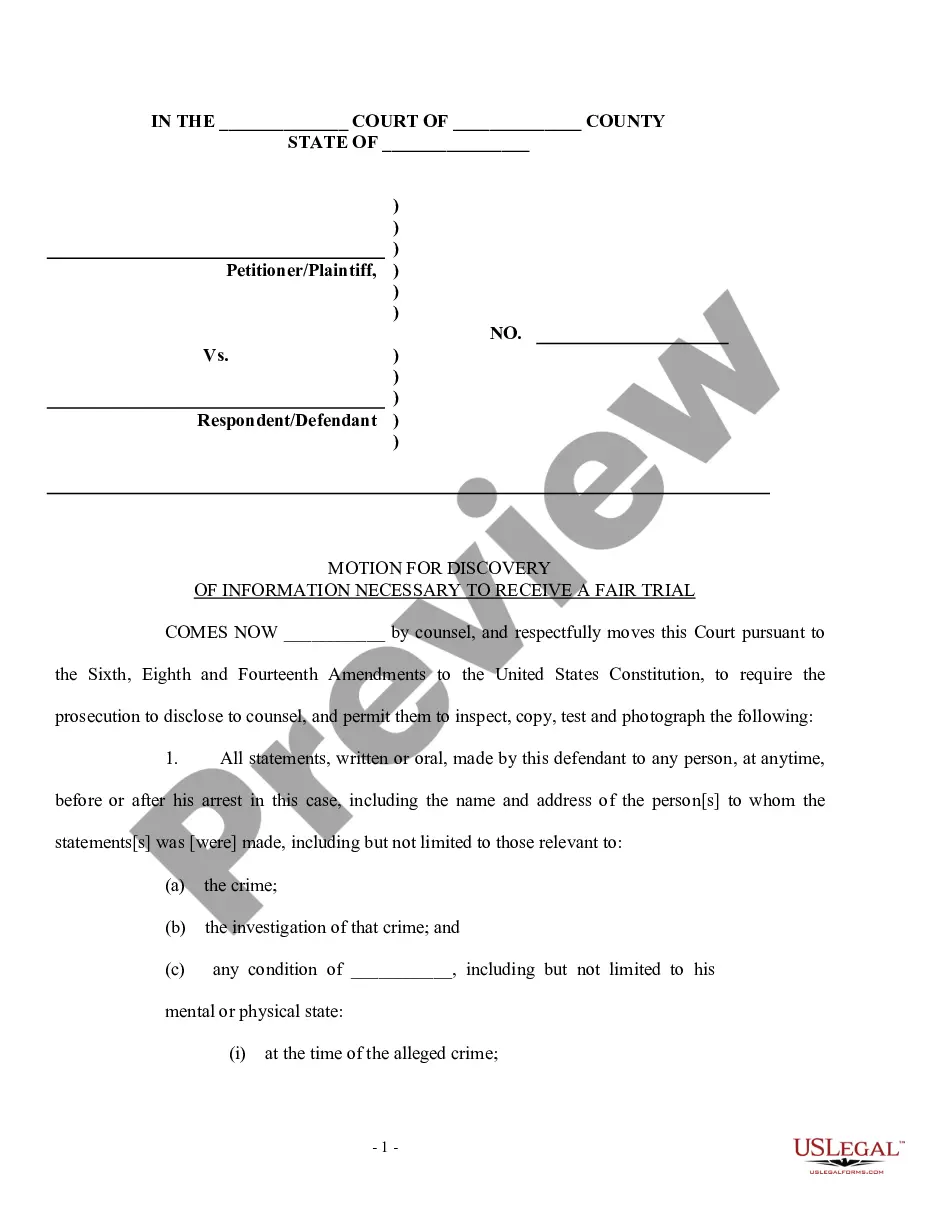
Get your form ready online
Our built-in tools help you complete, sign, share, and store your documents in one place.
Make edits, fill in missing information, and update formatting in US Legal Forms—just like you would in MS Word.
Download a copy, print it, send it by email, or mail it via USPS—whatever works best for your next step.
Sign and collect signatures with our SignNow integration. Send to multiple recipients, set reminders, and more. Go Premium to unlock E-Sign.
If this form requires notarization, complete it online through a secure video call—no need to meet a notary in person or wait for an appointment.
We protect your documents and personal data by following strict security and privacy standards.

Make edits, fill in missing information, and update formatting in US Legal Forms—just like you would in MS Word.

Download a copy, print it, send it by email, or mail it via USPS—whatever works best for your next step.

Sign and collect signatures with our SignNow integration. Send to multiple recipients, set reminders, and more. Go Premium to unlock E-Sign.

If this form requires notarization, complete it online through a secure video call—no need to meet a notary in person or wait for an appointment.

We protect your documents and personal data by following strict security and privacy standards.
Looking for another form?
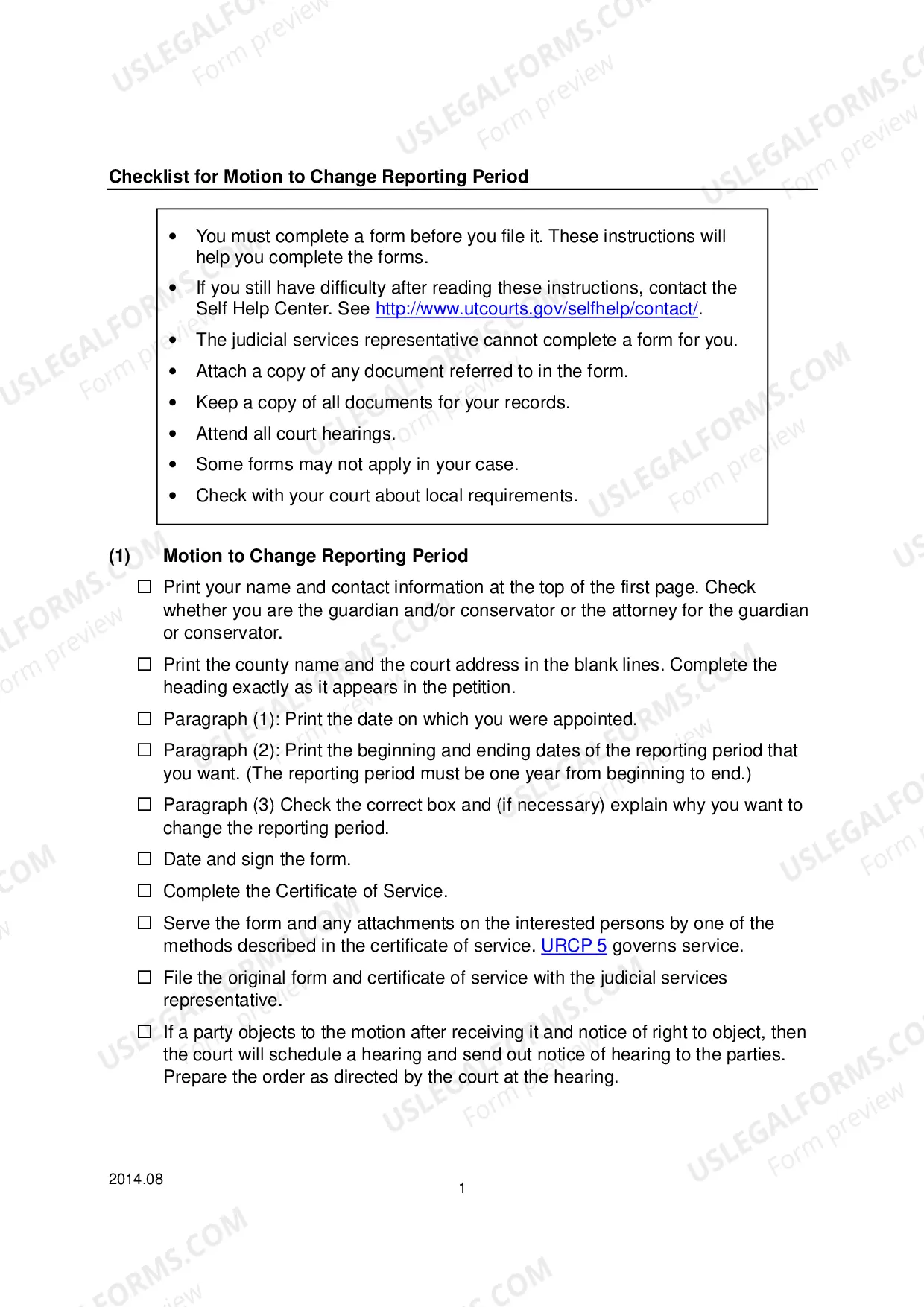

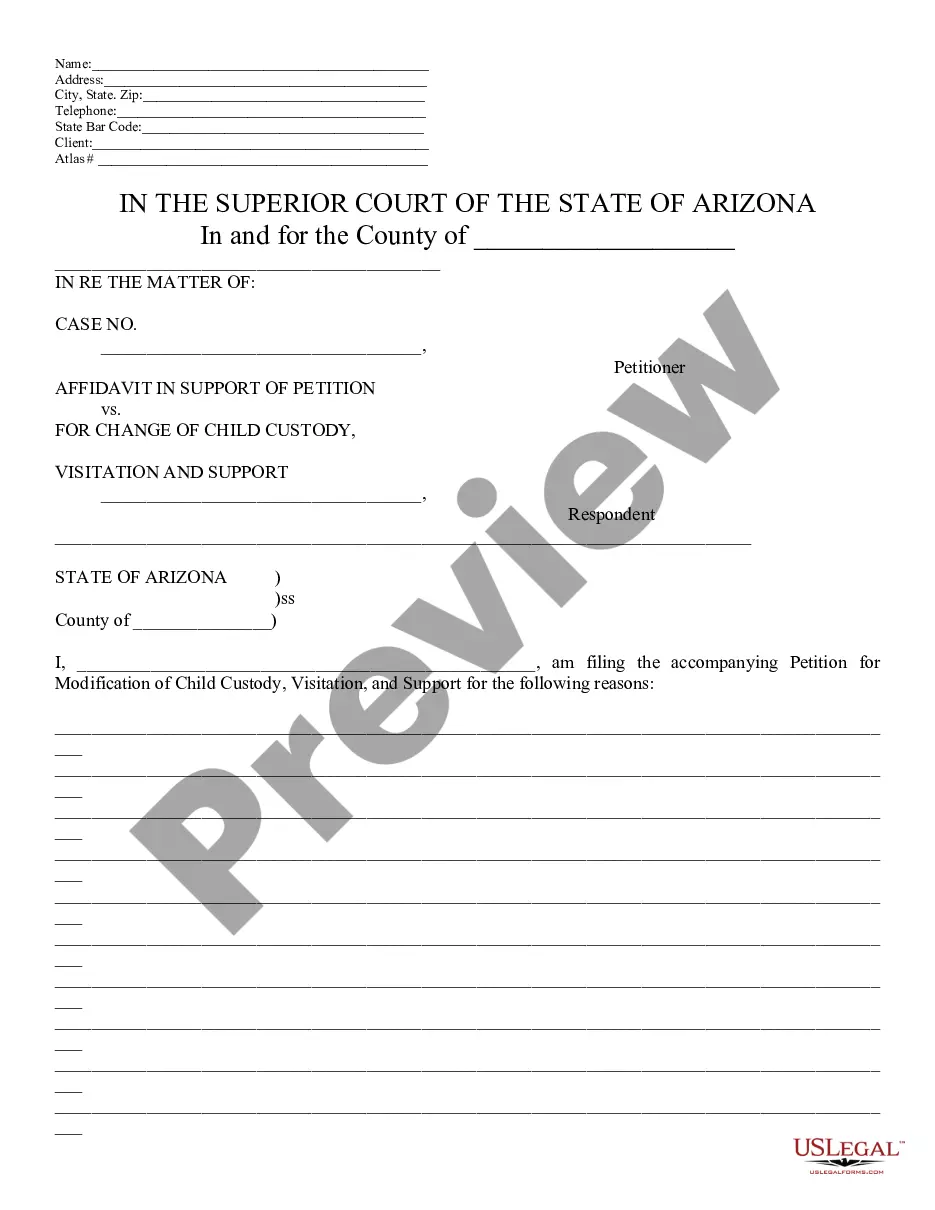
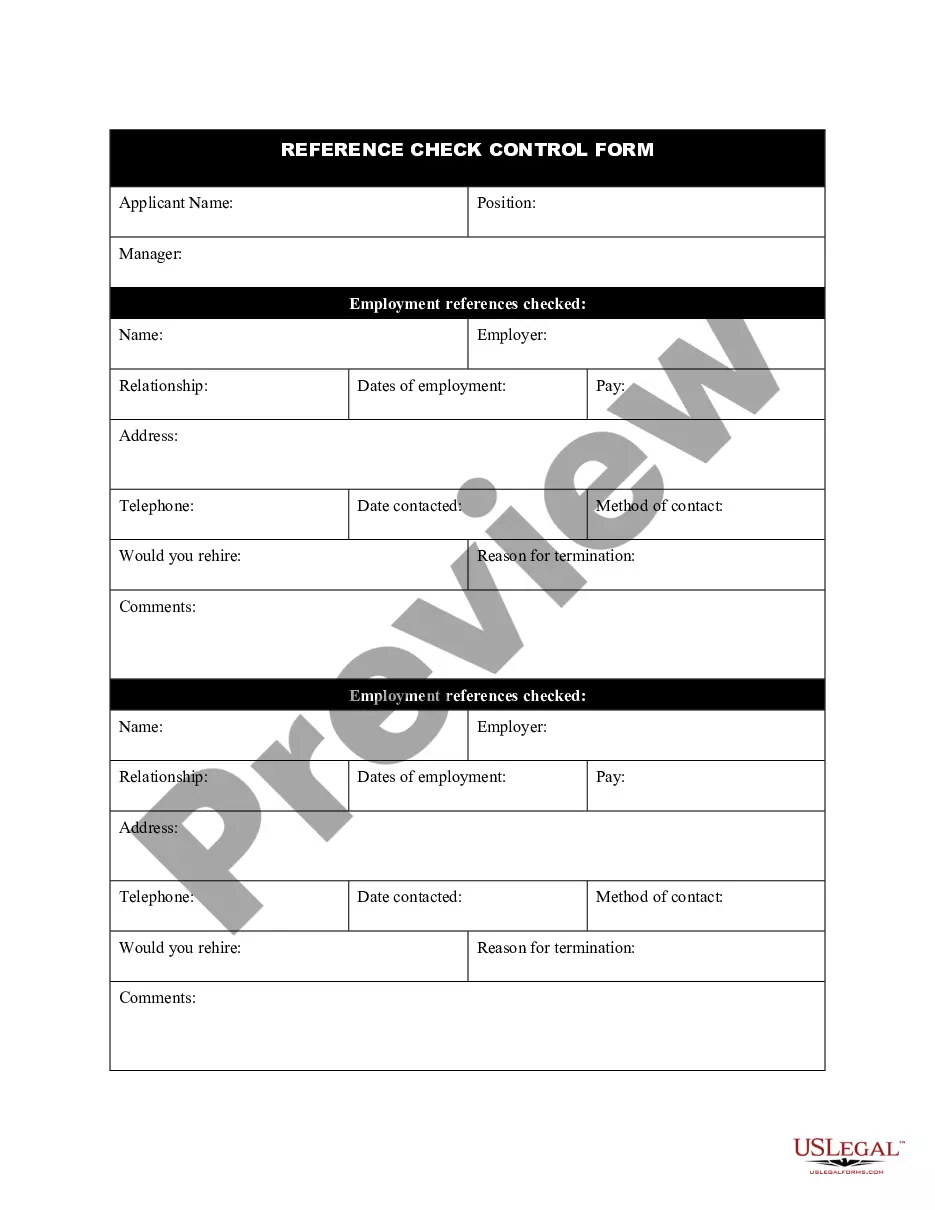
How to fill out Louisiana Motion For Discovery?
Legal documentation management can be exasperating, even for experienced professionals.
When looking for a Motion For Discovery Example With Motion and unable to dedicate time to searching for the appropriate and current version, the process can be overwhelming.
Access a comprehensive database of articles, guides, and resources relevant to your situation and needs.
Save time and effort searching for the documents you require, and take advantage of US Legal Forms’ sophisticated search and Review feature to locate Motion For Discovery Example With Motion and obtain it.
Make sure the sample is accepted in your state or county. Select Buy Now when you are prepared. Choose a subscription plan. Select the file format you prefer, and Download, fill it out, eSign, print, and submit your documents. Embrace the US Legal Forms online catalog, backed by 25 years of experience and reliability. Streamline your routine document management into an efficient and user-friendly process today.
- If you possess a subscription, Log In to your US Legal Forms account, search for the document, and download it.
- Visit the My documents tab to view the documents you previously downloaded and manage your folders as desired.
- If this is your first experience with US Legal Forms, create an account and gain unlimited access to all platform benefits.
- Here are the steps to follow after acquiring the document you need.
- Confirm this is the correct document by previewing it and reviewing its details.
- Access state- or county-specific legal and corporate documentation.
- US Legal Forms meets all your needs, from personal to commercial documents, all in one location.
- Utilize advanced tools to complete and handle your Motion For Discovery Example With Motion.
Form popularity
FAQ
Writing a proper motion requires clarity and structure. Begin by clearly stating the purpose of your motion and include any relevant facts. You should reference a motion for discovery example with motion to illustrate how to format your arguments effectively. Lastly, ensure that your motion adheres to the specific rules of your jurisdiction, as this can impact the outcome.
Discovery motions encompass any requests made to the court to resolve disputes related to the discovery process. This includes motions to compel, motions for protective orders, and motions to strike discovery requests. Utilizing a motion for discovery example with motion can help clarify these requests and streamline your arguments before the court.
When writing a legal motion sample, begin by clearly stating the motion's title, followed by an introduction. Outline the facts of the case, legal arguments, and specific requests for relief. Including a motion for discovery example with motion in your legal documents can serve as a valuable reference, aiding in structure and clarity.
The most common form of discovery is interrogatories, which are written questions that one party sends to another. Interrogatories allow parties to gather information in a structured manner, facilitating better understanding of the case. In many instances, a motion for discovery example with motion includes the use of interrogatories to request vital information.
Examples of discovery motions include motions to compel production of documents, motions for protective orders, and motions to quash subpoenas. These motions seek to manage the discovery process effectively, ensuring that evidence is gathered appropriately. Using a motion for discovery example with motion can guide you through writing these essential legal documents.
To write a motion to compel discovery, first, state the background of the case and explain why the information is necessary. Next, clearly outline the discovery that was requested and how the opposing party has failed to respond. Incorporating a motion for discovery example with motion helps to articulate your position effectively, prompting the court to address the issue.
The four types of discovery are interrogatories, requests for production, requests for admissions, and depositions. Each type serves to gather information and clarify points before trial. A motion for discovery example with motion often involves these tools to ensure that both parties have access to relevant information.
The three most common pretrial motions include motions to dismiss, motions for summary judgment, and motions to compel discovery. Each of these motions serves a unique purpose in the legal process. Specifically, a motion for discovery example with motion helps parties obtain necessary evidence, promoting fairness in trials.