Custody Court
Description
Get your form ready online
Our built-in tools help you complete, sign, share, and store your documents in one place.
Make edits, fill in missing information, and update formatting in US Legal Forms—just like you would in MS Word.
Download a copy, print it, send it by email, or mail it via USPS—whatever works best for your next step.
Sign and collect signatures with our SignNow integration. Send to multiple recipients, set reminders, and more. Go Premium to unlock E-Sign.
If this form requires notarization, complete it online through a secure video call—no need to meet a notary in person or wait for an appointment.
We protect your documents and personal data by following strict security and privacy standards.

Make edits, fill in missing information, and update formatting in US Legal Forms—just like you would in MS Word.

Download a copy, print it, send it by email, or mail it via USPS—whatever works best for your next step.

Sign and collect signatures with our SignNow integration. Send to multiple recipients, set reminders, and more. Go Premium to unlock E-Sign.

If this form requires notarization, complete it online through a secure video call—no need to meet a notary in person or wait for an appointment.

We protect your documents and personal data by following strict security and privacy standards.
Looking for another form?



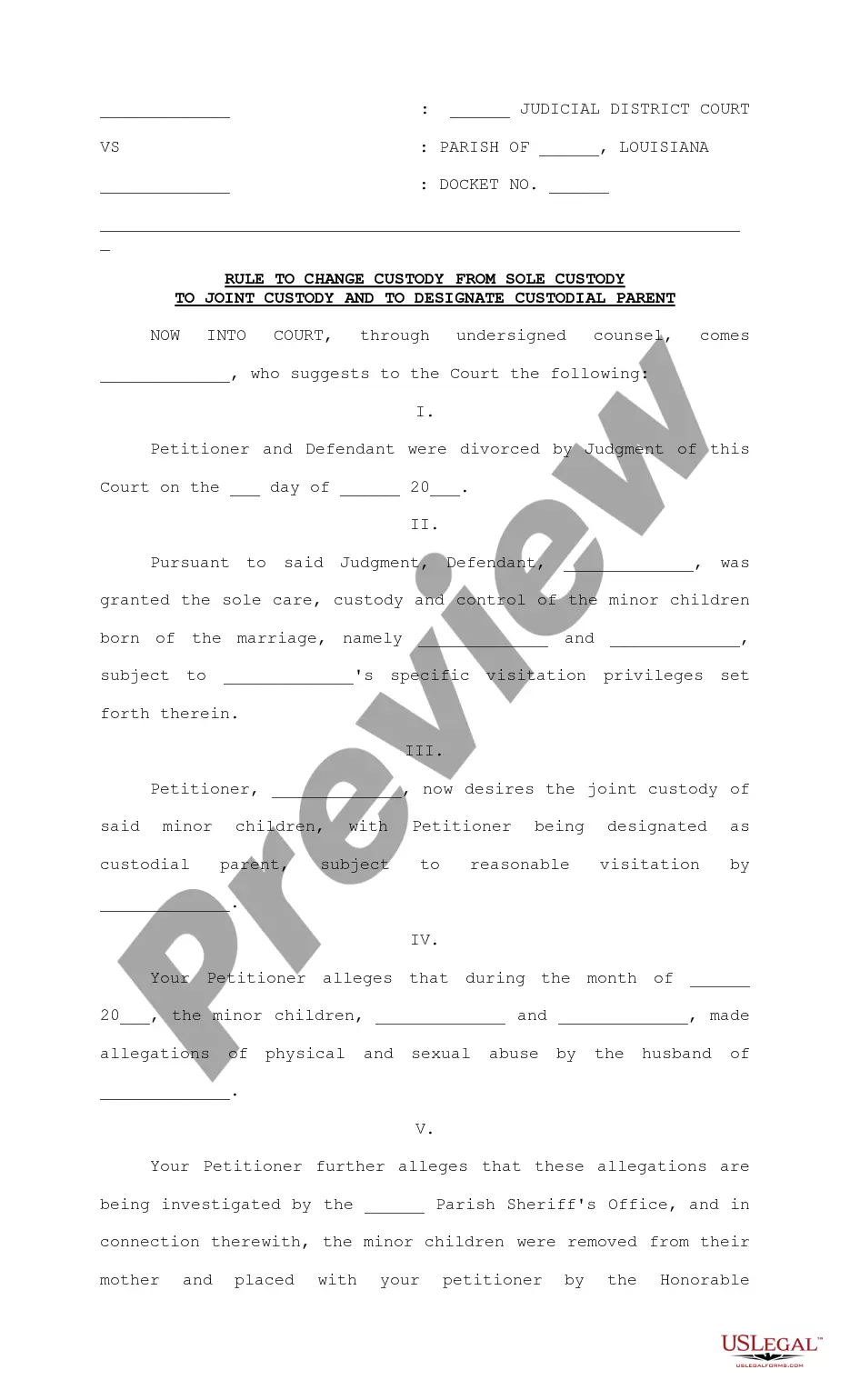
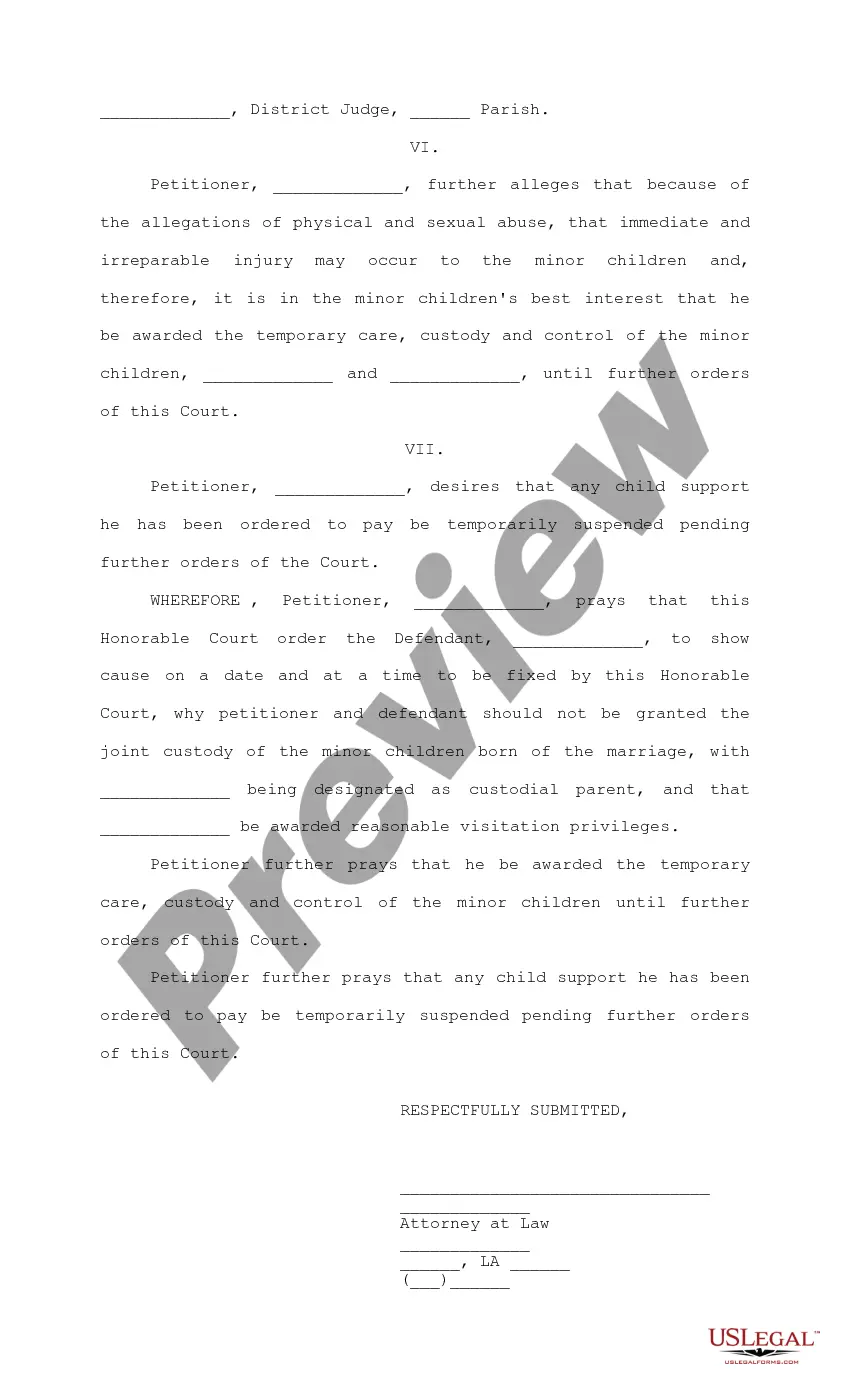
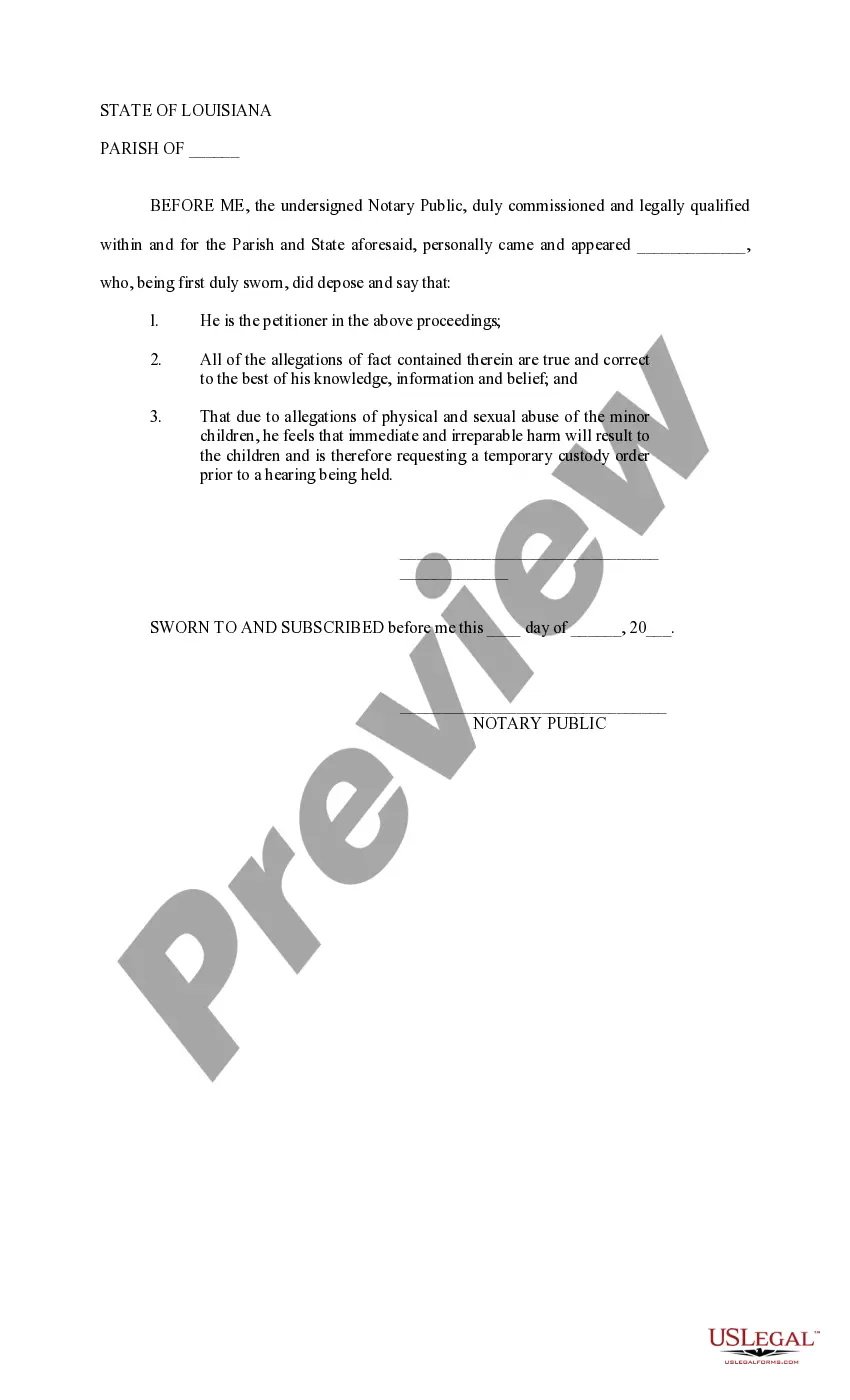
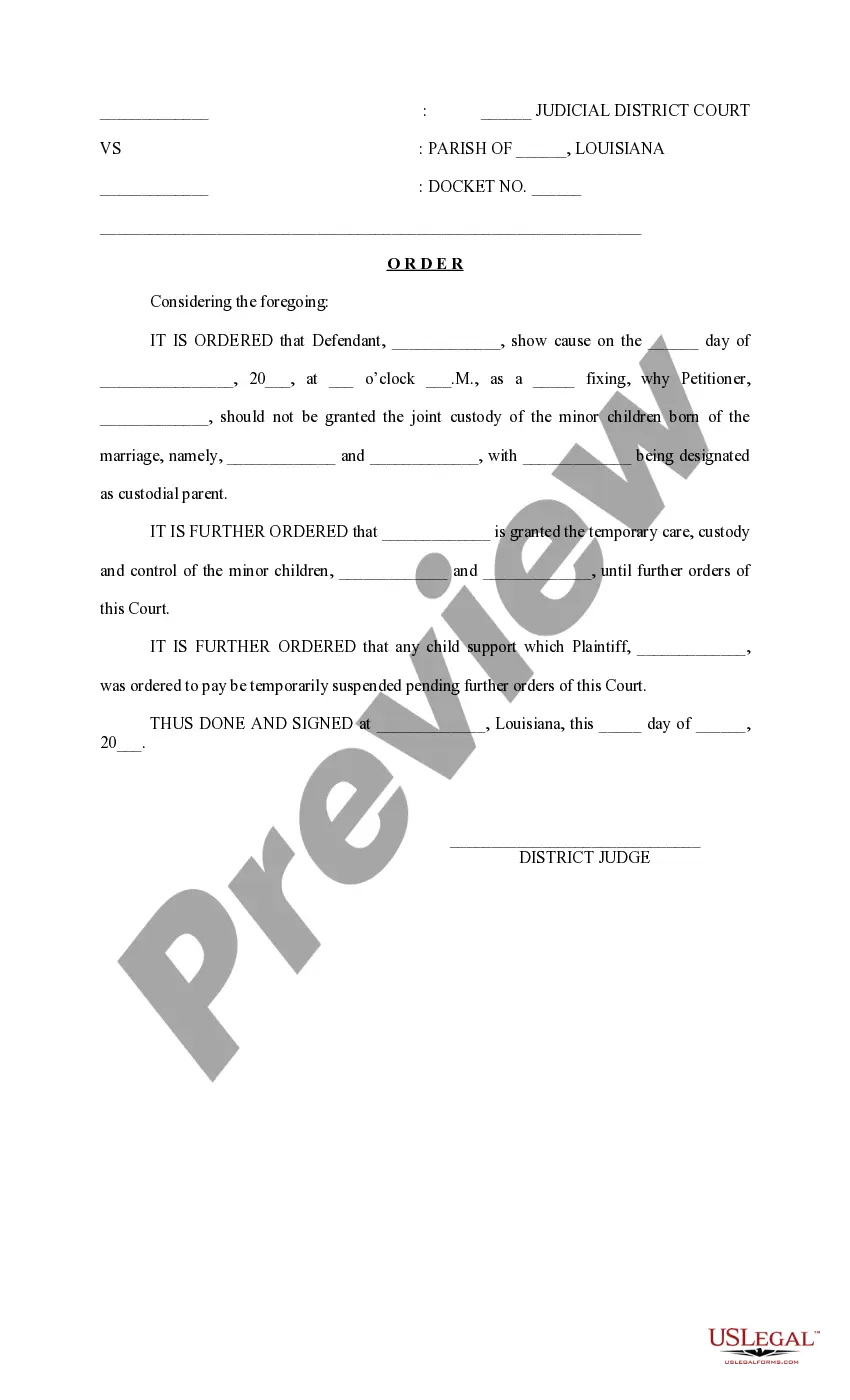
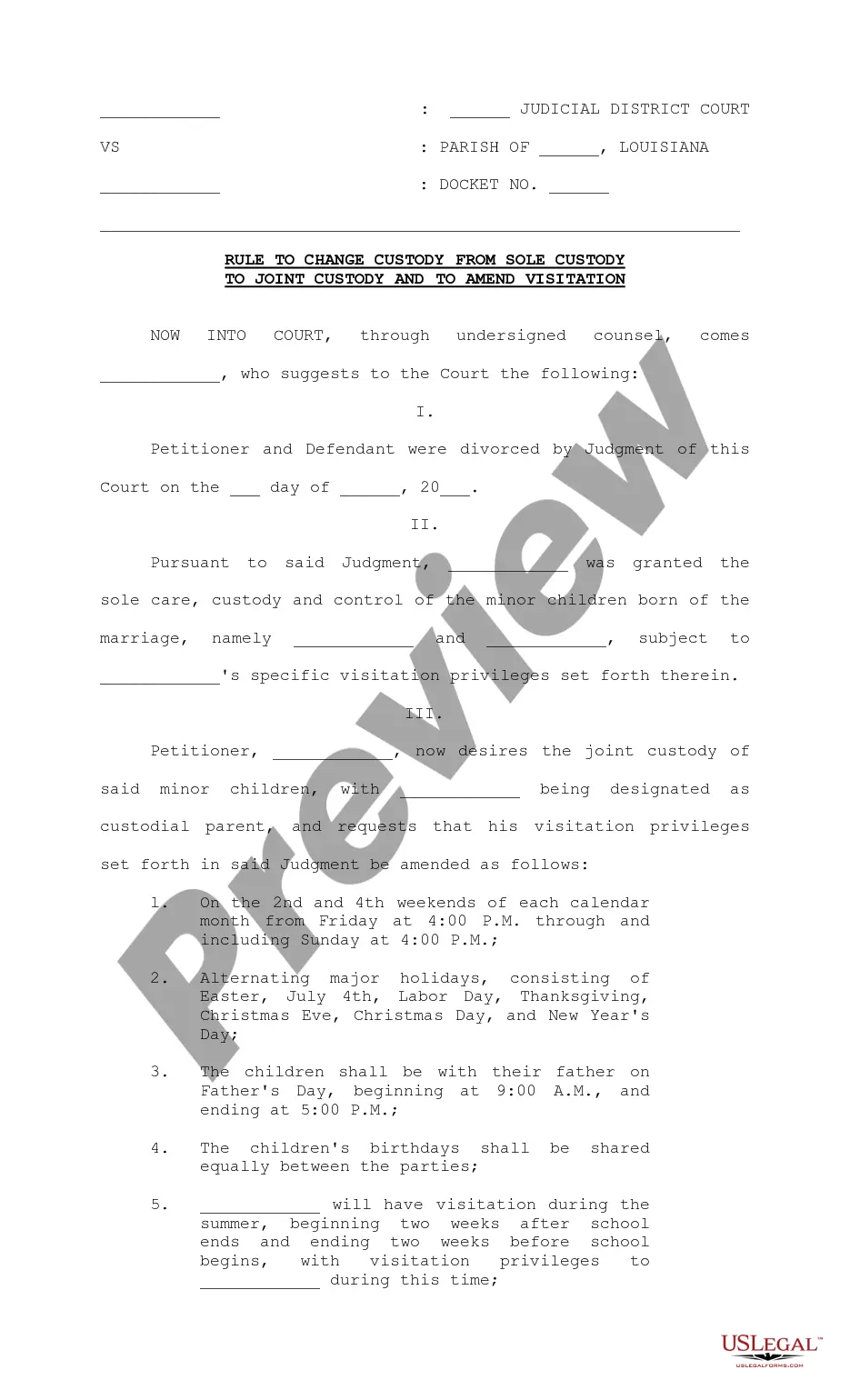
How to fill out Louisiana Rule To Change Custody From Sole To Joint And To Designate Custodial Parent, And Order?
- If you're a returning user, log in to your account and ensure your subscription is active. Download your desired form using the Download button.
- For first-time users, browse the extensive library. Use the Preview mode to review form descriptions and confirm they meet your jurisdiction's needs.
- If the form isn't quite right, use the Search tab to find more templates that suit your specific situation.
- Once you find the appropriate document, click the Buy Now button and select your preferred subscription plan, which may require account registration.
- Complete your purchase by providing payment information either via credit card or PayPal to activate your subscription.
- After payment, download the legal form to your device. The file will also be accessible at any time in the My Forms section of your account.
US Legal Forms ensures that you have access to over 85,000 fillable legal forms, enhancing your ability to handle legal matters effectively. Their premium expert assistance provides additional confidence in the completion of your documents.
Don’t hesitate—streamline your custody court journey today! Start by accessing US Legal Forms and take the first step toward effective legal documentation.
Form popularity
FAQ
Winning primary custody in Nevada requires demonstrating that you can best meet your child's needs and provide a stable environment. Focus on maintaining a positive relationship with your child and documenting your involvement in their life, including education and extracurricular activities. Engaging with a legal expert familiar with custody court processes can offer vital guidance to strengthen your case. Resources like US Legal Forms can streamline gathering necessary documents and simplify navigating the legal system.
Securing full custody in Nevada can be challenging, as the custody court prioritizes the child's welfare and often favors joint custody arrangements. Each case is unique, and the difficulty often hinges on the circumstances presented and the evidence provided. To strengthen your case, gather documentation, reliable witness statements, and clear evidence of your parenting abilities. Being well-prepared can significantly impact your chances.
In Nevada, the custody court focuses on the best interests of the child when determining grounds for full custody. Factors include the child's relationship with each parent, the ability of each parent to provide a stable environment, and any history of child abuse or neglect. Parents must present clear evidence supporting their claims to demonstrate why full custody is in the child's best interest. Understanding these grounds can help you prepare effectively.
The best evidence for child custody includes documentation that supports your capability to provide a safe and nurturing environment. This can range from school records, medical documents, to personal testimony illustrating your parenting skills. Courts often prefer objective, verifiable information to subjective claims. Make sure to collect and organize your evidence before presenting your case in custody court.
When filing for custody, detail your reasons for seeking custody and outline your proposed arrangement. Include any relevant information about your child's needs and your ability to meet them. Being thorough and honest in your documentation increases credibility during the custody court process. Using US Legal Forms can streamline this process and ensure you complete all necessary paperwork.
To write a statement for a custody case, begin by outlining your relationship with your child. Include specific examples that demonstrate your commitment to their well-being, such as contributions to their education and emotional support. Be concise and factual, and avoid emotional language that may detract from your message. Submitting a well-organized statement in custody court can significantly impact your case.
In your custody agreement, include critical details such as visitation schedules, parental responsibilities, and communication methods. Clarity can help prevent disputes later and create a stable environment for your child. It's essential to ensure that this agreement reflects both parents' rights and responsibilities. You might consider using a platform like US Legal Forms to create a comprehensive custody agreement.
The biggest mistake in a custody battle often involves overlooking the child's best interests. Focusing solely on your feelings or desires can lead to unfavorable decisions in custody court. Remember that a judge prioritizes the well-being of the child above all. Always present yourself as a supportive and loving parent in these proceedings.
In a custody court, several factors can negatively impact your case. For instance, failing to demonstrate a stable environment for the child may raise concerns about your suitability. Additionally, negative interactions with the other parent, such as hostility or disrespect, can be detrimental. It's crucial to present yourself as a cooperative and responsible individual to make a favorable impression in custody court.
In custody court, full custody often goes to the parent who can provide stability and continuous support for the child. Factors such as emotional bonds, caregiving capabilities, and the child's preferences play significant roles in the decision. Judges typically focus on ensuring the child's best interests are met, which may favor the parent with a more established and nurturing home environment. It's vital to present your case effectively to maximize your chances.