Tenant Landlord Failure With No Consent
Description



Get your form ready online
Our built-in tools help you complete, sign, share, and store your documents in one place.
Make edits, fill in missing information, and update formatting in US Legal Forms—just like you would in MS Word.
Download a copy, print it, send it by email, or mail it via USPS—whatever works best for your next step.
Sign and collect signatures with our SignNow integration. Send to multiple recipients, set reminders, and more. Go Premium to unlock E-Sign.
If this form requires notarization, complete it online through a secure video call—no need to meet a notary in person or wait for an appointment.
We protect your documents and personal data by following strict security and privacy standards.

Make edits, fill in missing information, and update formatting in US Legal Forms—just like you would in MS Word.

Download a copy, print it, send it by email, or mail it via USPS—whatever works best for your next step.

Sign and collect signatures with our SignNow integration. Send to multiple recipients, set reminders, and more. Go Premium to unlock E-Sign.

If this form requires notarization, complete it online through a secure video call—no need to meet a notary in person or wait for an appointment.

We protect your documents and personal data by following strict security and privacy standards.
Looking for another form?










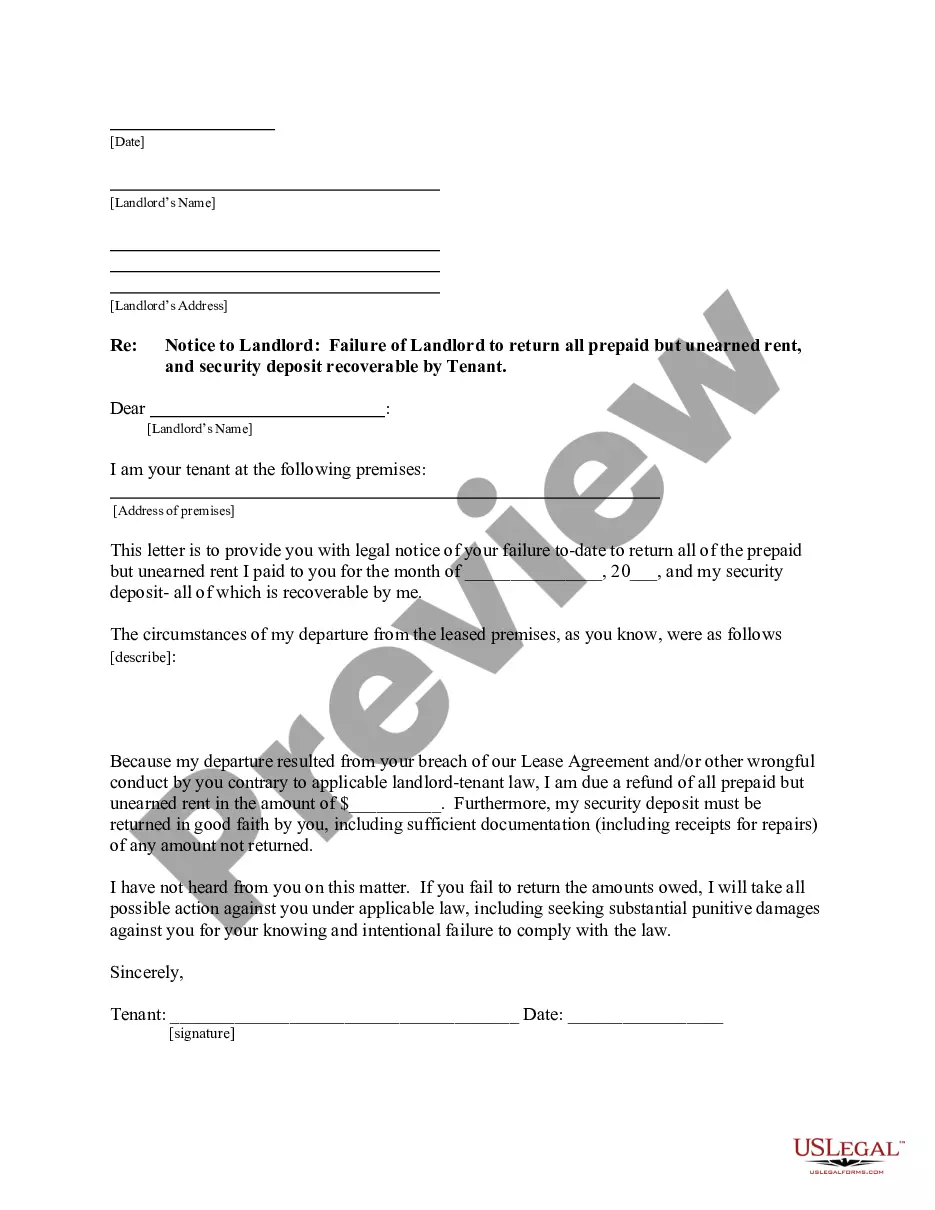
How to fill out Louisiana Letter From Tenant To Landlord For Failure Of Landlord To Return All Prepaid And Unearned Rent And Security Recoverable By Tenant?
- Log in to your US Legal Forms account if you're a returning user, ensuring your subscription is active for seamless access.
- First-time users should browse the Preview mode and form descriptions to select the correct template that complies with local jurisdiction requirements.
- If the initial form doesn’t suit your needs, utilize the Search tab to explore additional templates tailored to your situation.
- Once you find the right document, click on the Buy Now button and select your preferred subscription plan to proceed.
- Complete the payment process by entering your credit card information or using your PayPal account for a hassle-free transaction.
- Download your form and save it for future use. You can also access it later through the My Forms section in your profile.
With US Legal Forms, you can quickly and accurately handle your legal document needs, empowering individuals and attorneys alike.
Don’t wait—access your forms today and take the stress out of managing your legal obligations!
Form popularity
FAQ
Responding to a disrespectful tenant requires a calm and professional approach. Start by documenting any incidents of disrespectful behavior. Engage in a direct conversation, addressing their concerns and reminding them of the terms of your lease agreement. If tenant landlord failure with no consent becomes an issue, seeking legal counsel can provide the necessary support in resolving disputes.
To deal with non-compliance, outline the specific lease provisions the tenant is violating. Document all relevant incidents and communication attempts. If the tenant does not remedy the situation, you can initiate eviction proceedings or seek alternative resolutions. Utilizing resources like US Legal Forms can streamline the process of addressing tenant landlord failure with no consent.
In Michigan, it is illegal for landlords to retaliate against tenants for exercising their rights, such as reporting health and safety violations. Additionally, landlords cannot lock out tenants without proper legal procedure or make unwanted entries without consent. Understanding these illegal actions helps in addressing tenant landlord failure with no consent effectively. You can consult US Legal Forms for state's specific regulations.
Dealing with a non-responsive landlord can be frustrating. Begin by compiling all previous correspondence as evidence of your attempts to communicate. If they continue to ignore you, consider sending a formal demand for response or utilizing mediation services to facilitate a dialogue. If problems persist, you may explore your options regarding tenant landlord failure with no consent through legal advice.
Handling noncompliance from a tenant involves understanding your rights and responsibilities as a landlord. Begin by reviewing your lease agreement for specific terms regarding compliance. Address the issue with the tenant calmly, providing them with a written notice that outlines the noncompliance. If necessary, seek legal assistance to proceed with eviction or other actions related to tenant landlord failure with no consent.
If a tenant is ignoring you, maintaining clear and open communication is crucial. Attempt to reach out via different methods, such as phone calls or written notices. If they continue to be unresponsive, you may need to document these attempts and consider legal options to address tenant landlord failure with no consent. Utilizing US Legal Forms can assist you in drafting official notices.
To file a legal action against your landlord for tenant landlord failure with no consent, start by documenting all relevant interactions and incidents. Gather evidence, such as emails, letters, and photographs. Next, consult with a local legal aid organization or attorney who specializes in landlord-tenant issues. They can guide you through the process of filing a complaint in the appropriate court.
In North Carolina, if your landlord won't fix necessary issues in your rental unit, you can take several steps. First, document the problem and communicate formally with your landlord about the repairs. If there's no response, you may escalate the matter by reporting it to local housing authorities or seeking legal advice. Addressing repair issues promptly can prevent tenant landlord failure with no consent.
Another name for tenancy at sufferance is 'holdover tenancy.' This term reflects the lack of consent from the landlord, emphasizing the tenant's unauthorized presence. Such situations often result in tenant landlord failure with no consent, which can have legal implications. If you're experiencing this issue, consulting platforms like US Legal Forms can provide the necessary resources to navigate your rights.
A tenancy at sufferance occurs when a tenant occupies a property without the landlord's explicit consent after the lease has ended. This situation exemplifies tenant landlord failure with no consent and can create complications in the landlord-tenant relationship. Being clear on your tenancy type and understanding legal rights can help simplify resolution processes.