Diy Home Inspection Checklist
Description
Get your form ready online
Our built-in tools help you complete, sign, share, and store your documents in one place.
Make edits, fill in missing information, and update formatting in US Legal Forms—just like you would in MS Word.
Download a copy, print it, send it by email, or mail it via USPS—whatever works best for your next step.
Sign and collect signatures with our SignNow integration. Send to multiple recipients, set reminders, and more. Go Premium to unlock E-Sign.
If this form requires notarization, complete it online through a secure video call—no need to meet a notary in person or wait for an appointment.
We protect your documents and personal data by following strict security and privacy standards.

Make edits, fill in missing information, and update formatting in US Legal Forms—just like you would in MS Word.

Download a copy, print it, send it by email, or mail it via USPS—whatever works best for your next step.

Sign and collect signatures with our SignNow integration. Send to multiple recipients, set reminders, and more. Go Premium to unlock E-Sign.

If this form requires notarization, complete it online through a secure video call—no need to meet a notary in person or wait for an appointment.

We protect your documents and personal data by following strict security and privacy standards.
Looking for another form?

How to fill out Louisiana Buyer's Home Inspection Checklist?
Locating a reliable source for obtaining the most up-to-date and suitable legal templates is a significant part of dealing with bureaucracy.
Identifying the correct legal documentation necessitates precision and meticulousness, making it essential to procure examples of Diy Home Inspection Checklist exclusively from trustworthy providers, like US Legal Forms. An incorrect template can consume your time and hinder your situation.
Eliminate the hassles associated with your legal documentation. Explore the extensive US Legal Forms catalog to discover legal templates, assess their suitability for your situation, and download them instantly.
- Utilize the catalog navigation or search bar to find your sample.
- Access the form’s details to verify its compliance with the requirements of your state and locality.
- View the form preview, if available, to confirm that it is indeed the document you seek.
- Return to the search to locate the suitable document if the Diy Home Inspection Checklist does not meet your needs.
- Once you are certain about the form’s relevance, download it.
- If you are a registered user, click Log in to verify your identity and access your selected forms in My documents.
- If you do not yet have an account, click Buy now to acquire the form.
- Choose the pricing option that aligns with your preferences.
- Continue through the registration process to complete your purchase.
- Finalize your transaction by selecting a payment method (credit card or PayPal).
- Choose the document format for downloading the Diy Home Inspection Checklist.
- Once the form is on your device, you can edit it with the editor or print it out to complete manually.
Form popularity
FAQ
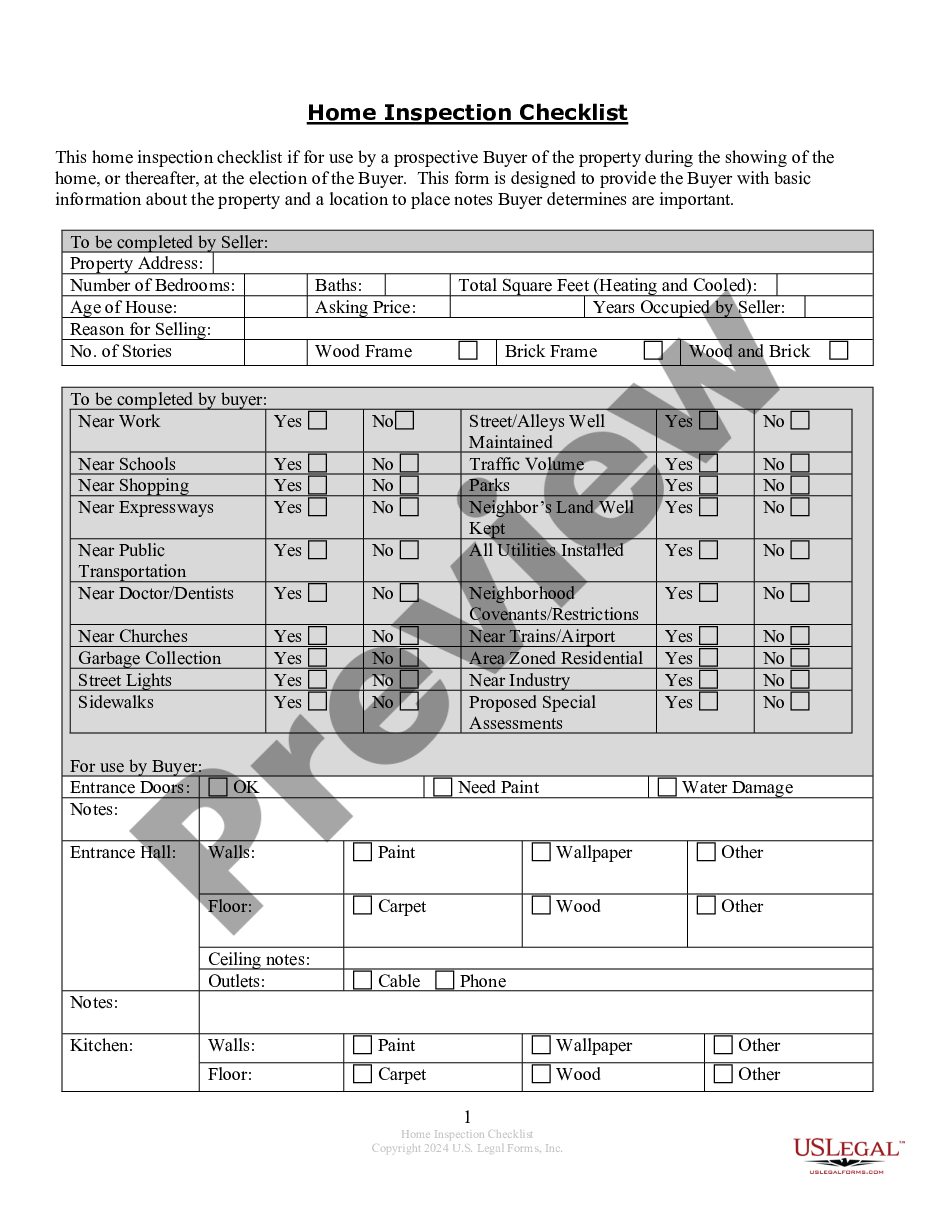
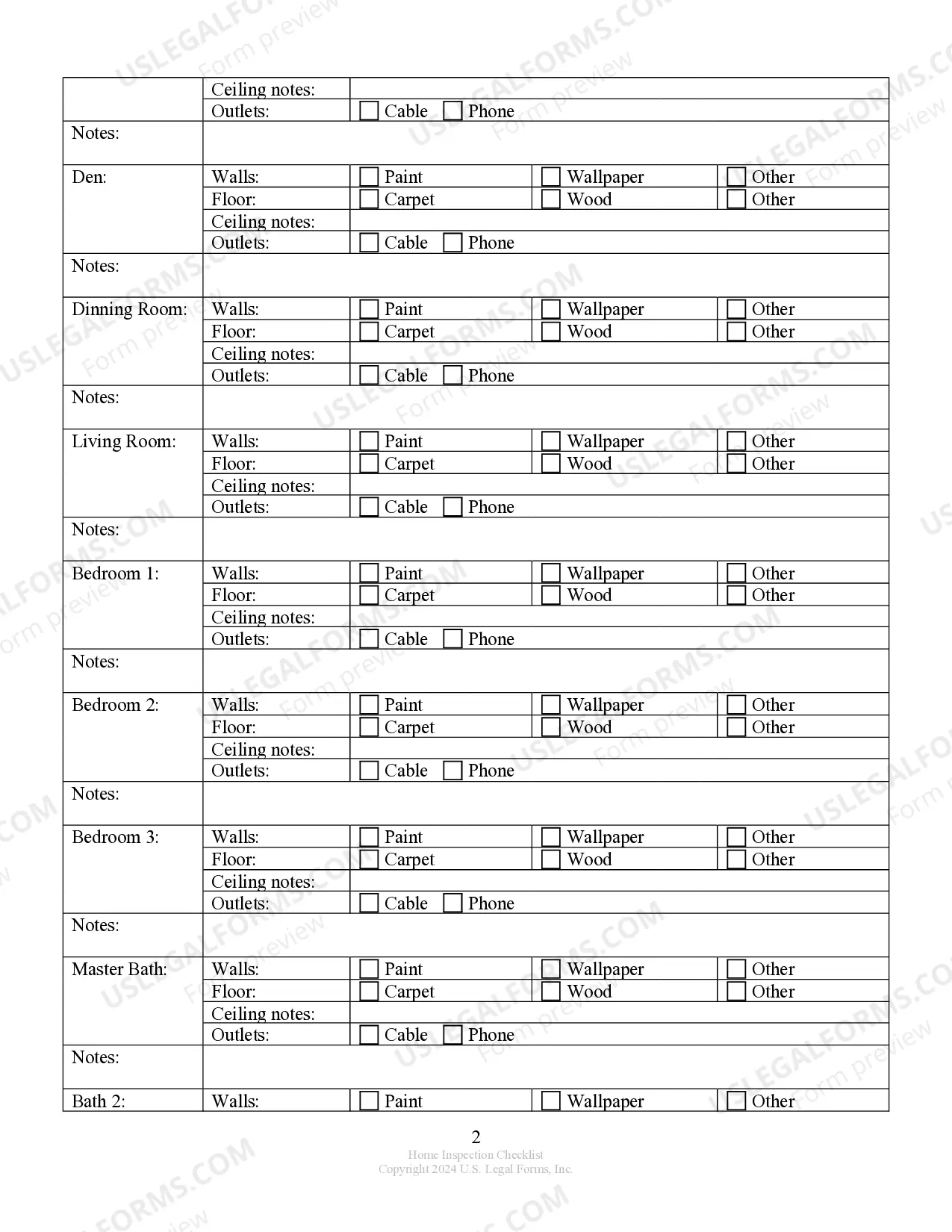
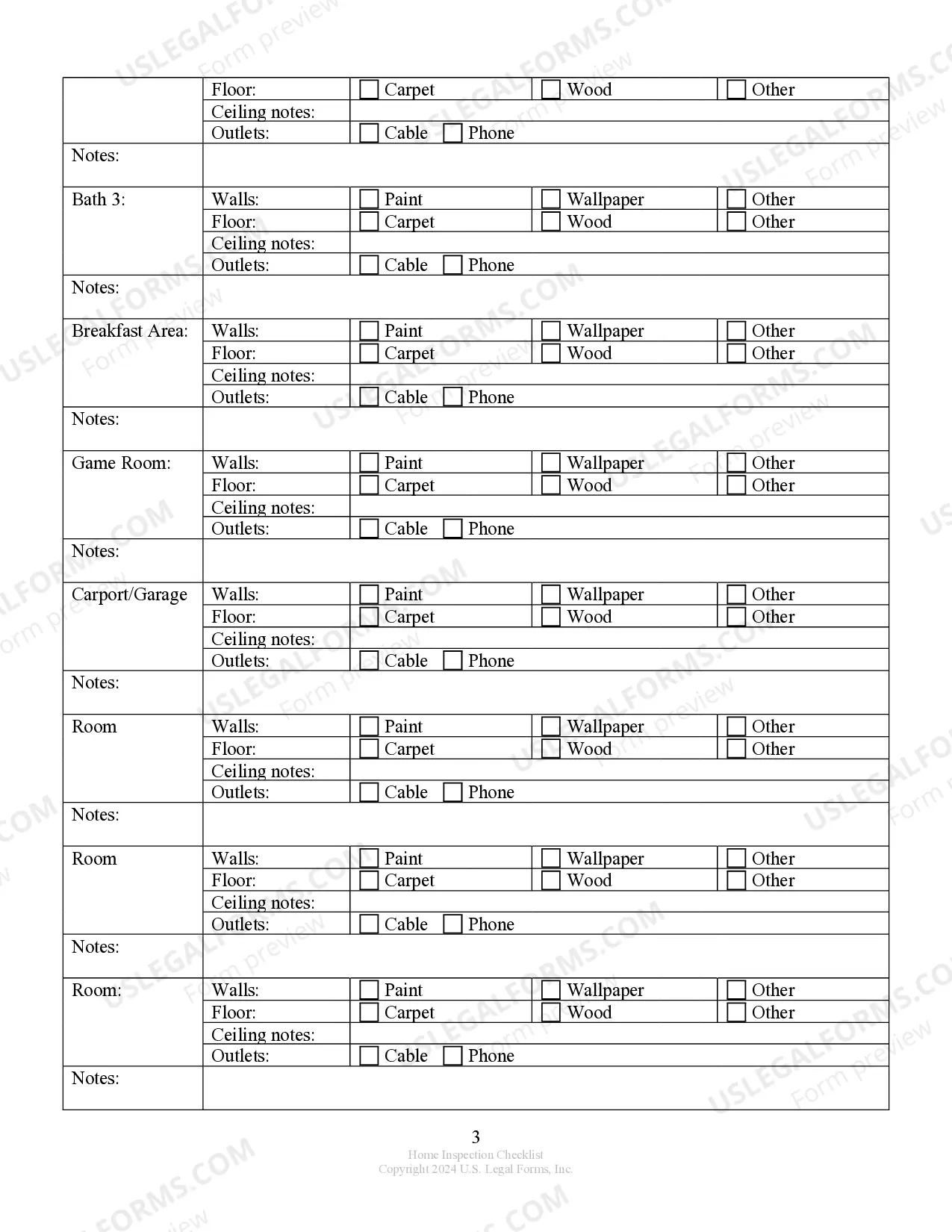
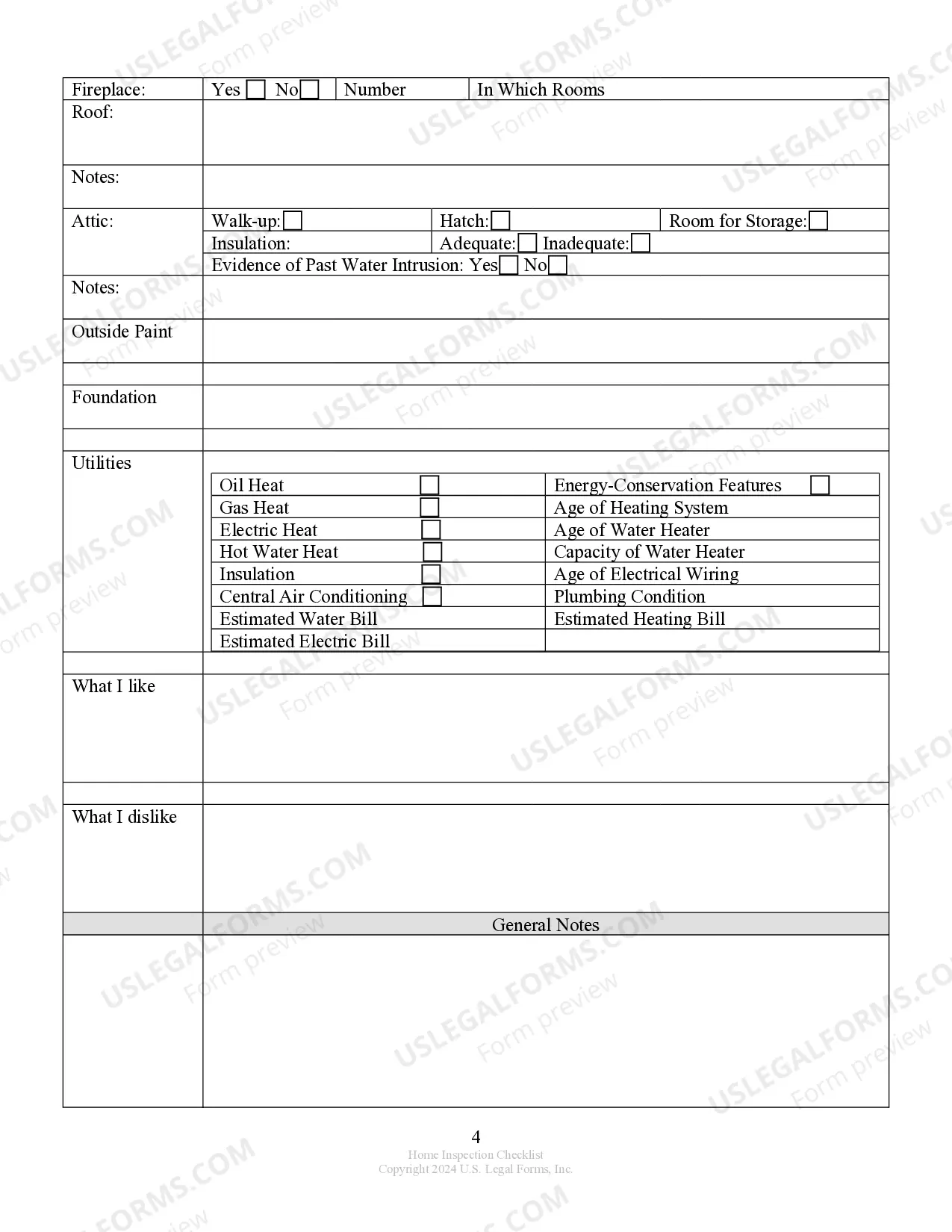
To begin your home inspection, create a DIY home inspection checklist that covers all critical areas. Start with the exterior, checking the roof, siding, and foundation. Then, move inside to inspect plumbing fixtures, appliances, and safety systems, such as smoke detectors. You can use resources from USLegalForms to access guides and templates that help you conduct a thorough and effective inspection.
Yes, you can conduct a home inspection yourself using a DIY home inspection checklist. This checklist helps you systematically evaluate the condition of various elements in your home, such as plumbing, electrical systems, and structural components. By performing a self-inspection, you can identify potential issues before they become major problems. However, remember that professional inspectors have training and experience that can uncover issues you might miss.
Yes, you can conduct your own home inspection using a Diy home inspection checklist. This checklist will guide you through assessing key areas of the property, such as the roof, foundation, plumbing, and electrical systems. While a professional inspection may provide more detailed insights, your DIY approach can help identify obvious issues and give you leverage in negotiations. Just remember to take your time and be thorough as you evaluate the home.
Generally an inspection includes a home's heating system; interior plumbing and electrical systems; the roof, attic and visible insulation; walls, ceilings, floors, windows and doors; the foundation, basement and structural components.
listing inspection focuses on proper functionality of all major systems and components of the house: heating and cooling; electrical; plumbing; roof and structure; siding; and doors and windows. It's a full inspection for the seller to better understand the condition of their home prior to the buyer's inspection.
How to Prepare for a Home Inspection Provide open access to areas that need to be checked. ... Clear the perimeter. ... Check the roof. ... Keep a clean house. ... Replace any bulbs that are out. ... Make sure your toilets are functioning properly. ... Put in a fresh furnace return filter. ... Turn all pilot lights on.
Our standard home inspection report covers all aspects of the homes electrical, heating and air systems, plumbing, roof and attic and visible defects within the home. We look at everything, including the windows, walls, doors, foundation, and all structural components of the home.
The buyer or the buyer's agent ?I always encourage the buyer at the beginning of the inspection to share anything that they have questions about,? Pretty says. Of course, if the buyer isn't able to attend the inspection for one reason or another, their agent can go for them.