Louisiana Buyer's Home Inspection Checklist
What this document covers
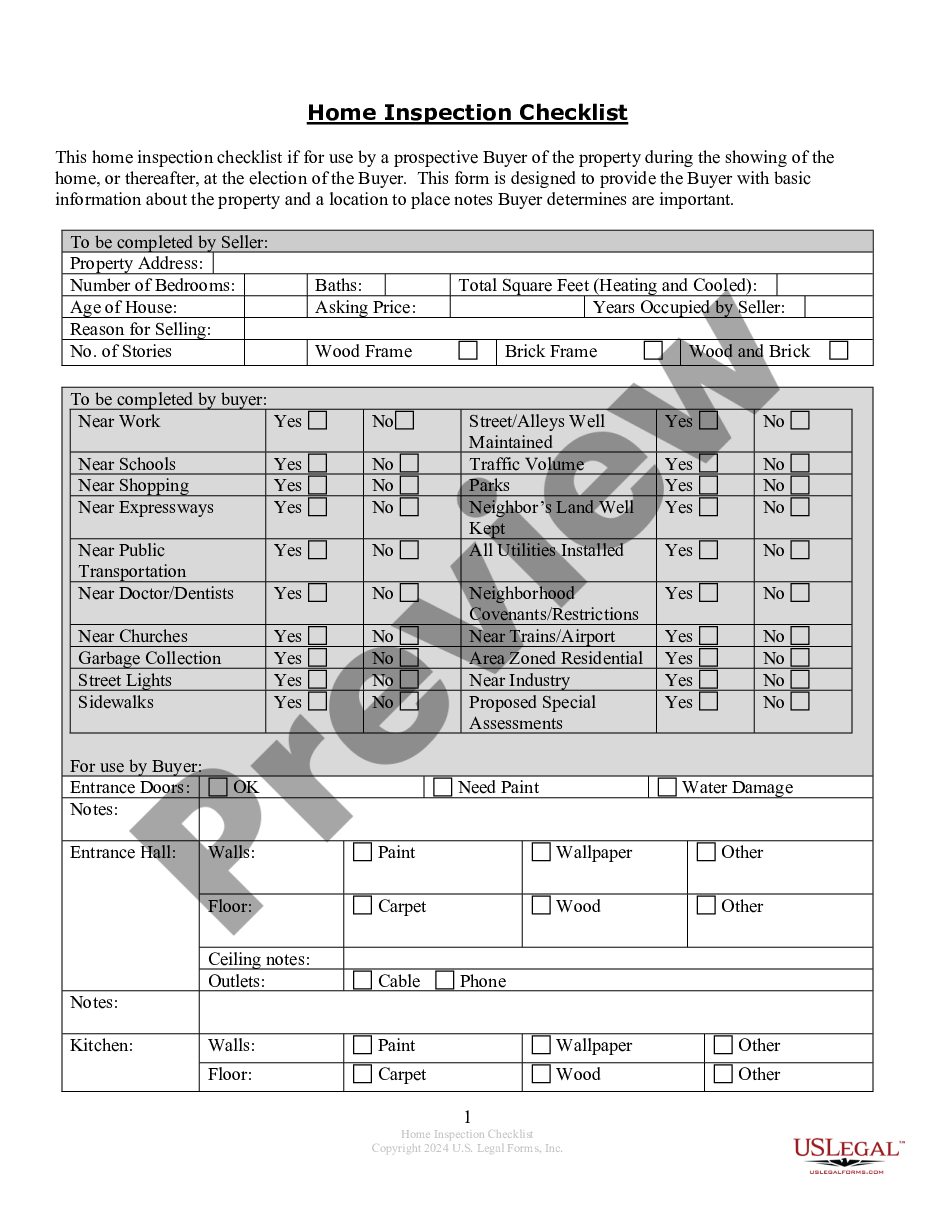
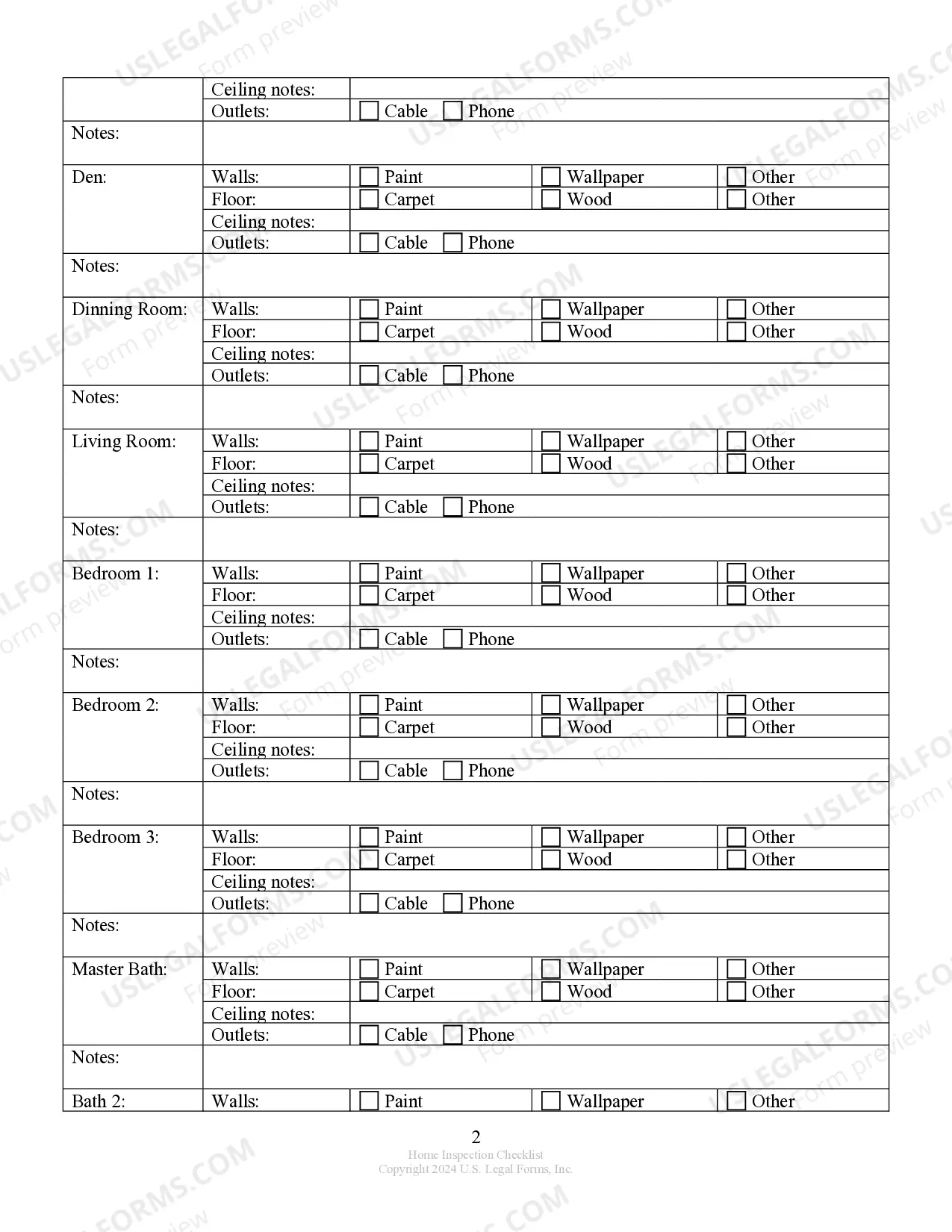
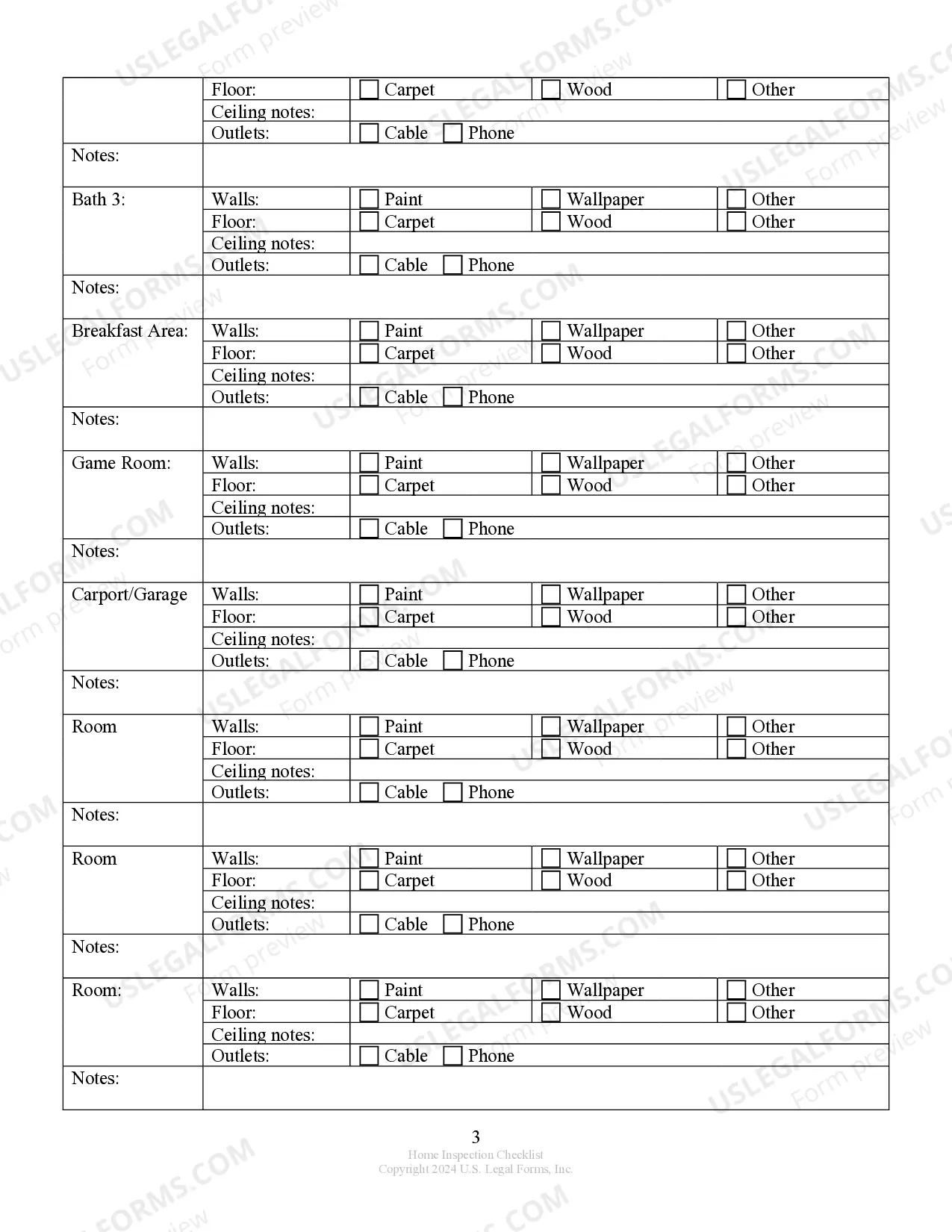
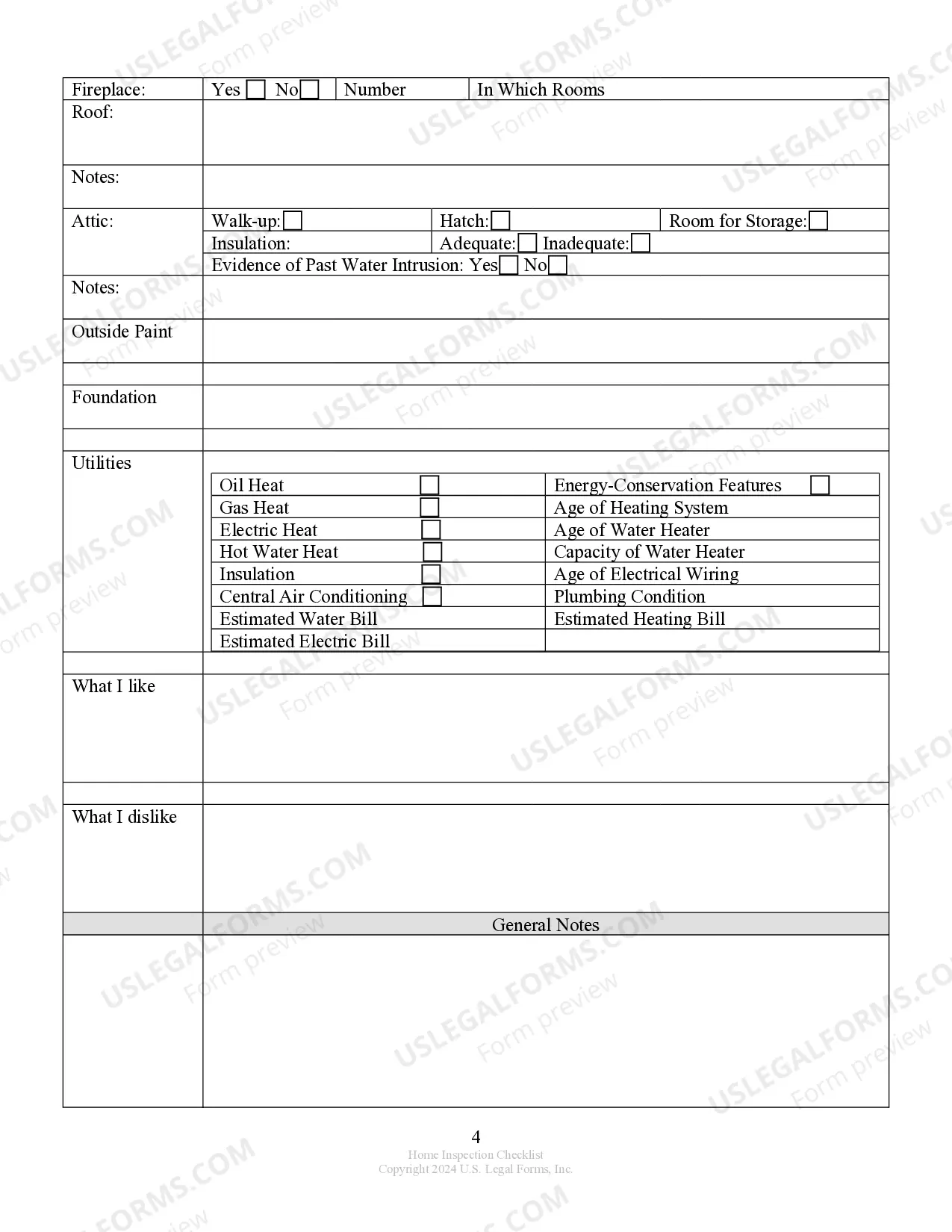
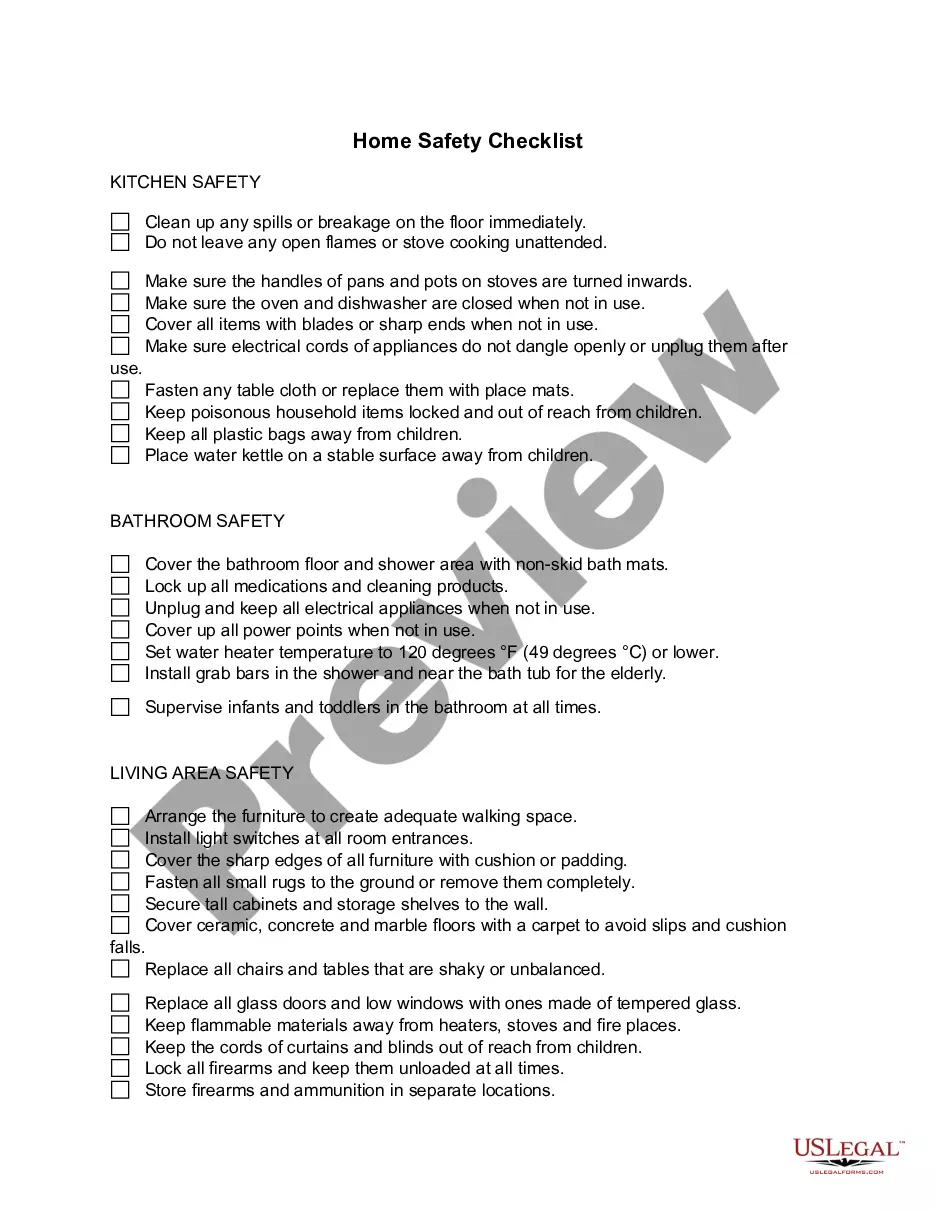
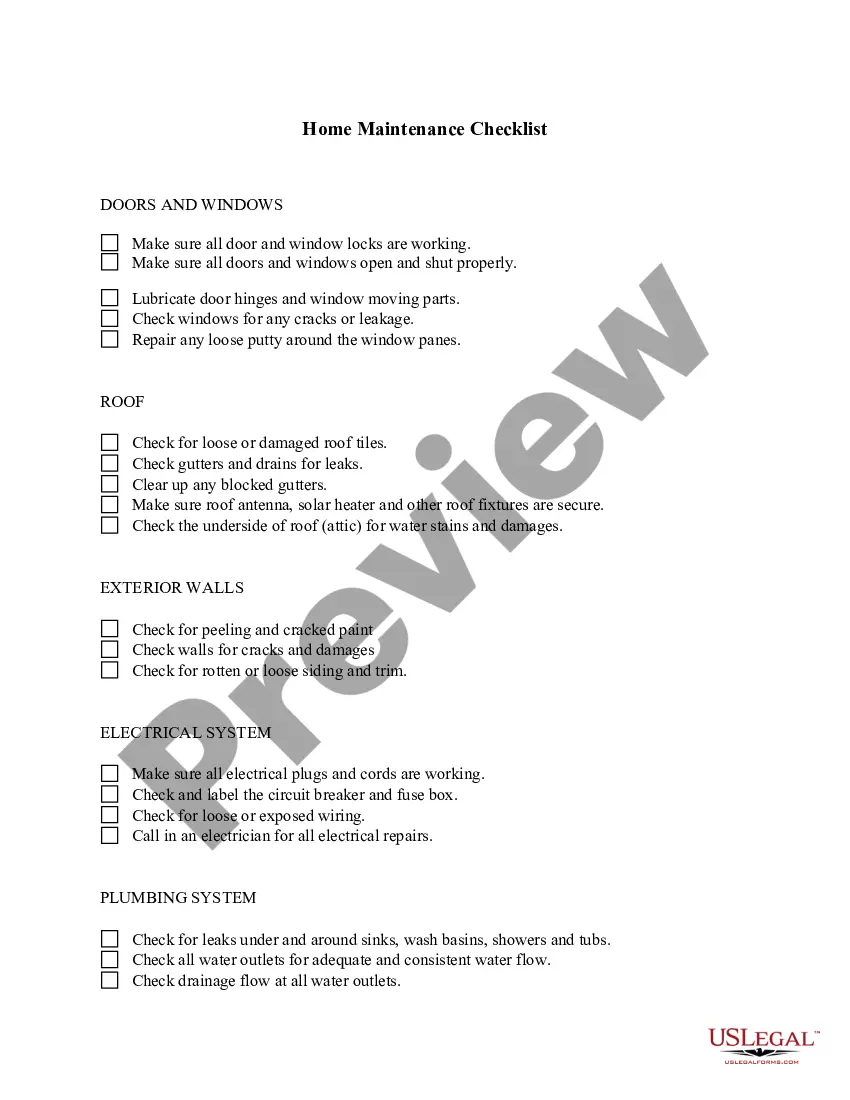
The Buyer's Home Inspection Checklist is a critical tool for anyone considering purchasing a home in Louisiana. This checklist is designed for buyers to evaluate key aspects of a property during their initial viewing or subsequent visits. Unlike other forms, this checklist provides a thorough list of items to inspect or inquire about, ensuring that buyers make informed decisions before making an offer on a home.
What’s included in this form
- Checklist of neighborhood features, such as traffic volume and proximity to amenities.
- Fields for notes on the property's condition, utility access, and maintenance levels.
- Options to assess local zoning regulations and special assessments.
- Indications for the propertyâs aesthetic and functional aspects, such as street lighting and sidewalks.
When to use this form
This form is essential for homebuyers in Louisiana during property viewings. It helps buyers document their observations and gather information about the home's condition, neighborhood conditions, and utilities available. Use this checklist when visiting properties to ensure a comprehensive review before submitting an offer.
Intended users of this form
- Homebuyers in Louisiana looking to evaluate potential properties.
- Real estate agents assisting clients during home showings.
- Investors assessing properties for purchase or renovation.
- Individuals unfamiliar with homebuying processes who need guidance.
Instructions for completing this form
- Begin by entering the property address and specifics regarding the showing.
- Review each item on the checklist, marking "Yes" or "No" based on your observations.
- Take notes in the designated areas to document your thoughts and concerns.
- Consult with a real estate agent for any areas needing further clarification or questions to ask the seller.
- Review the completed checklist to prioritize issues before making a purchase decision.
Does this document require notarization?
This form usually doesn’t need to be notarized. However, local laws or specific transactions may require it. Our online notarization service, powered by Notarize, lets you complete it remotely through a secure video session, available 24/7.
Get your form ready online
Our built-in tools help you complete, sign, share, and store your documents in one place.
Make edits, fill in missing information, and update formatting in US Legal Forms—just like you would in MS Word.
Download a copy, print it, send it by email, or mail it via USPS—whatever works best for your next step.
Sign and collect signatures with our SignNow integration. Send to multiple recipients, set reminders, and more. Go Premium to unlock E-Sign.
If this form requires notarization, complete it online through a secure video call—no need to meet a notary in person or wait for an appointment.
We protect your documents and personal data by following strict security and privacy standards.

Make edits, fill in missing information, and update formatting in US Legal Forms—just like you would in MS Word.

Download a copy, print it, send it by email, or mail it via USPS—whatever works best for your next step.

Sign and collect signatures with our SignNow integration. Send to multiple recipients, set reminders, and more. Go Premium to unlock E-Sign.

If this form requires notarization, complete it online through a secure video call—no need to meet a notary in person or wait for an appointment.

We protect your documents and personal data by following strict security and privacy standards.
Common mistakes
- Not checking all items on the checklist, leading to overlooked issues.
- Failing to ask the seller about any maintenance history or repairs.
- Not documenting notes immediately after the viewing.
Why complete this form online
- Convenient access to a downloadable checklist that you can complete anytime.
- Edit and customize the form based on your specific needs for each property.
- Reliable and legally vetted information, ensuring compliance with Louisiana laws.
Legal use & context
- The form serves as a guideline, promoting thorough property inspections.
- It is not legally binding but aids in documenting the buyer's observations.
- Helpful for establishing a foundation for negotiations based on property condition.
What to keep in mind
- The Buyer's Home Inspection Checklist is crucial for informed homebuying decisions in Louisiana.
- Document your observations thoroughly during property visits.
- Use the checklist to communicate effectively with sellers and real estate agents.
Looking for another form?
Form popularity
FAQ
The Louisiana Buyer's Home Inspection Checklist is a buyer-focused tool for evaluating a property during viewings in Louisiana. It guides buyers to document neighborhood features, the property's condition, utility access, maintenance levels, and local zoning or special assessments, helping them gather information and make informed decisions before submitting an offer.
Major red flags to note include signs of structural issues, moisture intrusion, safety hazards such as exposed wiring, and significant maintenance concerns that could affect value. By using this checklist to record observations about the property's condition and surrounding neighborhood, buyers can identify deal-breakers or requests for repairs before making an offer.
The Louisiana Buyer's Home Inspection Checklist is not a stand-alone seven-step process. Instead, it serves as a field tool to guide buyers during property viewings. Use it to document observations about the home's condition, utility access, and local zoning while you evaluate a property and decide whether to proceed with an offer.
A major red flag is structural or moisture-related problems that signal costly repairs, such as cracks, bowing walls, or signs of water intrusion. The checklist helps buyers record these observations to guide negotiations, repair requests, or whether to walk away from the deal.
Common red flags include structural cracks, significant moisture or water damage, roof leaks or age issues, electrical hazards, plumbing problems, heating or cooling system failures, mold, drainage issues, pest infestations, and safety hazards. This checklist helps buyers document such concerns during property visits for informed decisions.
This form is tailored for Louisiana buyers and explicit about neighborhood features and local zoning regulations and special assessments, in addition to documenting the property's condition and utility access. A general checklist may skip these Louisiana-specific considerations, making this one more useful for evaluating properties in this state.