Trust Account With Fidelity
Description

Get your form ready online
Our built-in tools help you complete, sign, share, and store your documents in one place.
Make edits, fill in missing information, and update formatting in US Legal Forms—just like you would in MS Word.
Download a copy, print it, send it by email, or mail it via USPS—whatever works best for your next step.
Sign and collect signatures with our SignNow integration. Send to multiple recipients, set reminders, and more. Go Premium to unlock E-Sign.
If this form requires notarization, complete it online through a secure video call—no need to meet a notary in person or wait for an appointment.
We protect your documents and personal data by following strict security and privacy standards.

Make edits, fill in missing information, and update formatting in US Legal Forms—just like you would in MS Word.

Download a copy, print it, send it by email, or mail it via USPS—whatever works best for your next step.

Sign and collect signatures with our SignNow integration. Send to multiple recipients, set reminders, and more. Go Premium to unlock E-Sign.

If this form requires notarization, complete it online through a secure video call—no need to meet a notary in person or wait for an appointment.

We protect your documents and personal data by following strict security and privacy standards.
Looking for another form?






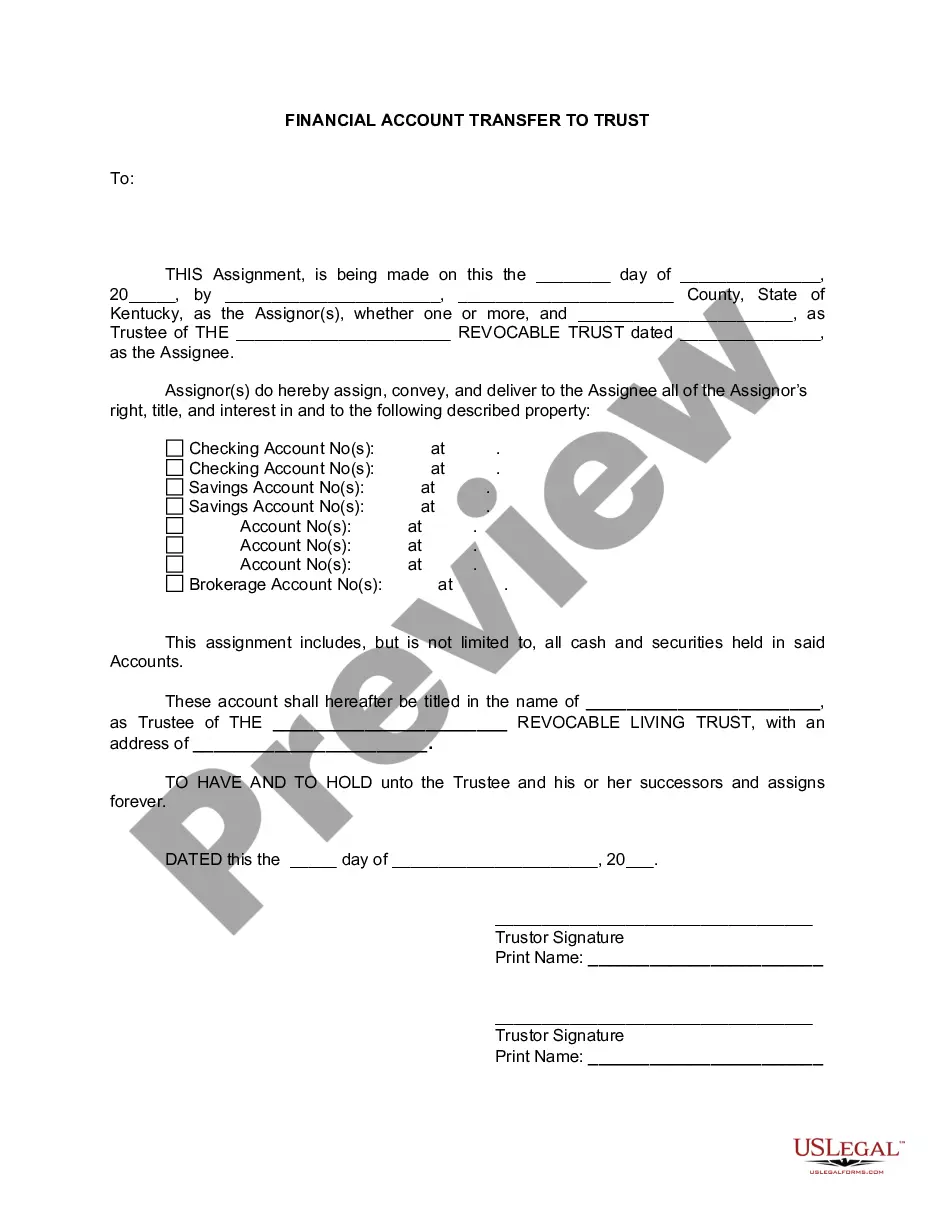
How to fill out Kentucky Financial Account Transfer To Living Trust?
- If you're already a member, log in to access your account and download the necessary form template by clicking the Download button. Ensure your subscription is active; if not, renew it according to your payment plan.
- For first-time users, start by exploring the Preview mode to understand the form description. Confirm you've selected the right document based on your jurisdiction requirements.
- If the initial form doesn't meet your needs, utilize the Search function to find an alternative template that suits your situation.
- Purchase the desired document by clicking the Buy Now button and selecting your preferred subscription plan. You'll need to register an account for library access.
- Complete the payment process by providing your credit card details or opting to use your PayPal account.
- Once purchased, download the document to your device. You can later access it anytime in the My Forms section of your profile.
By following these steps, you can quickly and easily obtain the legal documents you need for managing your trust account effectively.
Explore US Legal Forms today to streamline your legal document needs and ensure accurate, legally sound forms with expert support.
Form popularity
FAQ
Setting up a trust account with Fidelity involves several steps. First, you need to gather personal information of all parties involved. Then, complete the necessary paperwork provided by Fidelity, ensuring you include details about the trustees and beneficiaries. To facilitate this process and ensure proper compliance, consider using USLegalForms for guidance on setting up your trust account smoothly.
To fill out a trust fund, start by gathering the necessary documentation including information about the assets you want to include. When you're ready, define the roles of trustees and beneficiaries in your trust account with Fidelity. It's important to be precise and detailed to avoid any ambiguities. Utilize tools like USLegalForms for accurate templates that simplify this process.
One of the biggest mistakes parents make when setting up a trust fund is failing to clearly define their goals and intentions. A well-structured trust account with Fidelity can offer clarity to beneficiaries about their future. Make sure you outline specific provisions, as this can prevent misunderstandings later. Consider using trusted resources like USLegalForms to guide your planning process.
The downside of having a trust often involves the complexity and costs associated with managing it. A trust account with Fidelity can provide valuable services, but setting it up and administering it regularly requires effort and can come with fees. Furthermore, if not managed properly, a trust can lead to misunderstandings among beneficiaries.
While trust accounts can offer various benefits, there are also disadvantages to consider. Maintaining a trust account with Fidelity requires ongoing management and administrative tasks, which may incur fees. Additionally, the legal obligations tied to a trust account can be complex, which may require assistance from legal or financial professionals.
Yes, Fidelity provides trust account options that allow you to manage and invest the assets in your trust effectively. With a trust account with Fidelity, you can benefit from their robust investment platform and resources. This option is suitable for those looking to maintain control over their assets while ensuring proper management according to trust agreements.
While you may think you can open a trust account at any bank, it's crucial to choose one that understands the specifics of trust accounts with fidelity. Not every bank offers the required services and expertise, which could affect how well the trust operates. Therefore, always check if the bank you are considering provides the necessary trust-related services and complies with legal requirements. Trust-specific institutions often provide more tailored support for managing your assets.
The best place to open a trust account with fidelity is typically at a bank or financial institution that specializes in trusts and estates. Consider local banks, credit unions, or larger national banks that provide dedicated trust services. Each institution may have unique benefits; therefore, researching their terms and conditions can lead you to the best fit for your trust's requirements. Ensuring a good partnership with the bank can help in efficiently managing the trust.
The best type of bank account for a trust is a trust account with fidelity, designed to hold the assets for beneficiaries. This type of account ensures compliance with legal requirements and provides clarity in financial management. It's vital to choose an account that offers transparency, good interest rates, and online access for ease of management. Consult your trust document for specific guidance related to your trust's needs.
When selecting a bank for a trust account with fidelity, consider institutions that specialize in trust services. Look for banks known for their strong customer service and reputation in managing trust funds. Additionally, evaluate their fees, interest rates, and the tools they provide for managing the account. Choosing the right bank can make a significant difference in your trust account management.