Equitable Use Examples
Description

Get your form ready online
Our built-in tools help you complete, sign, share, and store your documents in one place.
Make edits, fill in missing information, and update formatting in US Legal Forms—just like you would in MS Word.
Download a copy, print it, send it by email, or mail it via USPS—whatever works best for your next step.
Sign and collect signatures with our SignNow integration. Send to multiple recipients, set reminders, and more. Go Premium to unlock E-Sign.
If this form requires notarization, complete it online through a secure video call—no need to meet a notary in person or wait for an appointment.
We protect your documents and personal data by following strict security and privacy standards.

Make edits, fill in missing information, and update formatting in US Legal Forms—just like you would in MS Word.

Download a copy, print it, send it by email, or mail it via USPS—whatever works best for your next step.

Sign and collect signatures with our SignNow integration. Send to multiple recipients, set reminders, and more. Go Premium to unlock E-Sign.

If this form requires notarization, complete it online through a secure video call—no need to meet a notary in person or wait for an appointment.

We protect your documents and personal data by following strict security and privacy standards.
Looking for another form?

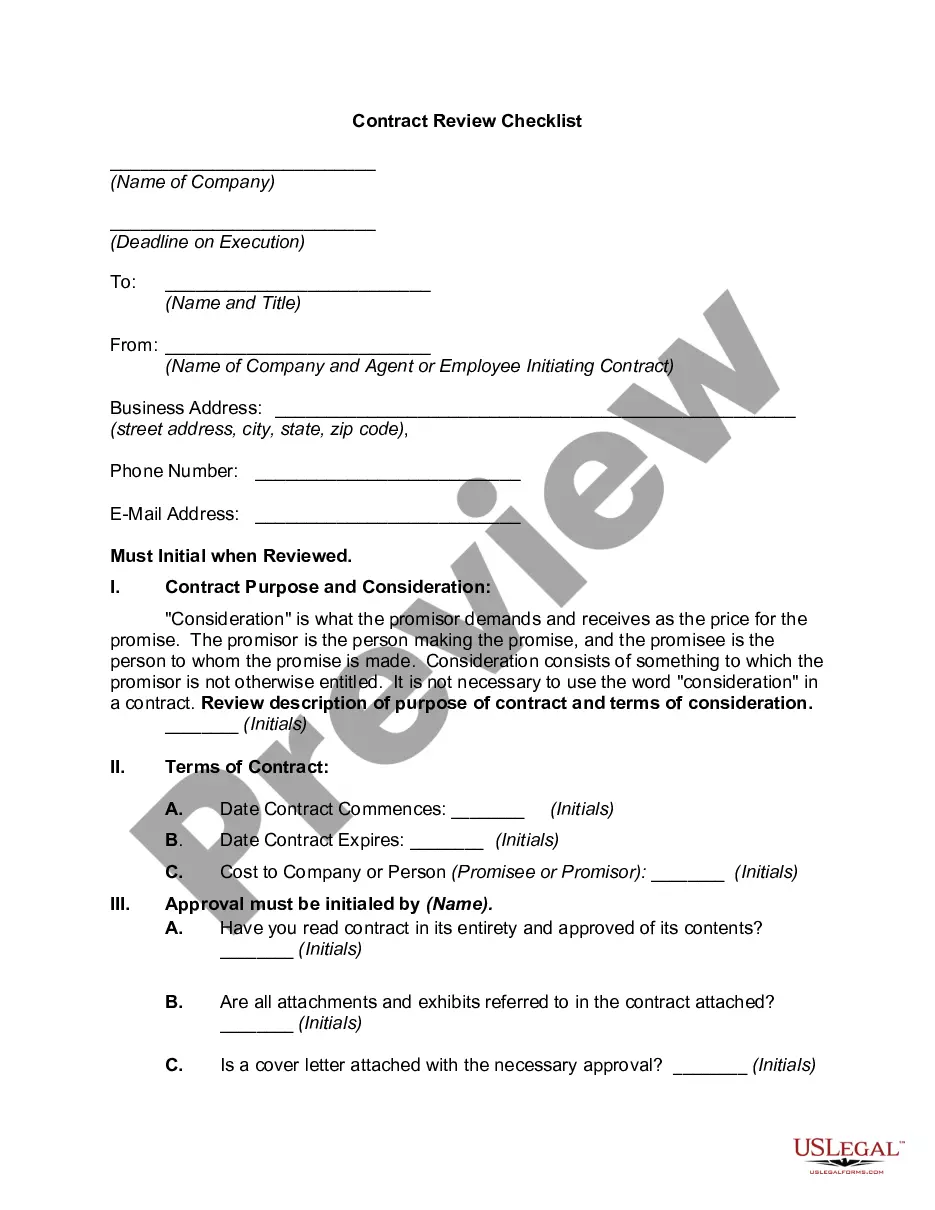


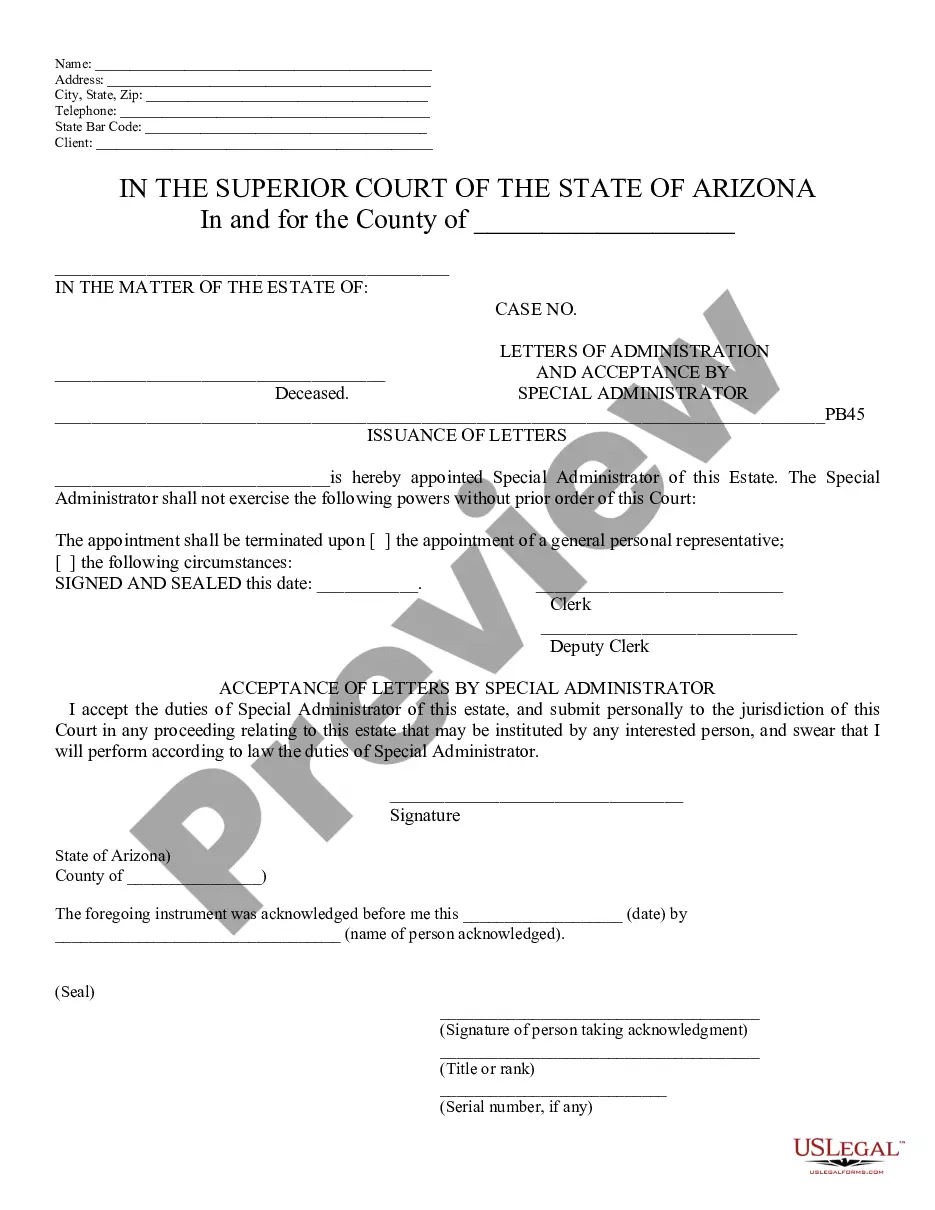




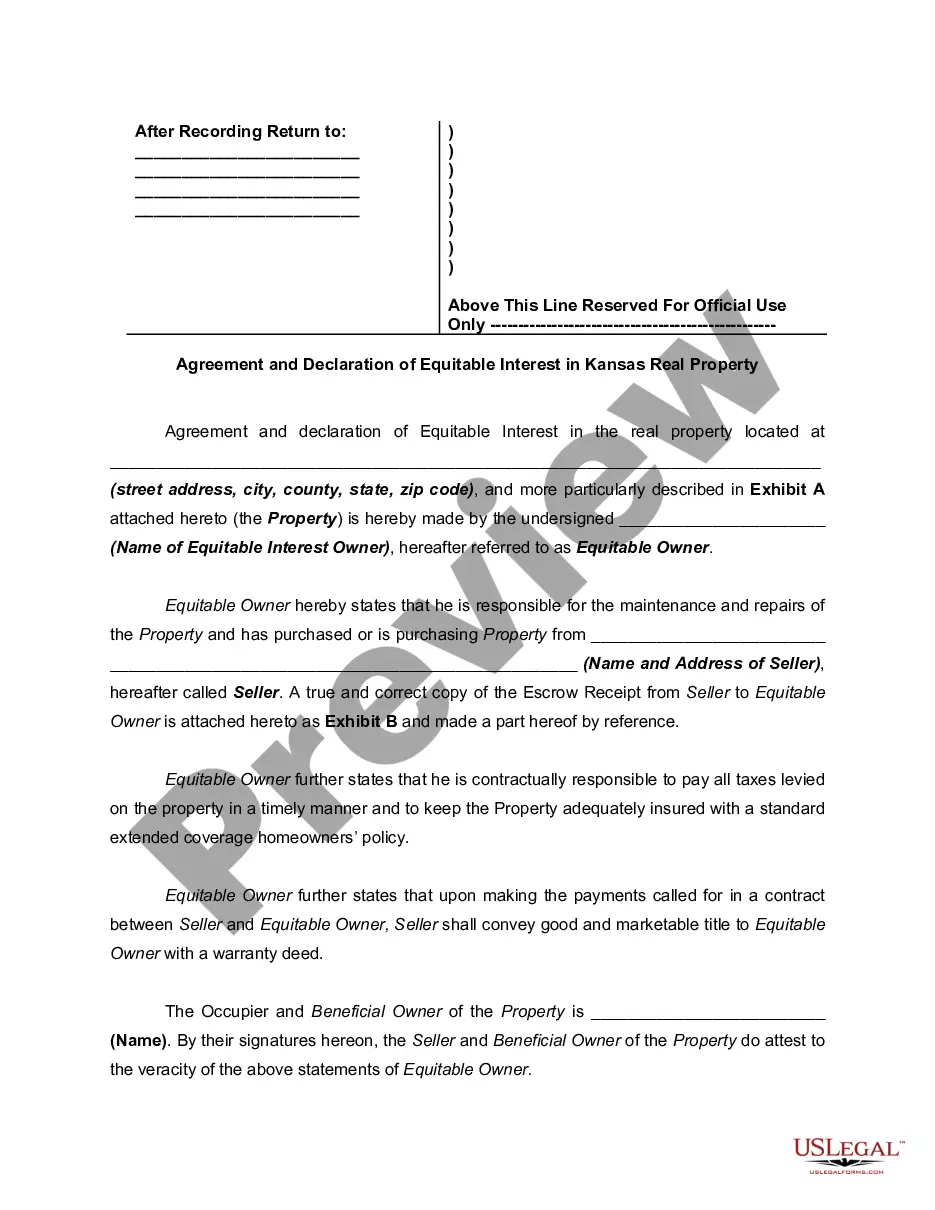
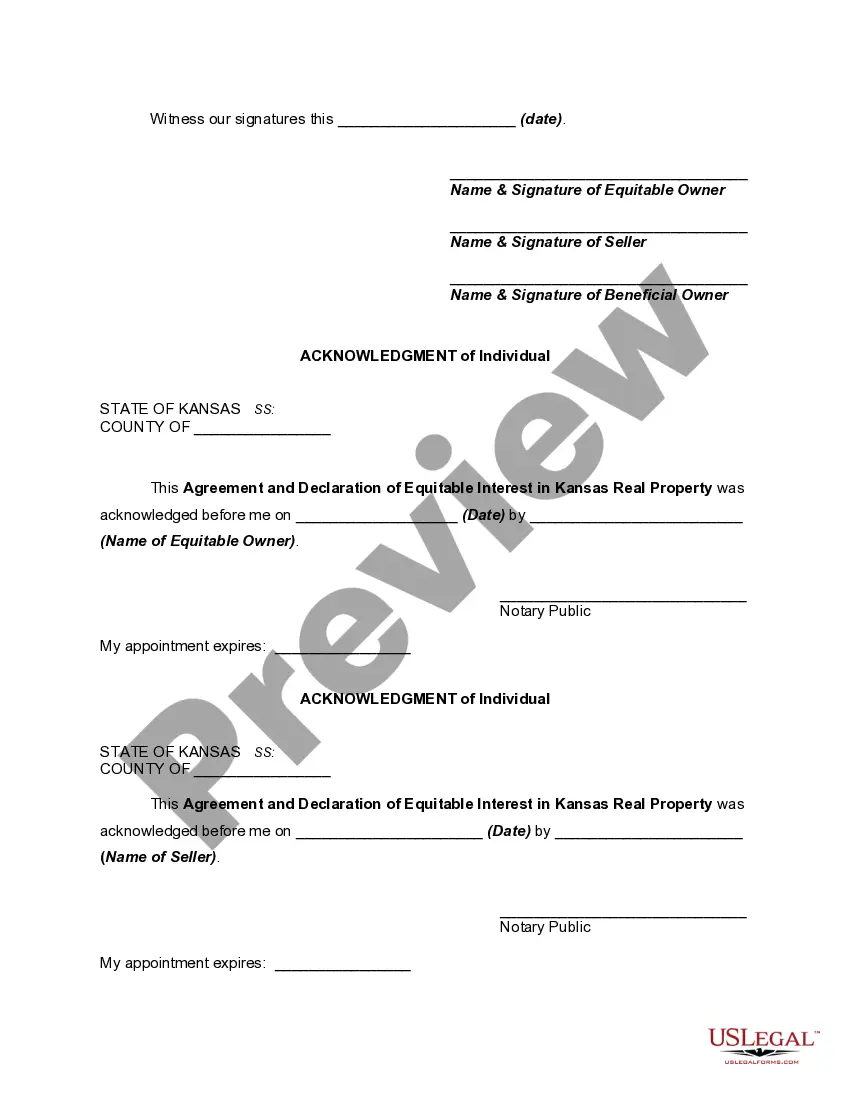
How to fill out Agreement And Declaration Of Equitable Interest In Kansas Real Property?
It’s well-known that you cannot instantly become a legal expert, nor can you quickly learn how to prepare Equitable Use Examples without possessing a specific skill set.
Drafting legal documents is a lengthy endeavor that necessitates particular training and expertise. So why not entrust the development of the Equitable Use Examples to the specialists.
With US Legal Forms, one of the most extensive legal template collections, you can find everything from court documents to templates for internal office communication. We recognize the significance of compliance and adherence to federal and local regulations. That's why, on our platform, all templates are tailored to specific locations and kept current.
- Start by utilizing the search bar at the top of the page to find the document you require.
- If the option is available, preview it and review the accompanying description to ascertain if Equitable Use Examples aligns with your needs.
- If you require a different template, commence your search again.
- Create a free account and choose a subscription plan to purchase the template.
- Click Buy now. Once the payment is processed, you can download the Equitable Use Examples, complete it, print it, and send it or mail it to the appropriate individuals or organizations.
Form popularity
FAQ
An example of equitable use design can be seen in public parks that provide accessible paths and facilities for everyone, regardless of their abilities. These designs promote inclusivity by accommodating different needs and ensuring that all individuals can enjoy the space. Equitable use examples like this demonstrate how thoughtful planning can enhance community engagement and well-being. It highlights the importance of designing spaces that truly serve all members of society.
Equitable use refers to the fair distribution of resources, opportunities, or benefits among individuals or groups. It emphasizes creating balance, ensuring that everyone has access to the same advantages. For instance, equitable use examples often include policies that address disparities in education or healthcare access. This concept is crucial in fostering a sense of community and ensuring that no one is left behind.
An example of equitable thinking or design is developing a mobile application that offers text-to-speech functionality for users with visual impairments. In this case, the design considers different user needs and ensures that all individuals can navigate and benefit from the app equally. Other equitable use examples might include websites that are structured to be easily navigated by assistive technologies. By incorporating such features, we demonstrate a commitment to inclusivity and accessibility, making every user experience better.
Equitable use in universal design refers to creating spaces and products that are accessible to all individuals, regardless of their abilities or disabilities. This principle ensures that everyone can interact with environments and technology without barriers, fostering inclusivity. In practical terms, equitable use examples include ramps for wheelchair access and adjustable workstations that accommodate people of different heights. By prioritizing equity in design, we promote fairness and usability across various demographics.
An example of equitable use can be seen in community land trusts, where land is held collectively for the benefit of the community. This model allows individuals to use land for housing or agriculture while ensuring that it remains affordable. In this context, equitable use examples emphasize the significance of shared resources for fostering community well-being.
Being equitable involves providing equal opportunities for everyone, regardless of their background. For instance, an organization that offers scholarships based on need and merit is demonstrating equitable practices. By considering equitable use examples in educational settings, you can see how fairness fosters inclusivity and growth.
life example of flexibility in use could be the transformation of an old factory into loft apartments. This change not only preserves historical architecture but also meets the housing demand in urban areas. Such equitable use examples highlight how adapting existing structures can benefit both the community and property owners.
The principle of equitable use focuses on fairness in resource management and ownership rights. It ensures that no party takes undue advantage over others and that all stakeholders maintain the same access to resources. By applying equitable use examples, you can better comprehend how this principle plays out in real scenarios.
Flexibility of use typically refers to the ability to adapt how resources are utilized based on changing needs or circumstances. For instance, a residential property can be converted into a commercial space, demonstrating flexibility in its usage. Equitable use examples often highlight such transitions, showcasing how flexibility benefits both owners and the community.
Equitable use refers to the fair distribution and application of resources or rights among individuals and entities. It emphasizes that all parties should have access to the same opportunities, ensuring justice and fairness in the usage of land, property, or other resources. Utilizing equitable use examples can help illustrate how rights are balanced within various contexts, contributing to better understanding and application.