Illinois.gov Last Will And Testament
Description

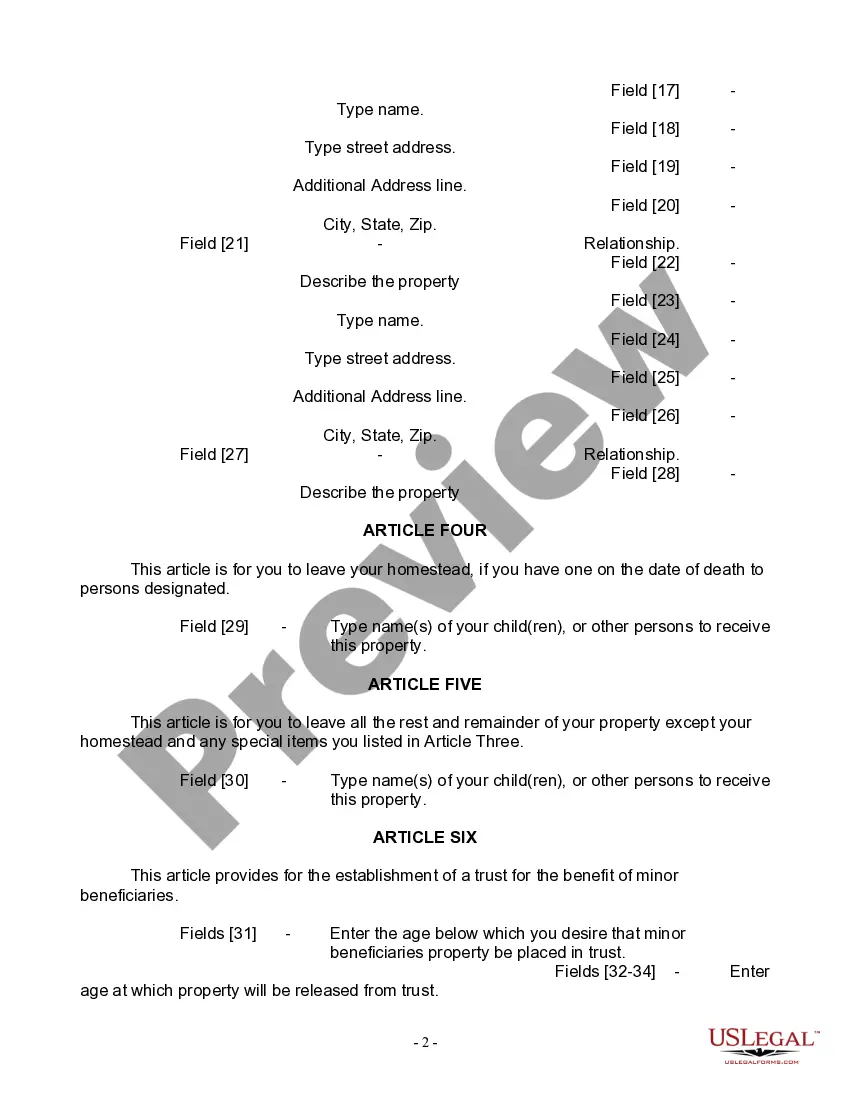
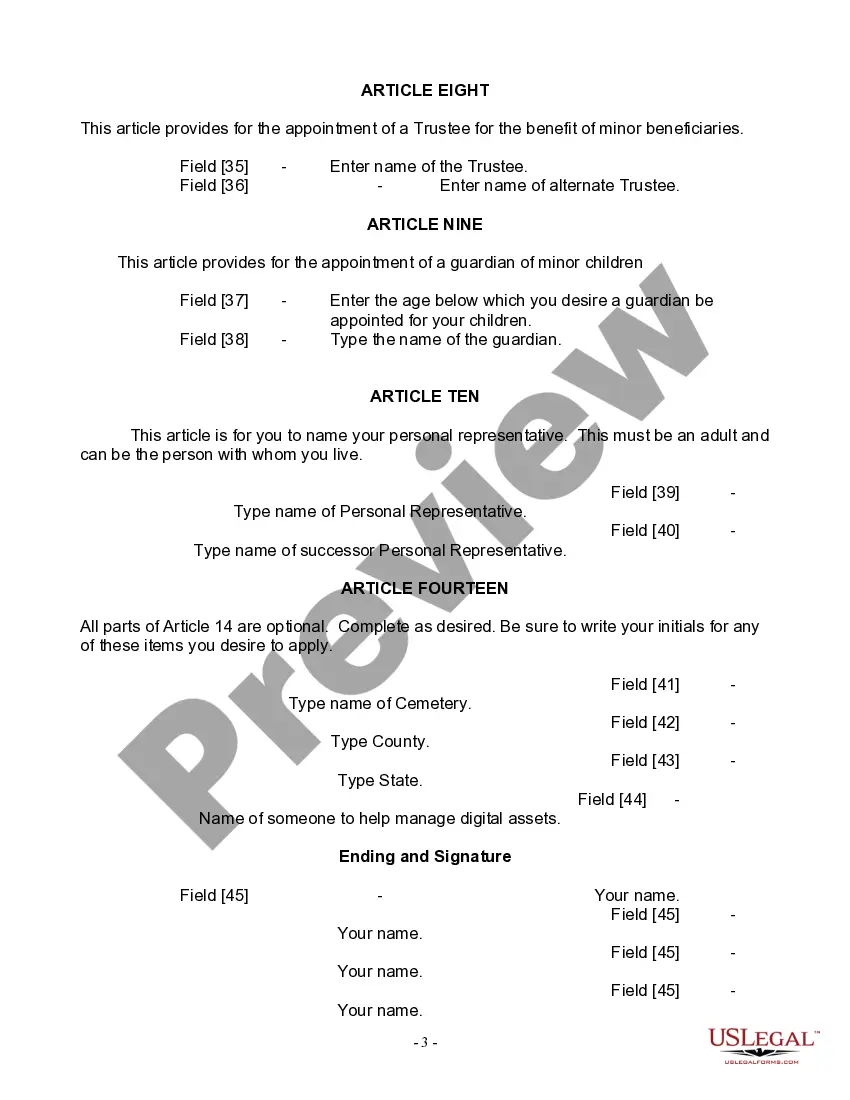

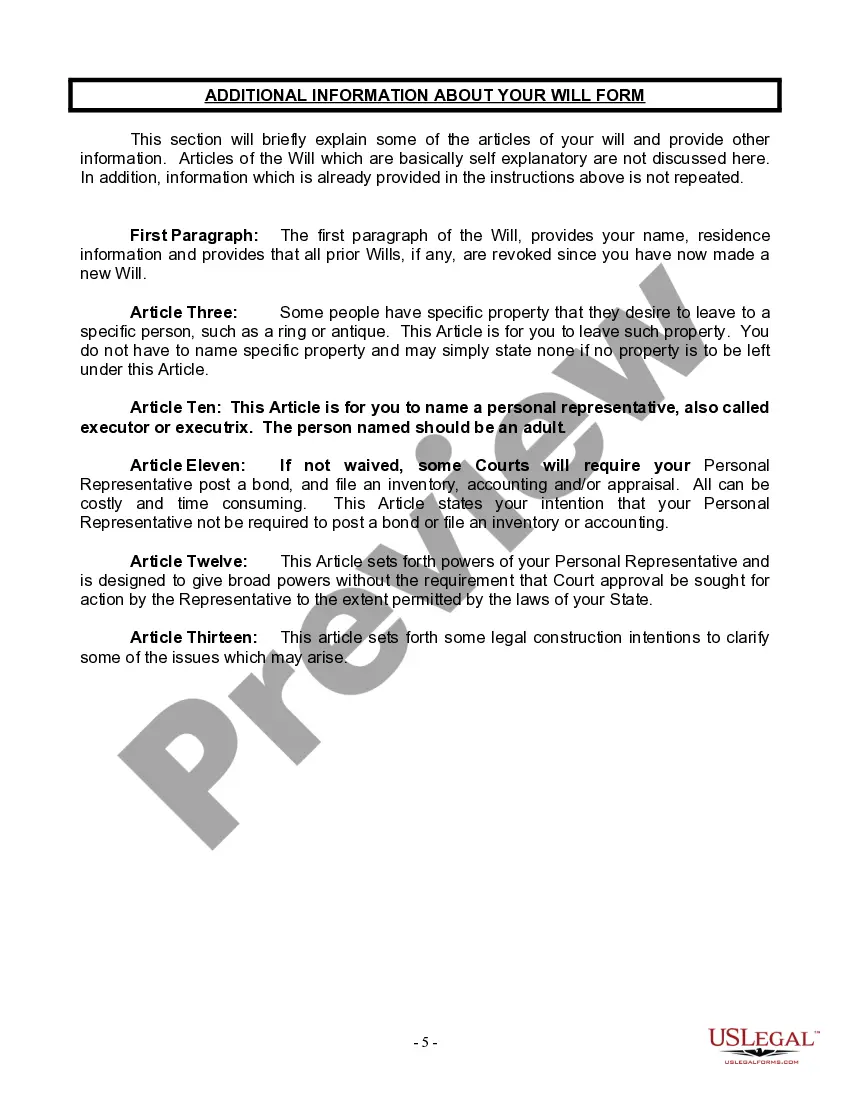
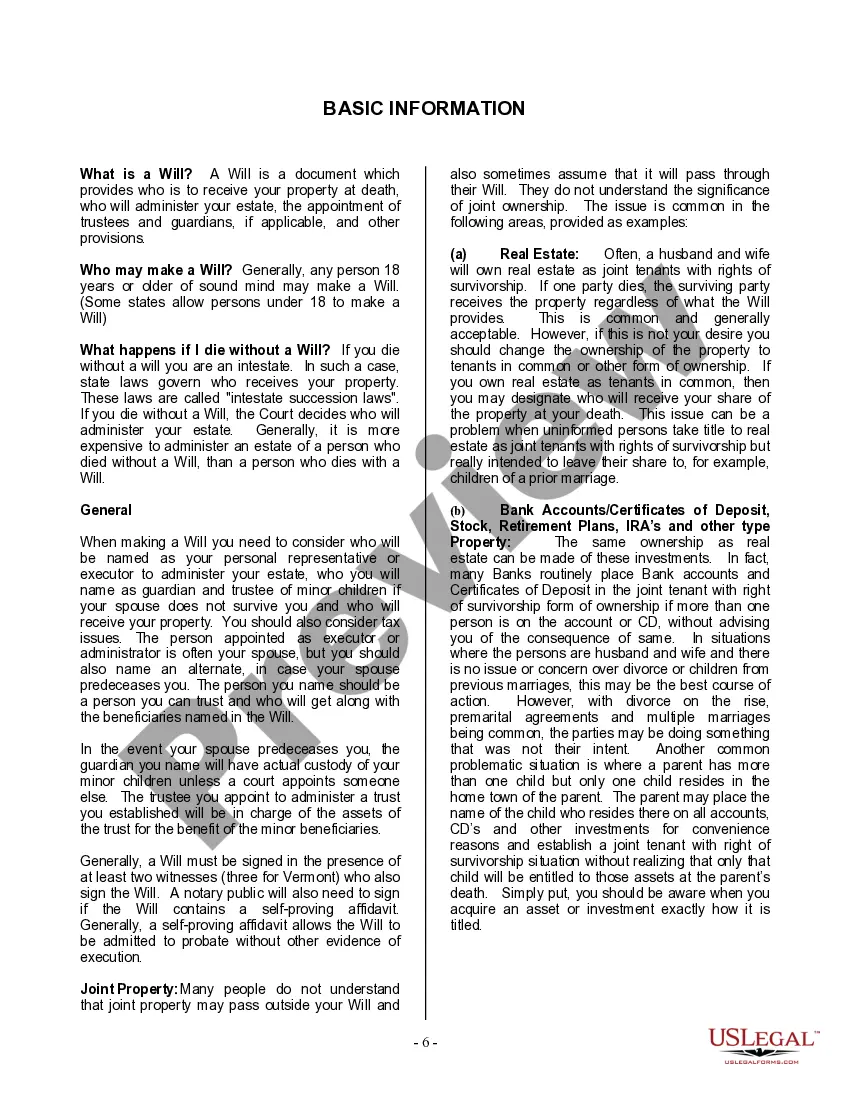

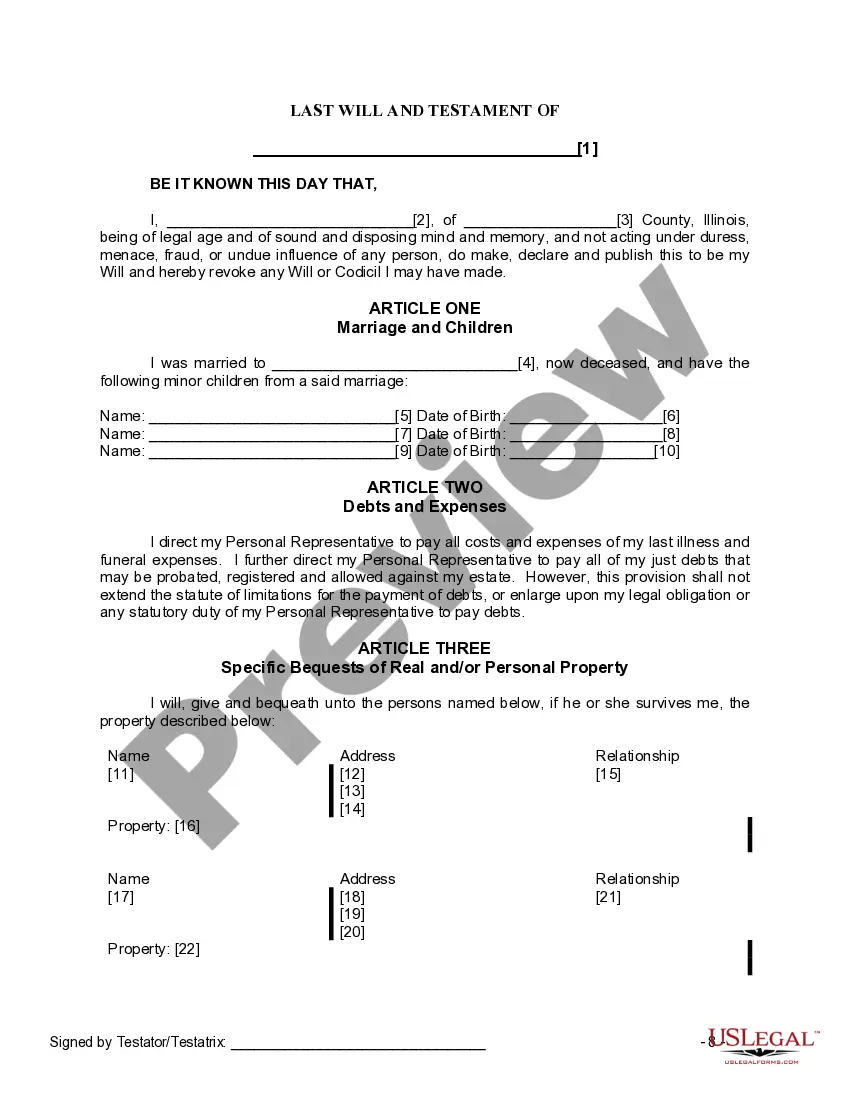
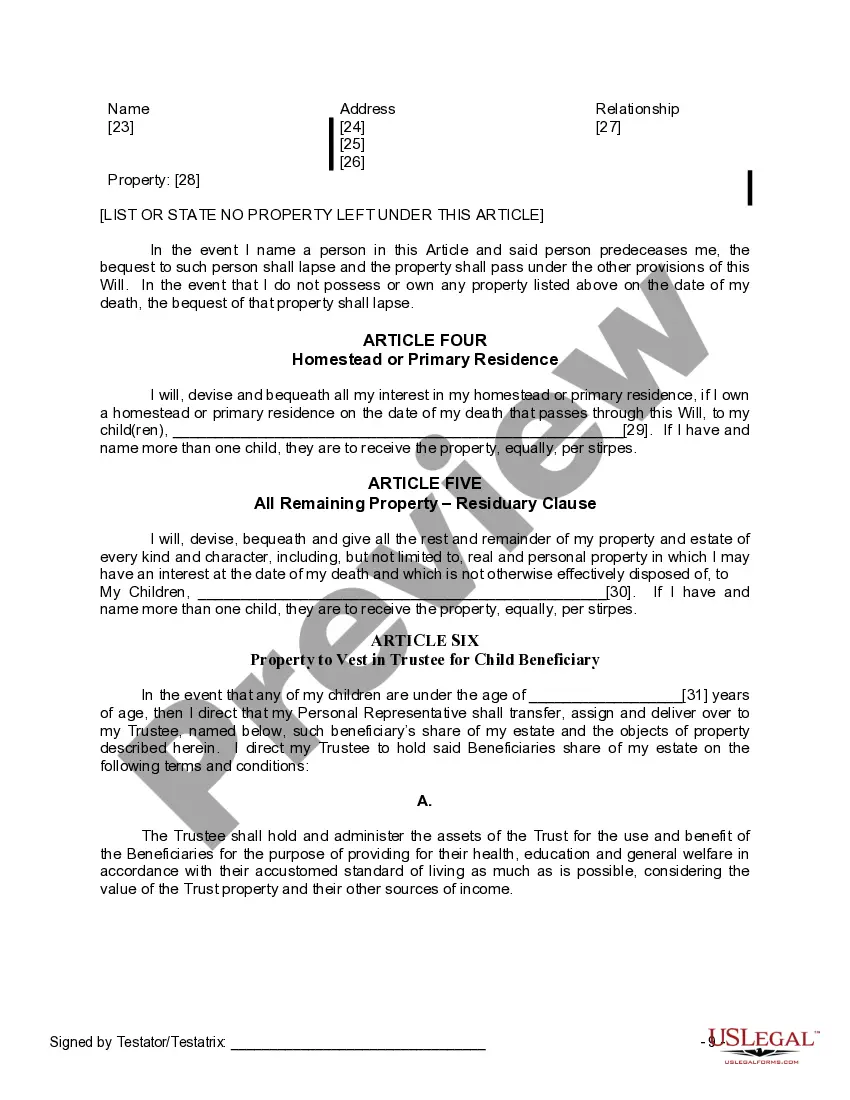
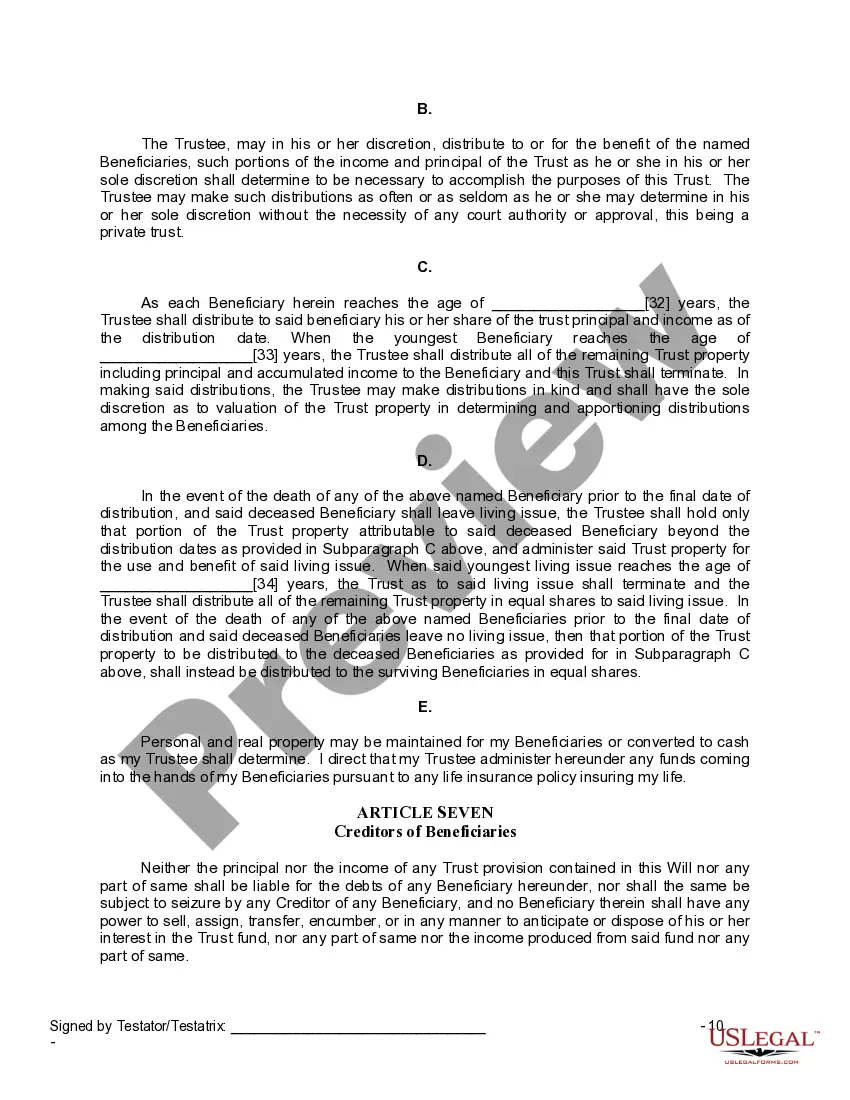






How to fill out Illinois Last Will And Testament For Widow Or Widower With Minor Children?
The Illinois.gov Last Will And Testament displayed on this page is a versatile official template created by qualified attorneys in compliance with federal and state regulations.
For over 25 years, US Legal Forms has assisted individuals, companies, and legal practitioners with more than 85,000 validated, state-specific documents for any commercial and personal circumstance. It’s the fastest, easiest, and most reliable method to acquire the forms you require, as the service guarantees the utmost level of data protection and anti-malware safeguards.
Select the format you prefer for your Illinois.gov Last Will And Testament (PDF, Word, RTF) and download the sample to your device.
- Search for the document you require and examine it.
- Review the sample you found and preview it or check the form description to ensure it meets your requirements. If it does not, use the search bar to locate the appropriate one. Click Buy Now when you have identified the template you need.
- Register and Log Into your account.
- Choose the pricing option that works for you and set up an account. Use PayPal or a credit card to make a quick payment. If you already possess an account, Log In and check your subscription to continue.
- Obtain the editable template.
Form popularity
FAQ
Yes. Illinois residents do not need an attorney to create a will. As long as you have testamentary capacity, know what property you have, and who you want to have that property, then you may make a will in Illinois.
Yes. Illinois residents do not need an attorney to create a will. As long as you have testamentary capacity, know what property you have, and who you want to have that property, then you may make a will in Illinois.
Generally, you must: Write an Introduction. Select an Executor. Identify Your Heirs and Beneficiaries. Nominate a Guardian for Your Minor or Dependent Children. Assess and Divide Your Property. State Your Funeral Wishes (If You Have Any) Sign and Notarize the Document.
Once the original will is located, it must be filed with the clerk of the court. The will should be filed in the County where the deceased person lived prior to death. For example, in Illinois, if a person dies while a resident of Chicago, the will should be filed in Cook County.
Do I Need to Have My Will Notarized? No, in Illinois, you do not need to notarize your will to make it legal. Many states allow you to make your will "self-proving," which allows the probate court to accept the will without contacting your witnesses.