Executor Person Estate Form California
Description
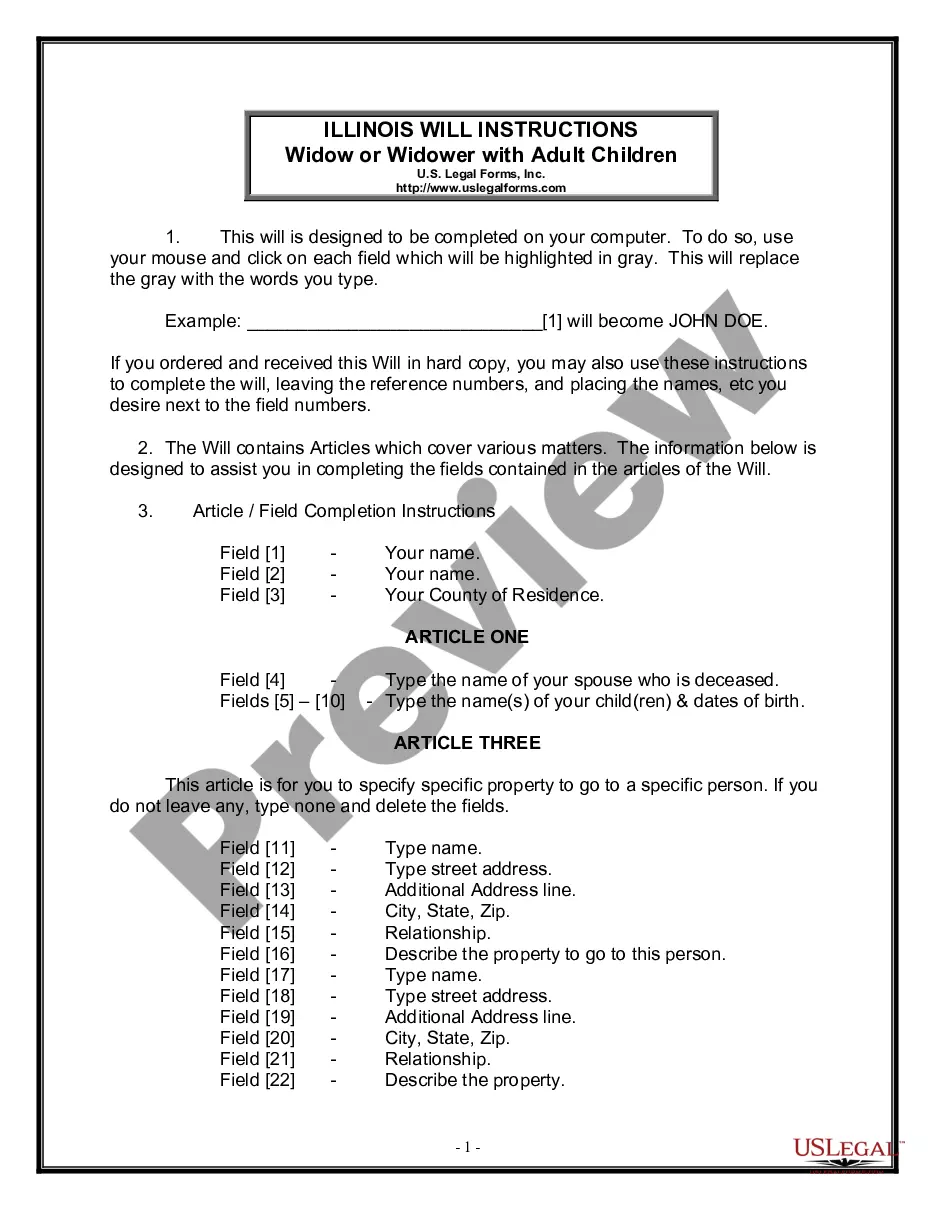
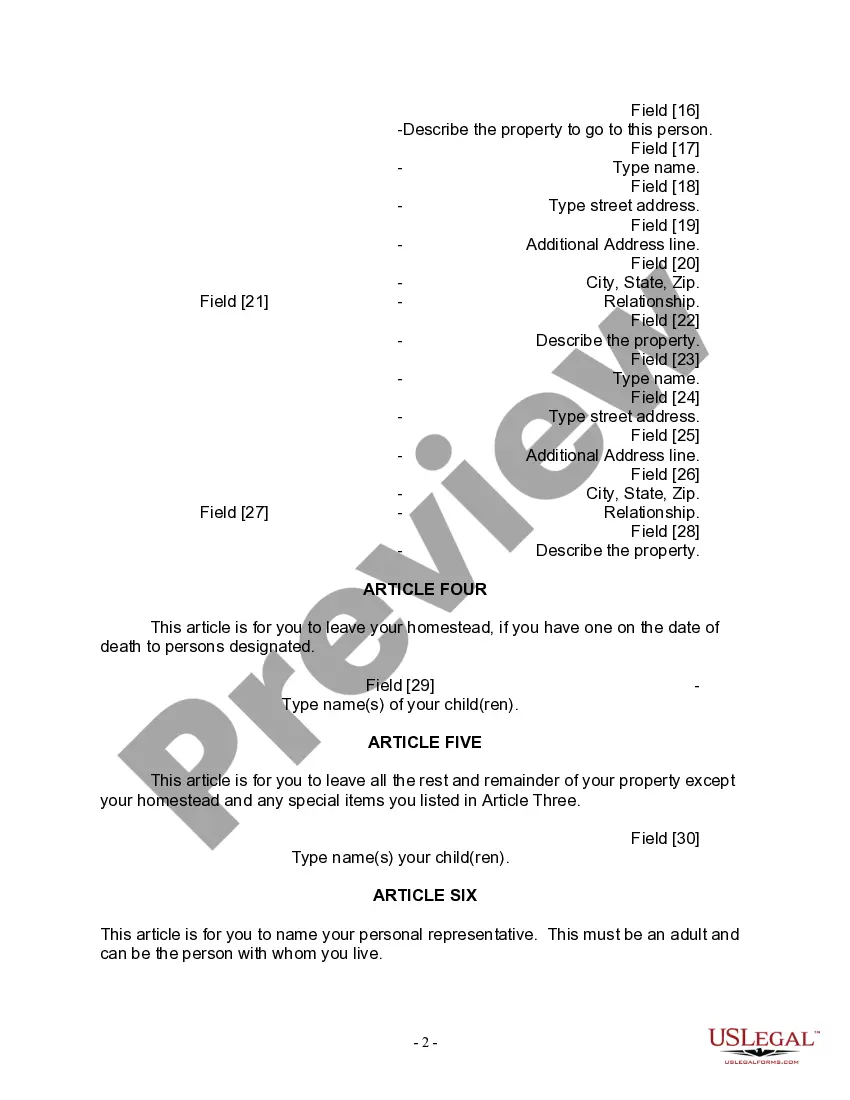
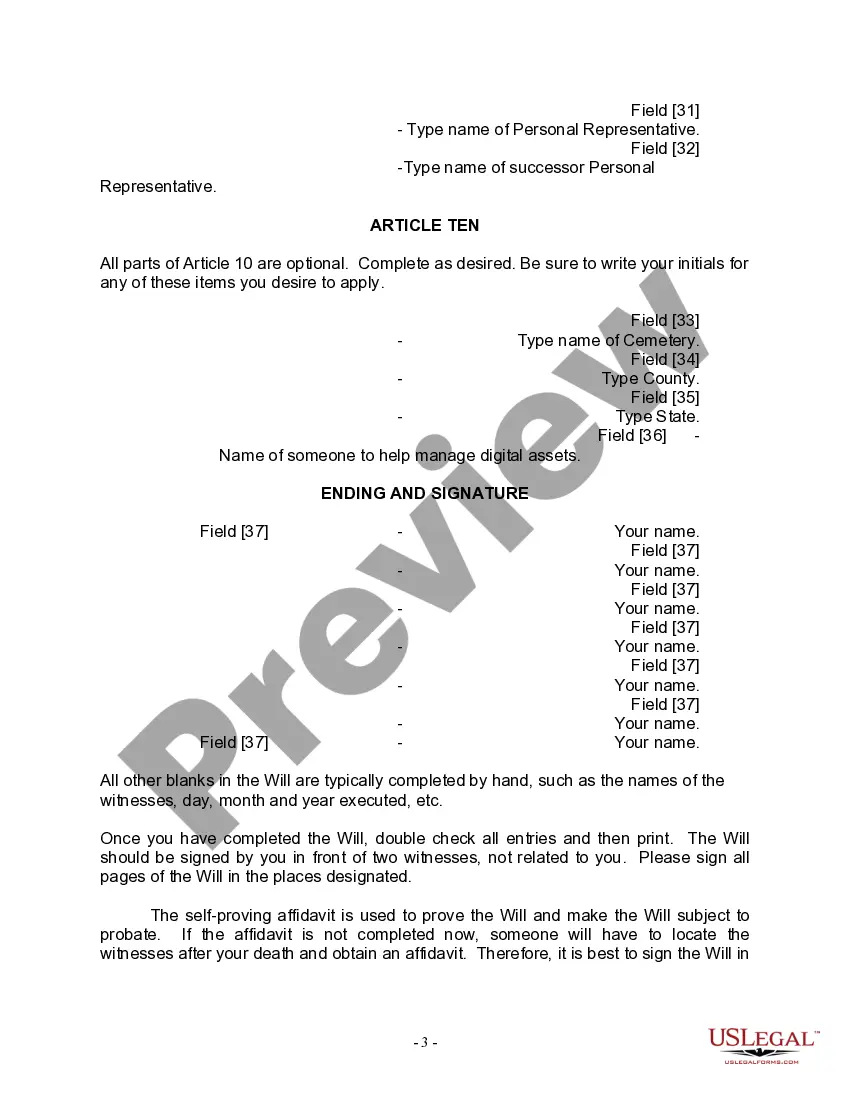

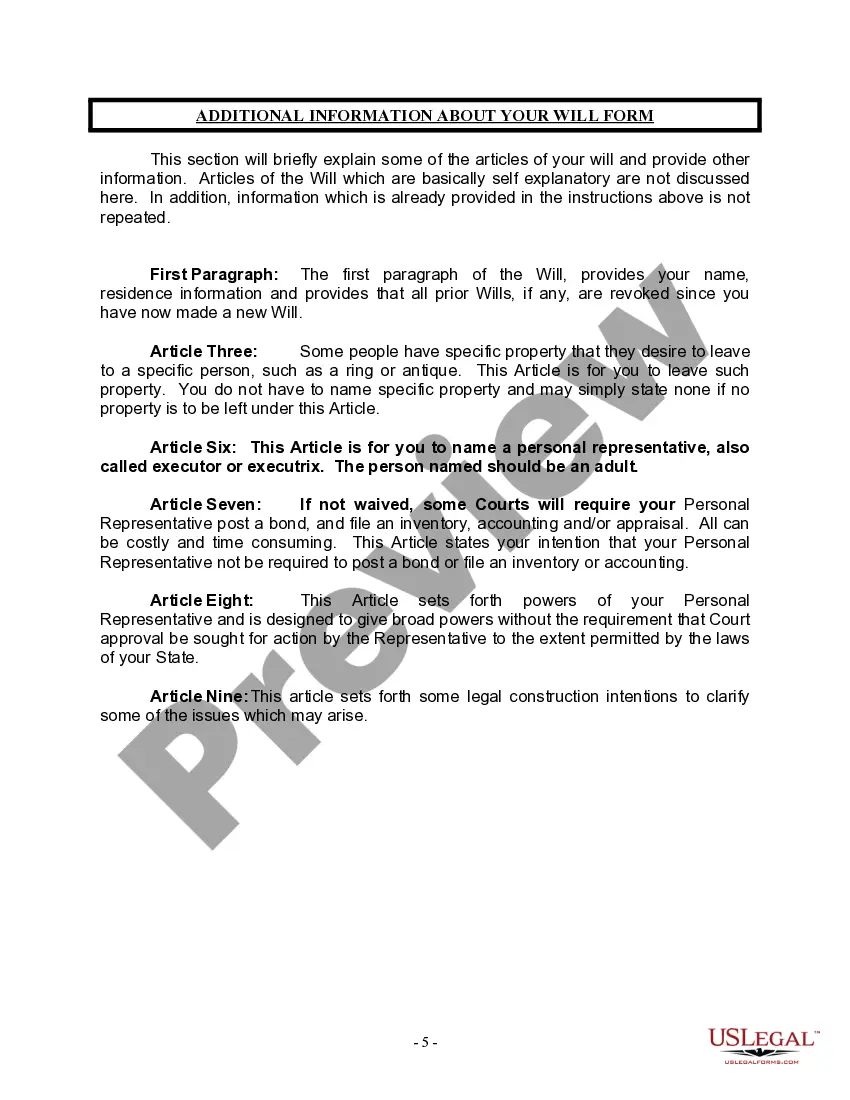
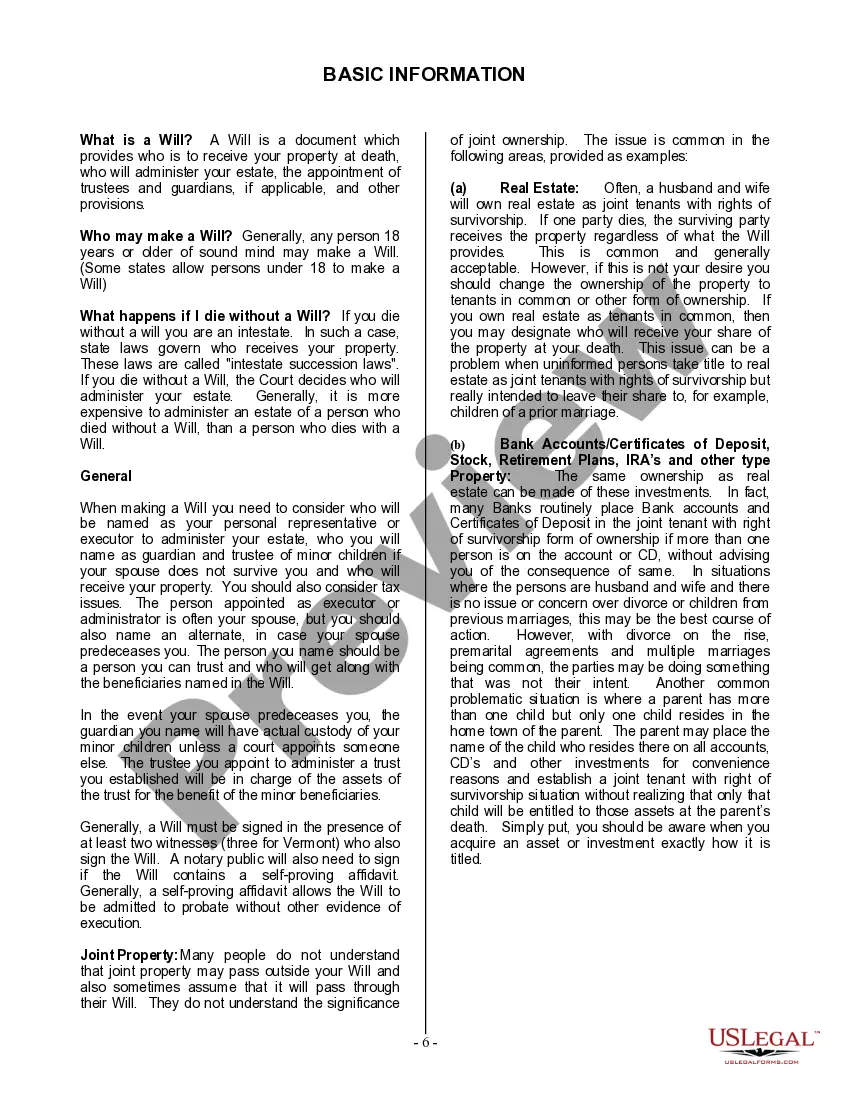

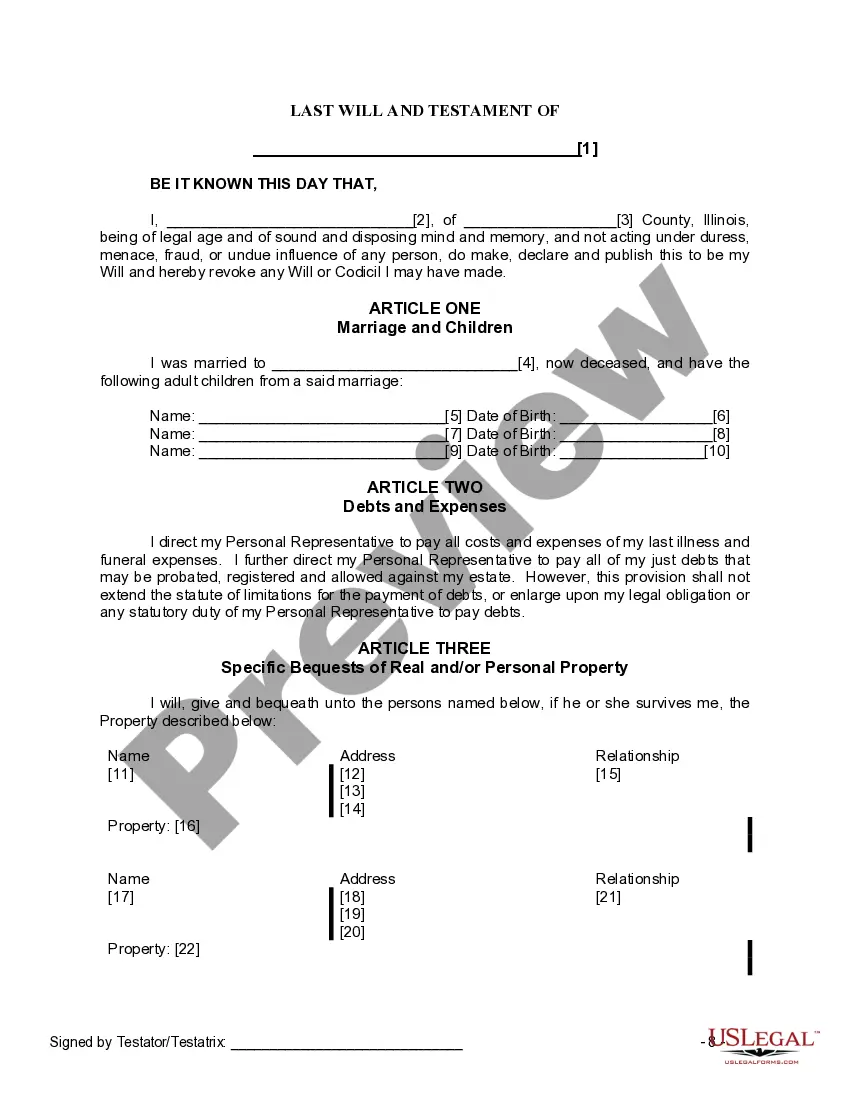
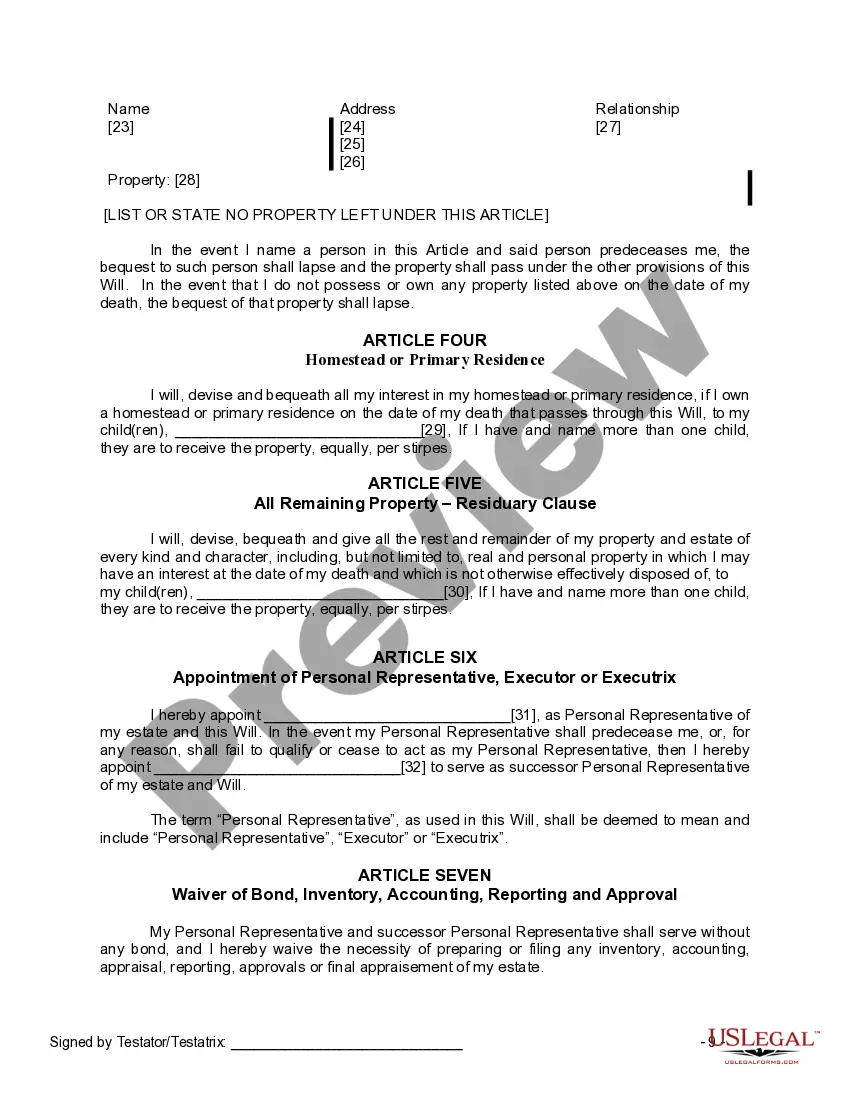
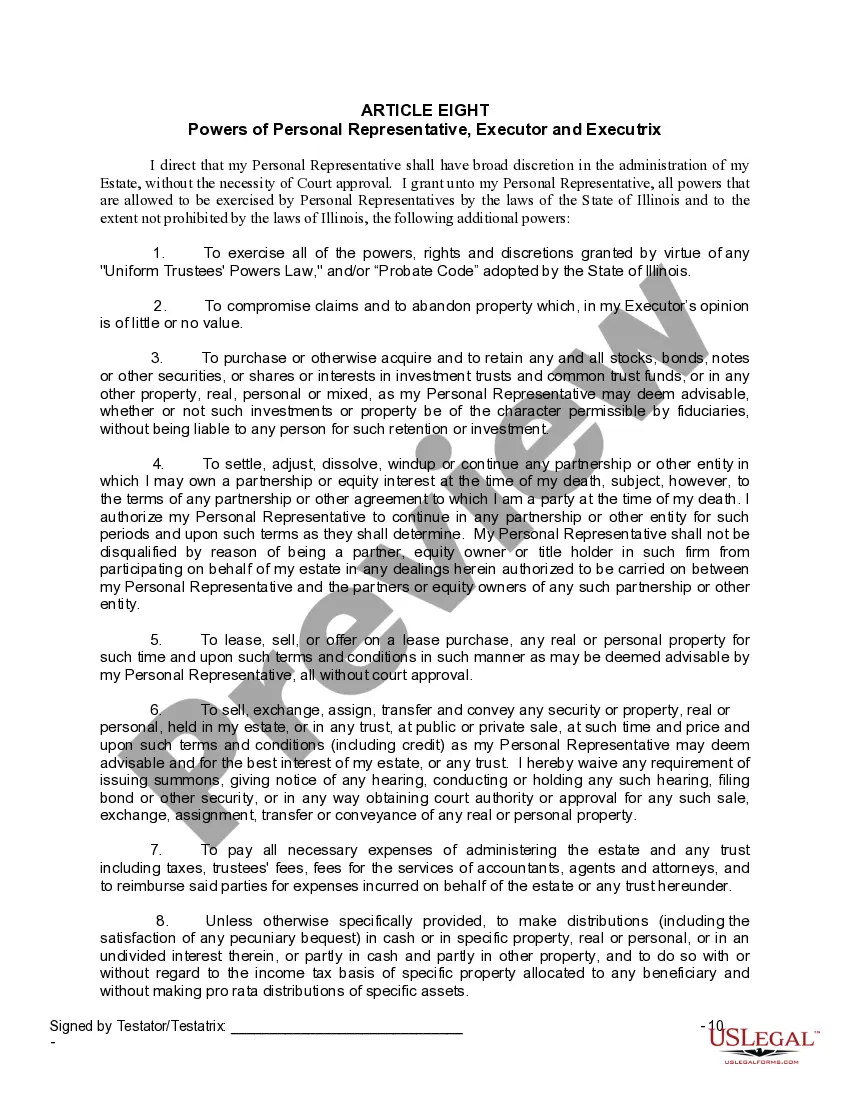



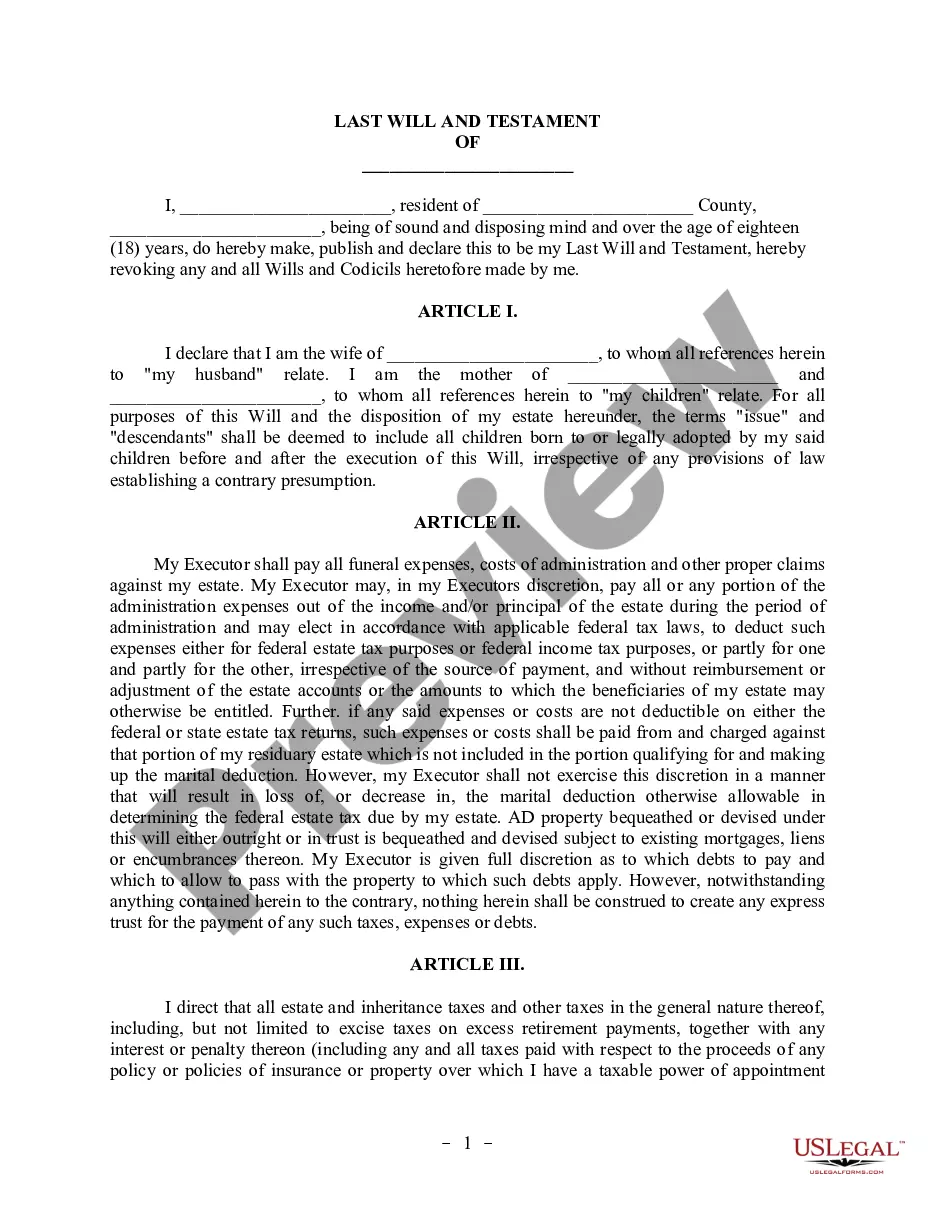


How to fill out Illinois Last Will And Testament For A Widow Or Widower With Adult Children?
It’s obvious that you can’t become a legal expert overnight, nor can you learn how to quickly prepare Executor Person Estate Form California without the need of a specialized background. Putting together legal documents is a long venture requiring a particular education and skills. So why not leave the creation of the Executor Person Estate Form California to the pros?
With US Legal Forms, one of the most extensive legal template libraries, you can find anything from court documents to templates for internal corporate communication. We know how important compliance and adherence to federal and state laws are. That’s why, on our platform, all templates are location specific and up to date.
Here’s how you can get started with our platform and get the document you need in mere minutes:
- Discover the form you need with the search bar at the top of the page.
- Preview it (if this option available) and check the supporting description to figure out whether Executor Person Estate Form California is what you’re searching for.
- Start your search again if you need a different form.
- Register for a free account and select a subscription plan to purchase the form.
- Pick Buy now. As soon as the payment is complete, you can download the Executor Person Estate Form California, fill it out, print it, and send or send it by post to the necessary people or entities.
You can re-access your forms from the My Forms tab at any time. If you’re an existing client, you can simply log in, and locate and download the template from the same tab.
Regardless of the purpose of your documents-whether it’s financial and legal, or personal-our platform has you covered. Try US Legal Forms now!
Form popularity
FAQ
Within 30 days of the decedent's death, go to the county probate clerk's office and file for probate. This is done by submitting the completed petition for probate form, the Will, and the decedent's death certificate. You must also pay the filing fee, which is currently $435.00 in California.
Specifically, the personal representative must list their name, address, and phone number in the probate form. Next, the representative must fill in the probate court name and location. In the Petition for Section, if the decedent has a will, the personal representative will mark one of the first two boxes.
You will file a petition for probate, and the court will issue a court order naming you executor. The court will also issue Letters Testamentary, which is the document that gives you authority to gather assets and make transfers.
In California, state law gives executors or administrators of estates a time limit to complete probate: one year from the date they are appointed to their position. However, extensions can be requested when delays in the process occur?which is why it generally takes 12 to 18 months.
Understanding executor pay in California ing to the California Probate Code section 10800, the executor receives a percentage of the estate. For example, the executor is entitled to 4% of the first $100,000 of the estate, then 3% of the next $100,000, and 2% of the next $800,000.