Idaho Surety Bond For Jail
Description


Get your form ready online
Our built-in tools help you complete, sign, share, and store your documents in one place.
Make edits, fill in missing information, and update formatting in US Legal Forms—just like you would in MS Word.
Download a copy, print it, send it by email, or mail it via USPS—whatever works best for your next step.
Sign and collect signatures with our SignNow integration. Send to multiple recipients, set reminders, and more. Go Premium to unlock E-Sign.
If this form requires notarization, complete it online through a secure video call—no need to meet a notary in person or wait for an appointment.
We protect your documents and personal data by following strict security and privacy standards.

Make edits, fill in missing information, and update formatting in US Legal Forms—just like you would in MS Word.

Download a copy, print it, send it by email, or mail it via USPS—whatever works best for your next step.

Sign and collect signatures with our SignNow integration. Send to multiple recipients, set reminders, and more. Go Premium to unlock E-Sign.

If this form requires notarization, complete it online through a secure video call—no need to meet a notary in person or wait for an appointment.

We protect your documents and personal data by following strict security and privacy standards.
Looking for another form?
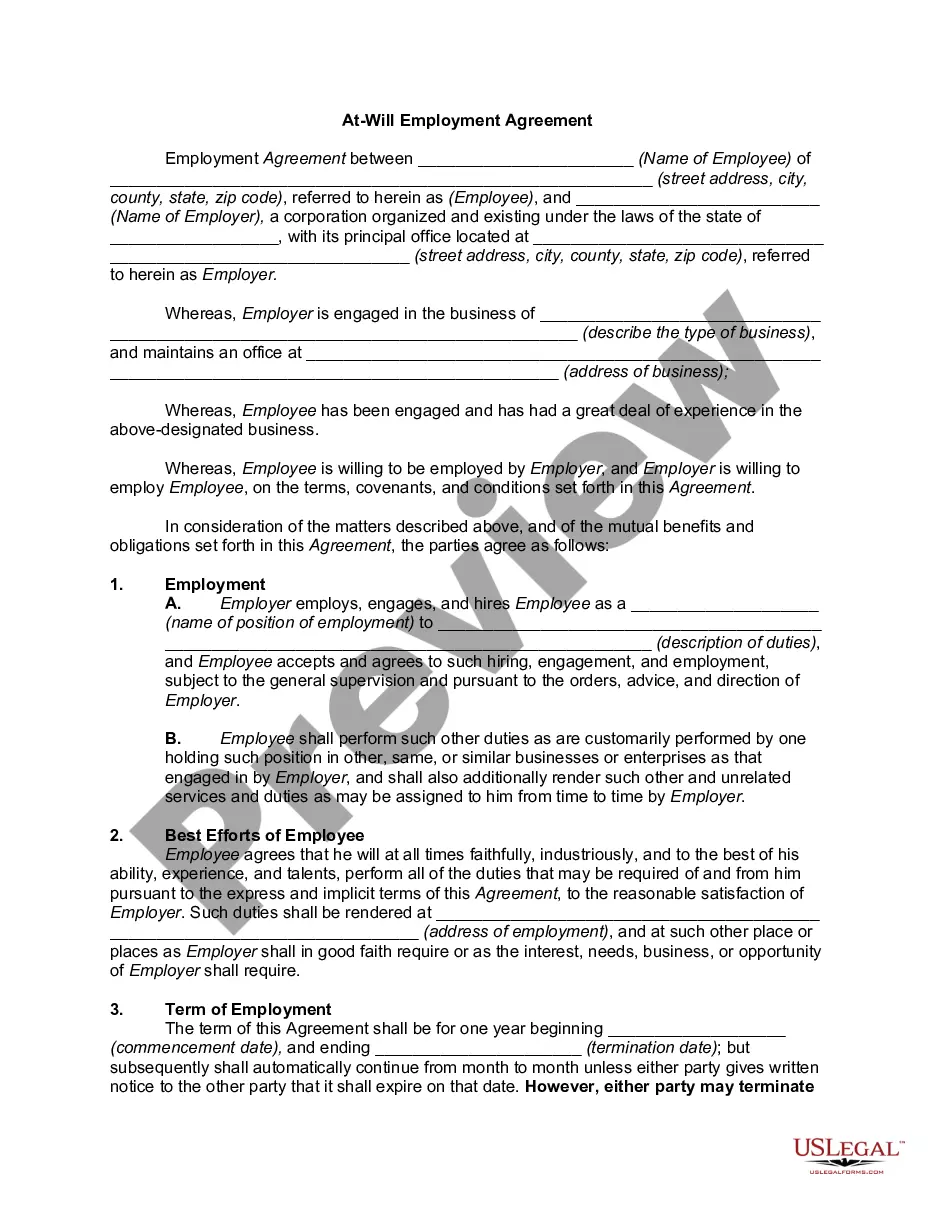

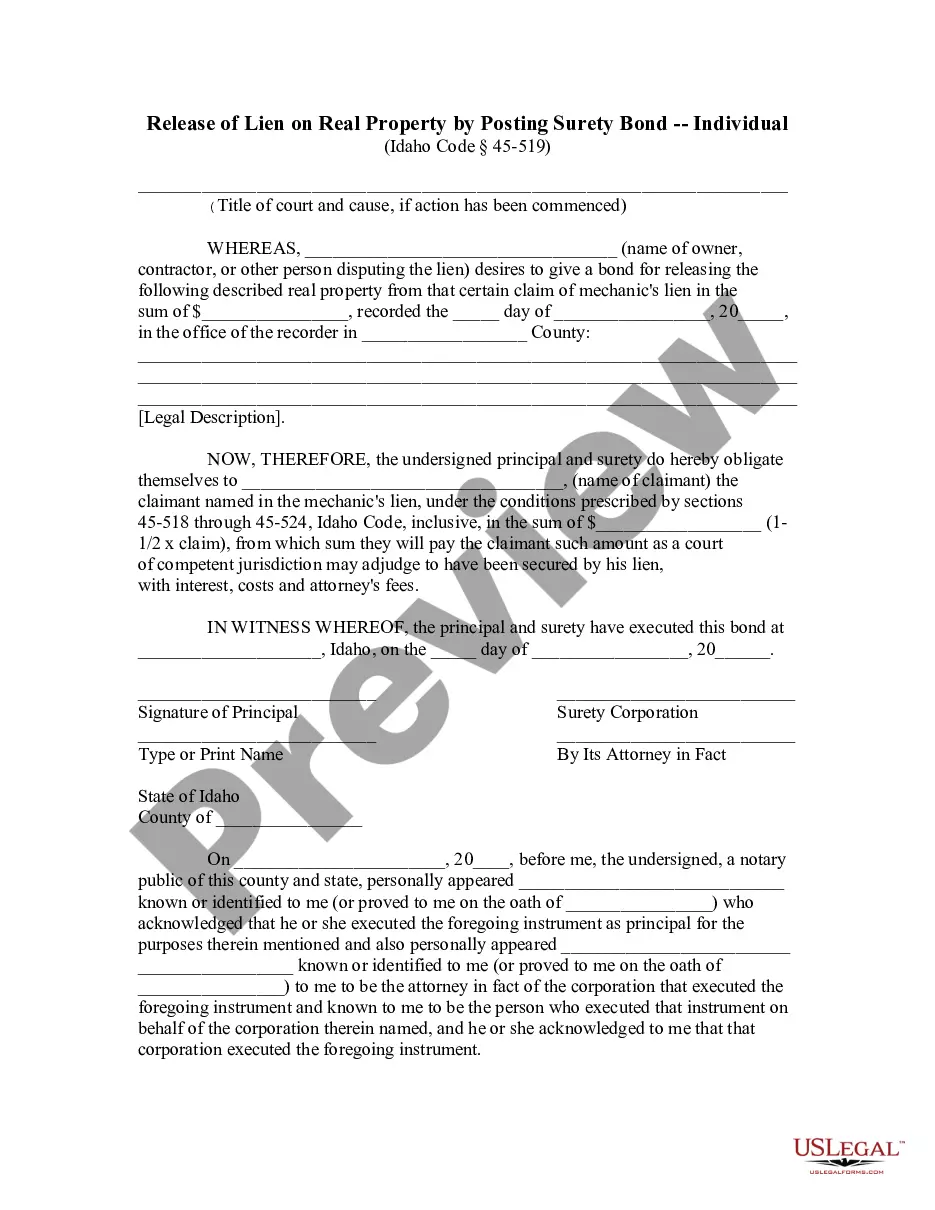
How to fill out Idaho Release Of Lien By Posting Of Surety Bond - Individual?
The Idaho Surety Bond For Jail displayed on this page is a reusable legal format created by qualified attorneys in accordance with federal and state regulations.
For over 25 years, US Legal Forms has supplied individuals, businesses, and legal practitioners with more than 85,000 validated, state-specific documents for any commercial and personal needs. It’s the quickest, simplest, and most dependable way to acquire the necessary paperwork, as the service guarantees the utmost level of data protection and anti-malware safeguards.
Utilize the same document again whenever necessary. Navigate to the My documents tab in your profile to redownload any previously saved forms. Subscribe to US Legal Forms to have verified legal templates for all of life's circumstances readily available.
- Conduct a search for the document you require and evaluate it.
- Browse through the sample you searched and preview it or check the form details to ensure it meets your standards. If it does not, utilize the search feature to obtain the correct one. Click Buy Now once you have located the template you need.
- Choose a pricing plan that fits your needs and create an account. Use PayPal or a credit card to process a swift payment. If you already possess an account, Log In and verify your subscription to proceed.
- Select the format you prefer for your Idaho Surety Bond For Jail (PDF, Word, RTF) and download the document onto your device.
- Print the template to fill it out manually. Alternatively, use an online multifunctional PDF editor to quickly and accurately complete and sign your form electronically.
Form popularity
FAQ
There are commonly 2 ways to bond someone out: 1) by paying an amount equal to the bail set by the judge or bail schedule, or 2) through a bail bondsman. Property bonds can be used as well, but are less common.
Simply put, OR release is no-cost bail. Defendants released on their own recognizance need only sign a written promise to appear in court as required. No bail has to be paid, either to the court or to a bail bond seller. However, all other aspects of bail remain the same.
Step 1: Hold a Bail Agent License in your home state. Step 2: Obtain an Appointment to a Surety company. Step 3: Acquire a bond in the amount of $15,000. The bond must be on the DOI's bond form.
A defendant may be admitted to bail or released on the defendant's own recognizance by the court in which the defendant was convicted pending an appeal on consideration of the factors set forth in subsection (c) of this rule unless it appears that the appeal is frivolous or taken for delay.
When a person/defendant is arrested, the court may set a bail amount, which is a fee the defendant can pay to the court for temporary release from jail pending a court appearance. If the defendant is able to pay bail, the defendant is released from jail and is required to appear in court on a specified date.