Iowa Living Trust For Property
Description


Get your form ready online
Our built-in tools help you complete, sign, share, and store your documents in one place.
Make edits, fill in missing information, and update formatting in US Legal Forms—just like you would in MS Word.
Download a copy, print it, send it by email, or mail it via USPS—whatever works best for your next step.
Sign and collect signatures with our SignNow integration. Send to multiple recipients, set reminders, and more. Go Premium to unlock E-Sign.
If this form requires notarization, complete it online through a secure video call—no need to meet a notary in person or wait for an appointment.
We protect your documents and personal data by following strict security and privacy standards.

Make edits, fill in missing information, and update formatting in US Legal Forms—just like you would in MS Word.

Download a copy, print it, send it by email, or mail it via USPS—whatever works best for your next step.

Sign and collect signatures with our SignNow integration. Send to multiple recipients, set reminders, and more. Go Premium to unlock E-Sign.

If this form requires notarization, complete it online through a secure video call—no need to meet a notary in person or wait for an appointment.

We protect your documents and personal data by following strict security and privacy standards.
Looking for another form?

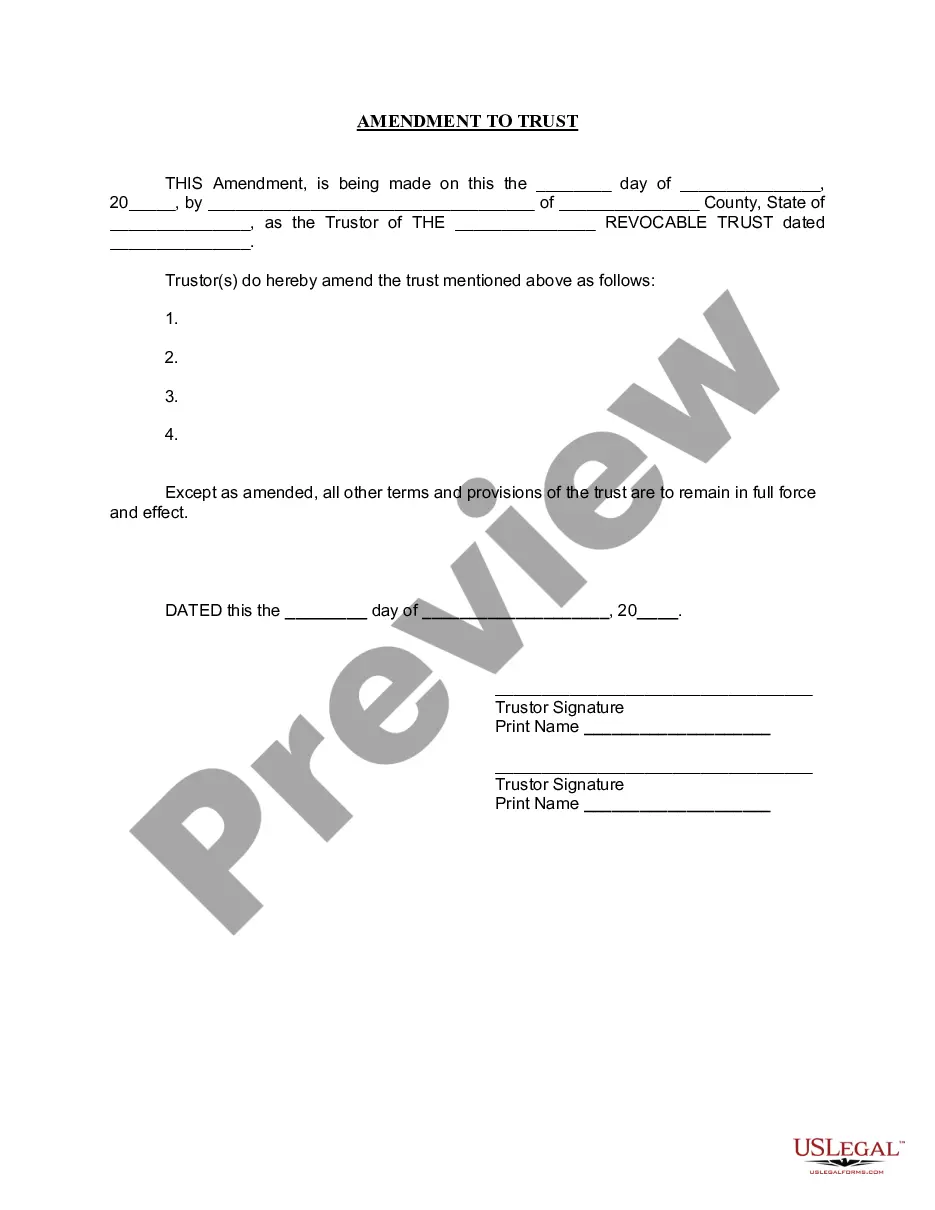
How to fill out Iowa Amendment To Living Trust?
- Visit the US Legal Forms website and log in to your account. If you're a first-time user, create an account to get started.
- Search for 'Iowa living trust for property' in the extensive template library and review the available options.
- Select the appropriate form by clicking on the Preview option to ensure it meets your needs.
- If necessary, use the Search tab to find alternative templates that better suit your requirements.
- Click on the Buy Now button and choose your preferred subscription plan.
- Enter your payment details to complete your purchase securely through credit card or PayPal.
- Download the form immediately and save it to your device. You can access it anytime from the My Forms section of your profile.
Using US Legal Forms enhances your legal document preparation experience by providing access to over 85,000 customizable legal forms. This extensive library ensures that everyone can find the exactly what they need without the hassle.
In conclusion, creating an Iowa living trust for property has never been easier. Take control of your estate planning by utilizing US Legal Forms today!
Form popularity
FAQ
A significant mistake parents often make when establishing a trust fund is failing to fund the trust properly. After setup, it’s crucial to transfer assets into the trust to ensure its effectiveness. Additionally, parents might not communicate their plans to beneficiaries, leading to confusion later. Utilizing platforms like uslegalforms can help guide parents in creating and managing their Iowa living trust for property effectively.
Creating an Iowa living trust for property involves a few key steps. First, individuals need to draft the trust agreement, outlining the management and distribution of assets. Then, they must transfer ownership of assets into the trust, which can include property, bank accounts, and investments. Consulting a legal expert can simplify this process and ensure everything complies with Iowa laws.
Deciding if your parents should place their assets in an Iowa living trust for property depends on their individual goals. A trust can help streamline the transfer of assets after death, avoiding probate and potentially saving time and costs. It can also provide protection against creditors and ensure assets go to intended beneficiaries. Encourage your parents to consult a professional to weigh these benefits against their current situation.
One downside of placing assets in an Iowa living trust for property is that it may make selling or transferring those assets more complicated. You will need to comply with the trust’s terms, which can require more administrative effort. Some people also worry about losing flexibility with their assets. While these concerns are valid, many find the long-term benefits worth the trade-off.
A family trust can have its disadvantages, particularly when it comes to control over the assets. Once you transfer property into a trust, you limit how you can manage these assets. Moreover, family dynamics can complicate trust administration, leading to potential conflicts. Having a clear understanding of these aspects is essential when considering an Iowa living trust for property.
Deciding whether to gift a house or place it in an Iowa living trust for property depends on your financial goals and tax implications. Gifting a house may result in immediate tax liabilities, whereas a trust can offer more control over asset distribution. A trust allows you to manage the property during your lifetime and ensure it is passed on according to your wishes. Consulting with a legal expert can clarify which option benefits you the most.
Although placing your home in an Iowa living trust for property offers many benefits, there are some disadvantages to consider. Primarily, you may face upfront costs associated with setting up the trust, including legal fees. Additionally, you could encounter complexities when transferring property into the trust, potentially affecting your real estate taxes. Evaluating these factors will help you determine if a trust is right for your situation.
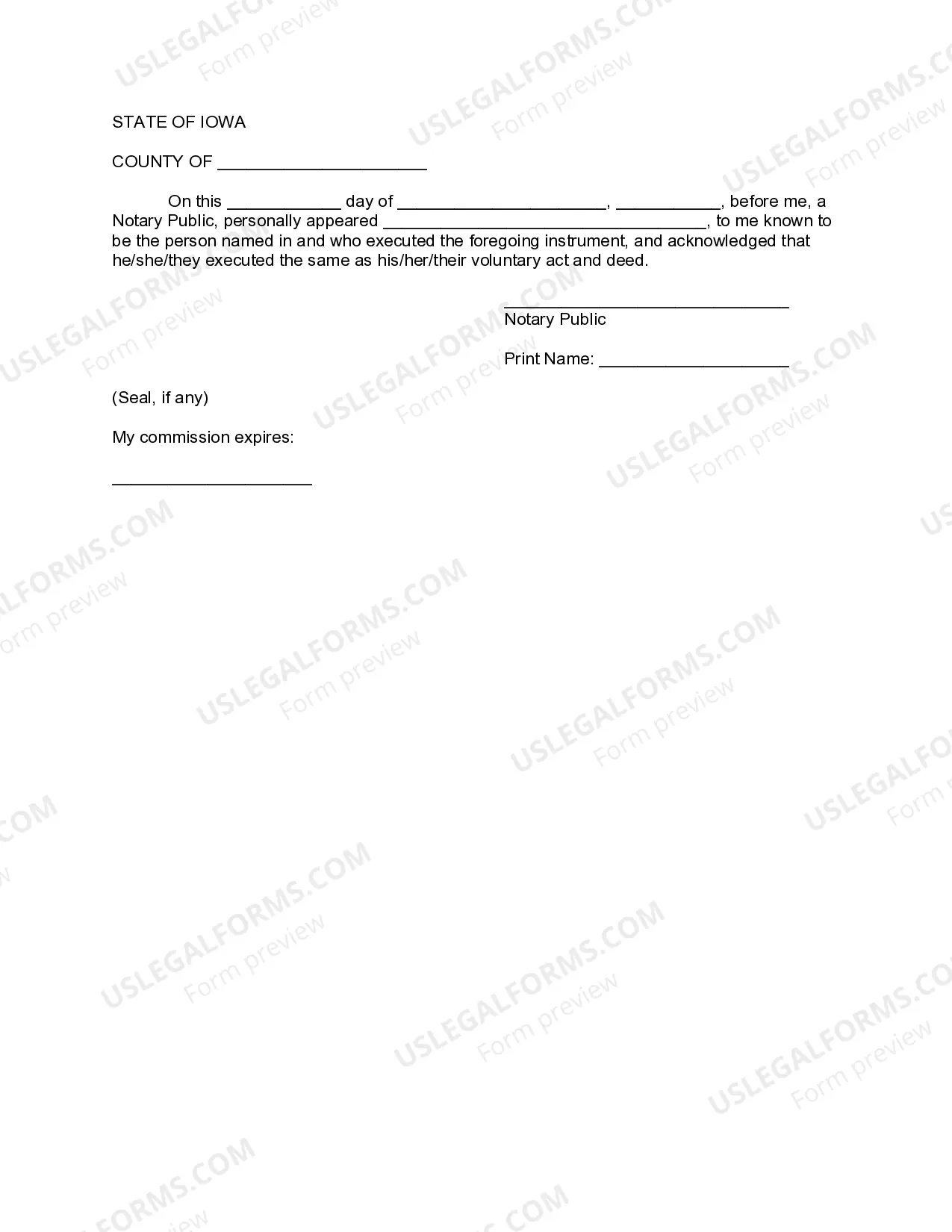
To fill out an Iowa living trust for property, start by gathering your essential documents, including property deeds and beneficiary information. You can then outline your assets and specify how you want them distributed after your passing. It's crucial to ensure all necessary details are included and that the trust is signed and notarized. For a seamless process, consider using platforms like US Legal Forms, which provide templates and guidance.
The 5 year rule for trusts typically refers to the period relevant to Medicaid eligibility and asset transfers. In the context of an Iowa living trust for property, this rule states that any assets transferred to a trust within five years of applying for Medicaid may affect eligibility for benefits. It’s essential to consult with a professional to ensure compliance and maximize the benefits of your living trust.
Setting up an Iowa living trust for property involves a few straightforward steps. First, you should choose a name for your trust and appoint a trustee who will manage it. Next, you will need to draft the trust document, which outlines the terms and conditions of the trust. Finally, transferring your property into the trust is crucial, which can be efficiently done through the uslegalforms platform.