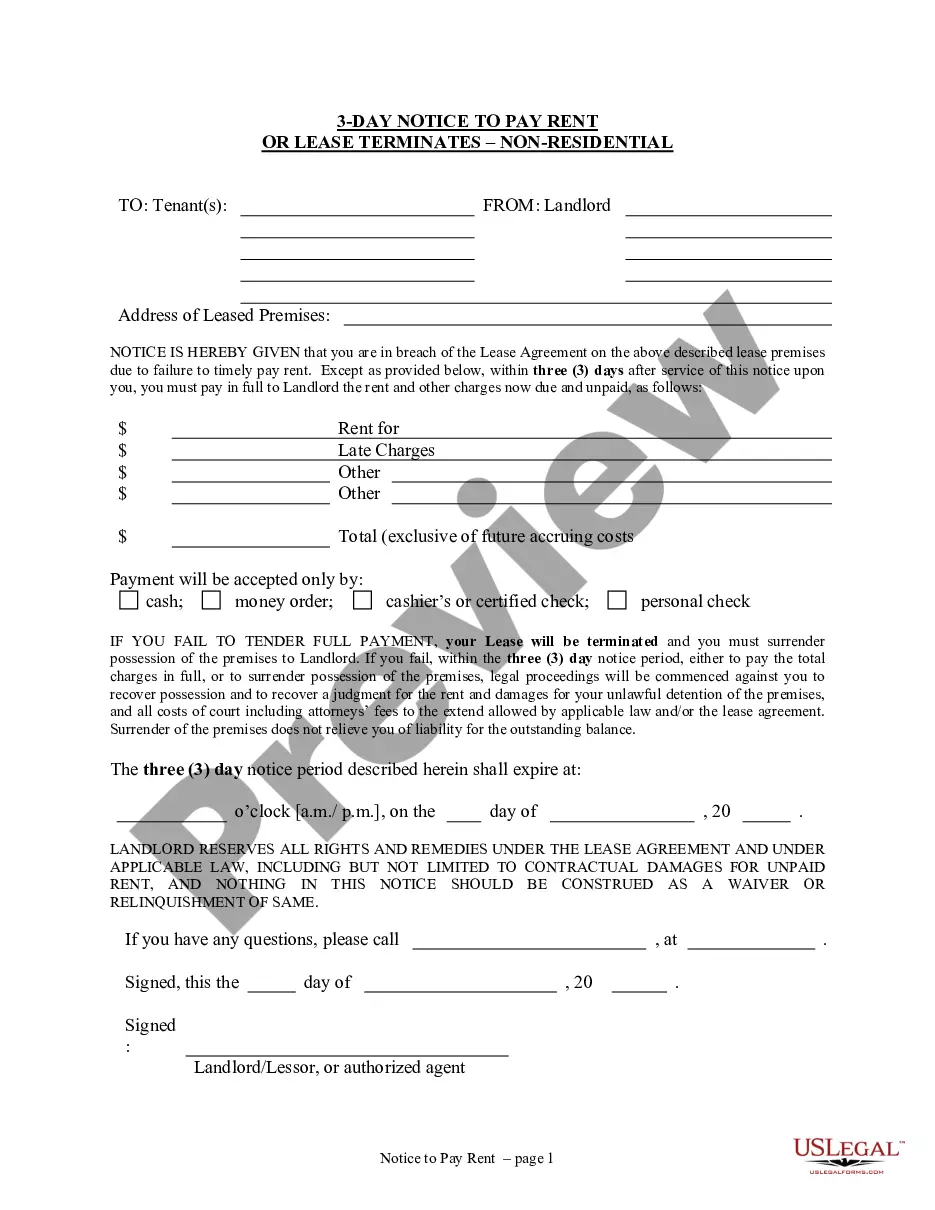
What Happens After A 3 Day Notice
Description


Get your form ready online
Our built-in tools help you complete, sign, share, and store your documents in one place.
Make edits, fill in missing information, and update formatting in US Legal Forms—just like you would in MS Word.
Download a copy, print it, send it by email, or mail it via USPS—whatever works best for your next step.
Sign and collect signatures with our SignNow integration. Send to multiple recipients, set reminders, and more. Go Premium to unlock E-Sign.
If this form requires notarization, complete it online through a secure video call—no need to meet a notary in person or wait for an appointment.
We protect your documents and personal data by following strict security and privacy standards.

Make edits, fill in missing information, and update formatting in US Legal Forms—just like you would in MS Word.

Download a copy, print it, send it by email, or mail it via USPS—whatever works best for your next step.

Sign and collect signatures with our SignNow integration. Send to multiple recipients, set reminders, and more. Go Premium to unlock E-Sign.

If this form requires notarization, complete it online through a secure video call—no need to meet a notary in person or wait for an appointment.

We protect your documents and personal data by following strict security and privacy standards.
Looking for another form?




How to fill out Iowa 3 Day Notice To Pay Rent Or Lease Terminated For Nonresidential Or Commercial Property?
- Log into your US Legal Forms account if you are a returning user. Make sure your subscription is active before downloading the required form by selecting the Download button.
- If you are new to US Legal Forms, start by reviewing the form descriptions and preview modes to find the right document that meets your local jurisdiction needs.
- Conduct a search for additional templates if your initial selection does not meet your requirements. The search feature can help you locate the correct form efficiently.
- Proceed to purchase your document by selecting the Buy Now button and choosing an appropriate subscription plan. You’ll need to create an account for access.
- Complete your purchase with a credit card or PayPal. After payment, you can download the form directly to your device.
- Access your downloaded form and utilize the 'My Forms' section in your profile for future reference.
By following these steps, you can ensure that you are well-prepared to handle the implications of a 3-day notice. US Legal Forms empowers you to navigate your legal obligations confidently and efficiently.
Ready to take action? Explore the vast library of over 85,000 legal forms at US Legal Forms and ensure your documents are legally sound.
Form popularity
FAQ
The Texas eviction process generally takes between three to six weeks, depending on various factors. After you receive a 3 day notice, the tenant has that time to respond or vacate the property. If they do not leave, you can file for an eviction in court. After filing, the court date is usually set within two to three weeks, making it essential to understand what happens after a 3 day notice to ensure you're prepared for each step of the process.
Renting with an eviction on your record can be challenging, but it’s not impossible. First, consider being upfront with potential landlords about your eviction history and highlight your efforts in improving your rental reliability. Explore renting from private landlords who may be more flexible than larger property management companies. Understanding what happens after a three day notice can help you prevent future evictions and strengthen your rental applications.
In Ohio, several factors can void a three-day notice. If the landlord fails to comply with proper notice requirements, such as not providing the correct information, the notice may not hold up in court. Additionally, if the tenant resolves the issue by paying overdue rent or addressing the lease violation before the eviction process begins, the notice becomes invalid. It’s crucial to understand what happens after a three day notice to navigate these situations effectively.
In Idaho, the eviction process begins when a landlord serves a notice based on the reason for eviction, such as non-payment of rent. After the notice period expires, the landlord can file a complaint in court if the issue remains unresolved. Following the court’s decision, the eviction will be carried out if necessary. Being aware of this process can prepare you for what happens after a 3 day notice in any state.
Yes, a landlord can cancel an eviction notice before the court hearing by formally withdrawing the notice. This often occurs when the tenant resolves the issue at hand, such as paying overdue rent. It’s important to obtain written confirmation to ensure clarity on both sides. Understanding this process can change what happens after a 3 day notice and grant you more security in your living situation.
Landlord harassment in Ohio includes any action that interferes with your right to peaceful enjoyment of your home. This could involve excessive visits, threatening behavior, or failing to maintain the property. If you experience such actions, it’s essential to document incidents and know your rights. Understanding these aspects will clarify what happens after a 3 day notice and how you can protect yourself.
The entire eviction process can take anywhere from a few weeks to a couple of months, depending on the state laws and specific circumstances. If you follow all legal steps after serving a notice, such as a 3 day notice, you may expedite the process. Consulting platforms like US Legal Forms can provide valuable resources to better understand the timelines involved.
Eviction duration in Washington state typically ranges between 2 to 6 weeks, depending on tenant responses and court schedules. After issuing a notice, the process can vary based on whether the tenant contests the eviction. Keeping in mind what happens after a 3 day notice can aid in planning your next steps effectively.
The eviction process in Washington can take approximately 2 to 4 weeks, depending on various factors such as court schedules and tenant responses. After serving a notice, you may need to wait for the tenant to respond before proceeding to court. Knowing what happens after a 3 day notice can help you anticipate the timeline and prepare accordingly.
Vermont has specific rules governing evictions, including the requirement for landlords to provide proper written notice. Usually, a notice must be given before a tenant can be forced out. Familiarizing yourself with what happens after a 3 day notice is essential, as each type of notice and situation can have different legal implications.