Limited Company Meaning
Description
Get your form ready online
Our built-in tools help you complete, sign, share, and store your documents in one place.
Make edits, fill in missing information, and update formatting in US Legal Forms—just like you would in MS Word.
Download a copy, print it, send it by email, or mail it via USPS—whatever works best for your next step.
Sign and collect signatures with our SignNow integration. Send to multiple recipients, set reminders, and more. Go Premium to unlock E-Sign.
If this form requires notarization, complete it online through a secure video call—no need to meet a notary in person or wait for an appointment.
We protect your documents and personal data by following strict security and privacy standards.

Make edits, fill in missing information, and update formatting in US Legal Forms—just like you would in MS Word.

Download a copy, print it, send it by email, or mail it via USPS—whatever works best for your next step.

Sign and collect signatures with our SignNow integration. Send to multiple recipients, set reminders, and more. Go Premium to unlock E-Sign.

If this form requires notarization, complete it online through a secure video call—no need to meet a notary in person or wait for an appointment.

We protect your documents and personal data by following strict security and privacy standards.
Looking for another form?







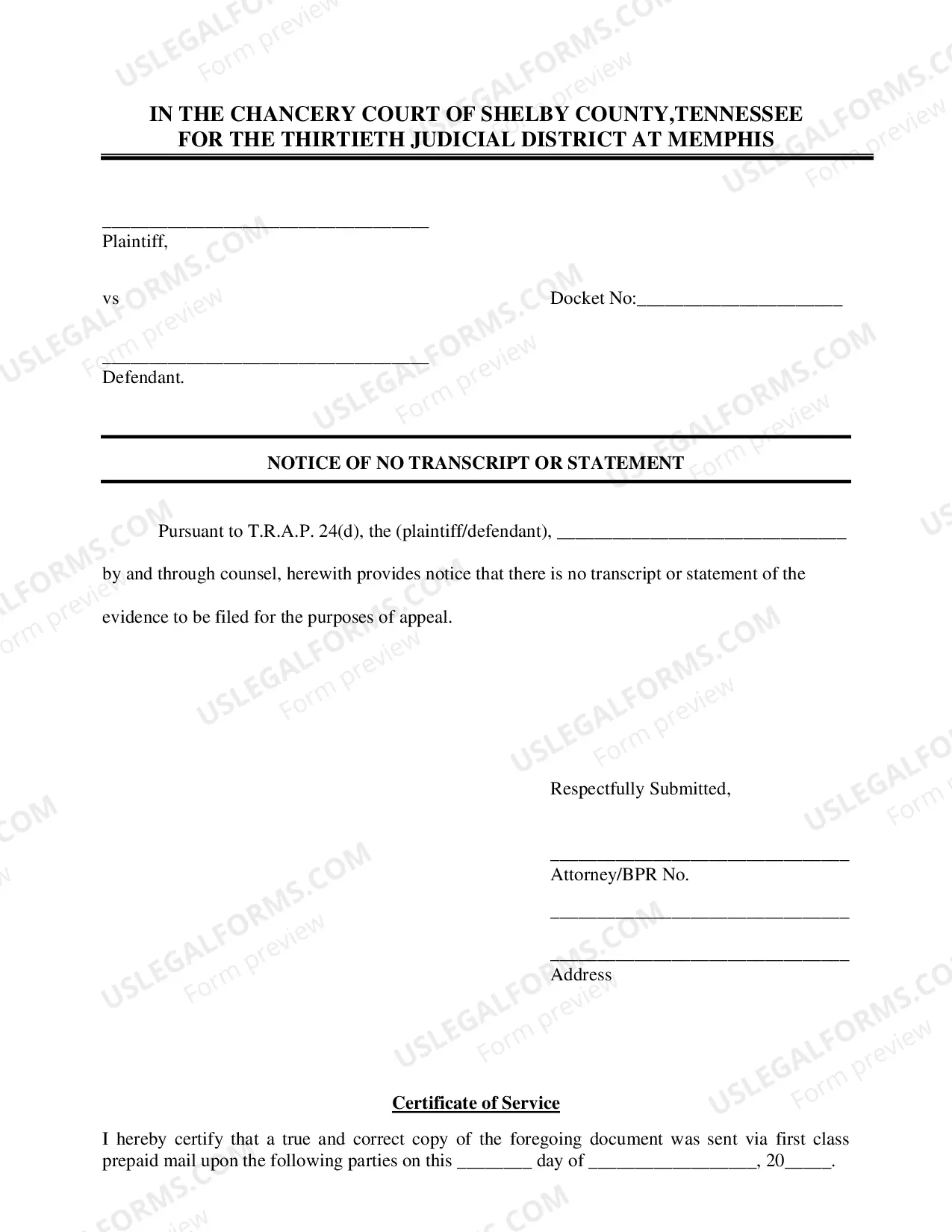

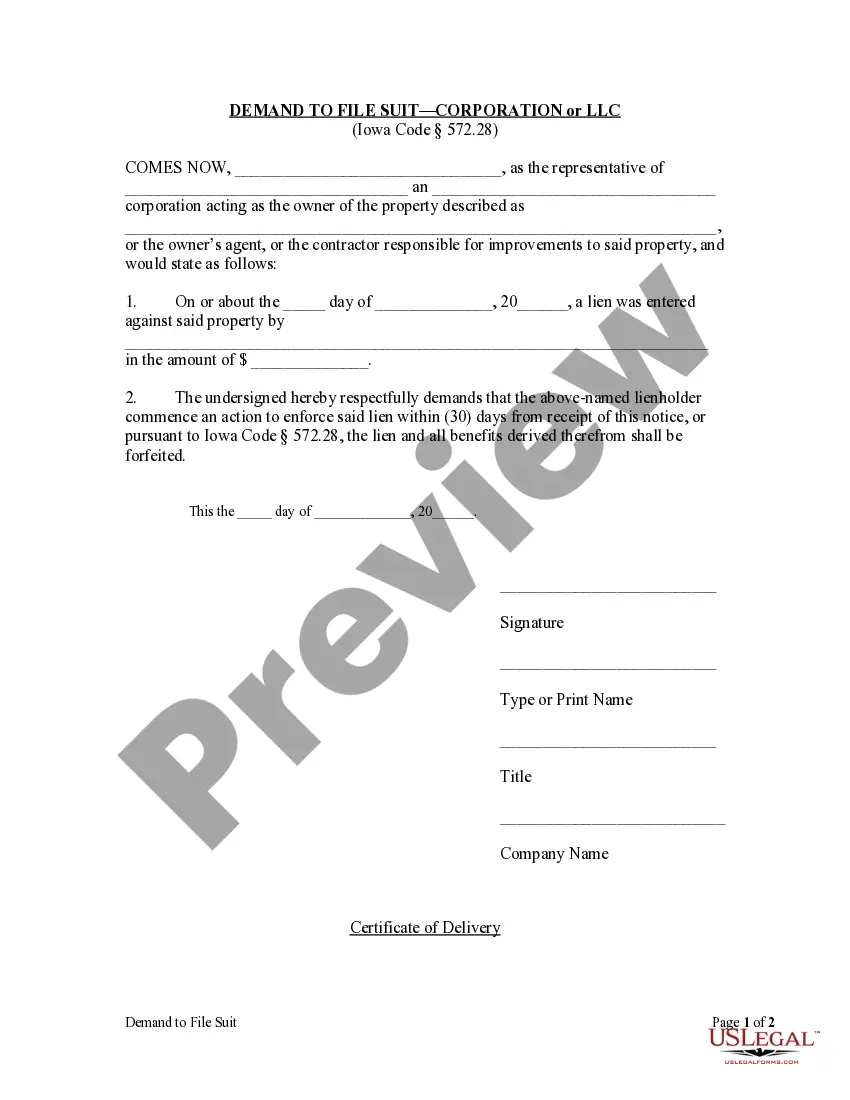
How to fill out Iowa Demand To File Suit By Corporation Or LLC?
- If you're an existing user, log into your account to retrieve your desired form template. Ensure your subscription is active; if it's expired, renew it based on your payment plan.
- For new users, begin by reviewing the Preview mode and form descriptions to select the correct document that fulfills your requirements and complies with your local regulations.
- Utilize the Search tool if the initial template doesn't meet your needs. Locate an appropriate alternative and ensure it aligns with your requirements before proceeding.
- To obtain your document, click the Buy Now button and choose your preferred subscription plan. Registration is necessary to unlock full access to the form library.
- Complete your transaction by entering your payment information via credit card or PayPal to finalize your subscription.
- Finally, download your selected form for your records. It will also be accessible anytime in the My Forms section of your profile.
In summary, using US Legal Forms not only provides a vast collection of legal documents but also ensures that your forms are tailored to your state's legal demands.
Don't wait; start navigating your legal documentation needs effortlessly today!
Form popularity
FAQ
While both limited companies and limited liability companies (LLC) offer protection against personal liability, they differ in their formation and tax treatments. A limited company is typically a corporation that can issue shares and has a more formal structure. Conversely, an LLC combines the benefits of a corporation and a partnership, providing flexibility in management and tax pass-through. Understanding these nuances in limited company meaning helps you select the best structure for your business.
Being a limited company means that the business operates as a separate entity from its owners. This status provides certain legal and financial advantages, including limited liability, which protects personal assets from business debts. It also enhances credibility with customers and suppliers. Knowing the limited company meaning is essential for those looking to establish a professional business presence.
A limited company is a business structure that limits the personal liability of its owners. This means that if the company faces financial trouble, the owners' personal assets usually remain protected. Limited companies are registered with state authorities, which gives them a separate legal identity. Understanding the limited company meaning helps entrepreneurs choose the right structure for their business.
One notable disadvantage of a limited company is the regulatory burden it faces. Companies are required to adhere to strict compliance rules, which can demand significant time and financial resources. Moreover, they may experience higher tax rates compared to sole proprietorships or partnerships. Being aware of these downsides and the limited company meaning helps individuals make informed decisions about their business setups.
While both LLCs and limited companies provide liability protection, they operate under different legal frameworks. An LLC, or Limited Liability Company, is often more flexible in terms of management and taxation. On the other hand, a limited company typically refers to corporations that are subject to stricter regulatory requirements. Knowing these distinctions enhances your comprehension of the limited company meaning and helps you decide which structure best suits your needs.
A limited company must file various documents to comply with regulations, including annual financial statements and confirmation statements. These filings ensure transparency and accountability to shareholders and the governmental authorities. By staying organized and meeting filing requirements, a limited company can maintain good standing and continue enjoying the perks of this structure. Understanding the limited company meaning helps you navigate these obligations more effectively.
The primary purpose of a limited company is to conduct business while limiting the liability of its owners. This structure allows for easier capital acquisition since investors are typically more willing to risk funds with limited liability involved. Additionally, a limited company can continue to exist independently of changes in ownership. Thus, grasping the limited company meaning is crucial for anyone considering this business structure for its operational benefits.
When a company has 'limited' in its name, it indicates that it is a separate legal entity, distinct from its owners. This means the company can own assets, enter contracts, and incur liabilities independently. The main idea behind limited status is to protect shareholders from personal liability beyond their investment in the company. Therefore, understanding the limited company meaning can help you grasp the legal shield it offers to its stakeholders.
Having a limited company comes with several advantages. It often provides liability protection for its owners, meaning personal assets are usually safe from business debts. Additionally, a limited company may have more credibility with customers and suppliers, which can help in securing contracts and financing. Thus, the limited company meaning often reflects a strategic choice for entrepreneurs aiming to grow and protect their business.
The limited company meaning refers to a business structure that offers liability protection to its owners. It defines a clear separation between personal finances and business liabilities, which is essential for businesses of all sizes. By grasping this concept, you can make informed decisions about your business formation and understand the protection it offers.