Lead Epa Regulations
Description
Get your form ready online
Our built-in tools help you complete, sign, share, and store your documents in one place.
Make edits, fill in missing information, and update formatting in US Legal Forms—just like you would in MS Word.
Download a copy, print it, send it by email, or mail it via USPS—whatever works best for your next step.
Sign and collect signatures with our SignNow integration. Send to multiple recipients, set reminders, and more. Go Premium to unlock E-Sign.
If this form requires notarization, complete it online through a secure video call—no need to meet a notary in person or wait for an appointment.
We protect your documents and personal data by following strict security and privacy standards.

Make edits, fill in missing information, and update formatting in US Legal Forms—just like you would in MS Word.

Download a copy, print it, send it by email, or mail it via USPS—whatever works best for your next step.

Sign and collect signatures with our SignNow integration. Send to multiple recipients, set reminders, and more. Go Premium to unlock E-Sign.

If this form requires notarization, complete it online through a secure video call—no need to meet a notary in person or wait for an appointment.

We protect your documents and personal data by following strict security and privacy standards.
Looking for another form?





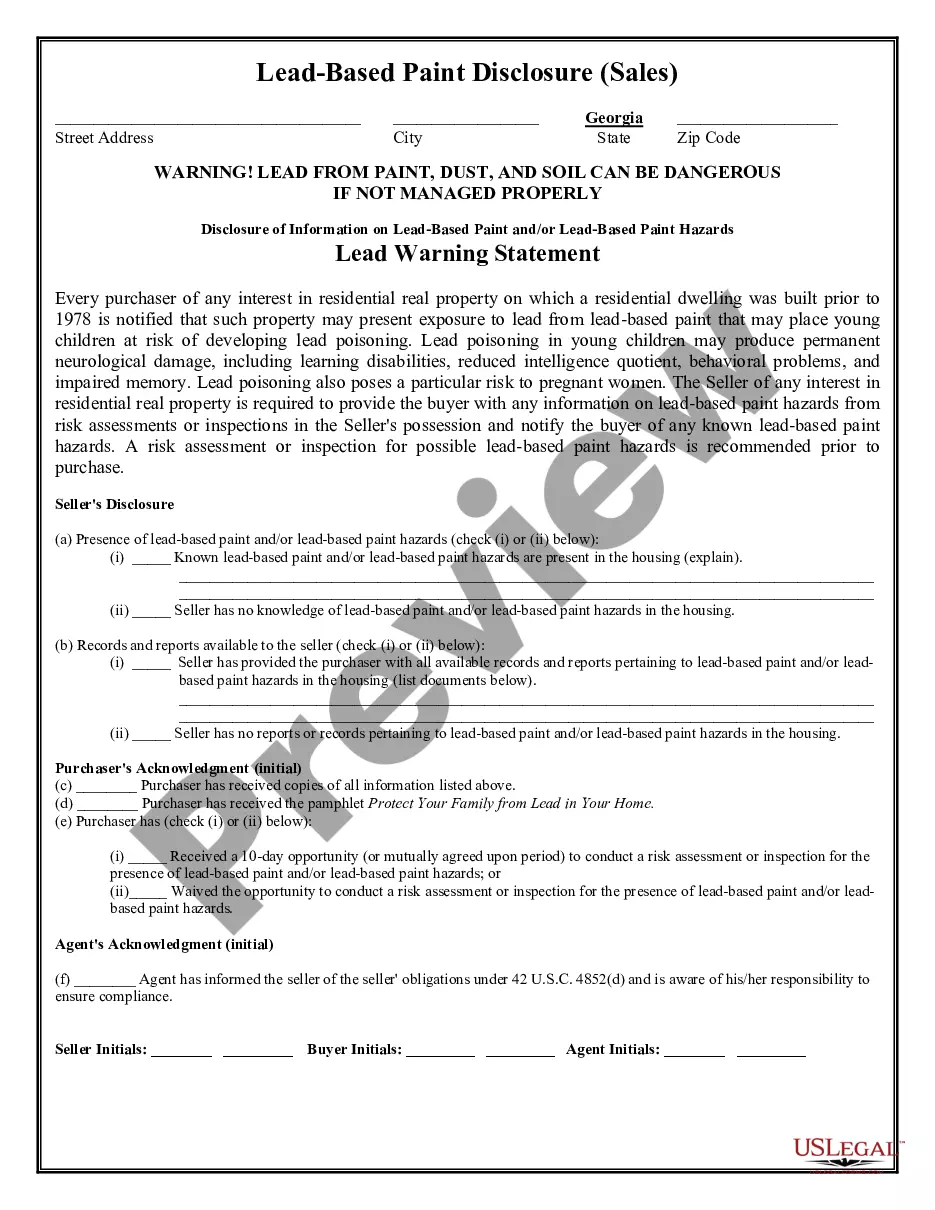
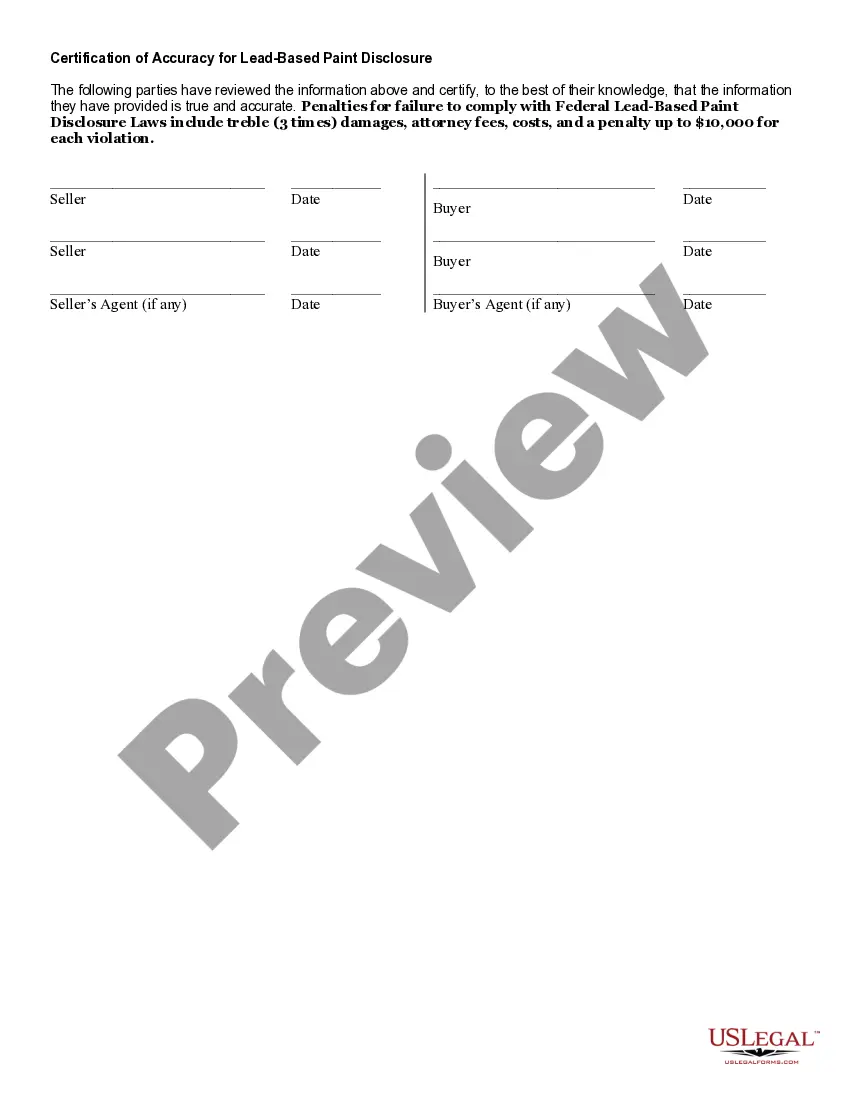
How to fill out Georgia Lead Based Paint Disclosure For Sales Transaction?
The Lead Epa Regulations displayed on this site is a versatile legal blueprint created by experienced attorneys in compliance with federal and state statutes and regulations.
For over 25 years, US Legal Forms has assisted individuals, organizations, and legal experts with more than 85,000 validated, state-specific documents for any commercial and personal scenario. It’s the fastest, easiest, and most dependable method to acquire the documentation you require, with the service ensuring bank-level data security and anti-malware safeguards.
- Search for the document you require and examine it. Browse through the file you sought and preview it or review the form description to confirm it meets your needs. If it doesn't, use the search bar to locate the correct one.
- Sign up and Log In. Choose the pricing plan that fits you best and create an account. Use PayPal or a credit card for a swift transaction. If you already have an account, Log In and verify your subscription to proceed.
- Receive the fillable document. Select your desired format for your Lead Epa Regulations (PDF, Word, RTF) and store the template on your device.
- Complete and sign the documentation. Print the template to fill it out by hand. Alternatively, utilize an online versatile PDF editor to promptly and accurately complete and sign your form with a legally binding electronic signature.
- Download your documentation one last time. Access the same document again whenever needed. Visit the My documents section in your profile to redownload any previously acquired forms.
Form popularity
FAQ
Soil contaminated by lead can be addressed with an interim abatement, which involves cleaning, removing, replacing, or covering the affected soil. Permanent abatement involves removing the affected soil, testing whatever is left over for lead, and covering it with either noncontaminated soil, asphalt, or concrete.
There are four basic methods of lead abatement: replacement?removing the building part with lead-based paint on it and replacing it with a new one; enclosure?covering the lead-based paint with a solid barrier; ? encapsulation?coating the lead-based painted surface so that it is not accessible; ? paint removal.
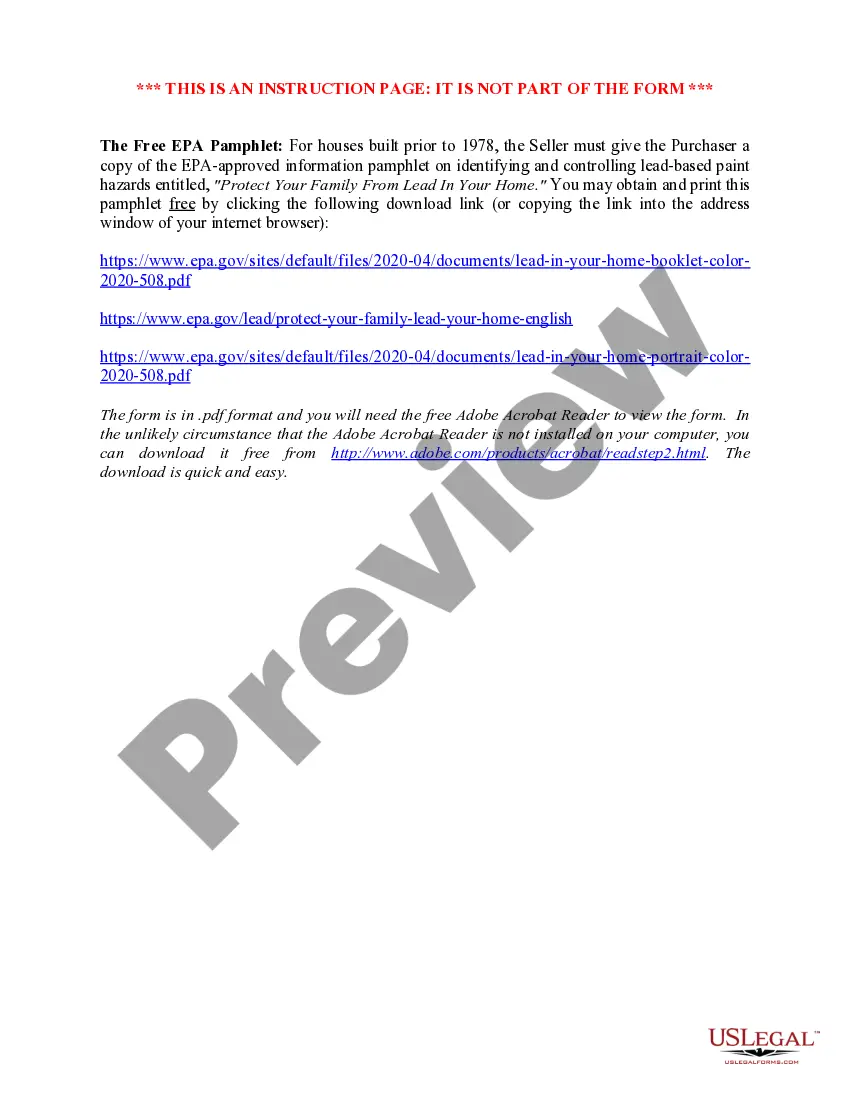
Landlords must give prospective tenants of target housing, including most buildings built before 1978: An EPA-approved information pamphlet on identifying and controlling lead-based paint hazards, Protect Your Family From Lead In Your Home (PDF).
Any renovation, repair, or painting (RRP) project in a pre-1978 home or building can easily create dangerous lead dust. EPA requires that RRP projects that disturb lead-based paint in homes, child care facilities and preschools built before 1978 be performed by lead-safe certified contractors.
Direct Discharges of Lead into Water The CWA prohibits anyone from discharging pollutants, including lead, through a point source into a water of the United States unless they have a National Pollutant Discharge Elimination System (NPDES) permit.