Georgia Life Estate With Remainder Interest

Description
Get your form ready online
Our built-in tools help you complete, sign, share, and store your documents in one place.
Make edits, fill in missing information, and update formatting in US Legal Forms—just like you would in MS Word.
Download a copy, print it, send it by email, or mail it via USPS—whatever works best for your next step.
Sign and collect signatures with our SignNow integration. Send to multiple recipients, set reminders, and more. Go Premium to unlock E-Sign.
If this form requires notarization, complete it online through a secure video call—no need to meet a notary in person or wait for an appointment.
We protect your documents and personal data by following strict security and privacy standards.

Make edits, fill in missing information, and update formatting in US Legal Forms—just like you would in MS Word.

Download a copy, print it, send it by email, or mail it via USPS—whatever works best for your next step.

Sign and collect signatures with our SignNow integration. Send to multiple recipients, set reminders, and more. Go Premium to unlock E-Sign.

If this form requires notarization, complete it online through a secure video call—no need to meet a notary in person or wait for an appointment.

We protect your documents and personal data by following strict security and privacy standards.
Looking for another form?
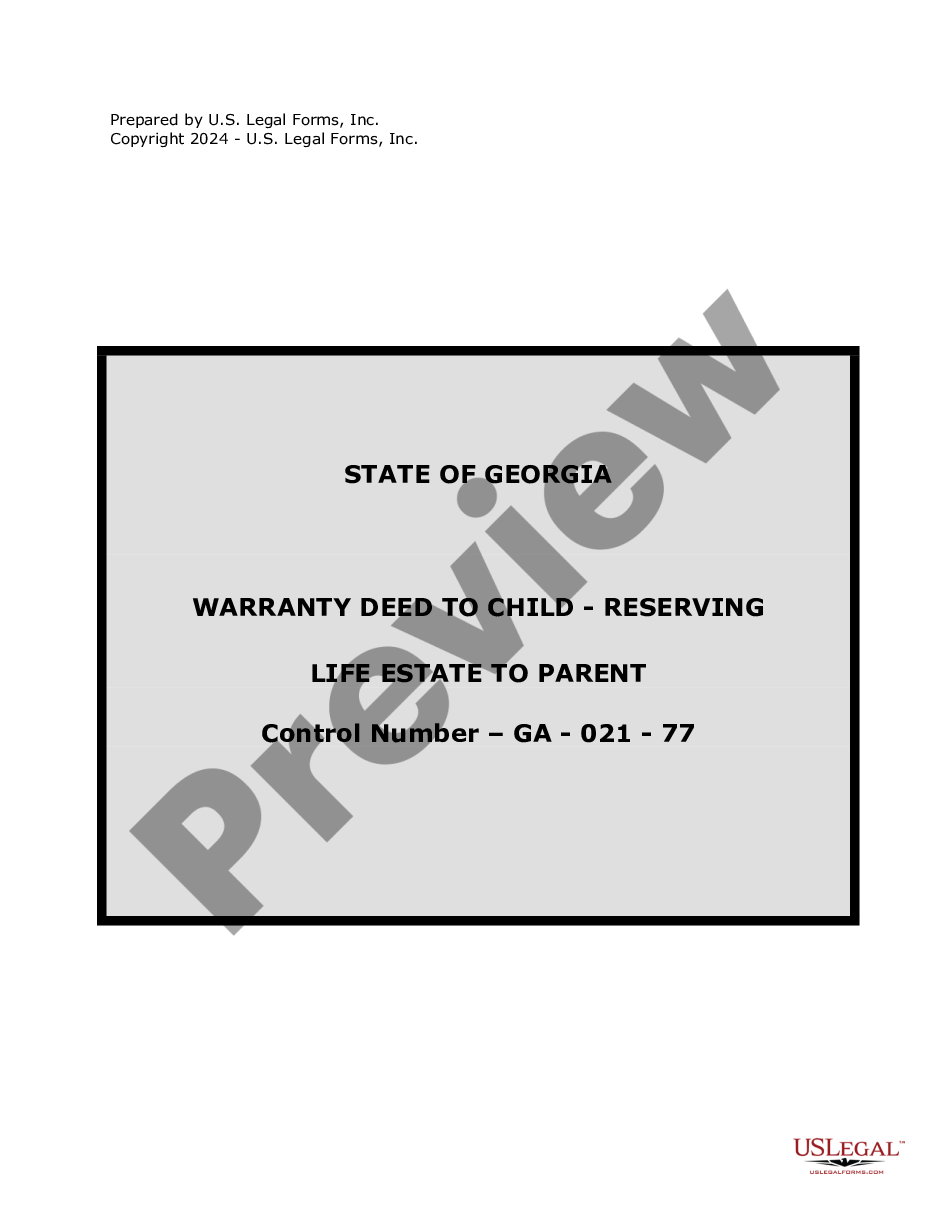
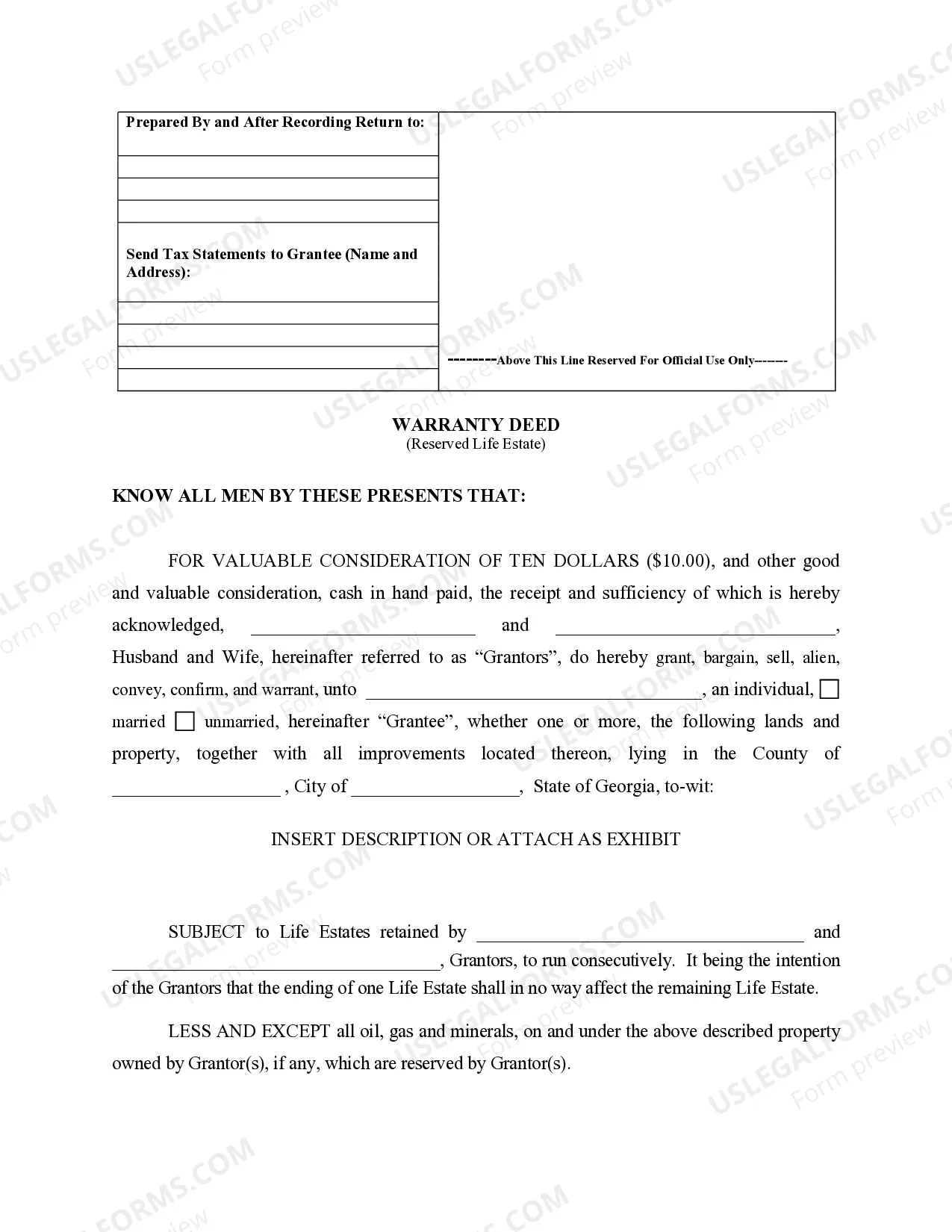
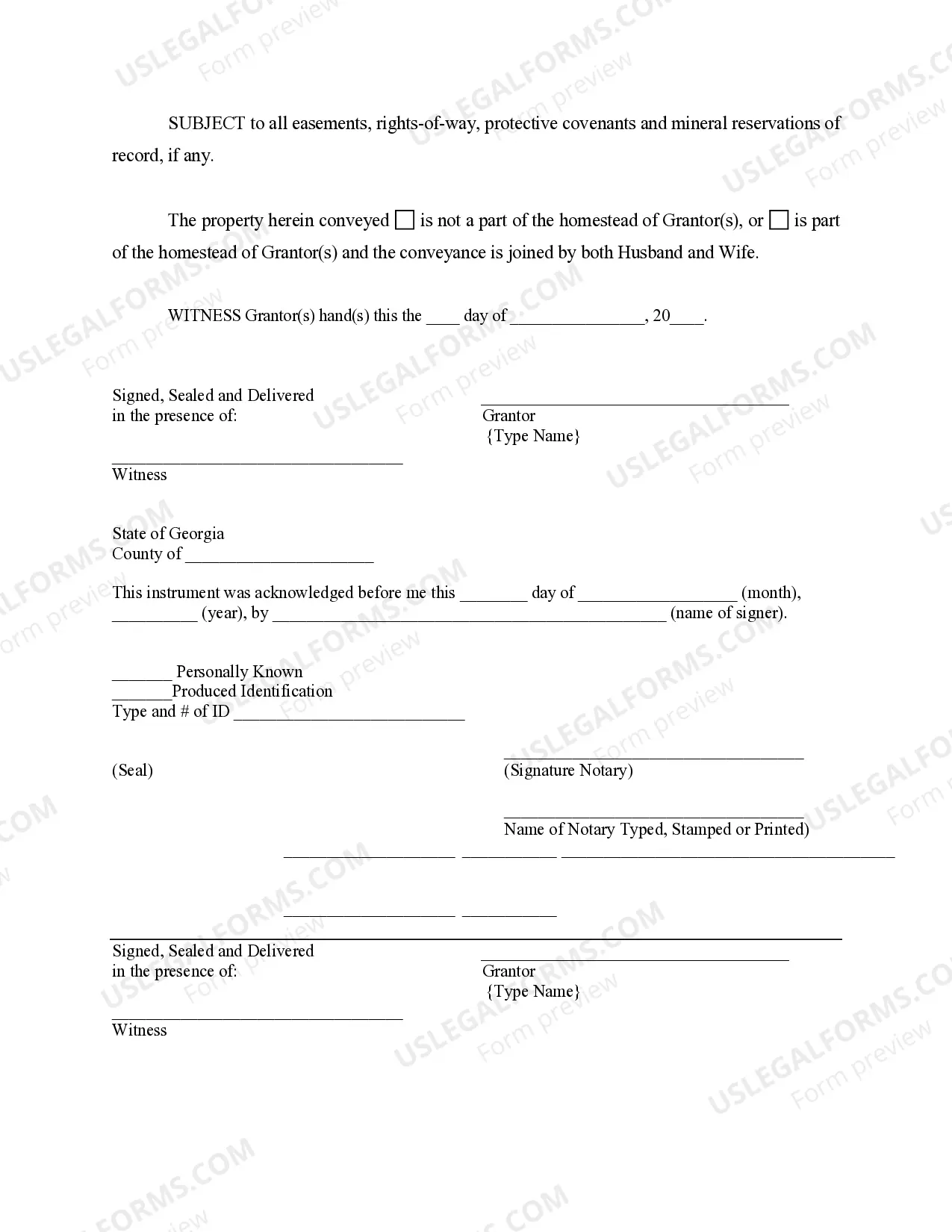
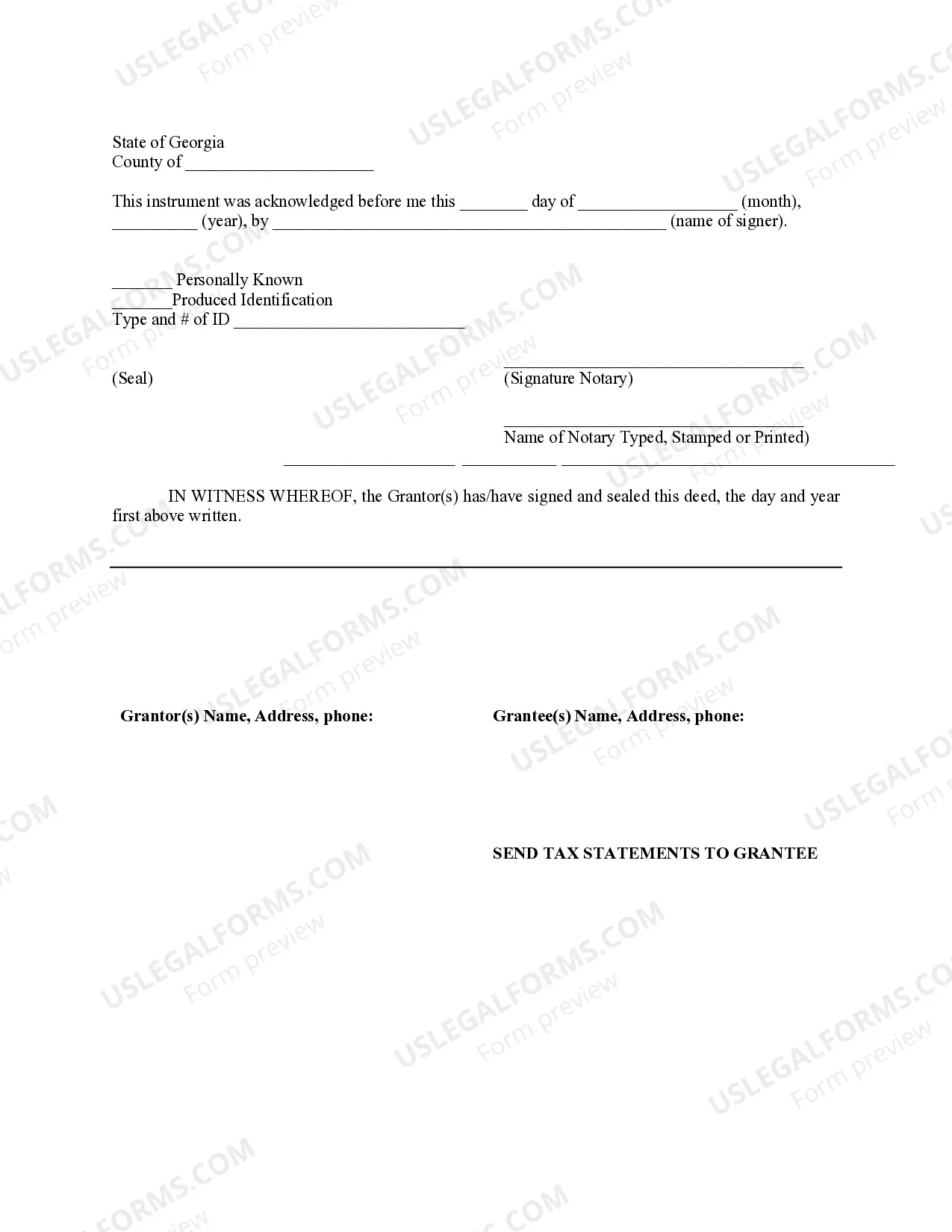
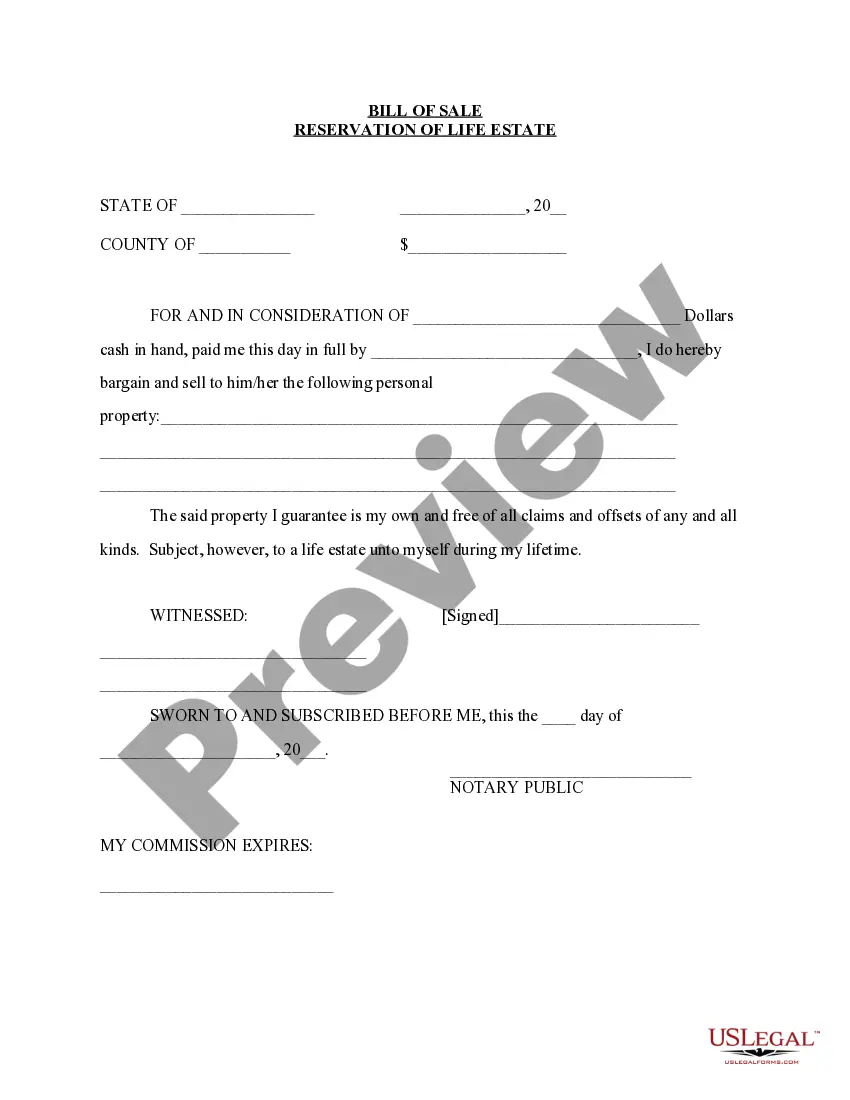
How to fill out Georgia Warranty Deed To Child Reserving A Life Estate In The Parents?
Managing legal documents can be exasperating, even for the most seasoned professionals.
If you are seeking a Georgia Life Estate With Remainder Interest and lack the time to invest in finding the correct and current version, the processes can be strenuous.
Utilize sophisticated tools to complete and manage your Georgia Life Estate With Remainder Interest.
Access a valuable library of articles, guides, and resources pertinent to your needs and circumstances.
Ensure that the form is accepted in your state or county before selecting Buy Now once you are prepared. Choose a monthly subscription plan, find the format you require, and Download, complete, sign, print, and send your document. Experience the convenience of the US Legal Forms online library, supported by 25 years of expertise and reliability. Transform your routine document handling into a seamless and intuitive process today.
- Save time and effort searching for the necessary documents, leveraging US Legal Forms’ enhanced search and Preview feature to find and obtain Georgia Life Estate With Remainder Interest.
- If you possess a subscription, Log In to your US Legal Forms account, search for the form, and obtain it.
- Check your My documents tab to review the documents you've previously saved and to organize your folders as desired.
- If this is your first experience with US Legal Forms, create a free account to gain unlimited access to the platform's benefits.
- After accessing the needed form, verify it is the correct one by previewing and reviewing its description.
- A comprehensive online form repository can be transformative for anyone aiming to handle these matters effectively.
- US Legal Forms is a frontrunner in the realm of online legal forms, boasting over 85,000 state-specific legal documents accessible at any time.
- With US Legal Forms, you can access curated forms tailored to state or county requirements, accommodating both personal and business needs in one location.
Form popularity
FAQ
The primary purpose of a remainder interest in a life estate is to facilitate the transfer of property ownership upon the death of the life tenant while allowing the tenant to retain use and enjoyment of the property during their lifetime. This arrangement is particularly beneficial in estate planning, as it minimizes probate issues and ensures a smooth transition of property rights. By utilizing a Georgia life estate with remainder interest, you can effectively plan for the future and protect your assets.
To calculate remainder interest in a life estate, first ascertain the property's appraised value. Then, subtract the present value of the life estate interest from this appraised value. This approach provides a clear representation of the financial interests and obligations involved in a Georgia life estate with remainder interest.
Valuing an undivided interest in real estate involves determining the property's market value and then applying the proportionate share based on ownership. It is essential to consider any restrictions or responsibilities tied to the property, especially within a Georgia life estate with remainder interest framework. This method ensures all co-owners receive fair treatment and clarity regarding their respective stakes.
Calculating the remainder interest in a life estate involves assessing the fair market value of the property and subtracting the present value of the life tenant's interest. This formula usually requires knowledge of state-specific life expectancy tables and current interest rates. By understanding these elements, you can accurately evaluate the remainder interest associated with a Georgia life estate.
To calculate the present value of the remainder interest, you must first determine the life expectancy of the life tenant, which can be based on statistical data. Next, you can use a present value formula that applies a discount rate over the remaining years of the life estate. In the context of a Georgia life estate with remainder interest, this calculation helps establish the current monetary worth of the future interest.
A remainder interest occurs when an individual retains ownership of a property but grants another person the right to use the property for a specific period, typically until the original owner's passing. For instance, in a Georgia life estate with remainder interest, one party might have the right to live in the property during their lifetime, while another individual is designated to take ownership after their death. This arrangement allows for efficient estate planning and management of assets.
The remainder interest in a Georgia life estate with remainder interest represents the ownership rights the remainderman will acquire upon the life tenant's death. It typically takes effect immediately when the life estate is created but does not allow the remainderman to use the property until the life tenant passes away. Understanding this concept is crucial for effective estate and financial planning.
One downside of a Georgia life estate with remainder interest is that the life tenant retains limited control over the property, making it difficult to sell or mortgage without the remainderman's consent. Additionally, life estates can complicate tax implications and estate planning. If circumstances change, modifying the arrangement can be challenging, so it is advisable to approach this decision carefully.
The remainderman is the person or entity who will receive ownership of the property after the life tenant's death, while the remainder interest refers to their right to gain ownership. In a Georgia life estate with remainder interest, these two concepts work together to ensure a smooth transition of property ownership. Understanding both aspects is essential for effective estate planning.
A Georgia life estate with remainder interest grants one individual the right to use a property for their lifetime, while transferring ownership to another party, known as the remainderman, upon the life tenant's death. This arrangement allows for clear estate planning and minimizes probate issues. It also makes it possible for owners to control property distribution after their passing.