What Policies And Procedures Should A Company Have
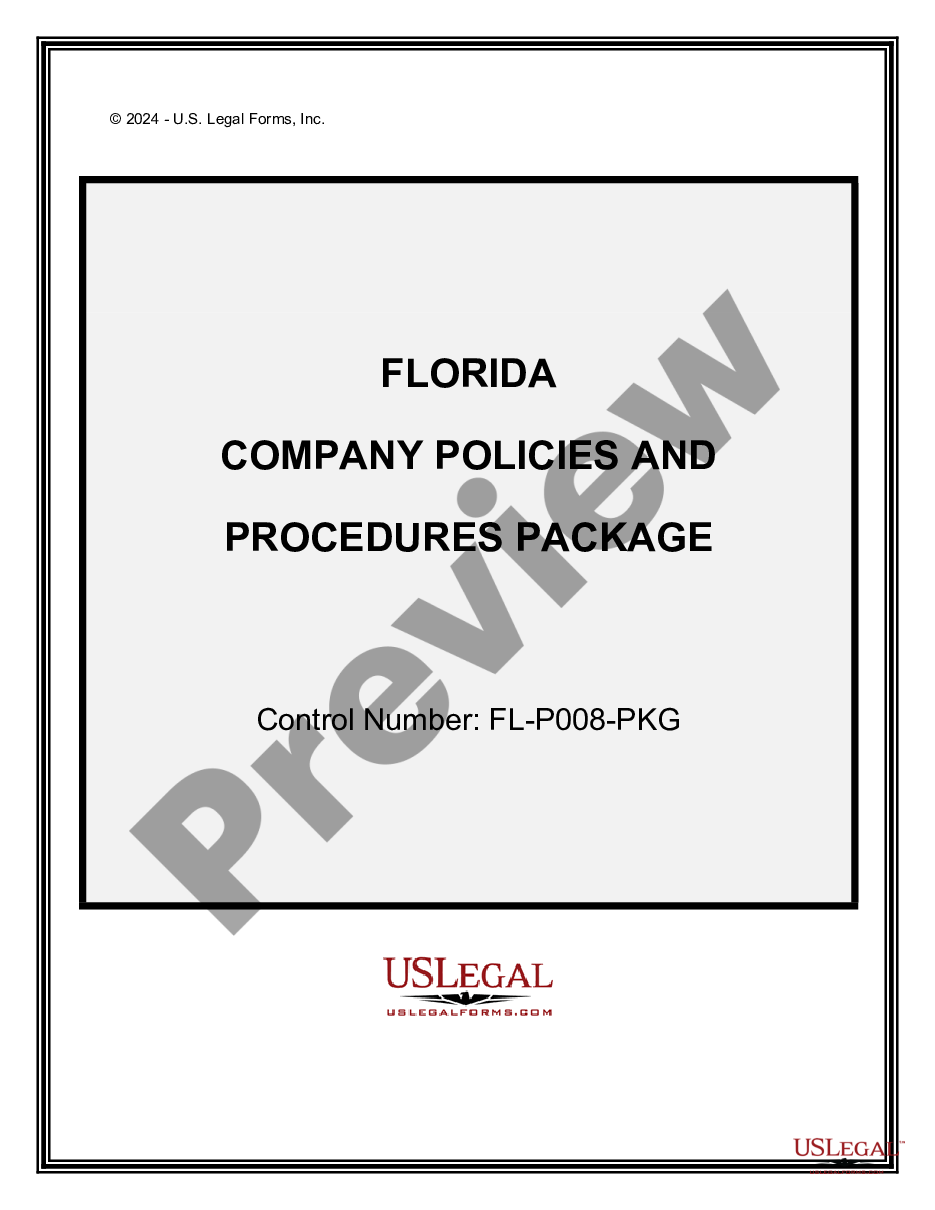
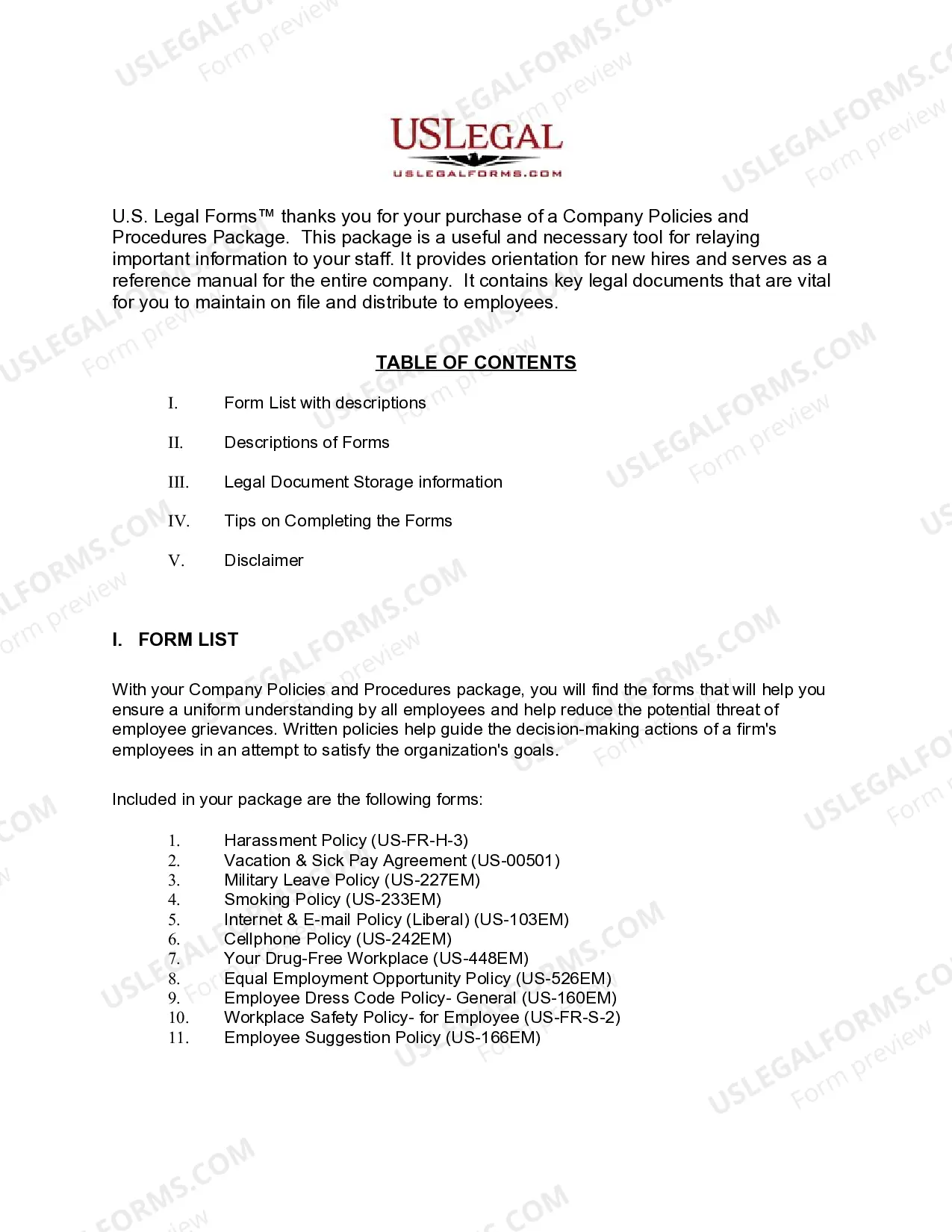
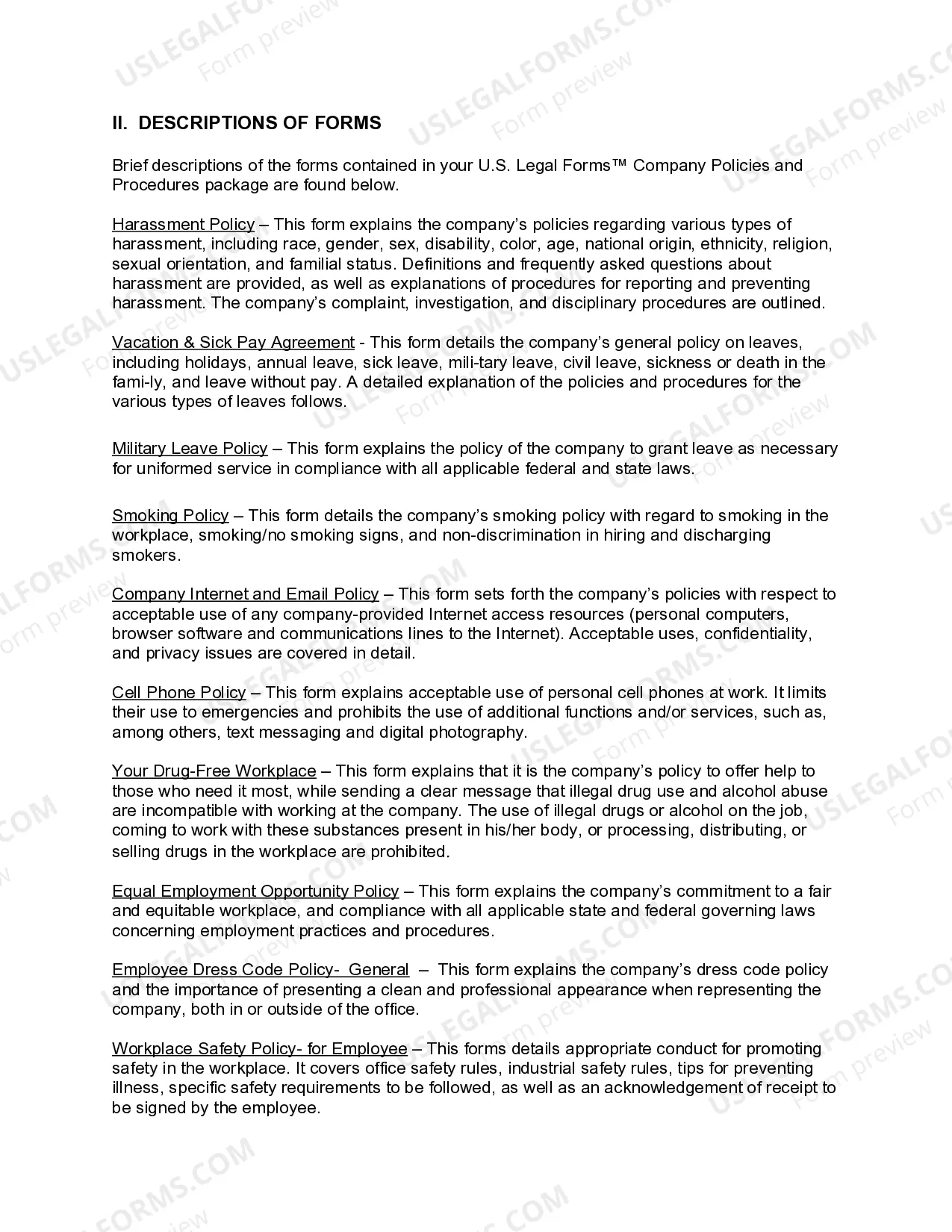
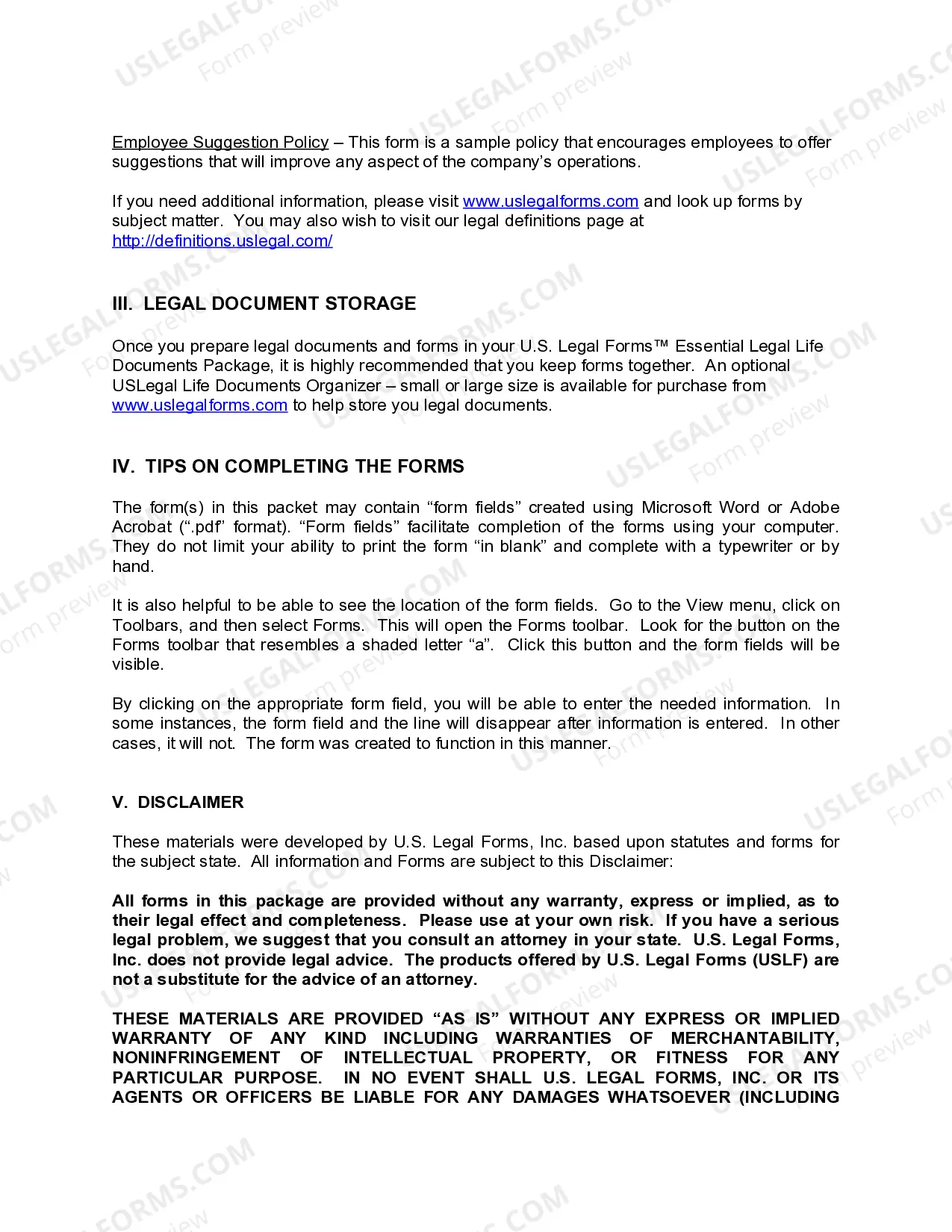
Description

Get your form ready online
Our built-in tools help you complete, sign, share, and store your documents in one place.
Make edits, fill in missing information, and update formatting in US Legal Forms—just like you would in MS Word.
Download a copy, print it, send it by email, or mail it via USPS—whatever works best for your next step.
Sign and collect signatures with our SignNow integration. Send to multiple recipients, set reminders, and more. Go Premium to unlock E-Sign.
If this form requires notarization, complete it online through a secure video call—no need to meet a notary in person or wait for an appointment.
We protect your documents and personal data by following strict security and privacy standards.

Make edits, fill in missing information, and update formatting in US Legal Forms—just like you would in MS Word.

Download a copy, print it, send it by email, or mail it via USPS—whatever works best for your next step.

Sign and collect signatures with our SignNow integration. Send to multiple recipients, set reminders, and more. Go Premium to unlock E-Sign.

If this form requires notarization, complete it online through a secure video call—no need to meet a notary in person or wait for an appointment.

We protect your documents and personal data by following strict security and privacy standards.
Looking for another form?




How to fill out Florida Company Employment Policies And Procedures Package?
- Log into your existing US Legal Forms account and ensure your subscription is active. If it has expired, consider renewing it based on your chosen plan.
- If you're a new user, navigate to the form preview section and carefully review the details to confirm that it meets your needs and complies with local regulations.
- Should you need an alternate document, utilize the search function to locate the required template that aligns with your needs.
- Proceed by selecting the 'Buy Now' option and choose the subscription tier that best fits your requirements. You will need to create an account to gain access.
- Complete your purchase by entering your payment information through credit card or PayPal.
- Finally, download the document to your device, allowing for easy access and completion at your convenience. You can always find it later in the 'My Forms' section of your profile.
In conclusion, US Legal Forms stands out for its extensive library of over 85,000 legal forms, ensuring you find exactly what your company needs. By leveraging this service, you can confidently create sound policies and procedures.
Start your journey today by exploring US Legal Forms and obtaining the documents essential for your business.
Form popularity
FAQ
To organize policies and procedures, create a central repository where all documents can be easily accessed by employees. Organize them by category, such as HR, compliance, and operational procedures, to facilitate quick navigation. Regularly review and update these documents to ensure they remain relevant. A structured platform like US Legal Forms offers an excellent solution for managing and organizing your policies and procedures efficiently.
Writing policies and procedures requires clarity and alignment with your company's mission. Begin by defining the purpose of each policy and the specific procedures to follow. Use clear language and straightforward formatting to ensure that all employees can easily understand and implement the processes. Remember, an effective resource like US Legal Forms can provide you with customizable templates that simplify the writing process and help meet legal requirements.
To create effective policies and procedures, start by identifying the specific needs of your company. Gather input from various stakeholders, including employees and management, to ensure that the policies align with company goals. Document each policy clearly, outlining objectives and procedures, which will help establish a solid foundation. Utilizing platforms like US Legal Forms can streamline this process, offering templates and guidelines that ensure compliance with regulations.
To develop effective policies and procedures, start by assessing your organization's needs and objectives. Involve key stakeholders in discussions to gather insights. By focusing on what policies and procedures a company should have, you can create comprehensive guidelines that address both operational and strategic priorities.
While not all businesses are legally required to have written policies, documented policies assist in promoting understanding and compliance. A well-defined written policy can serve as a reference for employees. This is why knowing what policies and procedures a company should have can lead to better governance and reduced liability.
Typically, a team of HR professionals, legal advisors, and department leaders collaborate to write policies and procedures. Input from various stakeholders ensures that all perspectives are considered. When determining what policies and procedures a company should have, involving diverse voices in the writing process enhances effectiveness and buy-in.
Typically, yes, following established policies and procedures is mandatory for employees. These guidelines exist to promote safety, consistency, and legal compliance within the organization. Therefore, understanding what policies and procedures a company should have helps create a framework that supports these expectations.
When developing policies and procedures, consider the organizational goals, legal requirements, employee roles, and potential risks. Additionally, effective communication strategies are crucial for implementation. Focusing on what policies and procedures a company should have ensures clarity and alignment with overall objectives.
While it's not legally required for all businesses to have policies and procedures, having them is highly advisable. Policies and procedures aid in establishing consistent practices and minimizing risk. Therefore, understanding what policies and procedures a company should have can significantly improve operational efficiency and legal compliance.
Yes, company policies can be enforceable by law, depending on their nature and implementation. For example, workplace safety policies may have legal implications. Therefore, it's essential to ensure that what policies and procedures a company should have comply with legal standards and are effectively communicated to all employees.