Documents Used In Home Trade And Their Uses
Description

Get your form ready online
Our built-in tools help you complete, sign, share, and store your documents in one place.
Make edits, fill in missing information, and update formatting in US Legal Forms—just like you would in MS Word.
Download a copy, print it, send it by email, or mail it via USPS—whatever works best for your next step.
Sign and collect signatures with our SignNow integration. Send to multiple recipients, set reminders, and more. Go Premium to unlock E-Sign.
If this form requires notarization, complete it online through a secure video call—no need to meet a notary in person or wait for an appointment.
We protect your documents and personal data by following strict security and privacy standards.

Make edits, fill in missing information, and update formatting in US Legal Forms—just like you would in MS Word.

Download a copy, print it, send it by email, or mail it via USPS—whatever works best for your next step.

Sign and collect signatures with our SignNow integration. Send to multiple recipients, set reminders, and more. Go Premium to unlock E-Sign.

If this form requires notarization, complete it online through a secure video call—no need to meet a notary in person or wait for an appointment.

We protect your documents and personal data by following strict security and privacy standards.
Looking for another form?



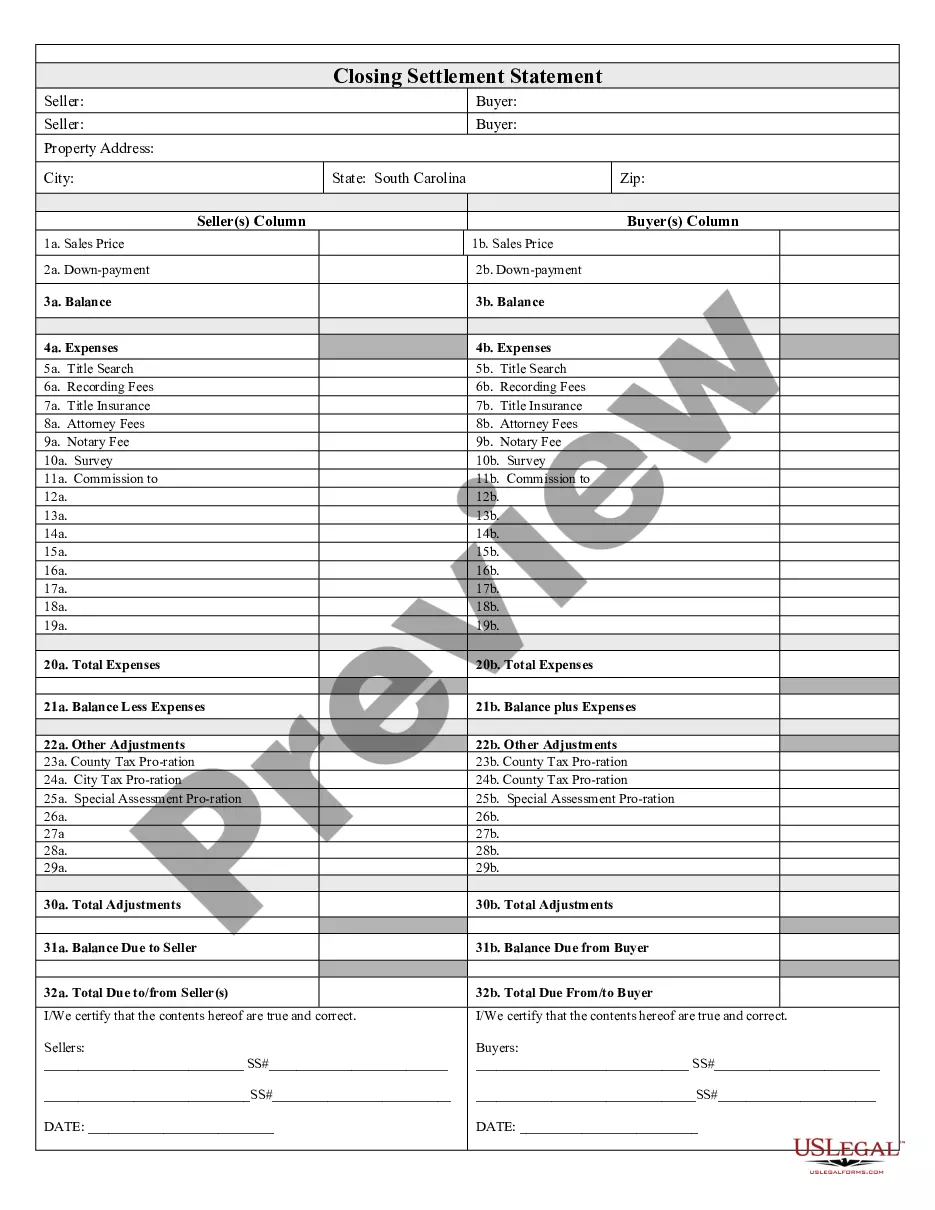



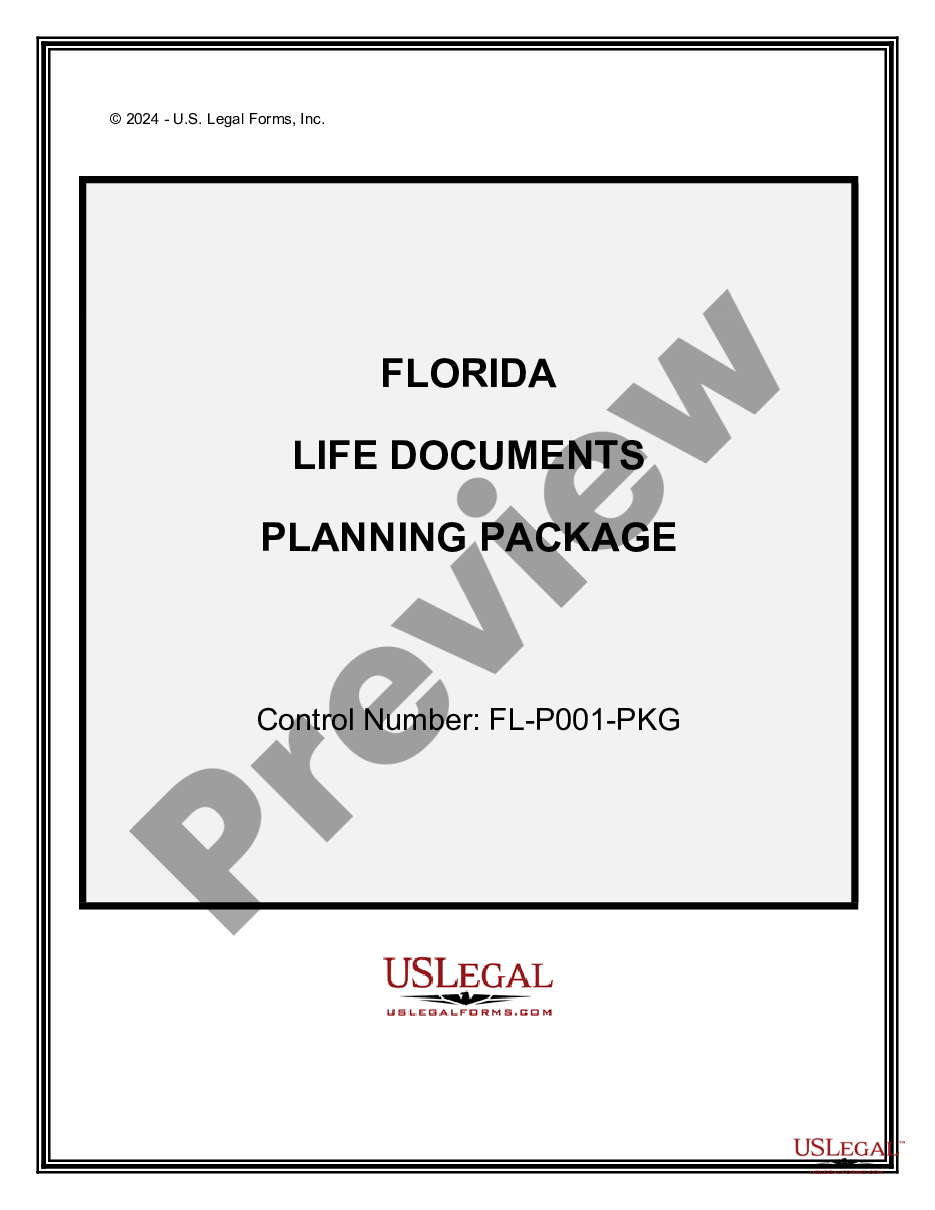
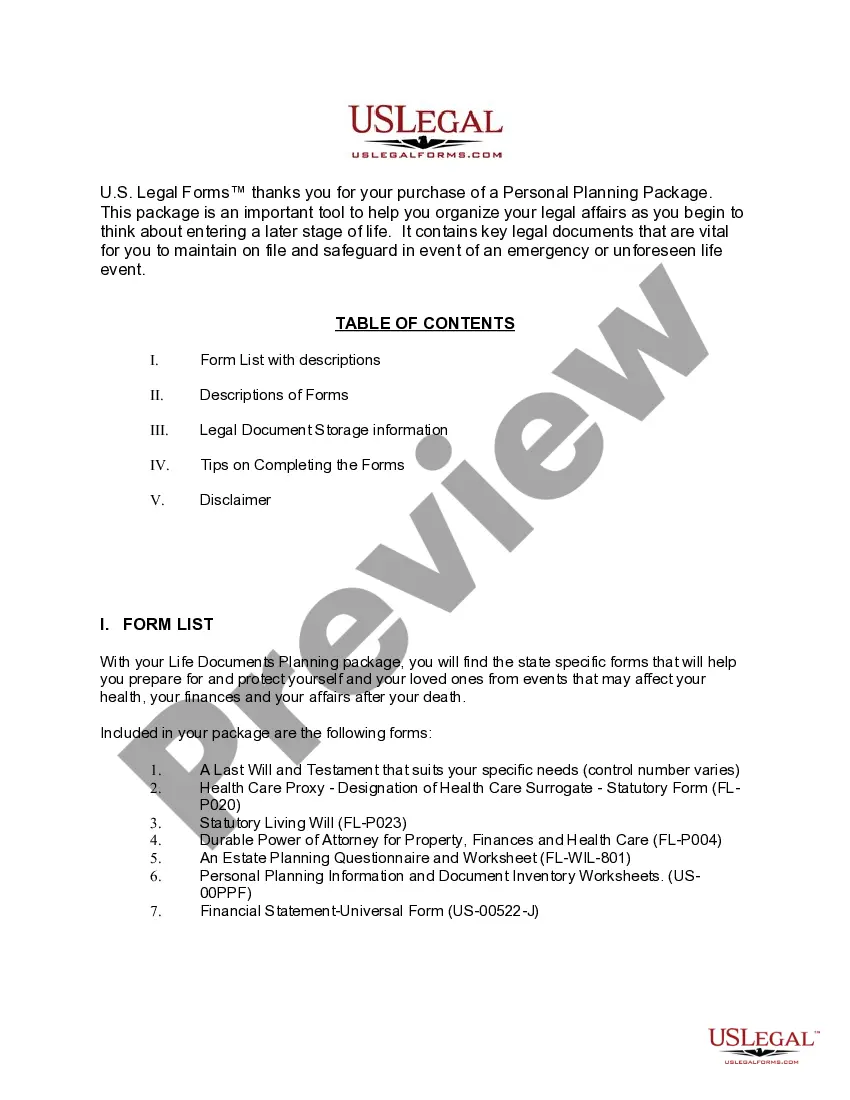
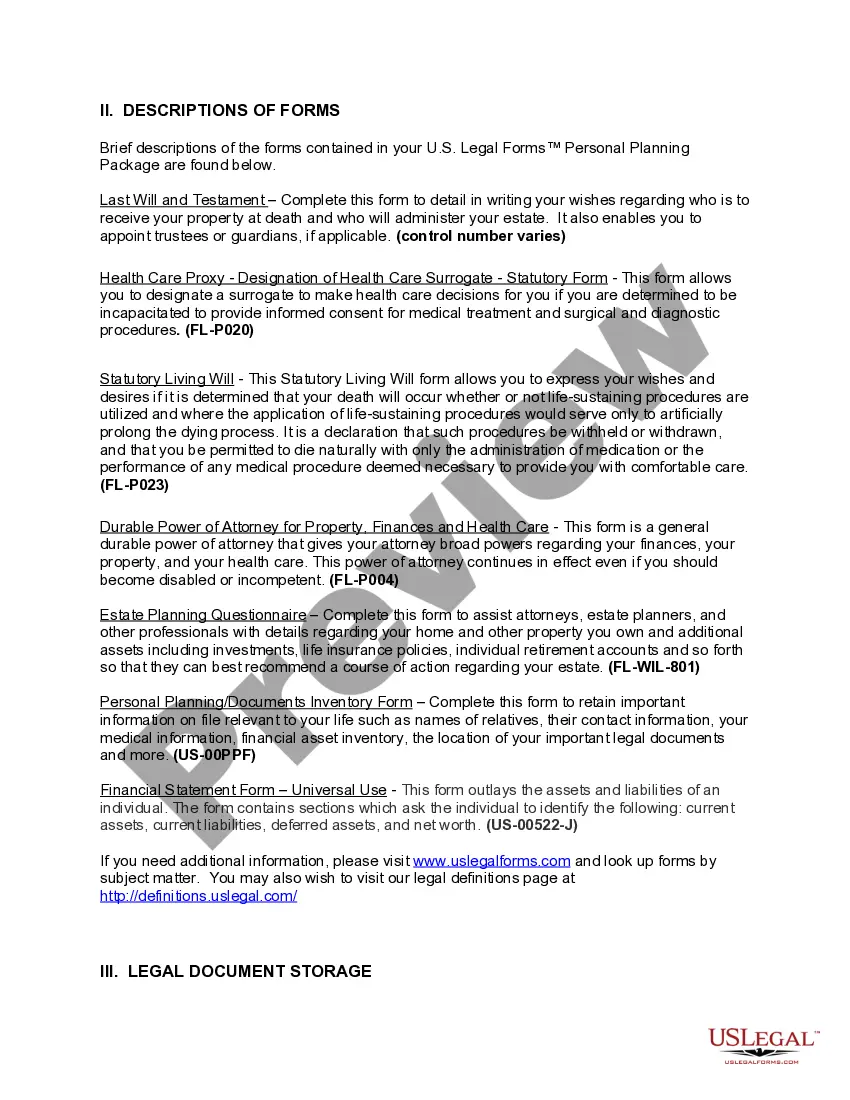
How to fill out Florida Life Documents Planning Package, Including Will, Power Of Attorney And Living Will?
Engaging with legal paperwork and procedures can be a labor-intensive addition to the daily schedule.
Documents Utilized In Home Trading And Their Functions and similar forms frequently necessitate that you look for them and understand how to fill them out accurately.
Thus, whether you are addressing financial, legal, or personal affairs, utilizing a comprehensive and efficient online directory of forms when required will significantly help.
US Legal Forms is the leading online service for legal documents, providing over 85,000 state-specific templates and a range of resources to help you complete your forms effortlessly.
Is this your first experience using US Legal Forms? Create and set up your account in a few moments, and you’ll gain access to the form catalog and Documents Utilized In Home Trading And Their Functions. Then, follow the steps below to finalize your document: Ensure you have found the correct form using the Review feature and checking the form description.
- Browse the assortment of pertinent documents available to you with just a single click.
- US Legal Forms offers you state- and county-specific documents ready for download at any time.
- Protect your paperwork management processes with a high-quality service that enables you to prepare any document in a matter of minutes without extra or hidden fees.
- Simply Log In to your account, find Documents Utilized In Home Trading And Their Functions, and obtain it instantly from the My documents section.
- You can also access forms you've downloaded previously.
Form popularity
FAQ
Documents used in transportation include bills of lading, freight invoices, delivery receipts, packing lists, and shipping manifests. Each document ensures that goods are shipped legally and efficiently. They provide crucial information about the contents, destination, and handling requirements of shipments. Understanding the documents used in home trade and their uses will streamline your transportation processes.
Examples of trade include retail exchanges, wholesale dealings, barter transactions, e-commerce sales, and international shipping agreements. Each type involves the transfer of goods or services for compensation. Recognizing various forms of trade can help you better understand the dynamic trading landscape. Incorporating knowledge about documents used in home trade and their uses supports effective engagement in these activities.
Common items that can serve as proof of trading include invoices, contracts, and receipts. Each of these documents provides details about the transaction, such as the parties involved and the agreement terms. Utilizing these documents ensures transparency in your trading activities. Knowing the documents used in home trade and their uses aids in creating a reliable trading environment.
A proof of trade document serves as evidence of a business transaction. It confirms that goods or services were exchanged between parties. These documents are essential for maintaining accurate records and ensuring smooth financial operations. Understanding the documents used in home trade and their uses will help you manage your transactions effectively.
Proof of trade in home transactions often relies on specific documents that confirm ownership and agreements. Commonly used documents include signed contracts, receipts, and property deeds. These documents provide legal verification of the transaction and help resolve any disputes that may arise. By knowing the documents used in home trade and their uses, you’re better prepared to establish legitimacy in your property dealings.
In the home trade delivery process, four key documents are often utilized. These include the sale agreement, mortgage documents, property title, and closing disclosure. Each document plays a crucial role in ensuring that the transaction proceeds smoothly, outlining the terms, financial obligations, and rights of ownership. Familiarizing yourself with these documents used in home trade and their uses will enhance your confidence in the buying or selling process.
Main Documents Used In Internal Trade 1. Invoice ? In case of credit purchases, a statement is supplied by the seller of goods in which he gives particulars of goods purchased by buyer such as quantity, quality, rate, total value, sales tax, trade discount, etc. It is also called a Bill or Memo.
A copy of the note is then returned to the seller as proof of delivery. It's useful because, suppliers can confirm that everything went as planned with the delivery and after it's been signed and returned, it serves as proof that all goods were received and the recipient is satisfied.
The bill or invoice for the goods is sent by the supplier immediately after they have been despatched. It contains <111 details of the purchase - quantity, quality, grade and price, with trade discount deducted from the invoice if applicable.
(i) Trade enquiry. (ii) Import licence. (iii) Shipment of advice. (iv) Import general manifest.