Florida Trust Amendment Form For Estate
Description
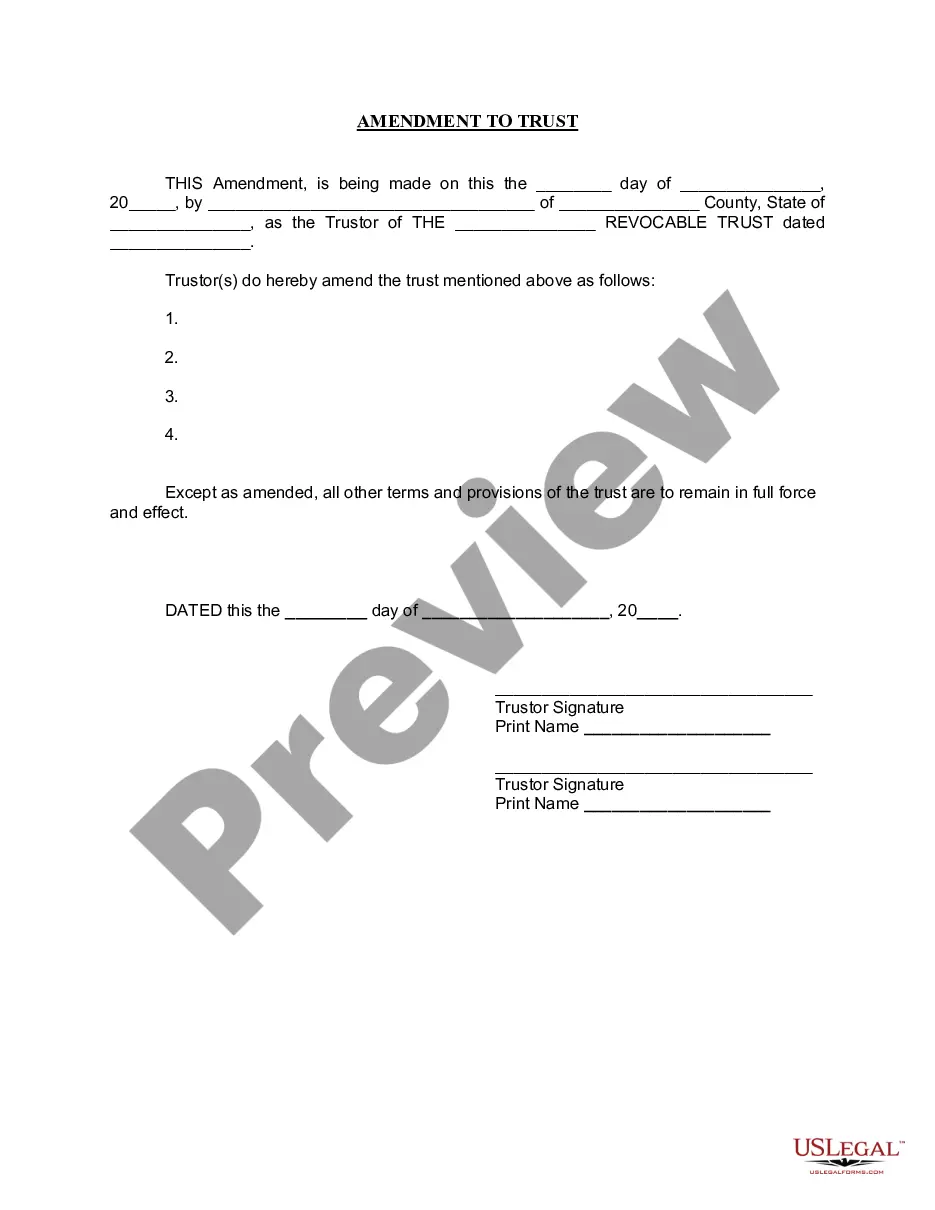
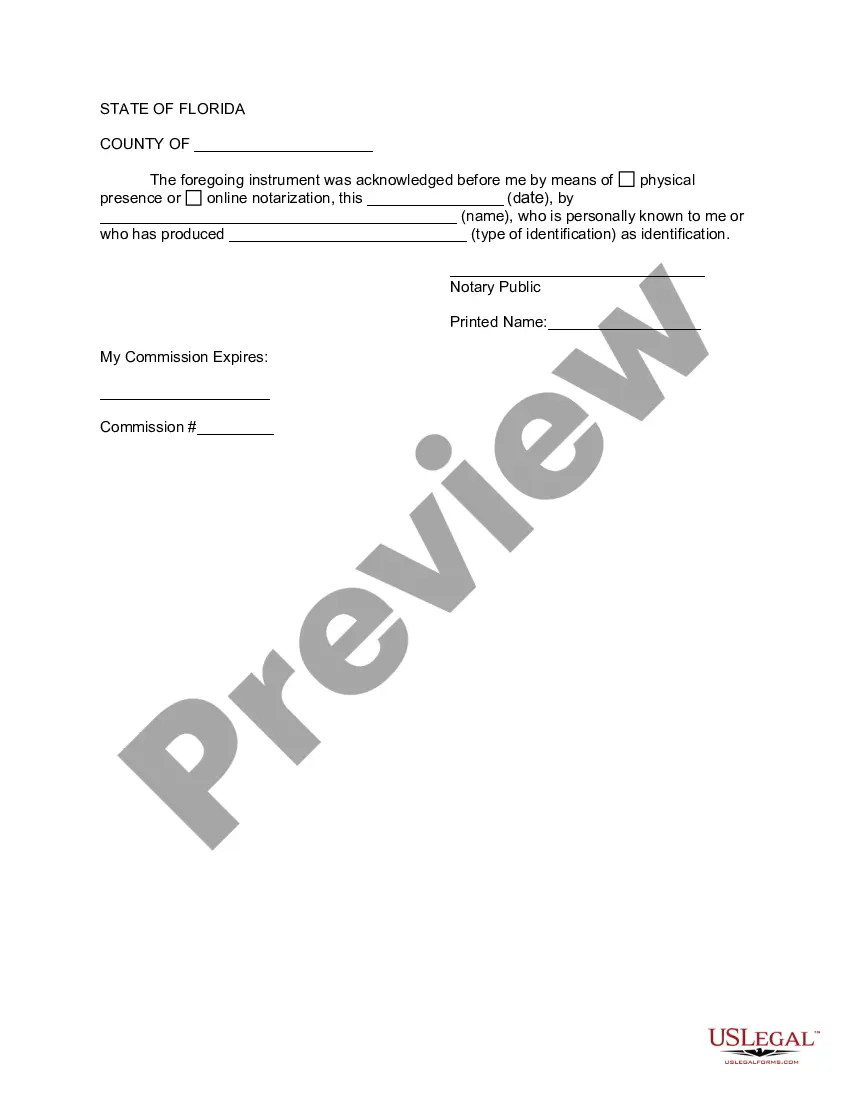

Get your form ready online
Our built-in tools help you complete, sign, share, and store your documents in one place.
Make edits, fill in missing information, and update formatting in US Legal Forms—just like you would in MS Word.
Download a copy, print it, send it by email, or mail it via USPS—whatever works best for your next step.
Sign and collect signatures with our SignNow integration. Send to multiple recipients, set reminders, and more. Go Premium to unlock E-Sign.
If this form requires notarization, complete it online through a secure video call—no need to meet a notary in person or wait for an appointment.
We protect your documents and personal data by following strict security and privacy standards.

Make edits, fill in missing information, and update formatting in US Legal Forms—just like you would in MS Word.

Download a copy, print it, send it by email, or mail it via USPS—whatever works best for your next step.

Sign and collect signatures with our SignNow integration. Send to multiple recipients, set reminders, and more. Go Premium to unlock E-Sign.

If this form requires notarization, complete it online through a secure video call—no need to meet a notary in person or wait for an appointment.

We protect your documents and personal data by following strict security and privacy standards.
Looking for another form?









How to fill out Florida Amendment To Living Trust?
Creating legal paperwork from the ground up can at times be intimidating.
Certain situations may require extensive investigation and significant financial resources.
If you seek a simpler and more economical method of drafting the Florida Trust Amendment Form For Estate or other documents without unnecessary hassle, US Legal Forms is always available to assist you.
Our digital repository of over 85,000 current legal templates encompasses nearly every aspect of your fiscal, legal, and personal matters. With just a few clicks, you can swiftly obtain state- and county-compliant forms expertly prepared by our legal professionals.
Review the form preview and descriptions to ensure you have found the correct document you are seeking.
- Utilize our website any time you require trustworthy and dependable services to swiftly locate and download the Florida Trust Amendment Form For Estate.
- If you’re already familiar with our services and have created an account previously, simply Log In to your account, find your desired form, and download it immediately or re-download it at any time later in the My documents section.
- Don't hold an account? No problem. Registering takes just a few minutes, allowing you to navigate the library.
- But before diving straight into downloading the Florida Trust Amendment Form For Estate, consider these suggestions.
Form popularity
FAQ
It's important to know what you want to change and where in your trust document this information lives (such as the article number you're amending). Fill out the amendment form. Complete the entire form. It's important to be clear and detailed in describing your changes.
In Florida, anytime a trust amendment is created, it must be notarized in order to become enforceable.
In Florida, the amendment must conform to the procedures laid out in the trust's declaration. If no procedures are specified, Florida law allows the grantor to amend the trust by executing a document that clearly states their intentions.
Florida law requires that a trust document and any amendments to it be executed by the Grantor(s) in the presence of two witnesses who must also execute the document.
In most cases, a trust deed generally offers two processes for the removal of a beneficiary. Most commonly, the beneficiary can sign a document to renunciate all interests as a beneficiary. Otherwise, the trustee may have discretionary power to revoke the beneficiary.