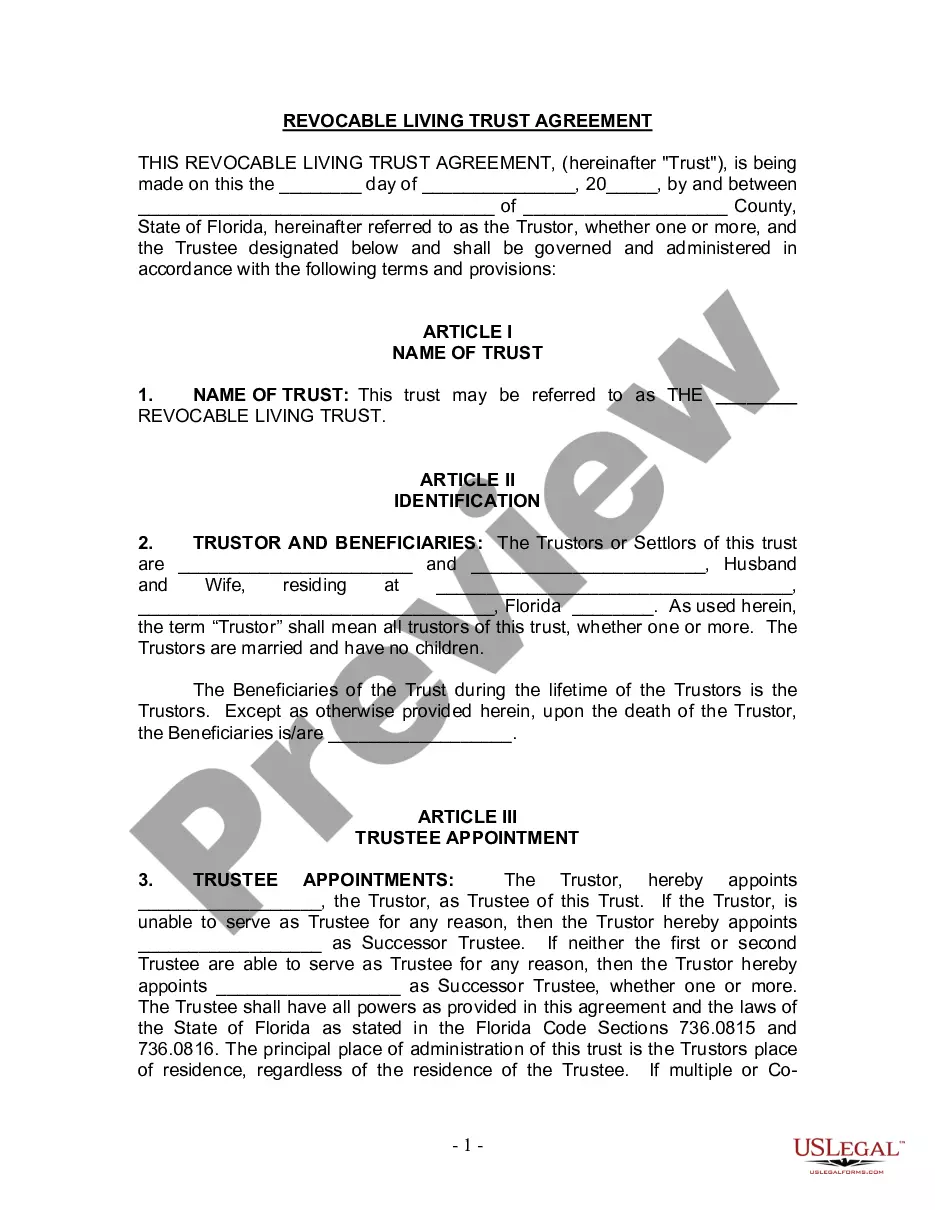
Florida Living Trust With Multiple Beneficiaries
Description





Get your form ready online
Our built-in tools help you complete, sign, share, and store your documents in one place.
Make edits, fill in missing information, and update formatting in US Legal Forms—just like you would in MS Word.
Download a copy, print it, send it by email, or mail it via USPS—whatever works best for your next step.
Sign and collect signatures with our SignNow integration. Send to multiple recipients, set reminders, and more. Go Premium to unlock E-Sign.
If this form requires notarization, complete it online through a secure video call—no need to meet a notary in person or wait for an appointment.
We protect your documents and personal data by following strict security and privacy standards.

Make edits, fill in missing information, and update formatting in US Legal Forms—just like you would in MS Word.

Download a copy, print it, send it by email, or mail it via USPS—whatever works best for your next step.

Sign and collect signatures with our SignNow integration. Send to multiple recipients, set reminders, and more. Go Premium to unlock E-Sign.

If this form requires notarization, complete it online through a secure video call—no need to meet a notary in person or wait for an appointment.

We protect your documents and personal data by following strict security and privacy standards.
Looking for another form?








How to fill out Florida Revocable Living Trust For Husband And Wife With No Children?
Handling legal documents can be exasperating, even for seasoned professionals.
When you're looking for a Florida Living Trust With Multiple Beneficiaries and lack the time to spend searching for the correct and current version, the process can be stressful.
US Legal Forms meets any requirements you may have, ranging from personal to corporate paperwork, all in one location.
Make use of sophisticated tools to create and oversee your Florida Living Trust With Multiple Beneficiaries.
Here are the actions to take after downloading the required form: Confirm it is the correct document by previewing it and reviewing its details. Make sure the sample is accepted in your state or county. Click Buy Now when you are prepared. Select a subscription option. Obtain the format you require, and Download, fill out, sign, print, and dispatch your document. Take advantage of the US Legal Forms online library, supported by 25 years of expertise and reliability. Streamline your daily document management into a simple and user-friendly process today.
- Access a wealth of articles, guides, and resources pertinent to your situation and requirements.
- Save time and energy in searching for the necessary documents, and leverage US Legal Forms’ advanced search and Preview tool to find and obtain the Florida Living Trust With Multiple Beneficiaries.
- If you possess a monthly subscription, Log Into your US Legal Forms account, look for the form, and acquire it.
- Check your My documents tab to review the documents you have previously downloaded and manage your folders as desired.
- If it's your first experience with US Legal Forms, set up an account and gain unlimited access to all the benefits of the library.
- An extensive online form repository can be transformative for anyone aiming to navigate these circumstances effectively.
- US Legal Forms stands out as a leader in online legal documents, offering over 85,000 state-specific legal forms accessible at any moment.
- With US Legal Forms, you can find state- or county-specific legal and business documents.
Form popularity
FAQ
The 5 by 5 rule for trusts allows beneficiaries to withdraw up to $5,000 or 5% of the trust's value each year without affecting the trust's tax status. This rule is particularly relevant when managing a Florida living trust with multiple beneficiaries, as it provides flexibility and access to funds. By understanding this rule, you can make informed decisions about distributions among your beneficiaries. If you need assistance in setting up a trust that follows these guidelines, consider using the US Legal Forms platform to find the right documents.
Yes, you can have two or more beneficiaries on a living trust. This is a common practice that allows the trustor to distribute assets among multiple individuals according to their wishes. A Florida living trust with multiple beneficiaries enables you to specify how each beneficiary will receive their share, which can help prevent misunderstandings in the future.
You can add more beneficiaries to a trust, provided that you follow the appropriate legal procedures outlined in the trust agreement. This flexibility is one of the key benefits of a Florida living trust with multiple beneficiaries, as it allows you to adapt to changing family dynamics or financial situations. Consulting with a legal expert can help ensure that the additions are made correctly.
Yes, two or more people can certainly be beneficiaries of a trust. In fact, many individuals create a Florida living trust with multiple beneficiaries to ensure equitable distribution among family members or friends. This arrangement allows the trustor to dictate how assets are divided among all beneficiaries, fostering clear communication and minimizing disputes.
The 2-year rule for trusts generally refers to the IRS's regulations regarding the taxation of trusts and their beneficiaries. Essentially, if a trust distributes income to beneficiaries, they may be required to report this income on their tax returns within two years. For a Florida living trust with multiple beneficiaries, understanding this rule is essential for effective tax planning.
One downside for beneficiaries of a living trust is that they may not have immediate access to assets. Unlike a will, which distributes assets directly after death, a Florida living trust with multiple beneficiaries may impose waiting periods or conditions on distributions. Additionally, managing the trust may involve administrative fees, which could reduce the final inheritance.
Yes, a living trust can have multiple beneficiaries. This is often advantageous for estate planning, as it allows the trustor to allocate assets among family members, friends, or organizations. With a Florida living trust with multiple beneficiaries, you can specify different shares for each beneficiary, ensuring everyone receives their intended portion.
Typically, the beneficiary of a living trust is the person or group of people who will receive the assets held within the trust after the trustor passes away. In the case of a Florida living trust with multiple beneficiaries, it is common to name family members, friends, or charitable organizations. The trustor decides how and when the beneficiaries receive their inheritance, providing flexibility in asset distribution.