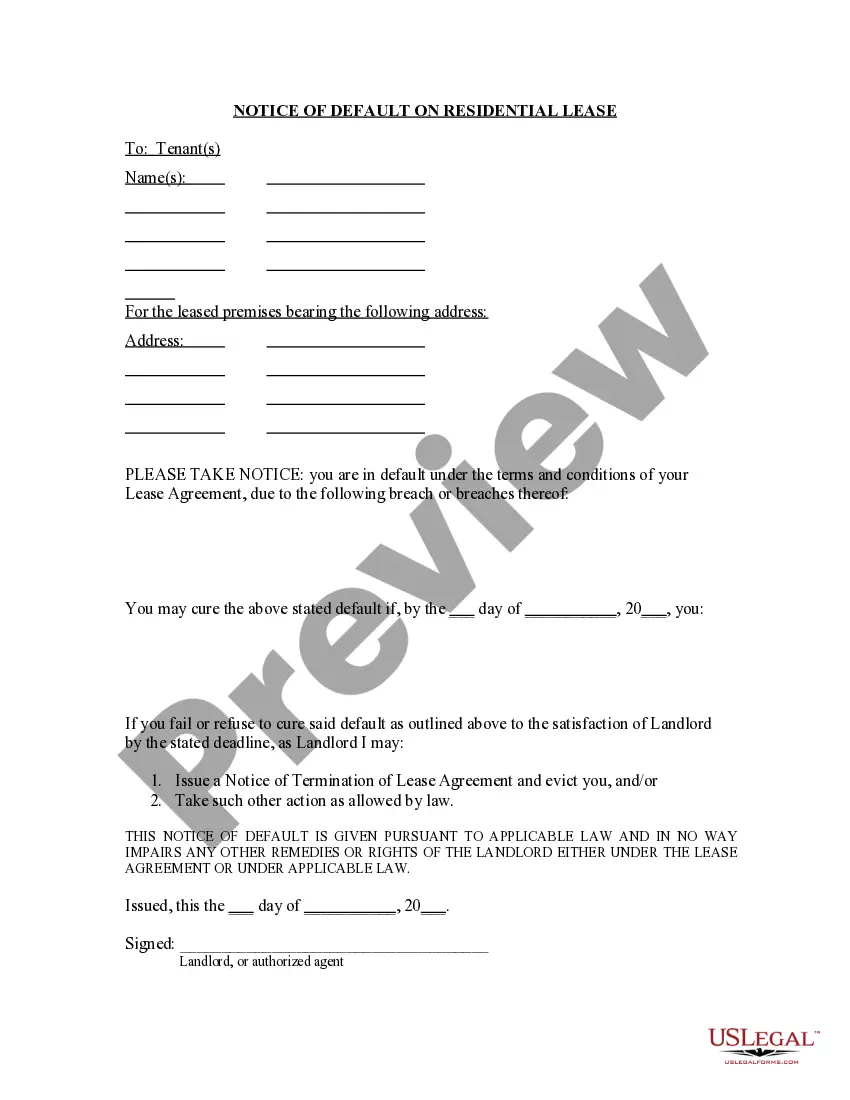
Default Lease Agreement
Description


Get your form ready online
Our built-in tools help you complete, sign, share, and store your documents in one place.
Make edits, fill in missing information, and update formatting in US Legal Forms—just like you would in MS Word.
Download a copy, print it, send it by email, or mail it via USPS—whatever works best for your next step.
Sign and collect signatures with our SignNow integration. Send to multiple recipients, set reminders, and more. Go Premium to unlock E-Sign.
If this form requires notarization, complete it online through a secure video call—no need to meet a notary in person or wait for an appointment.
We protect your documents and personal data by following strict security and privacy standards.

Make edits, fill in missing information, and update formatting in US Legal Forms—just like you would in MS Word.

Download a copy, print it, send it by email, or mail it via USPS—whatever works best for your next step.

Sign and collect signatures with our SignNow integration. Send to multiple recipients, set reminders, and more. Go Premium to unlock E-Sign.

If this form requires notarization, complete it online through a secure video call—no need to meet a notary in person or wait for an appointment.

We protect your documents and personal data by following strict security and privacy standards.
Looking for another form?




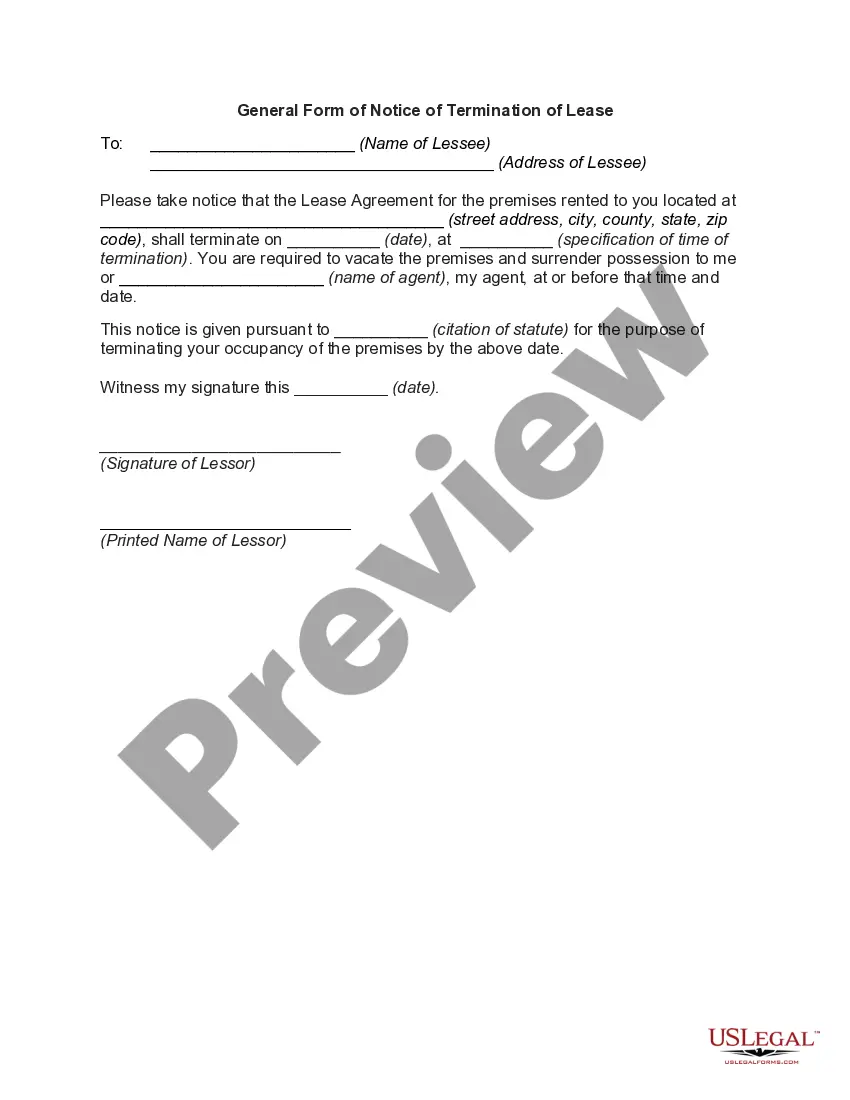
How to fill out Florida Notice Of Default On Residential Lease?
The Standard Lease Agreement presented on this page is a reusable formal outline created by expert attorneys in accordance with federal and state legislation and regulations.
For over 25 years, US Legal Forms has supplied individuals, businesses, and legal practitioners with more than 85,000 authenticated, state-specific documents for any business and personal situation. It’s the quickest, simplest, and most dependable method to acquire the documentation you require, as the service assures bank-grade data protection and anti-malware safeguards.
Subscribe to US Legal Forms to have verified legal templates for all of life's situations at your fingertips.
- Search for the document you require and review it.
- Examine the sample you searched for and preview it or review the form description to confirm it meets your needs. If it doesn't, use the search bar to find the appropriate one. Click Buy Now when you have found the template you need.
- Subscribe and Log In.
- Select the pricing option that fits you and create an account. Use PayPal or a credit card to make an immediate payment. If you already possess an account, Log In and verify your subscription to continue.
- Obtain the editable template.
- Choose the format you prefer for your Default Lease Agreement (PDF, Word, RTF) and save the template on your device.
- Complete and sign the document.
- Print the template to finish it by hand. Alternatively, utilize an online multifunctional PDF editor to quickly and accurately fill out and sign your form with an eSignature.
- Download your documents once more.
- Reuse the same document whenever necessary. Access the My documents tab in your profile to redownload any previously acquired forms.
Form popularity
FAQ
To file a motion for default judgment, you need to prepare the necessary documentation to submit to the court. This typically includes the original lease agreement, proof of service to the tenant, and any evidence supporting your claim. Following the correct procedures outlined in your default lease agreement is vital for a successful filing. Platforms like US Legal Forms offer templates and legal advice to streamline this process, ensuring you meet all requirements.
If you default on a lease, the landlord may take several actions, including sending a notice to remedy the default or filing for eviction. This can lead to legal consequences, affecting your credit score and rental history. Understanding the implications of your default lease agreement is essential to navigate this situation effectively. Consulting US Legal Forms can provide you with the necessary documents and guidance to manage your obligations.
You default on a lease when you fail to meet the terms outlined in your lease agreement. This usually occurs when you miss rental payments or violate other key conditions, such as subletting without permission. It's important to understand your specific obligations in the default lease agreement. If you're unsure about your rights or responsibilities, resources like US Legal Forms can help clarify the terms.
Defaulting on a lease agreement refers to a tenant's failure to fulfill the commitments stated within the lease, such as timely rent payment or adhering to property rules. This breach can result in legal actions, including eviction proceedings by the landlord. To prevent misunderstandings, it's crucial to know the specifics of your default lease agreement. US Legal Forms offers resources and templates to help both tenants and landlords navigate these situations effectively.
When a tenant defaults, they fail to meet the obligations outlined in their lease agreement. This often includes not paying rent on time or violating other terms of the contract, such as damaging the property. A default can lead to serious consequences, including eviction. Understanding what constitutes a default lease agreement is essential for both tenants and landlords to avoid disputes.
A default clause is a provision in a legal contract that states what will happen if either party in a contract defaults or fails to hold up their end of the agreement. These clauses can be found in any type of contract including loan agreements, lease agreements, and property agreements.
For example, failing to deliver goods or services on time, or failing to pay on time would trigger a default. Often, these provisions enable the non-defaulting party to cancel the contract, but often these provisions set forth the conditions which must first arise.
For example, the original tenant might have put holes in the wall to make a new passageway or undertaken other major work on the property. At the end of the lease, the new tenant must fix those issues and return the property to the condition that it was in at the start of the lease.
Rent Default means when the tenant fails to pay rent in ance with a rental agreement and /or periodic tenancy agreement.
A default clause is a provision in a legal contract that states what will happen if either party in a contract defaults or fails to hold up their end of the agreement. These clauses can be found in any type of contract including loan agreements, lease agreements, and property agreements.