Florida Evicting Eviction Without Lease
Description

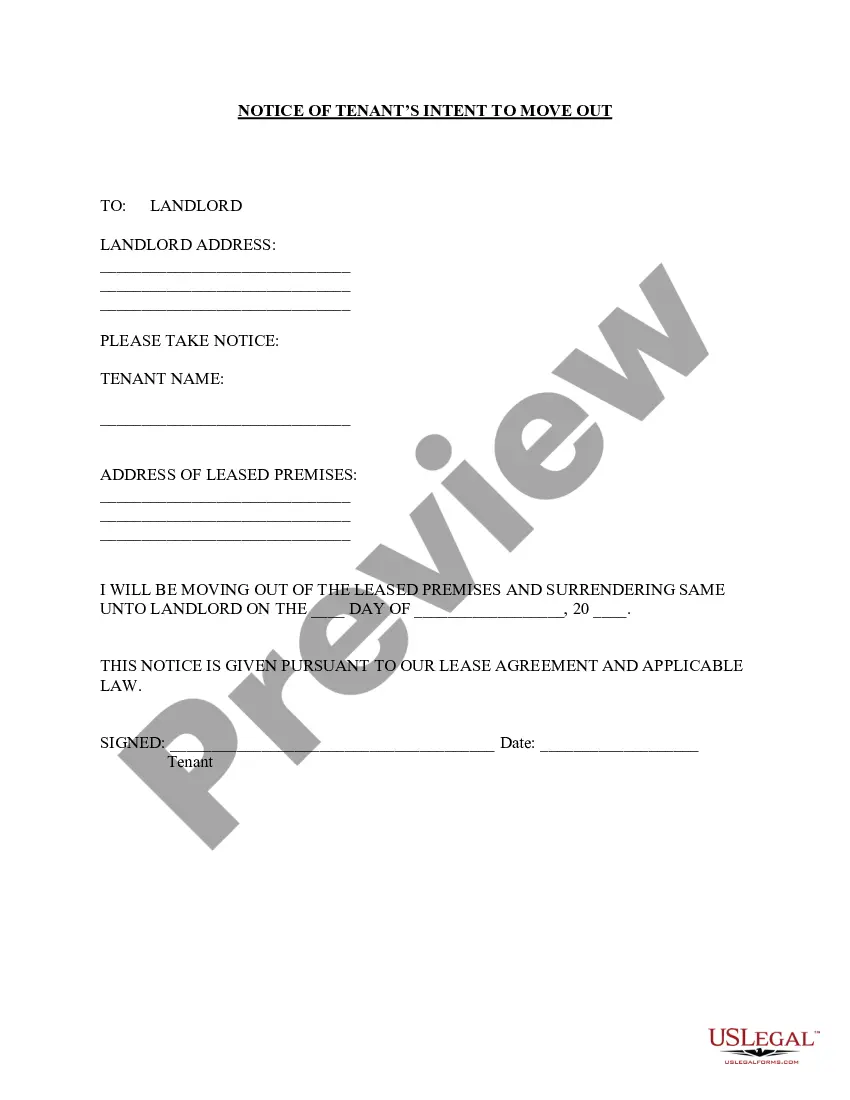


Get your form ready online
Our built-in tools help you complete, sign, share, and store your documents in one place.
Make edits, fill in missing information, and update formatting in US Legal Forms—just like you would in MS Word.
Download a copy, print it, send it by email, or mail it via USPS—whatever works best for your next step.
Sign and collect signatures with our SignNow integration. Send to multiple recipients, set reminders, and more. Go Premium to unlock E-Sign.
If this form requires notarization, complete it online through a secure video call—no need to meet a notary in person or wait for an appointment.
We protect your documents and personal data by following strict security and privacy standards.

Make edits, fill in missing information, and update formatting in US Legal Forms—just like you would in MS Word.

Download a copy, print it, send it by email, or mail it via USPS—whatever works best for your next step.

Sign and collect signatures with our SignNow integration. Send to multiple recipients, set reminders, and more. Go Premium to unlock E-Sign.

If this form requires notarization, complete it online through a secure video call—no need to meet a notary in person or wait for an appointment.

We protect your documents and personal data by following strict security and privacy standards.
Looking for another form?




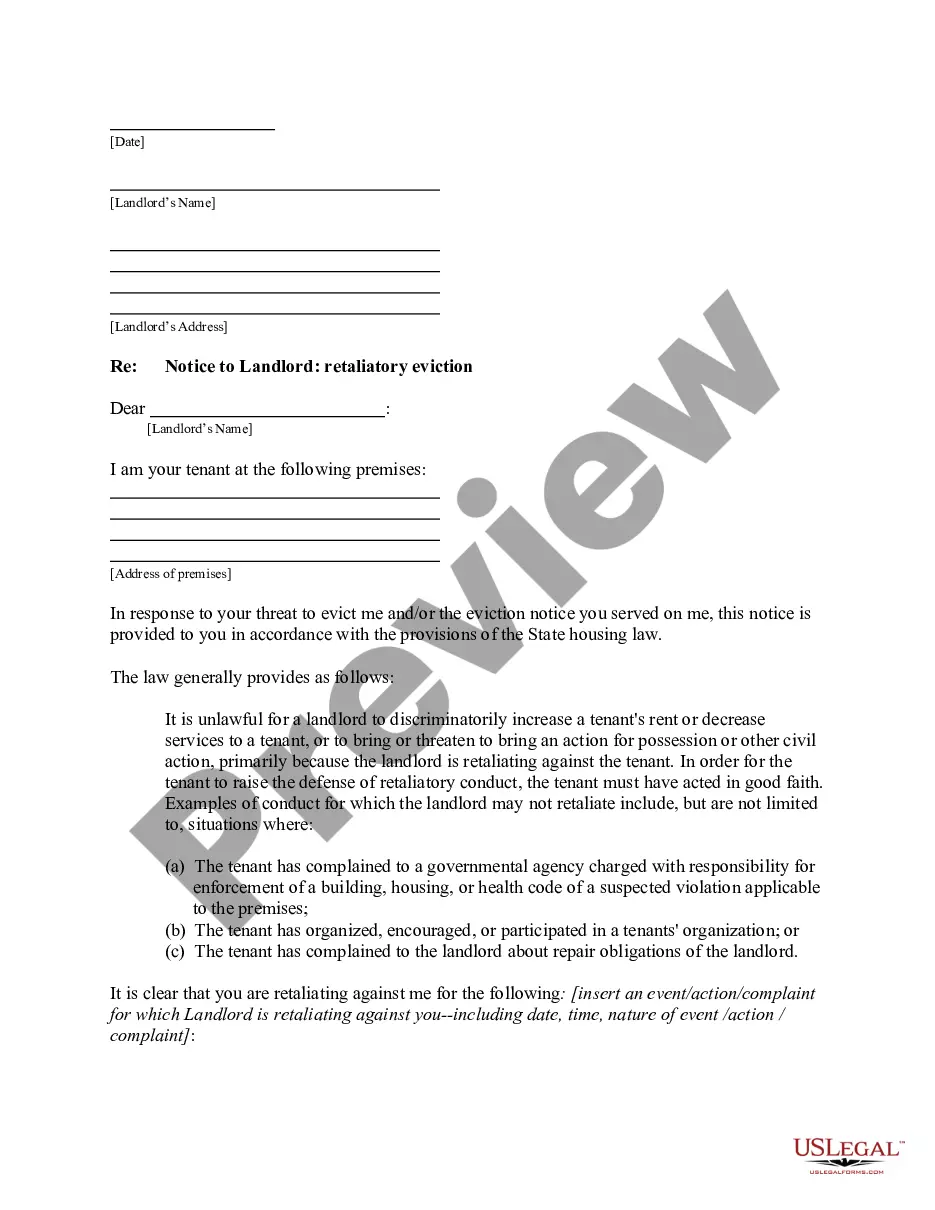
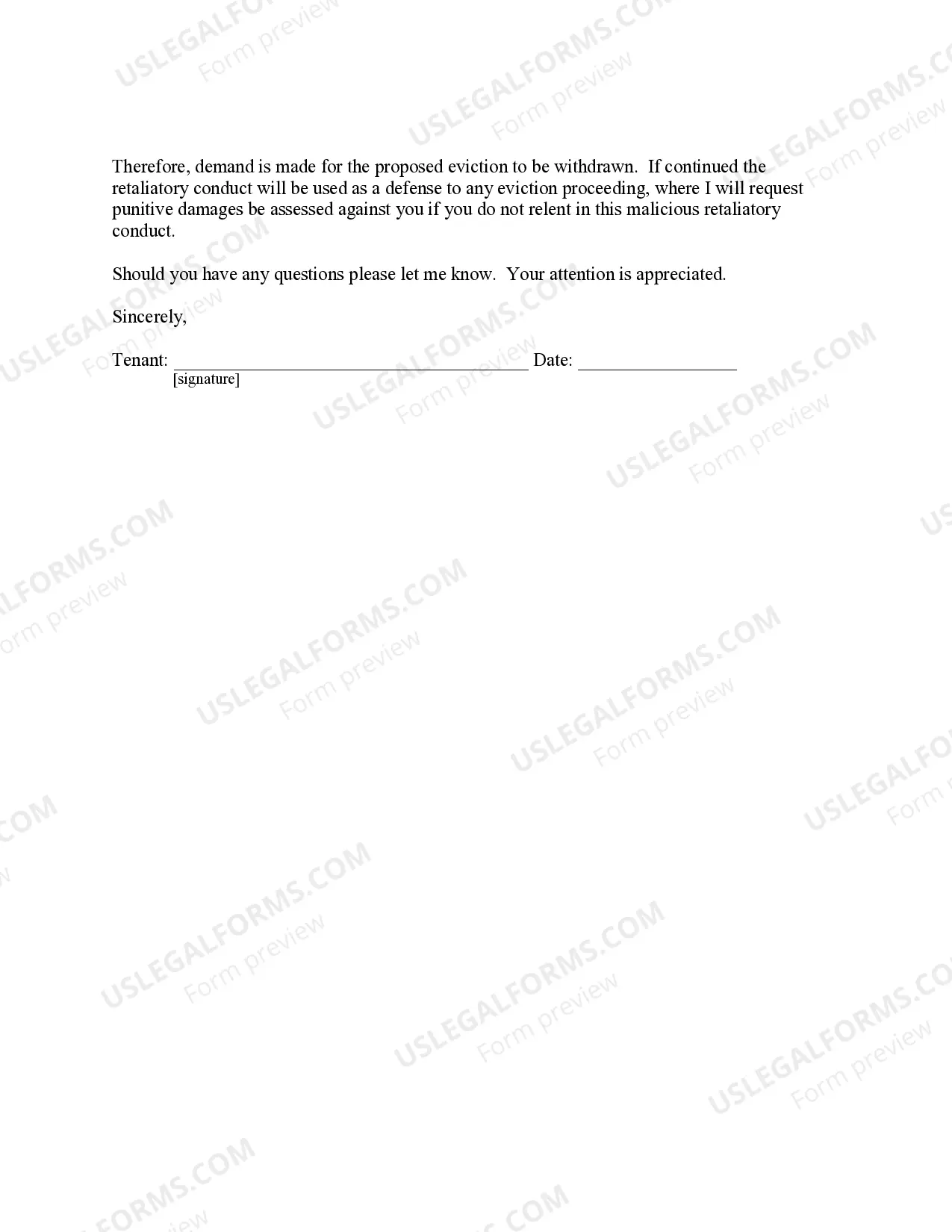
How to fill out Florida Letter From Tenant To Landlord Containing Notice To Landlord To Cease Retaliatory Threats To Evict Or Retaliatory Eviction?
Whether for business purposes or for individual affairs, everyone has to deal with legal situations at some point in their life. Filling out legal paperwork needs careful attention, beginning from picking the proper form sample. For instance, when you select a wrong edition of the Florida Evicting Eviction Without Lease, it will be rejected once you submit it. It is therefore crucial to have a reliable source of legal papers like US Legal Forms.
If you need to get a Florida Evicting Eviction Without Lease sample, stick to these simple steps:
- Find the template you need by utilizing the search field or catalog navigation.
- Check out the form’s information to make sure it suits your situation, state, and region.
- Click on the form’s preview to see it.
- If it is the wrong document, go back to the search function to locate the Florida Evicting Eviction Without Lease sample you need.
- Get the template if it matches your needs.
- If you already have a US Legal Forms profile, simply click Log in to gain access to previously saved templates in My Forms.
- In the event you don’t have an account yet, you can obtain the form by clicking Buy now.
- Select the appropriate pricing option.
- Finish the profile registration form.
- Choose your transaction method: you can use a bank card or PayPal account.
- Select the file format you want and download the Florida Evicting Eviction Without Lease.
- When it is saved, you can fill out the form by using editing software or print it and finish it manually.
With a substantial US Legal Forms catalog at hand, you do not have to spend time searching for the right template across the web. Make use of the library’s straightforward navigation to find the appropriate template for any occasion.
Form popularity
FAQ
Examples of illegal ?self-help? evictions include changing the locks, removing the front door, or turning off the heat or electricity?all of which may be the basis for a tenant suing a landlord. Florida tenants may sue for actual damages or whichever is greater. A tenant may recover court costs and attorney fees.
An uncontested residential eviction for non-payment of rent may sometimes be finalized within approximately 4 to 5 weeks, but a contested eviction may take longer to finalize. Before a landlord may file an eviction case in court, the tenancy must be terminated.
Give the tenant a 3-days notice to either pay the outstanding rent or vacate the premises. Write down a complaint and file for eviction. Eviction can be filed with any county clerk serving at a court in a particular county. The landlord must mention ?Plaintiff? and his/her contact details on the complaint.
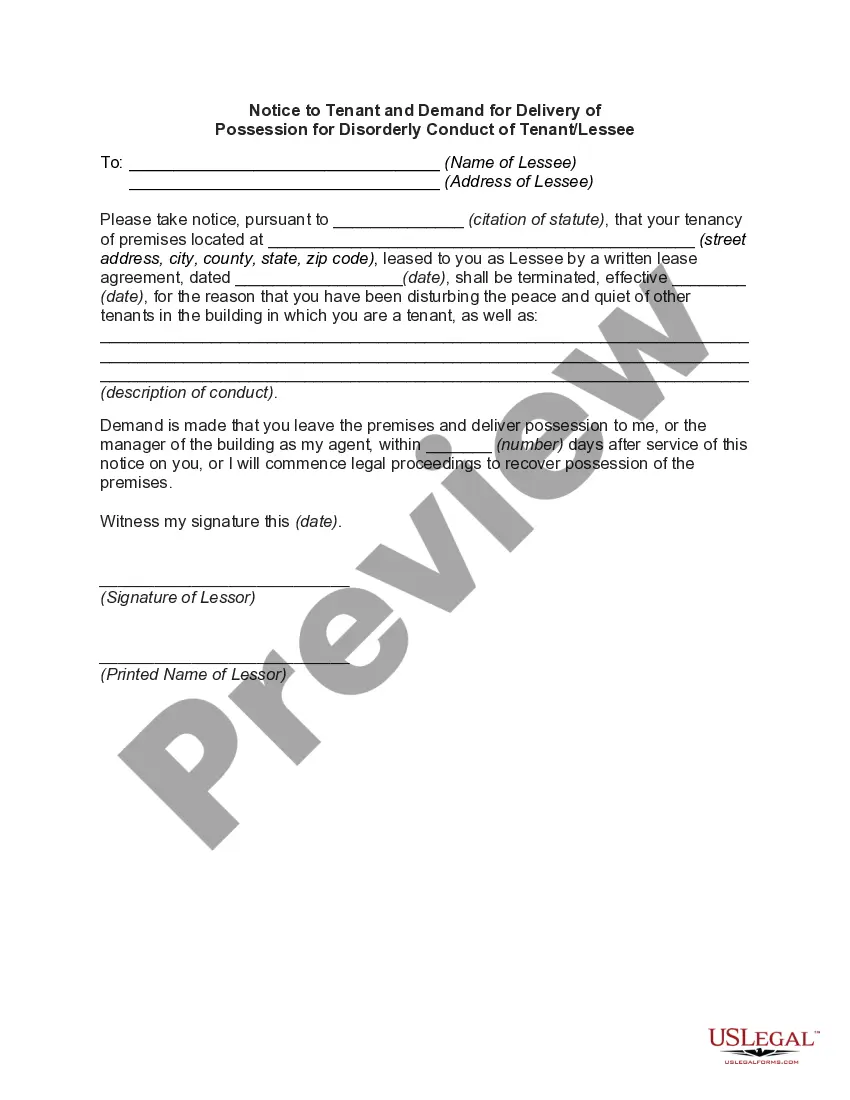
Other types of notices cover no lease tenants or holdovers The landlord only has to send proper notice to the tenant, allowing for the number of days provided by Fla. Stat. § 83.57. For instance, month-to-month tenants must be given 15 days to vacate.
Florida law allows for a legal action know as an Ejectment to remove a non-rent paying person living in your home, who has not signed a lease and has no title or interest in the property. Often times, this involves a person whom you have allowed to live in your home and who later refuses to leave when asked.