Tenant Landlord Fight
Description


Get your form ready online
Our built-in tools help you complete, sign, share, and store your documents in one place.
Make edits, fill in missing information, and update formatting in US Legal Forms—just like you would in MS Word.
Download a copy, print it, send it by email, or mail it via USPS—whatever works best for your next step.
Sign and collect signatures with our SignNow integration. Send to multiple recipients, set reminders, and more. Go Premium to unlock E-Sign.
If this form requires notarization, complete it online through a secure video call—no need to meet a notary in person or wait for an appointment.
We protect your documents and personal data by following strict security and privacy standards.

Make edits, fill in missing information, and update formatting in US Legal Forms—just like you would in MS Word.

Download a copy, print it, send it by email, or mail it via USPS—whatever works best for your next step.

Sign and collect signatures with our SignNow integration. Send to multiple recipients, set reminders, and more. Go Premium to unlock E-Sign.

If this form requires notarization, complete it online through a secure video call—no need to meet a notary in person or wait for an appointment.

We protect your documents and personal data by following strict security and privacy standards.
Looking for another form?








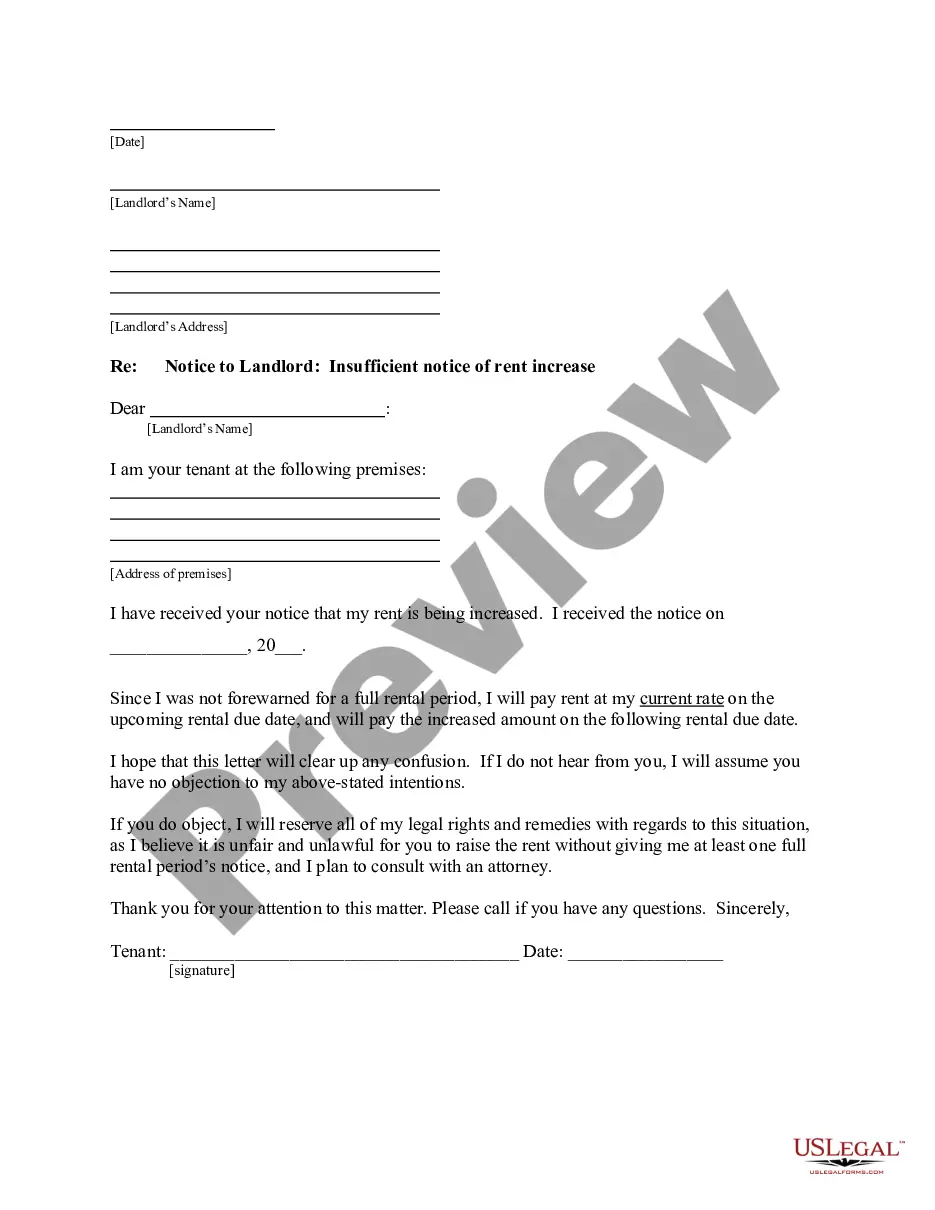
How to fill out Florida Letter From Tenant To Landlord About Insufficient Notice Of Rent Increase?
- If you are an existing user, log in to your account and locate the required form template. Click the Download button to save it on your device, ensuring your subscription is current.
- For first-time users, start by browsing the Preview mode and descriptions to find the appropriate document that aligns with your local jurisdiction's needs.
- If you need a different template, utilize the Search feature above to access a range of options. Ensure the chosen form suits your requirements before proceeding.
- Once you've selected a document, click the Buy Now button and choose a suitable subscription plan. You’ll need to create an account for access to the full library.
- Complete your purchase by entering your payment information through credit card or PayPal.
- Finally, download your document to your device and find it later under the My Forms section of your profile for future reference.
US Legal Forms is dedicated to empowering users with a comprehensive collection of over 85,000 easily fillable and editable legal forms to ensure every document is accurate and compliant.
Take control of your tenant landlord fight today by utilizing US Legal Forms, where expert assistance is available to ensure your legal documents are precise. Start resolving your disputes easily!
Form popularity
FAQ
Dealing with a toxic landlord requires a proactive approach. Start by documenting all interactions and incidents that illustrate the landlord's toxic behavior. Engage in calm, respectful communication to address issues directly, but do not hesitate to seek legal advice or support groups if the situation does not improve. Platforms like uslegalforms can provide resources and guidance to help you navigate your tenant landlord fight effectively.
Landlord negligence occurs when a landlord fails to maintain safe living conditions in a rental property. This can include not addressing repairs, ignoring safety hazards, or not providing essential services like heating or water. If a landlord's actions or inactions lead to harm or discomfort, it may be considered negligence. Understanding this concept can empower you in your tenant landlord fight by identifying grounds for your grievances.
If you feel the need to threaten legal action against your landlord, clearly outline the issues at hand, such as safety violations or unfulfilled repairs. Draft a formal letter stating your concerns and the possible legal actions you may take if the issues remain unresolved. This approach encourages the landlord to take your claims seriously, enhancing your position in the tenant landlord fight. You can also seek legal advice to ensure your communication is appropriate.
To fight your landlord's charges, start by reviewing your lease agreement and understanding the charges in question. Gather any supporting documents, such as receipts or photos, that counter the landlord's claims. Communicate with your landlord to discuss the charges and express your concerns clearly. If necessary, consider seeking help from organizations that specialize in tenant rights to strengthen your case in the tenant landlord fight.
To sue your landlord for emotional distress, you must first document the events that caused your distress. Collect evidence such as texts, emails, or witness statements. It's crucial to show how the landlord's actions negatively impacted your emotional well-being. Consulting with a legal professional can guide you through the process and help you build a solid case in your tenant landlord fight.
To win in court against a landlord, gather all necessary documents, including lease agreements and communication records. Present clear evidence of your claims regarding the tenant landlord fight. Legal platforms like uslegalforms can provide resources and templates to help build your case effectively.
The most common landlord-tenant dispute revolves around non-payment of rent, which can lead to serious tenant landlord fights. Other frequent issues include maintenance requests and lease violations. Understanding your rights and responsibilities can help in preventing these disputes from escalating.
Renters in Illinois have rights that protect them from unfair treatment and unsafe living conditions. They are entitled to quiet enjoyment of their home and can take action if these rights are violated. If you're involved in a tenant landlord fight, you may have legal options available through local housing authorities or tenant rights organizations.
Dealing with fighting tenants requires a calm approach. First, listen to both parties to understand the root of the conflict. Next, encourage them to resolve their issues amicably, and remind them of the lease agreement terms. If problems persist, consider reviewing your options on how to handle this tenant landlord fight effectively.
Tenants in New Jersey have several rights, including the right to a habitable living environment and protection against unfair eviction. If you're facing issues like a tenant landlord fight, you should know that you have the right to report unsafe conditions to local authorities. Moreover, landlords must follow proper legal procedures before eviction.