Tenant Landlord About With Owner
Description

Get your form ready online
Our built-in tools help you complete, sign, share, and store your documents in one place.
Make edits, fill in missing information, and update formatting in US Legal Forms—just like you would in MS Word.
Download a copy, print it, send it by email, or mail it via USPS—whatever works best for your next step.
Sign and collect signatures with our SignNow integration. Send to multiple recipients, set reminders, and more. Go Premium to unlock E-Sign.
If this form requires notarization, complete it online through a secure video call—no need to meet a notary in person or wait for an appointment.
We protect your documents and personal data by following strict security and privacy standards.

Make edits, fill in missing information, and update formatting in US Legal Forms—just like you would in MS Word.

Download a copy, print it, send it by email, or mail it via USPS—whatever works best for your next step.

Sign and collect signatures with our SignNow integration. Send to multiple recipients, set reminders, and more. Go Premium to unlock E-Sign.

If this form requires notarization, complete it online through a secure video call—no need to meet a notary in person or wait for an appointment.

We protect your documents and personal data by following strict security and privacy standards.
Looking for another form?










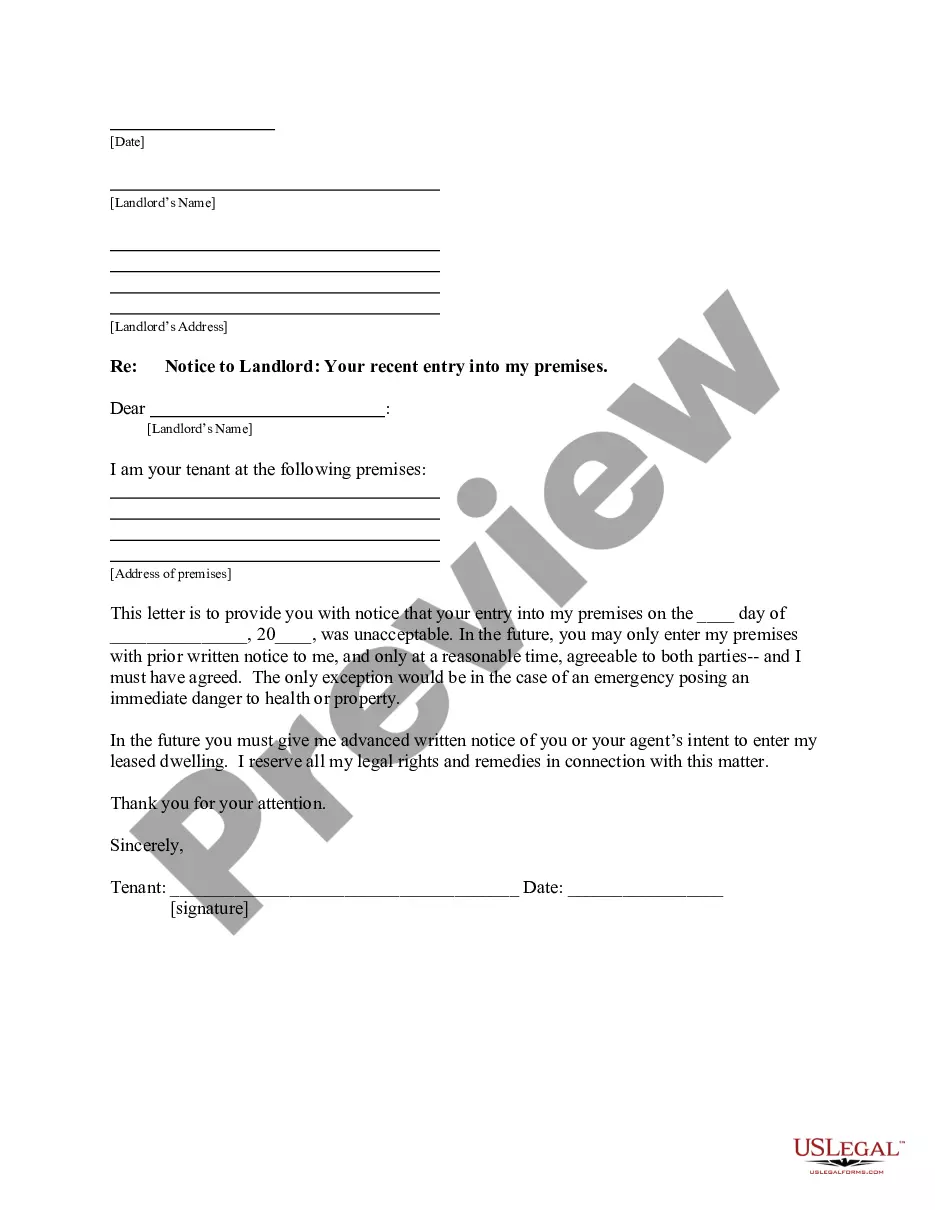
How to fill out Florida Letter From Tenant To Landlord About Illegal Entry By Landlord?
- If you are a returning user, log in to your account and locate your desired form template. Click the Download button, ensuring your subscription is current. If it's not, take steps to renew it based on your payment plan.
- For first-time users, start by reviewing the form descriptions and preview modes. Confirm you select the right document that aligns with your local laws and personal requirements.
- If you find discrepancies or need additional templates, utilize the Search tab to find the appropriate legal documents.
- Once you've located the correct form, click the Buy Now button and select your subscription plan. Don't forget to create an account to unlock access to our extensive form library.
- Proceed to payment by entering your credit card information or using your PayPal account to finalize your subscription.
- After payment, download your form and save it on your device. You can also access this document anytime in the My Forms section of your profile.
US Legal Forms not only provides a robust collection of legal documents but also offers access to premium experts who can assist you in completing your forms accurately, ensuring your legal needs are met efficiently.
In conclusion, whether you're a landlord or a tenant, US Legal Forms equips you with the necessary documentation and support to navigate your legal obligations. Start using our services today to create hassle-free legal solutions!
Form popularity
FAQ
The 83.53 law, similar to what you might find in other legal references, specifically deals with the termination of rental agreements and the procedures for eviction. It outlines the notice requirements a landlord must provide before filing an eviction suit. For anyone involved in a tenant landlord about with owner situation, understanding this law can be instrumental in protecting your interests and ensuring you are following legal protocols.
Florida has introduced several new rules for landlords to ensure better tenant protections and fair practices. These rules cover aspects such as security deposits, rent increases, and maintenance obligations. Staying informed about these changes is vital for both landlords and tenants so that they can maintain a harmonious tenant landlord about with owner environment. Platforms like USLegalForms can provide you with the latest information and documentation necessary for compliance.
The 83.03 law in Florida outlines the definitions and responsibilities of landlords and tenants within rental agreements. This section elaborates on what constitutes a dwelling unit and sets forth the obligations for both parties when entering into a residential lease. By understanding this law, individuals can navigate the tenant landlord about with owner dynamics more effectively and ensure that their rights are respected.
In general, owners hold more rights than renters when it comes to property management and decision-making. Owners can set the terms of the lease, choose tenants, and are responsible for maintenance, creating a power dynamic that often favors them. However, tenants also have rights protected by law, which creates a balance in the tenant landlord about with owner relationship, ensuring that both parties can coexist fairly.
Section 83.53 of the Florida Statutes addresses the issue of rental agreements and eviction processes. This law provides specific guidelines regarding the notice period that landlords must give tenants before initiating eviction proceedings. Understanding this section is crucial for both tenants and landlords, as it helps clarify what each party can expect and their rights in the tenant landlord about with owner relationship.
A landlord may agree to rent-to-own for several reasons, including steady income from rent and the potential for a future sale. This arrangement allows landlords to attract reliable tenants who are invested in the property’s upkeep. It also provides them a chance to expand their investment portfolio through a secure tenant-landlord relationship with ownership opportunities.
Writing a letter to explain an eviction should be straightforward and factual. Include key details like the reason for the eviction, dates, and any relevant conversations you had with your landlord. Aim for a tone that is respectful and clear, as this letter may become part of your tenancy history and impacts future tenant-landlord interactions.
Yes, a landlord can back out of a rent-to-own agreement under specific circumstances, such as violations of the contract terms. It's essential for tenants to understand the agreement fully and seek clarification on the conditions. If you're unsure, legal guidance can provide insights into tenant rights and landlord obligations.
Finding rent-to-own homes involves researching various online platforms, connecting with real estate agents, and exploring community listings. Websites that focus on rental properties may also showcase listings that offer rent-to-own options. Engaging with your local real estate market allows you to access opportunities directly linked to tenant-landlord discussions about ownership.
Yes, it's beneficial to inform your landlord that you're interested in buying the property. This transparency fosters trust and may open up negotiation opportunities for a rent-to-own arrangement. When you approach the conversation with respect and clarity, you enhance your chances of a positive response.