Florida Deed Quit Claim Form Without Attorney
Description
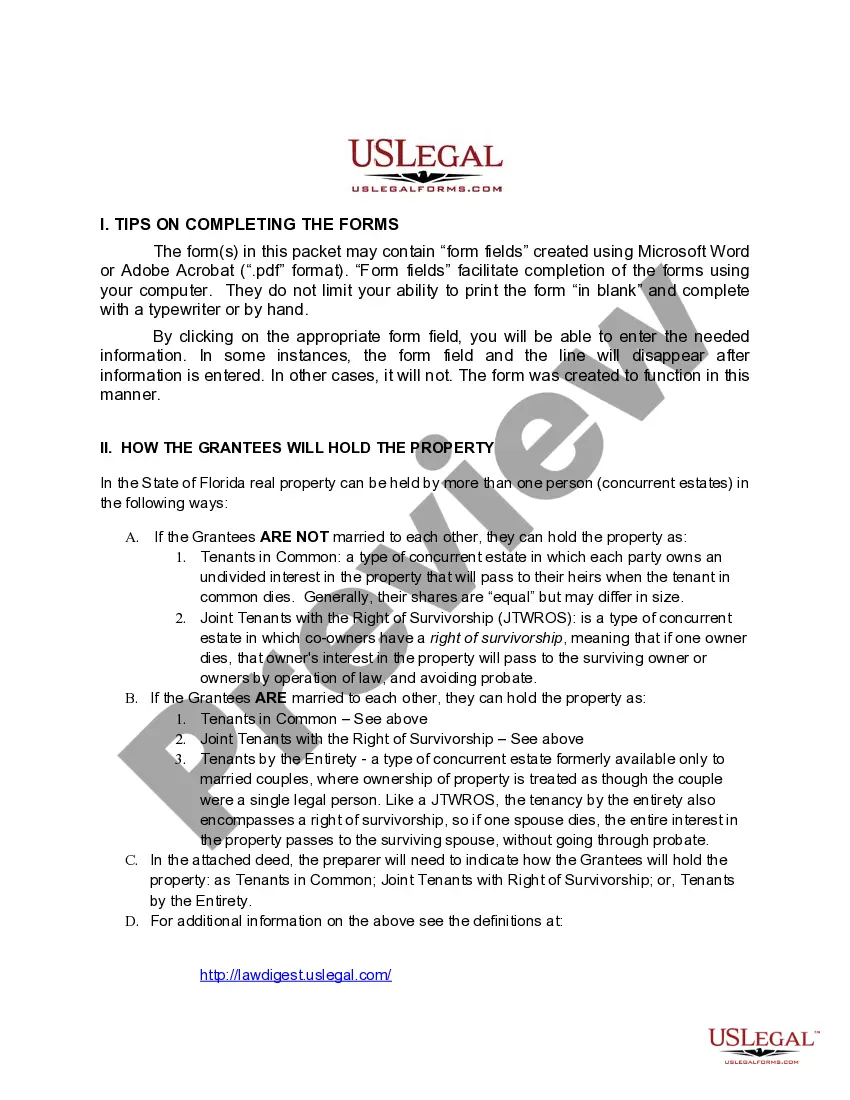
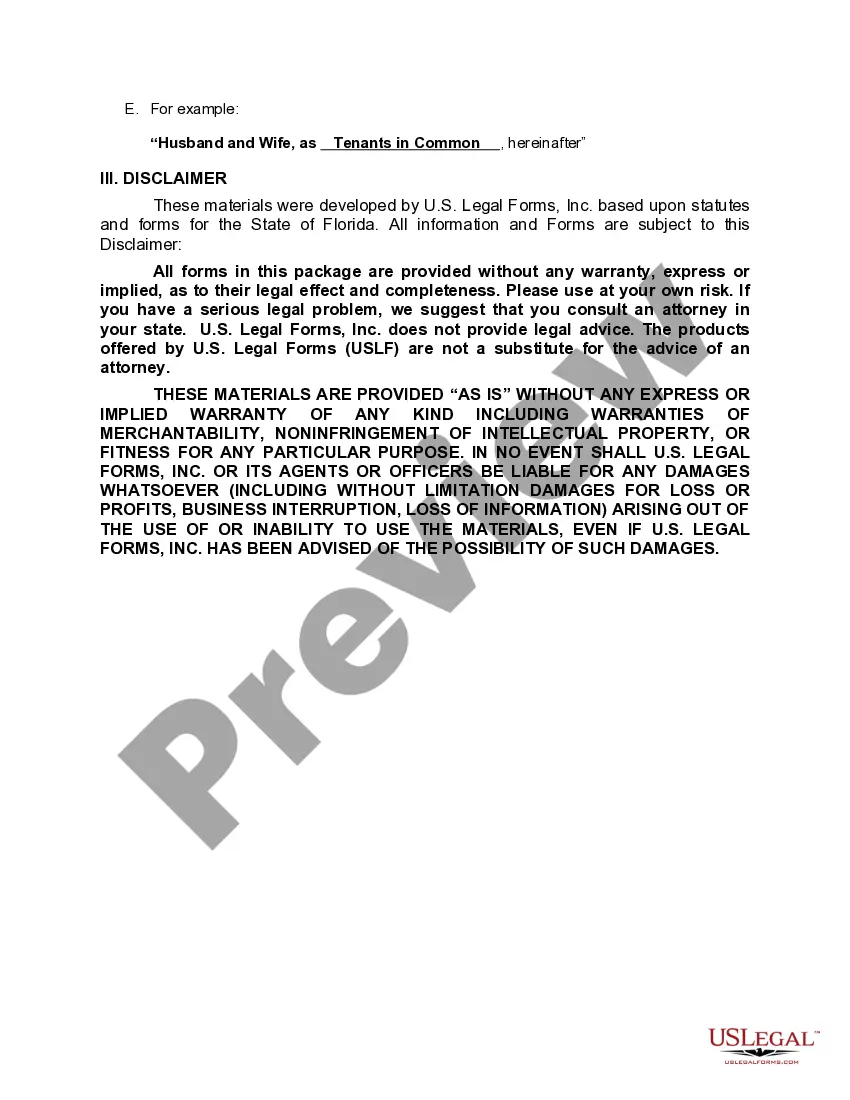
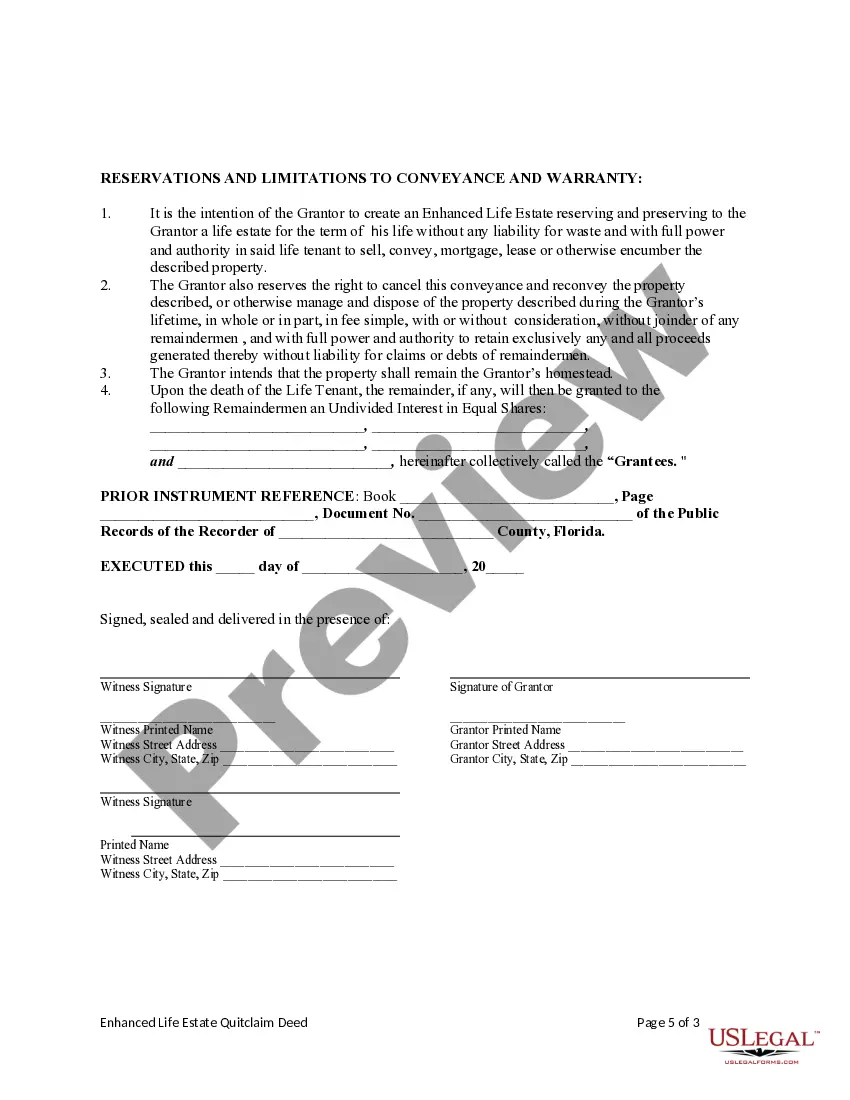
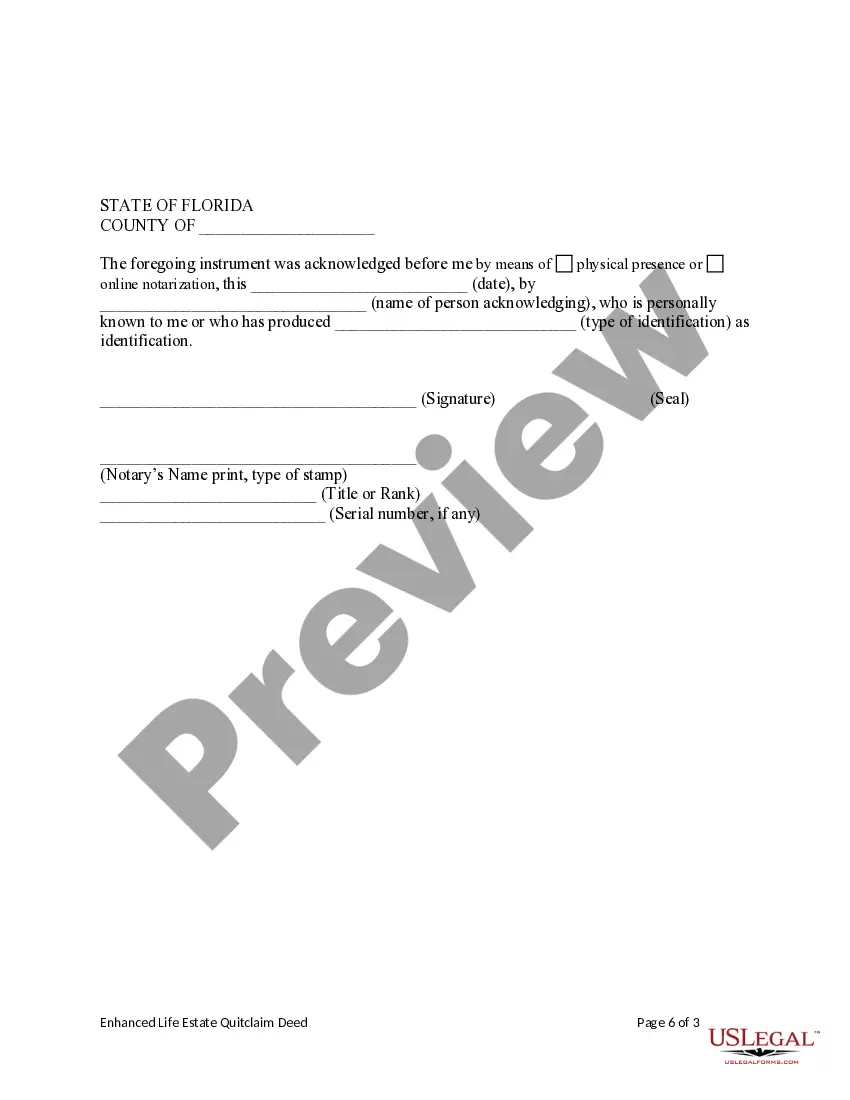
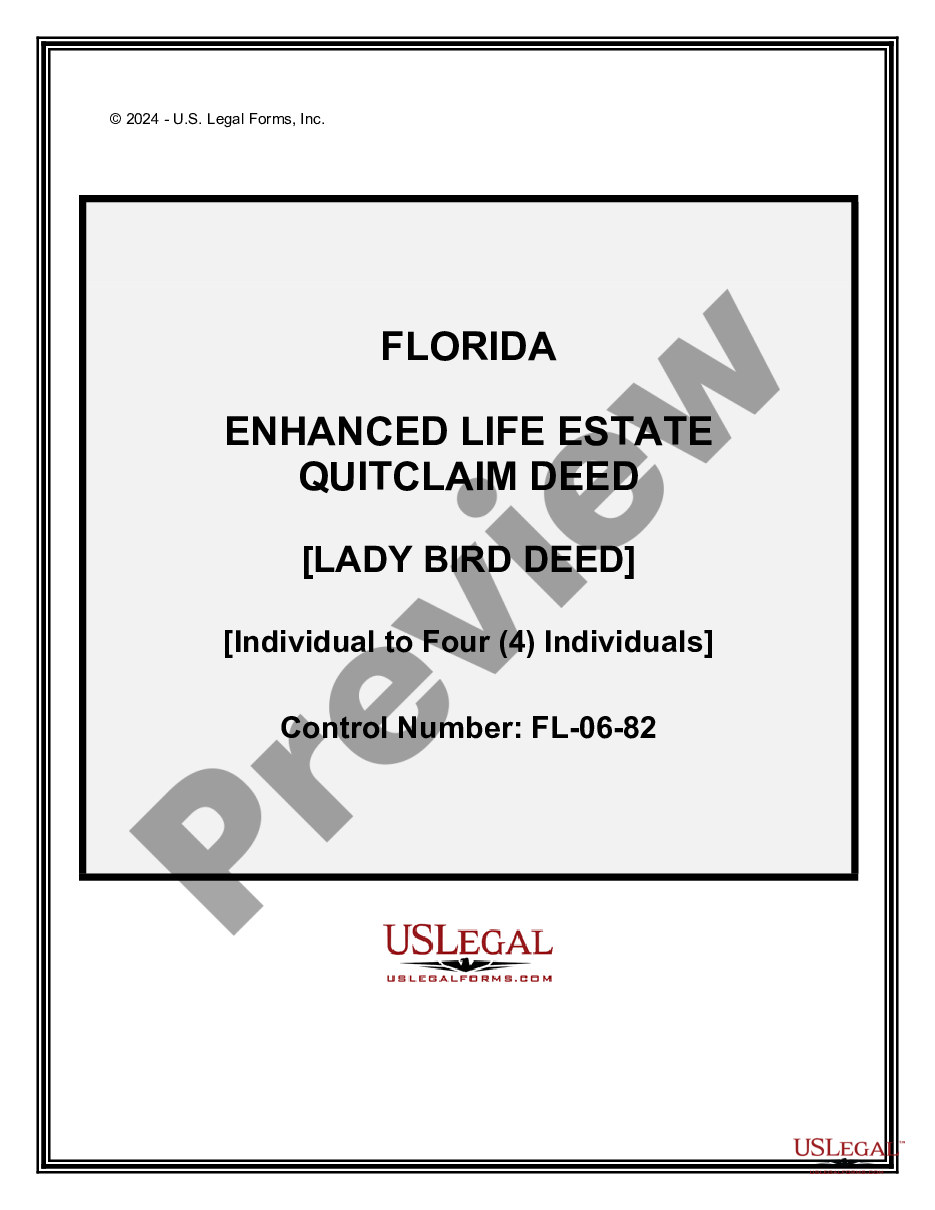
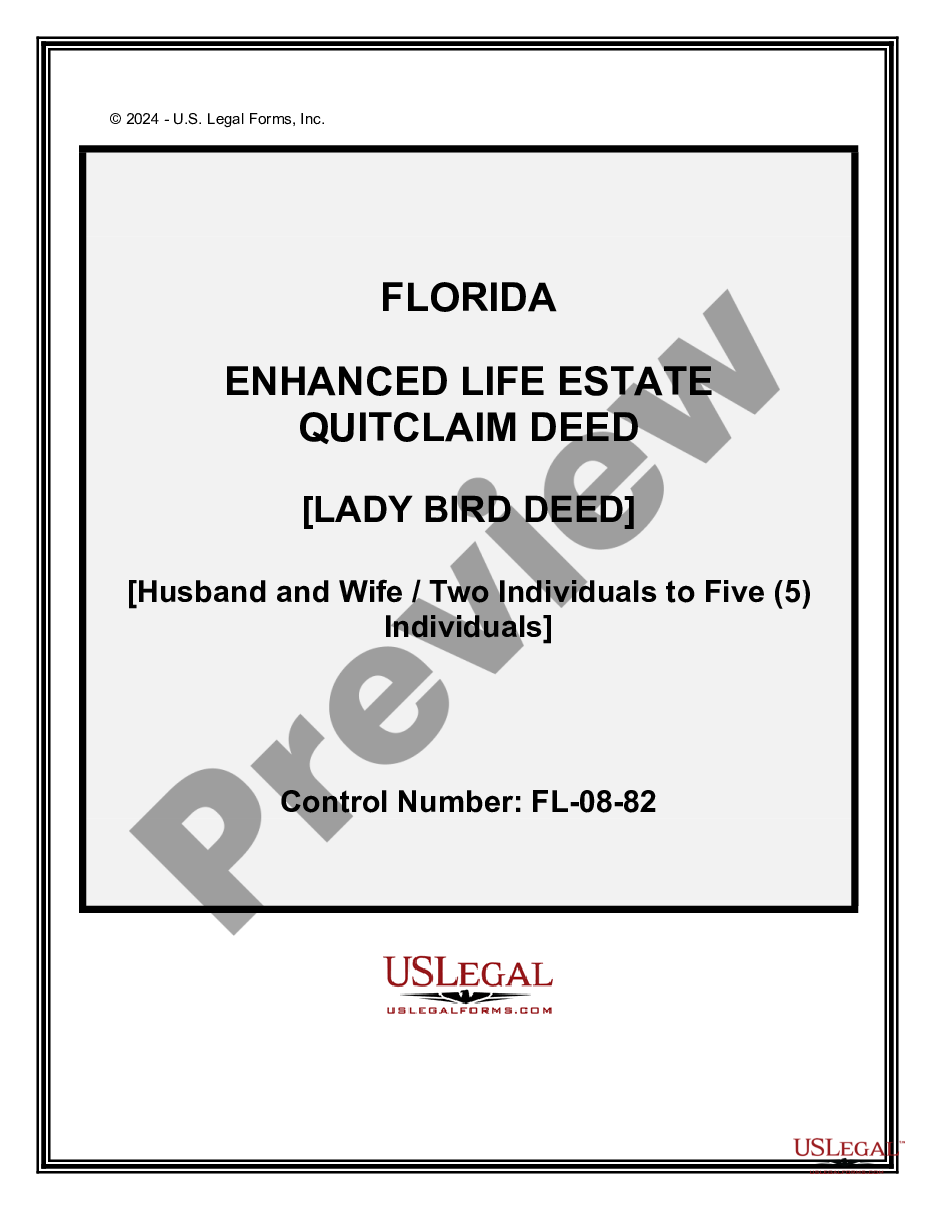
Get your form ready online
Our built-in tools help you complete, sign, share, and store your documents in one place.
Make edits, fill in missing information, and update formatting in US Legal Forms—just like you would in MS Word.
Download a copy, print it, send it by email, or mail it via USPS—whatever works best for your next step.
Sign and collect signatures with our SignNow integration. Send to multiple recipients, set reminders, and more. Go Premium to unlock E-Sign.
If this form requires notarization, complete it online through a secure video call—no need to meet a notary in person or wait for an appointment.
We protect your documents and personal data by following strict security and privacy standards.

Make edits, fill in missing information, and update formatting in US Legal Forms—just like you would in MS Word.

Download a copy, print it, send it by email, or mail it via USPS—whatever works best for your next step.

Sign and collect signatures with our SignNow integration. Send to multiple recipients, set reminders, and more. Go Premium to unlock E-Sign.

If this form requires notarization, complete it online through a secure video call—no need to meet a notary in person or wait for an appointment.

We protect your documents and personal data by following strict security and privacy standards.
Looking for another form?






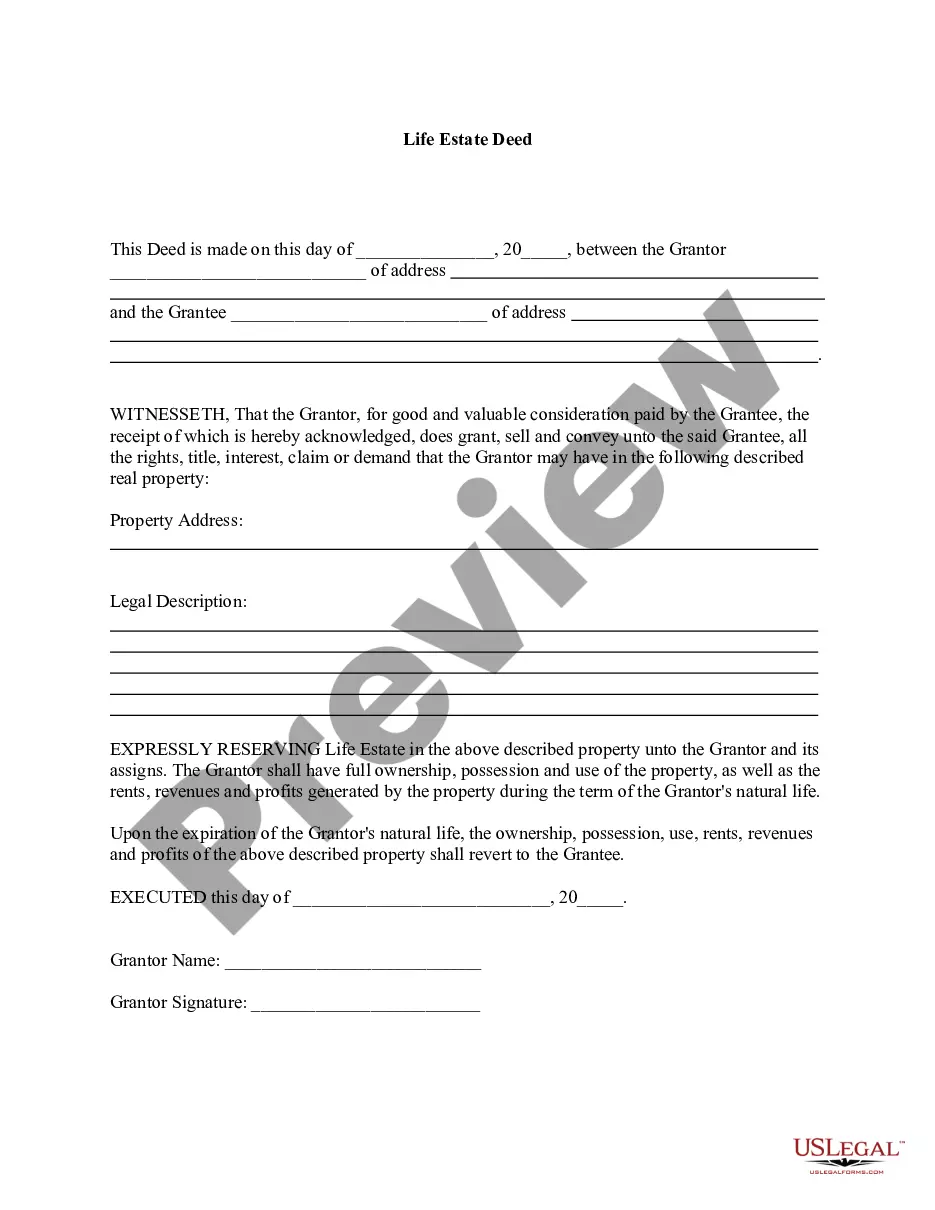
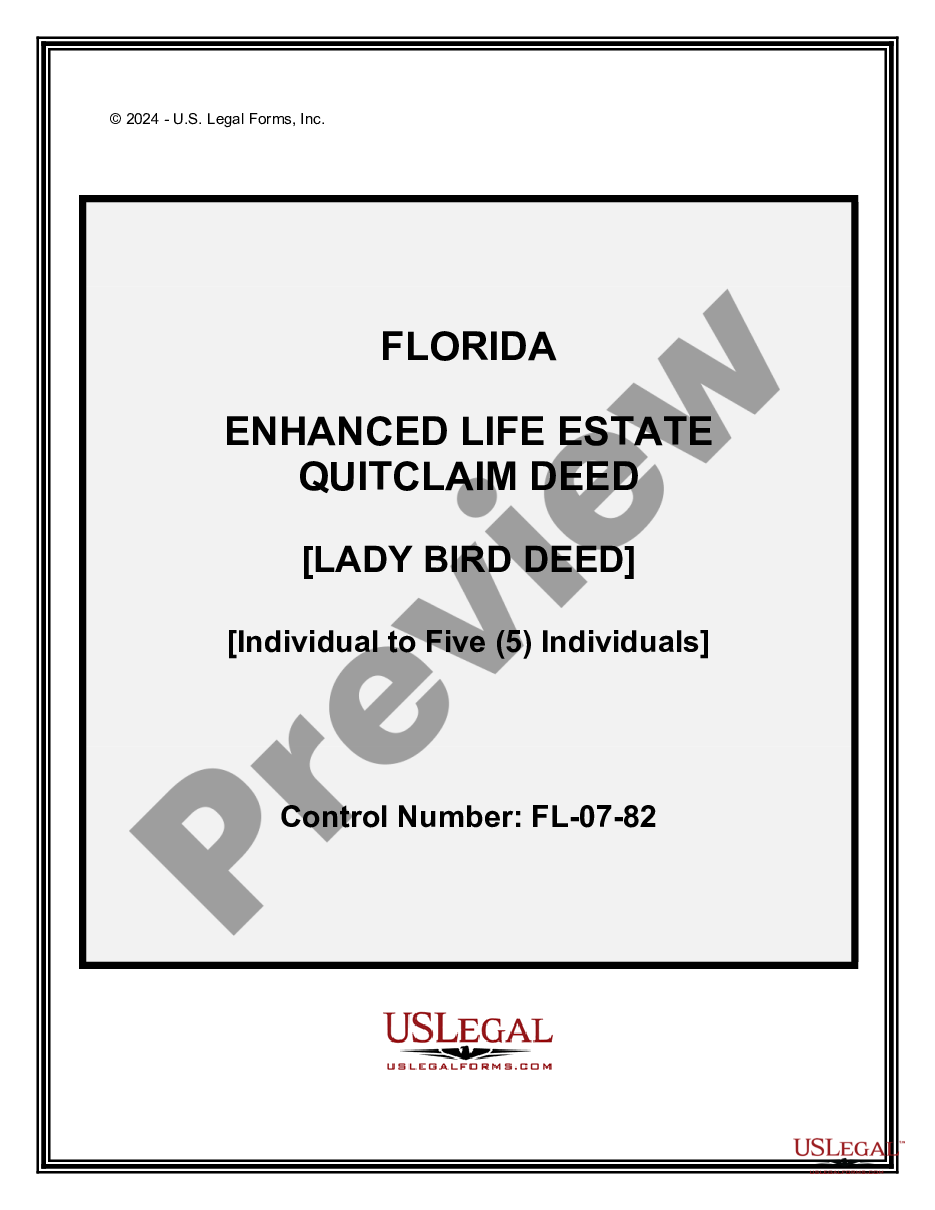
How to fill out Florida Enhanced Life Estate Or Lady Bird Deed - Quitclaim - Individual To Five Individuals?
Locating a reliable source for the latest and suitable legal templates is part of the challenge of navigating bureaucracy.
Identifying the appropriate legal documents requires accuracy and careful consideration, which is why it is essential to obtain samples of the Florida Deed Quit Claim Form Without Attorney exclusively from trustworthy providers, such as US Legal Forms. An incorrect template can squander your time and delay your matter.
After you have the form on your device, you can modify it with the editor or print it out and complete it by hand. Eliminate the hassle associated with your legal documentation. Browse the extensive US Legal Forms collection where you can find legal templates, assess their applicability to your situation, and download them instantly.
- Use the library navigation or search box to locate your template.
- Review the form’s details to ensure it meets the criteria of your state and locality.
- Examine the form preview, if available, to confirm it is the document you need.
- Return to the search and seek the correct document if the Florida Deed Quit Claim Form Without Attorney does not meet your needs.
- Once you are confident about the form’s applicability, download it.
- If you are a registered user, click Log in to verify and access your chosen templates in My documents.
- If you do not possess an account yet, click Buy now to acquire the template.
- Select the pricing option that aligns with your needs.
- Proceed to the registration to complete your transaction.
- Finalize your purchase by selecting a payment method (credit card or PayPal).
- Choose the document format for downloading the Florida Deed Quit Claim Form Without Attorney.
Form popularity
FAQ
A Florida quitclaim deed is a legal document transferring title (i.e., ownership) from one person or entity to another. The person transferring the title of the property is called the grantor, and the one receiving it is known as the grantee. Grantors cannot usually transfer more than they have with a quitclaim deed.
In Florida, you can make a quitclaim deed or hire someone like a lawyer to do it for you. However, ensuring the deed is prepared correctly and adheres to legal requirements is crucial. Preparing a quitclaim deed involves understanding the legal rules for deeds in Florida and how to file them with the county.
There are three steps to transferring property using a quitclaim deed: Enter the relevant information on a quitclaim deed form. Sign the deed with two witnesses and a notary. Record the deed at the county comptroller's office.
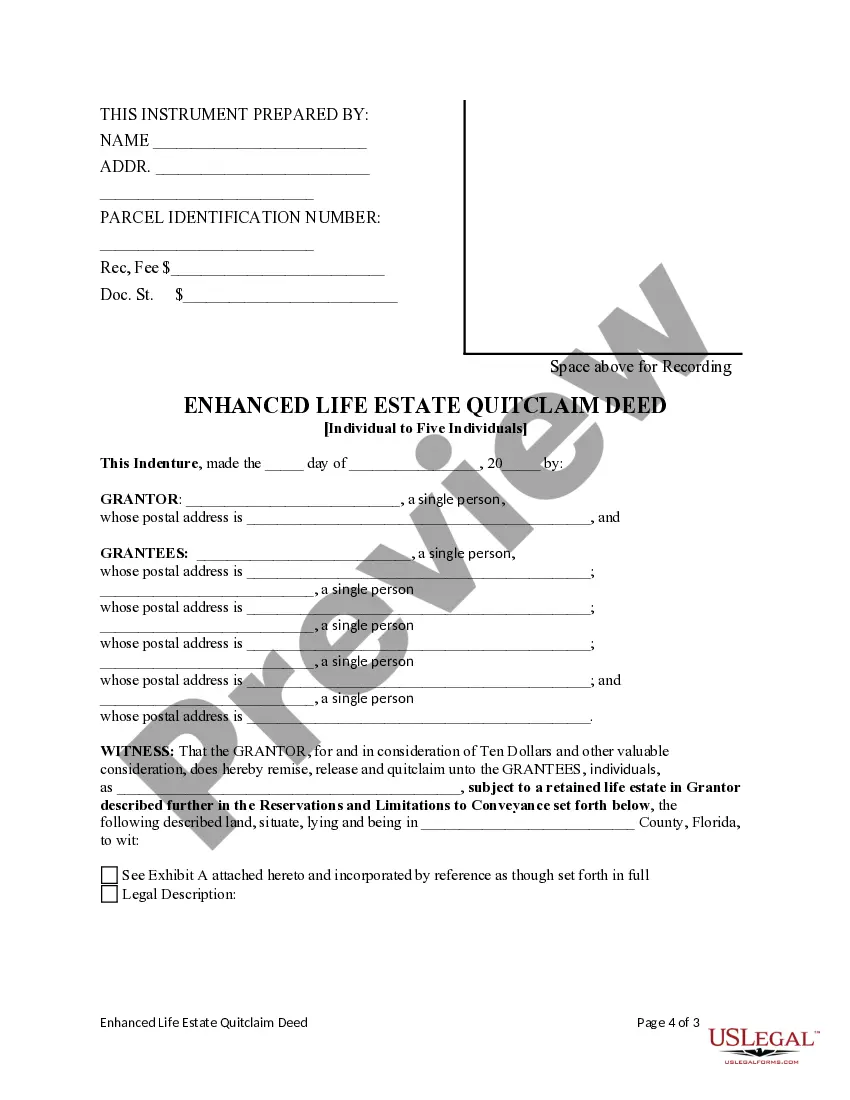
Ing to Florida Statute 695.26, a quitclaim deed must contain these certain elements: Name and address of person preparing the deed. Grantor's name and address. Grantee's name and address. Signatures of the grantors. Two witnesses for each signature/ Notary acknowledgment with signature.
An attorney licensed to practice law in Florida must prepare deeds, powers of attorney, and other instruments that are to be recorded. General closing documents that will not be recorded can be prepared by a non-attorney provided they are not contractual in nature.