Lienor Contractor Florida With A Family
Description
Get your form ready online
Our built-in tools help you complete, sign, share, and store your documents in one place.
Make edits, fill in missing information, and update formatting in US Legal Forms—just like you would in MS Word.
Download a copy, print it, send it by email, or mail it via USPS—whatever works best for your next step.
Sign and collect signatures with our SignNow integration. Send to multiple recipients, set reminders, and more. Go Premium to unlock E-Sign.
If this form requires notarization, complete it online through a secure video call—no need to meet a notary in person or wait for an appointment.
We protect your documents and personal data by following strict security and privacy standards.

Make edits, fill in missing information, and update formatting in US Legal Forms—just like you would in MS Word.

Download a copy, print it, send it by email, or mail it via USPS—whatever works best for your next step.

Sign and collect signatures with our SignNow integration. Send to multiple recipients, set reminders, and more. Go Premium to unlock E-Sign.

If this form requires notarization, complete it online through a secure video call—no need to meet a notary in person or wait for an appointment.

We protect your documents and personal data by following strict security and privacy standards.
Looking for another form?



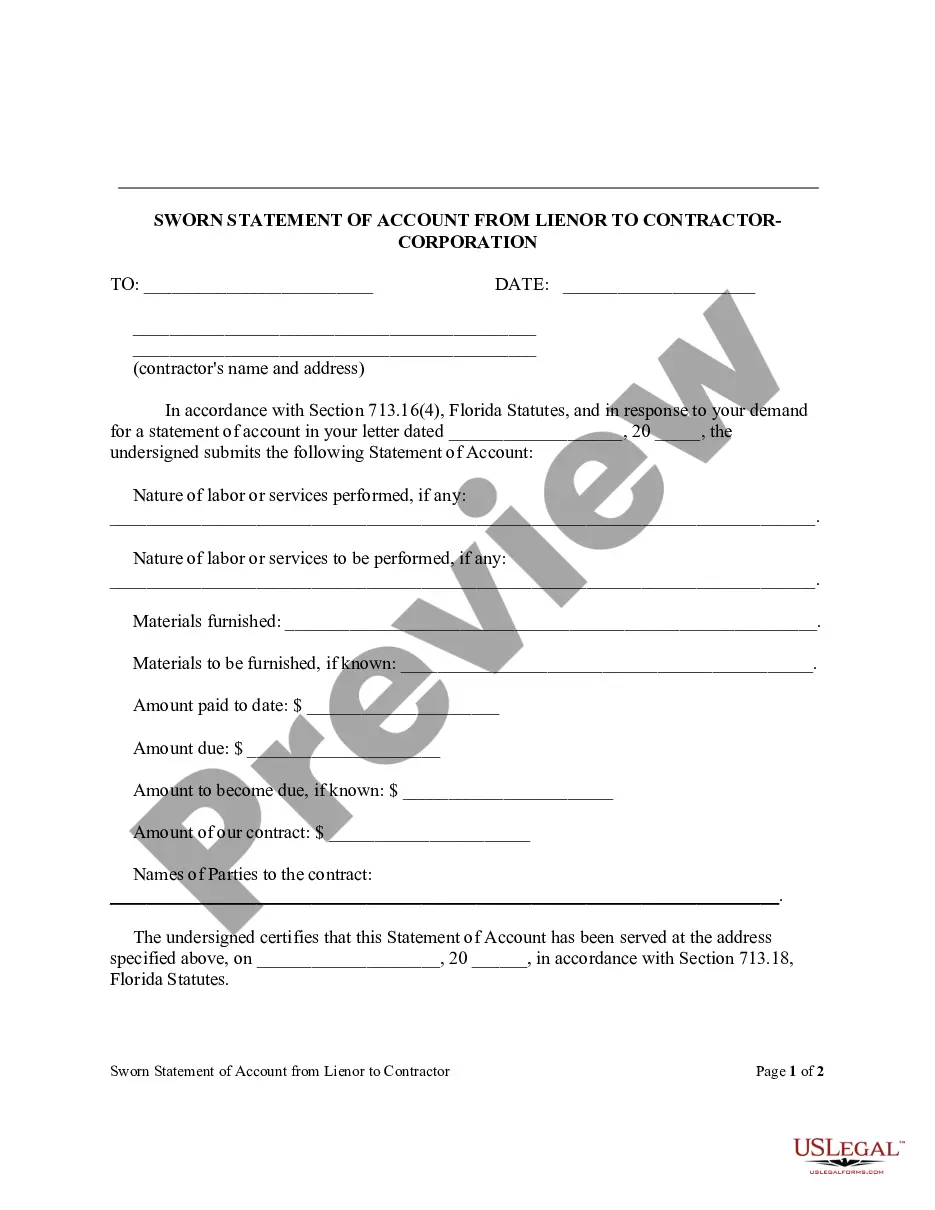
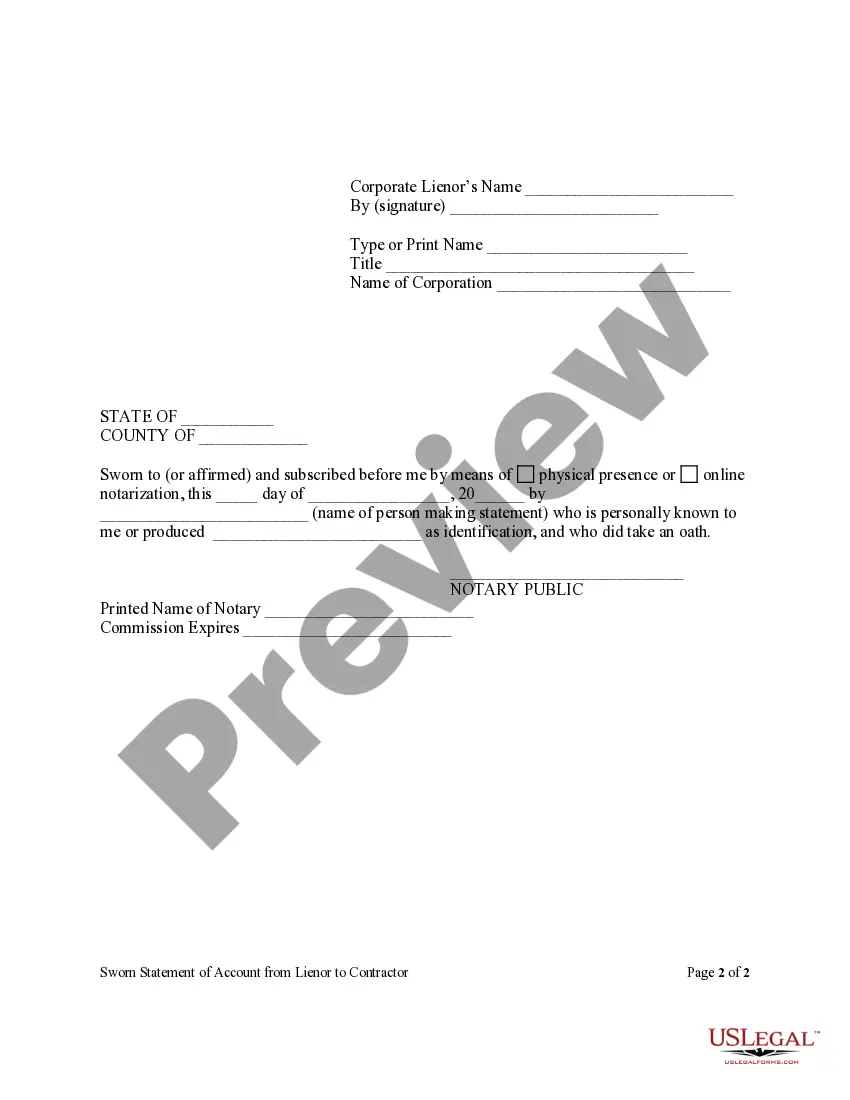
How to fill out Florida Sworn Statement Of Account From Lienor To Contractor - Corporation?
- Log in to your US Legal Forms account. Ensure your subscription is active, or renew it if necessary.
- Preview the form you need. Verify that it aligns with your specific legal requirements and locality.
- Search for another template. If you encounter discrepancies, utilize the search feature to find the accurate form.
- Purchase the document. Click the 'Buy Now' button and choose a subscription plan that suits you. You will need to register for an account.
- Complete your transaction. Enter your payment information via credit card or PayPal to finalize the subscription.
- Download your form. Save the template on your device and access it anytime through the 'My Forms' section in your account.
In conclusion, US Legal Forms provides a reliable way for lienor contractors and families in Florida to manage legal documentation efficiently. With the ease of access and expert assistance available, you can ensure your documents are legally sound and tailored to your needs.
Start your document journey today and simplify your legal processes with US Legal Forms!
Form popularity
FAQ
In Florida, a contractor can file a lien without giving a notice to the owner, but this comes with specific limitations. If a contractor is directly contracted with the property owner, formal notice is not necessary, but it is advisable for lienor contractors in Florida with a family to provide notice to protect their claims. For those unfamiliar with these processes, utilizing US Legal Forms can equip you with the correct forms and guidance to ensure everything is handled properly.
The statute of liens for contractors in Florida is governed by the Florida Construction Lien Law, primarily outlined in Chapter 713 of the Florida Statutes. According to this law, contractors must file a lien within a specific period, typically within 90 days after completion of the work. This timeline ensures that lienor contractors in Florida with a family can secure their rights while also giving property owners clarity on their obligations. Understanding this statute is crucial for both parties involved.
To fight a contractor's lien in Florida, start by reviewing the lien details carefully. Next, gather evidence that supports your case, such as contracts, payments, and communications with the lienor contractor. If necessary, you can file a lawsuit to challenge the lien or negotiate with the contractor directly. For additional support, consider using the US Legal Forms platform to find resources and forms that can help you navigate this process.
In Florida, a contractor typically cannot place a lien on your property without a written contract. The contract serves to protect both parties involved in the transaction. If you have concerns about liens or contract obligations, consulting a legal advisor or using US Legal Forms can be beneficial for lienor contractors in Florida with a family.
Filing a contractor lien in Florida involves several steps, including notifying the property owner and preparing a formal lien claim. You then file the lien with the county clerk and provide a copy to the owner. To ensure accuracy and compliance, using resources such as US Legal Forms can help ease the process for any lienor contractor in Florida with a family.
Yes, in many cases, you can file a construction lien online through your county's official website. This method can save you time and streamline the process. However, make sure to confirm that your county offers online filing for liens. For further assistance, US Legal Forms can provide templates and information relevant to lienor contractors in Florida with a family.
To file a contractor's lien in Florida, start by preparing a lien claim that includes important details such as your name, the property description, and the amount due. Next, you must file your claim with the appropriate county clerk. Additionally, you should send a copy to the property owner. Using US Legal Forms can simplify the documentation and filing process for lienor contractors in Florida with a family.
No, you cannot file a lien in Florida without first providing a notice to the owner. This requirement is in place to ensure the property owner is aware of the potential lien. Skipping this step could invalidate your claim. If you are unsure how to navigate this process, consider using a platform like US Legal Forms for guidance.
To put a lien on someone in Florida, you must first provide a written notice to the property owner. This notice should outline the amount owed and the work you performed. After that, you will need to file your lien with the county clerk where the property is located. It's crucial to follow the legal procedures carefully to protect your rights as a lienor contractor in Florida with a family.
Yes, in Florida, someone can put a lien on your house without a direct contract, especially if they have provided labor or materials for the property. This situation highlights the importance of understanding lienor contractor rights in Florida. Families should ensure they maintain clear agreements with contractors to prevent misunderstandings. For further clarity and legal protection, consider utilizing platforms like US Legal Forms to draft comprehensive contracts.