Philadelphia Lead Paint Disclosure And Certification Law
Description
Get your form ready online
Our built-in tools help you complete, sign, share, and store your documents in one place.
Make edits, fill in missing information, and update formatting in US Legal Forms—just like you would in MS Word.
Download a copy, print it, send it by email, or mail it via USPS—whatever works best for your next step.
Sign and collect signatures with our SignNow integration. Send to multiple recipients, set reminders, and more. Go Premium to unlock E-Sign.
If this form requires notarization, complete it online through a secure video call—no need to meet a notary in person or wait for an appointment.
We protect your documents and personal data by following strict security and privacy standards.

Make edits, fill in missing information, and update formatting in US Legal Forms—just like you would in MS Word.

Download a copy, print it, send it by email, or mail it via USPS—whatever works best for your next step.

Sign and collect signatures with our SignNow integration. Send to multiple recipients, set reminders, and more. Go Premium to unlock E-Sign.

If this form requires notarization, complete it online through a secure video call—no need to meet a notary in person or wait for an appointment.

We protect your documents and personal data by following strict security and privacy standards.
Looking for another form?
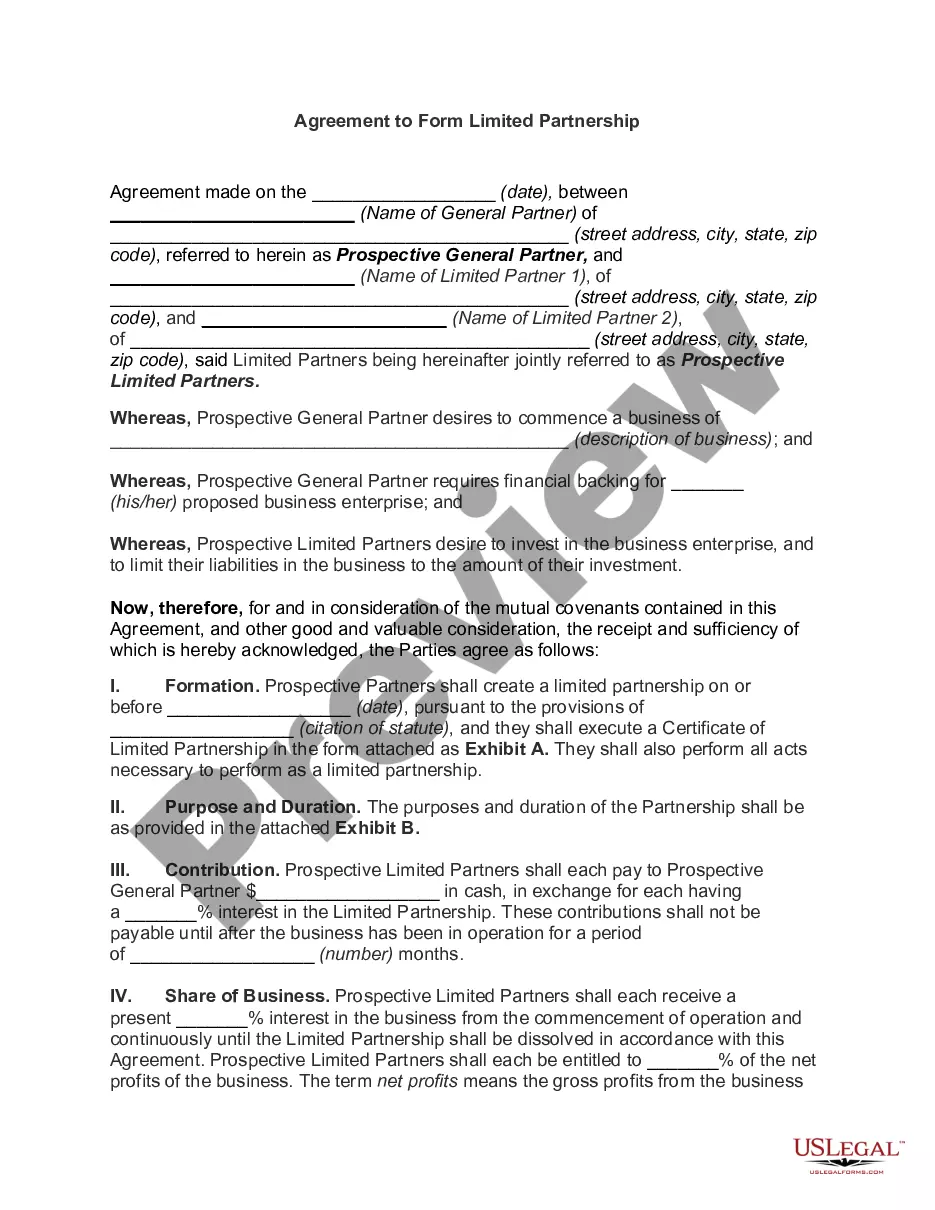
How to fill out Delaware Lead Based Paint Disclosure For Sales Transaction?
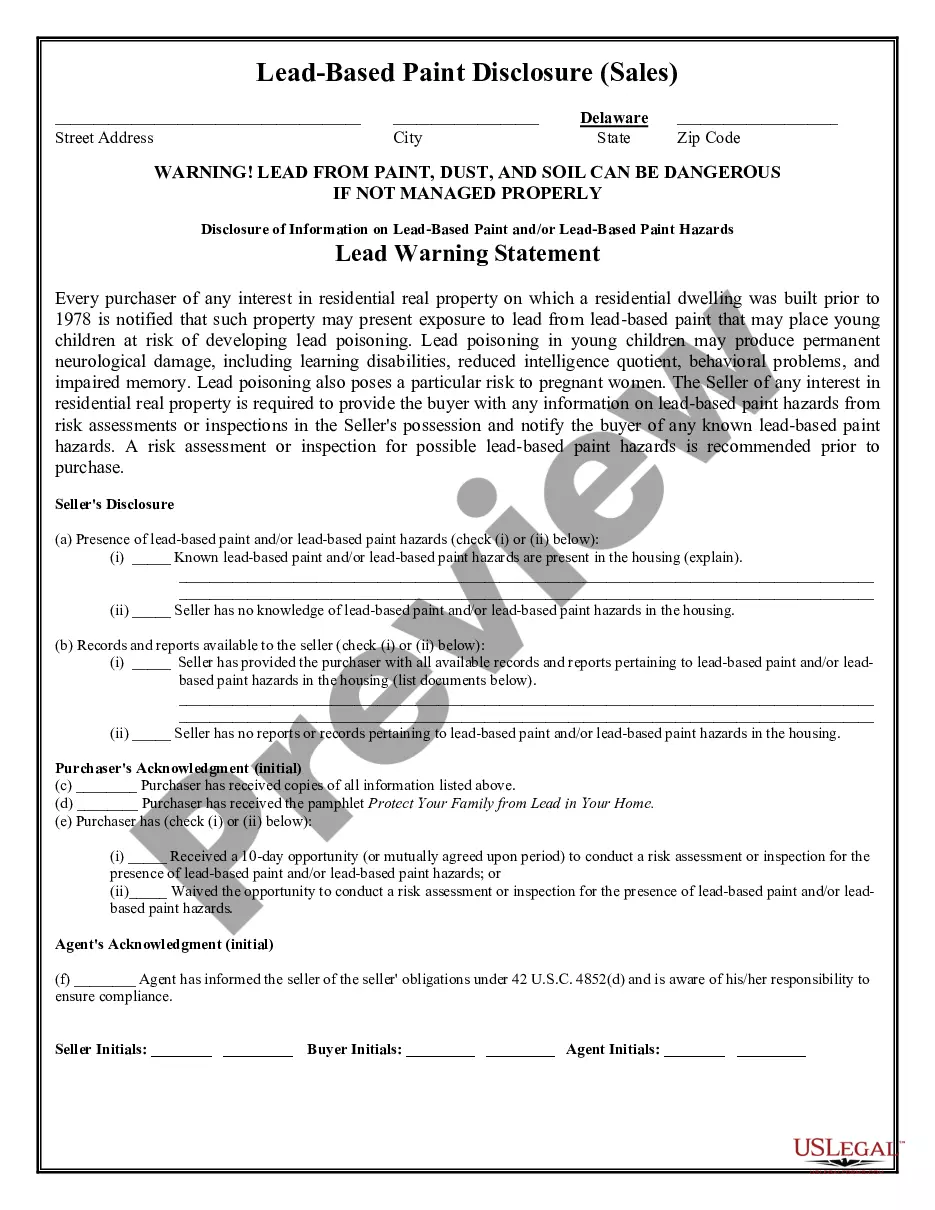
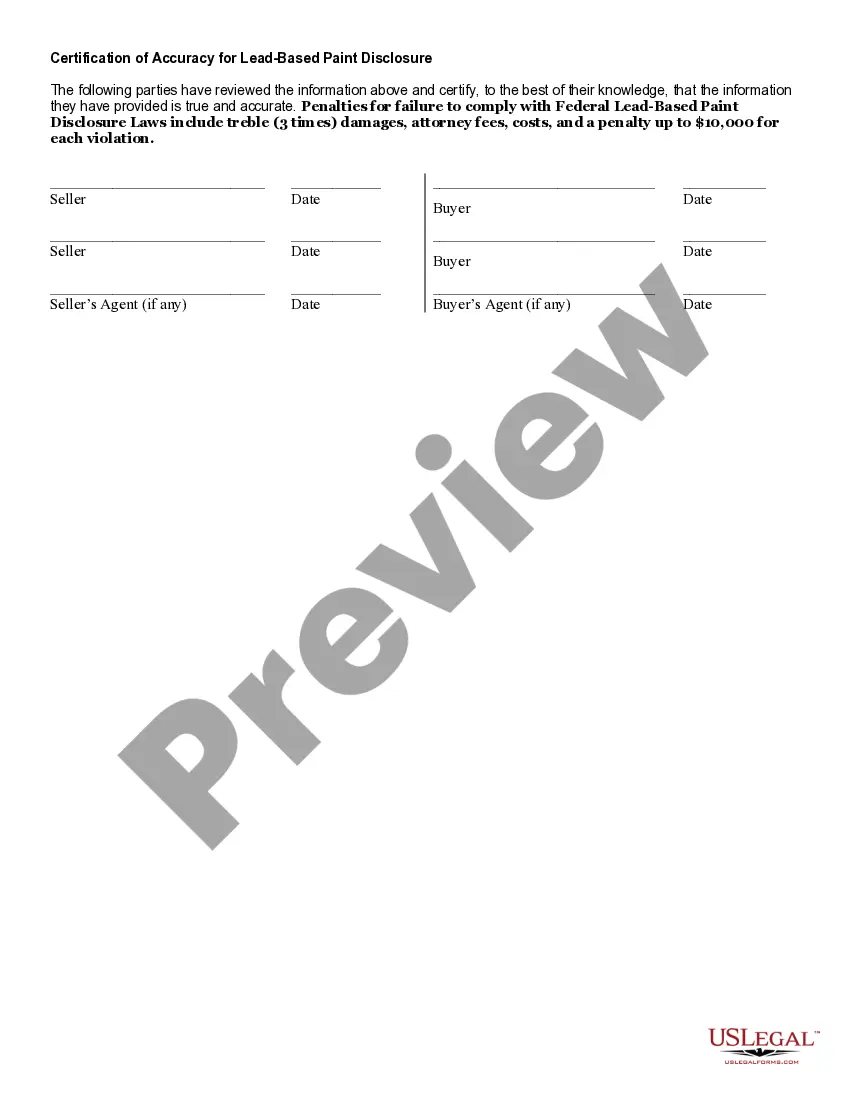
The Philadelphia Lead Paint Disclosure And Certification Law presented on this page is a reusable legal template created by experienced attorneys in compliance with federal and state statutes and regulations.
For over 25 years, US Legal Forms has supplied individuals, businesses, and legal experts with more than 85,000 validated, state-specific documents for any commercial and personal event. It’s the quickest, easiest, and most reliable method to secure the forms you require, as the service ensures the utmost level of data security and anti-malware safeguards.
Subscribe to US Legal Forms to have authenticated legal templates available for all of life’s situations.
- Search for the document you need and examine it.
- Review the file you searched and either preview it or check the form description to confirm it meets your needs. If it doesn’t, utilize the search bar to find the appropriate one. Click Buy Now when you've identified the template you require.
- Register and Log In.
- Select the pricing plan that fits you and set up an account. Use PayPal or a credit card to make a swift payment. If you already possess an account, Log In and verify your subscription to proceed.
- Obtain the editable template.
- Choose the format you desire for your Philadelphia Lead Paint Disclosure And Certification Law (PDF, DOCX, RTF) and store the sample on your device.
- Complete and sign the document.
- Print the template to fill it out manually. Alternatively, employ an online multifunctional PDF editor to quickly and accurately complete and sign your form with an eSignature.
- Download your documents once again.
- Utilize the same document again whenever necessary. Access the My documents tab in your profile to redownload any previously saved forms.
Form popularity
FAQ
Visit the Vermont Judiciary website at judiciary.vermont.gov. Look for the "Public Portal" or "Case Search" option on the website's homepage and click on it.
The Vermont Public Records Law is a series of laws designed to guarantee that the public has access to public records of government bodies at all levels in Vermont. Public records includes all documents, no matter the physical form that are ?produced or acquired in the course of public agency business.?
Although Vermont courts have recognized a common law right of access to public documents since 1906, our Public Records Act (PRA) was originally a product of the 1976 session of the General Assembly, adopted in the wake of the Watergate scandal.
You can contact the court by phone, in writing, in person, or by sending an email to JUD.VJB@vermont.gov. A motion is a request in writing asking the court to consider doing something specific in your case. All motions must identify the request and give specific reasons for the request.
The Vermont Superior Courts, District Courts, and the Supreme Court primarily maintain criminal court records. To access these records, individuals can use the Vermont Judiciary Public Portal, which provides search options based on case numbers, party names, or attorney names.
Vermont's courts are open, but they are operating differently than they were before the COVID-19 pandemic started. Like many public spaces, courthouses have had to adapt to rising and falling case numbers and as the understanding of COVID-19 has changed.
Generally speaking, those seeking access to public records are advised to put the request in writing and to email it to treasurers.office@vermont.gov. If email is not an option, mail the request to: Office of the State Treasurer, 109 State Street, 4th floor, Montpelier, VT 05609-6200.
Use the Request for Access to Court Record form on the bottom of this web page. General questions about court processes and procedures. Contact the Information Center at 802-652-1900.