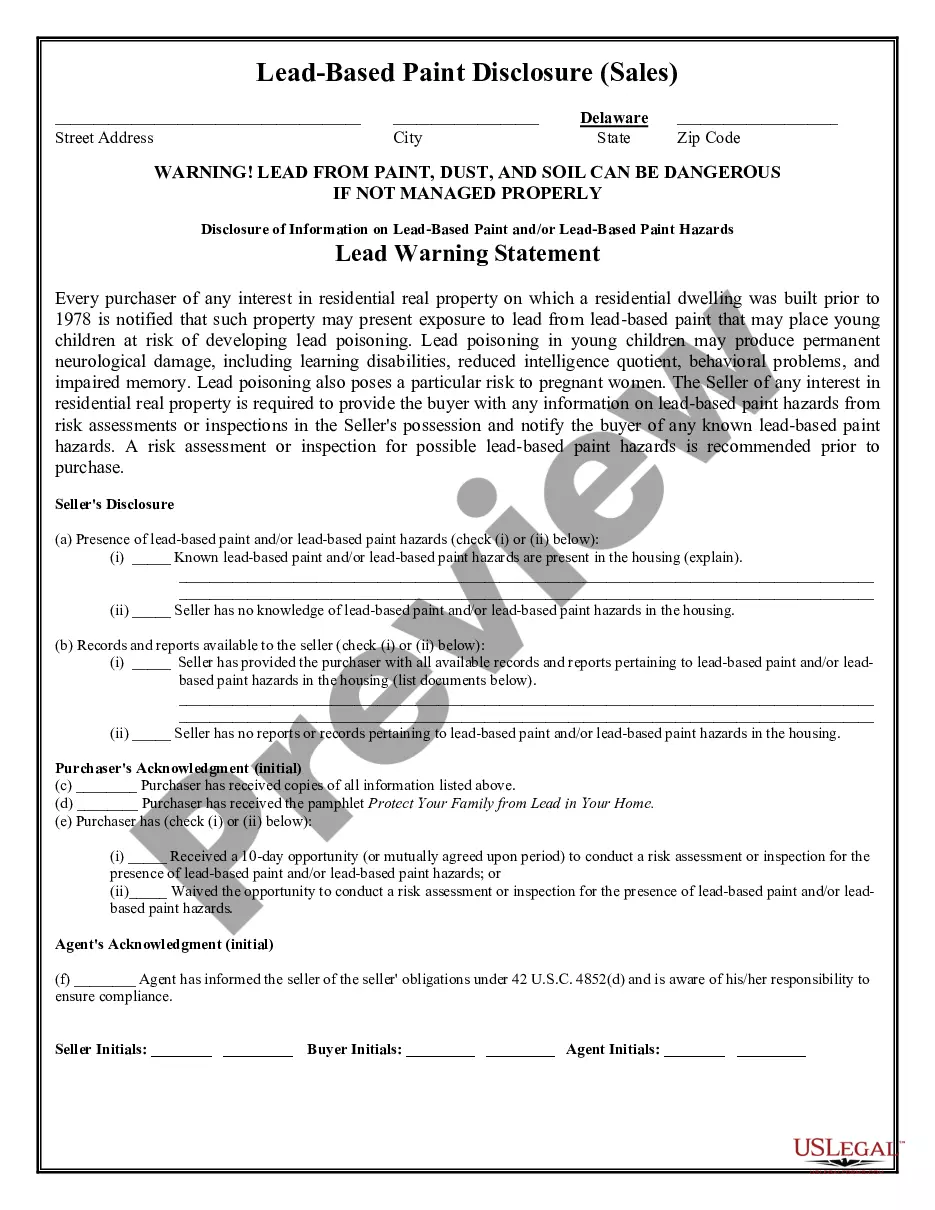
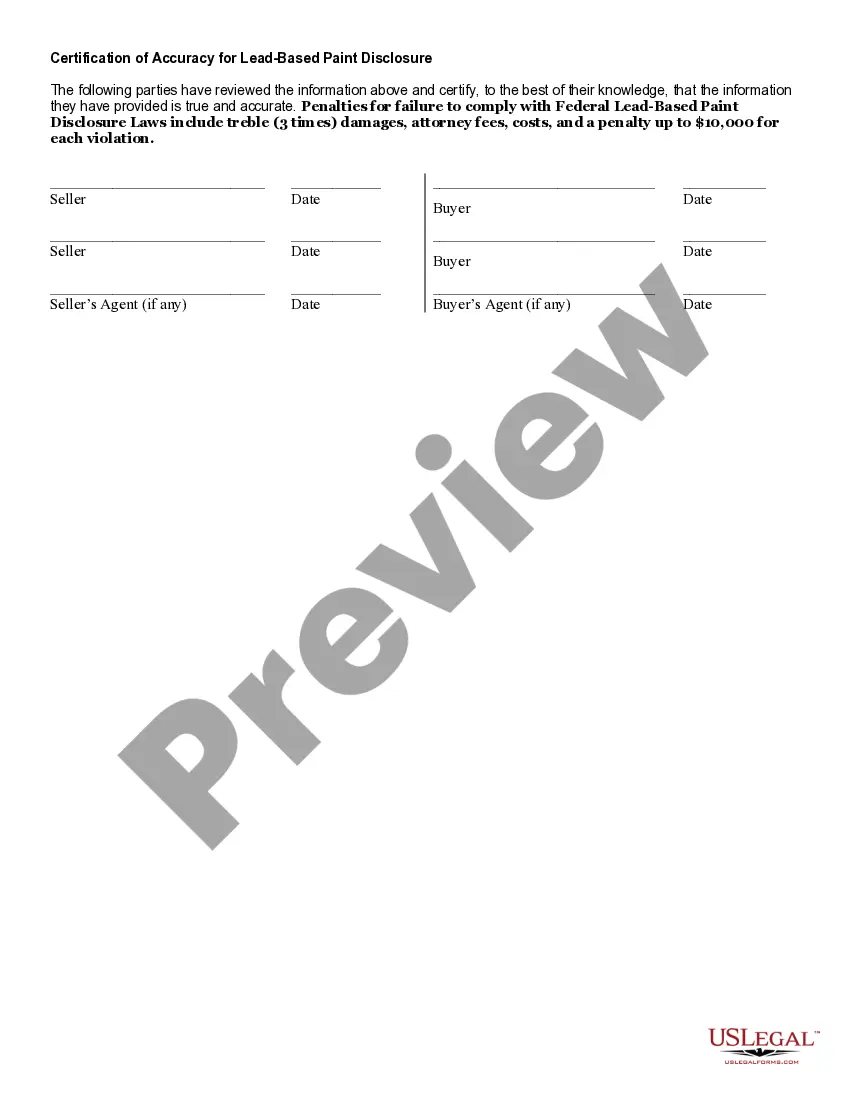
Delaware Lead Paint Regulations
Description
Get your form ready online
Our built-in tools help you complete, sign, share, and store your documents in one place.
Make edits, fill in missing information, and update formatting in US Legal Forms—just like you would in MS Word.
Download a copy, print it, send it by email, or mail it via USPS—whatever works best for your next step.
Sign and collect signatures with our SignNow integration. Send to multiple recipients, set reminders, and more. Go Premium to unlock E-Sign.
If this form requires notarization, complete it online through a secure video call—no need to meet a notary in person or wait for an appointment.
We protect your documents and personal data by following strict security and privacy standards.

Make edits, fill in missing information, and update formatting in US Legal Forms—just like you would in MS Word.

Download a copy, print it, send it by email, or mail it via USPS—whatever works best for your next step.

Sign and collect signatures with our SignNow integration. Send to multiple recipients, set reminders, and more. Go Premium to unlock E-Sign.

If this form requires notarization, complete it online through a secure video call—no need to meet a notary in person or wait for an appointment.

We protect your documents and personal data by following strict security and privacy standards.
Looking for another form?


How to fill out Delaware Lead Based Paint Disclosure For Sales Transaction?
Legal administration can be overwhelming, even for the most experienced experts.
When you are searching for Delaware Lead Paint Regulations and lack the time to dedicate to finding the correct and current version, the process can be stressful.
Leverage advanced tools to complete and manage your Delaware Lead Paint Regulations.
Access a resource hub of articles, guides, handbooks, and materials relevant to your circumstances and requirements.
Verify this is the correct form by previewing it and reviewing its description.
- Save time and effort searching for the documents you need, and use US Legal Forms’ advanced search and Review tool to locate Delaware Lead Paint Regulations and obtain it.
- If you have a monthly subscription, Log In to your US Legal Forms account, search for the form, and download it.
- Check the My documents tab to view the documents you've previously saved and to organize your folders as needed.
- If this is your first time using US Legal Forms, create a free account to gain unlimited access to all the platform's features.
- Here are the steps to take after accessing the necessary form.
- A comprehensive online form database can be transformative for anyone looking to handle these matters effectively.
- US Legal Forms is a leader in online legal documents, offering over 85,000 state-specific legal forms available at any time.
- With US Legal Forms, you can access state or county-specific legal and business documents. US Legal Forms accommodates any needs you might have, from personal to business paperwork, all in one location.
Form popularity
FAQ
Painting over lead paint can be considered a form of ?encapsulation,? which is one of the EPA-approved ways to remediate lead paint hazards. However, this requires the use of a special material called an ?encapsulant.? Regular store-bought paint by itself is not sufficient to safely encapsulate lead paint.
Painting over lead paint is known as ?encapsulation,? and it's frequently used as an effective remediation technique. In fact, it's less expensive and safer than lead paint removal, since it doesn't disturb the existing paint and doesn't tend to release lead dust or toxic particles into the air.
What To Do if You Find Lead Paint In Your Home Avoid Disturbing the Surface. ... Clean Up Any Chips or Scraps of Paint. ... Keep Children Away. ... Remove Dust From Shelves and Window Sills. ... Use an Air Filter. ... Carefully Paint Over The Area or Have The Paint Professionally Removed.
Sellers must provide homebuyers a 10-day period to conduct a paint inspection or risk assessment for lead-based paint or lead-based paint hazards. Parties may mutually agree, in writing, to lengthen or shorten the time period for inspection. Homebuyers may waive this inspection opportunity.
In 1977, the Consumer Products Safety Commission limited the lead in most paints to 0.06% (600 ppm by dry weight). Since 2009, the lead allowable in most paints is now 0.009%. Paint for bridges and marine use may contain greater amounts of lead.