Connecticut Separation Laws
Description


Get your form ready online
Our built-in tools help you complete, sign, share, and store your documents in one place.
Make edits, fill in missing information, and update formatting in US Legal Forms—just like you would in MS Word.
Download a copy, print it, send it by email, or mail it via USPS—whatever works best for your next step.
Sign and collect signatures with our SignNow integration. Send to multiple recipients, set reminders, and more. Go Premium to unlock E-Sign.
If this form requires notarization, complete it online through a secure video call—no need to meet a notary in person or wait for an appointment.
We protect your documents and personal data by following strict security and privacy standards.

Make edits, fill in missing information, and update formatting in US Legal Forms—just like you would in MS Word.

Download a copy, print it, send it by email, or mail it via USPS—whatever works best for your next step.

Sign and collect signatures with our SignNow integration. Send to multiple recipients, set reminders, and more. Go Premium to unlock E-Sign.

If this form requires notarization, complete it online through a secure video call—no need to meet a notary in person or wait for an appointment.

We protect your documents and personal data by following strict security and privacy standards.
Looking for another form?






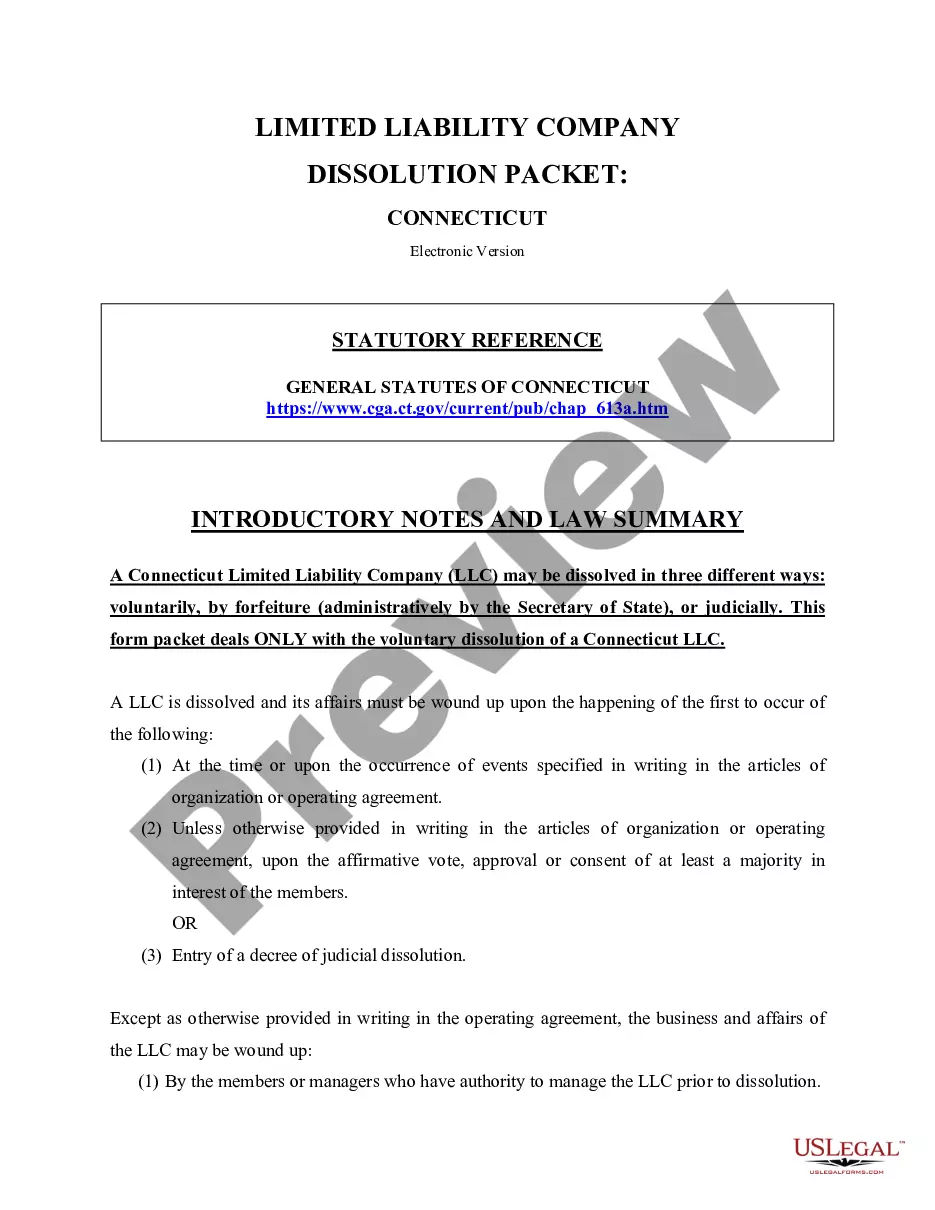
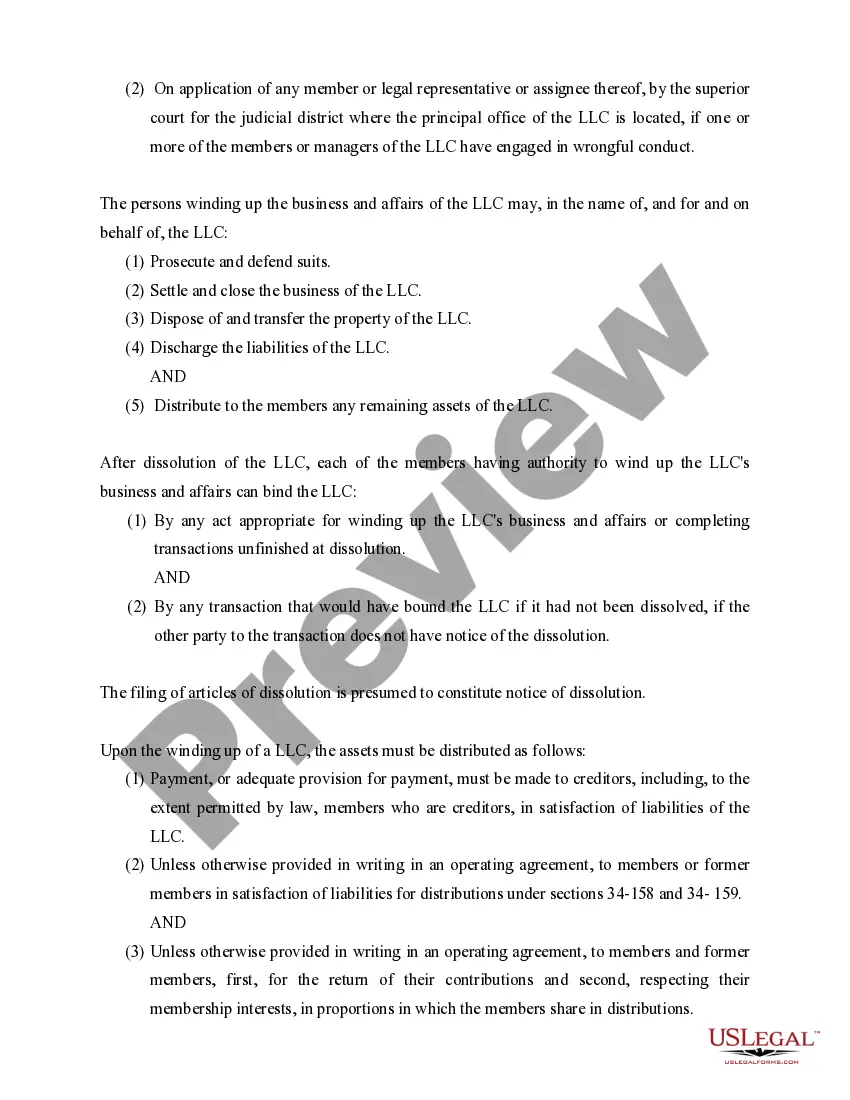
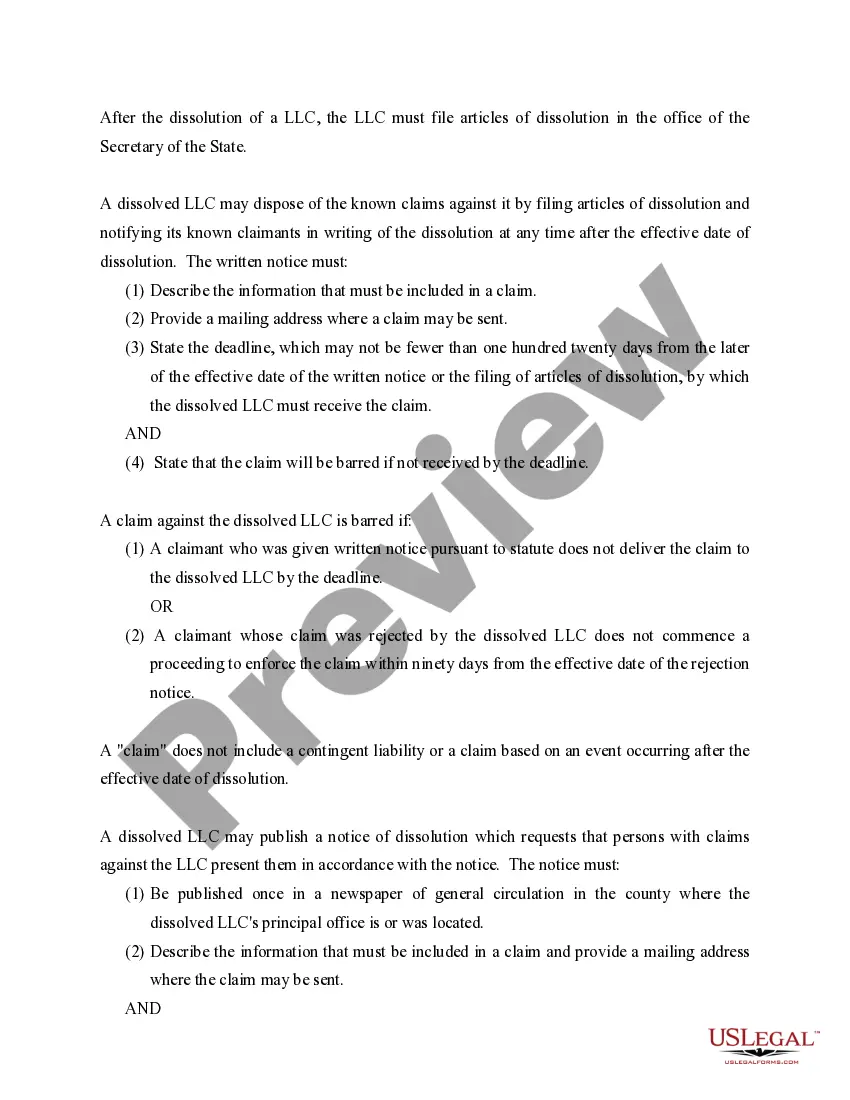
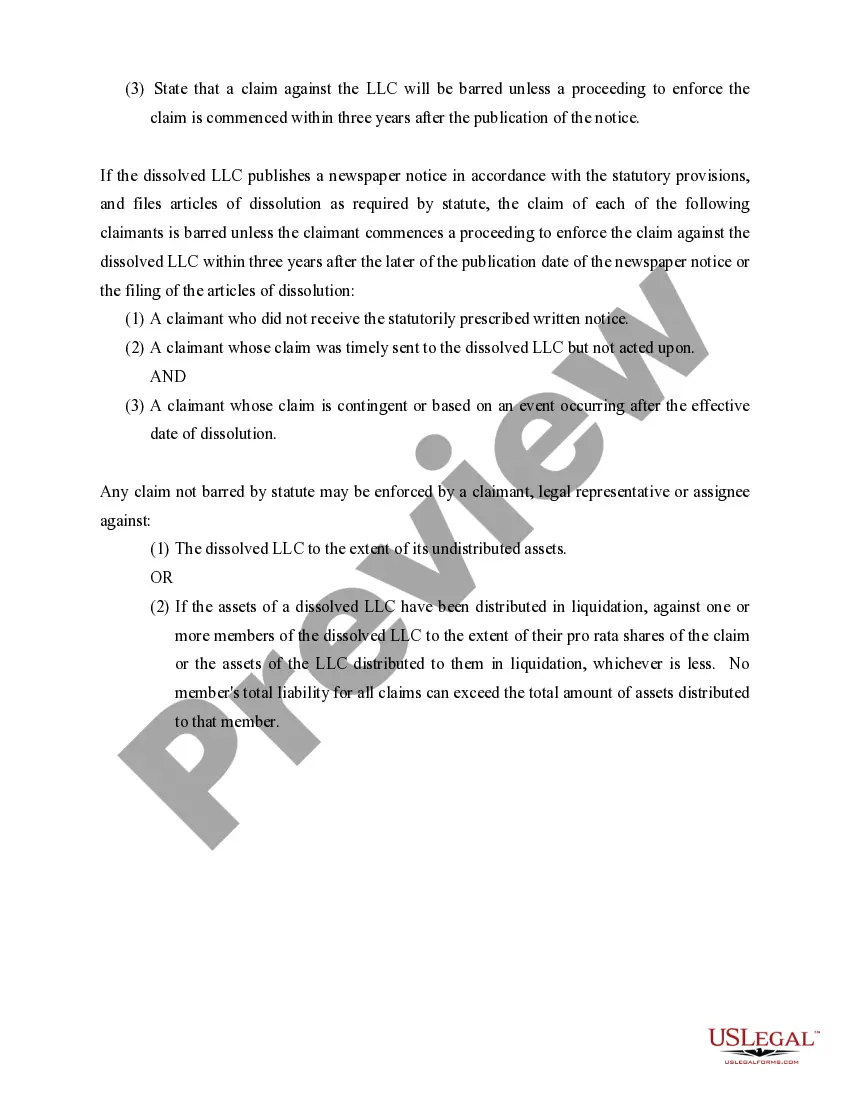
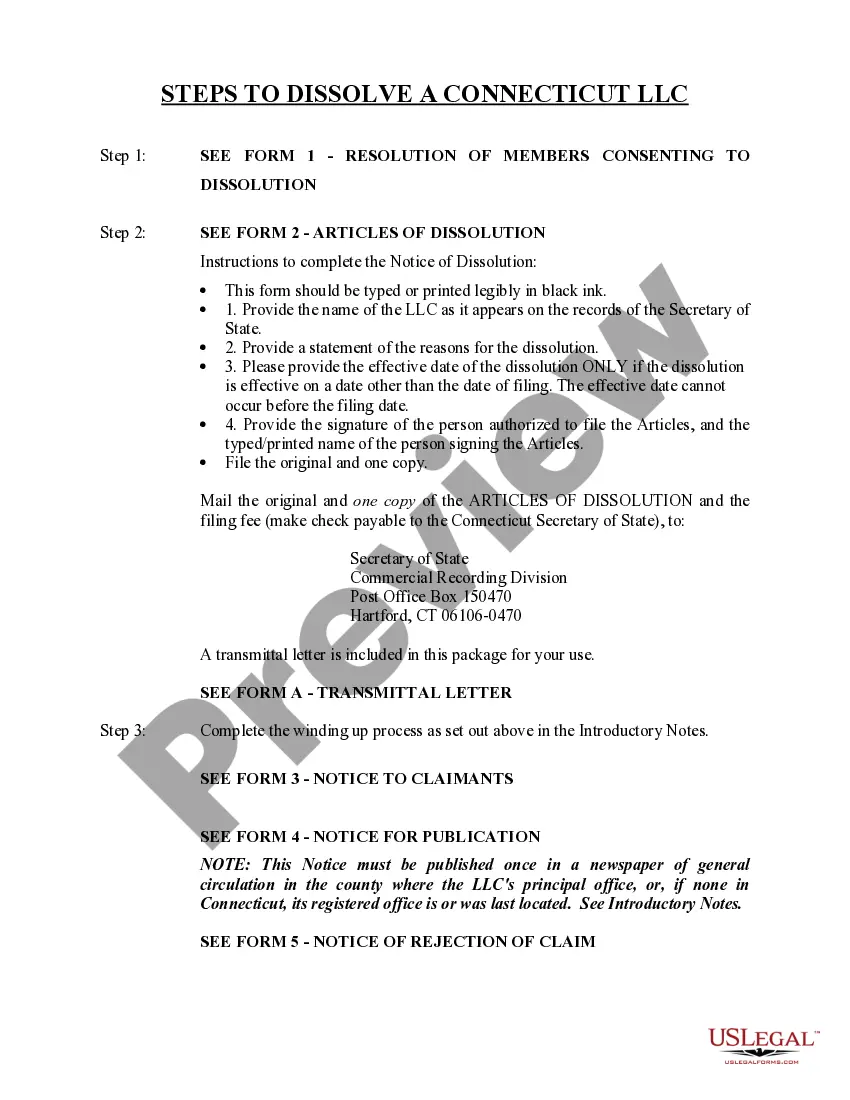
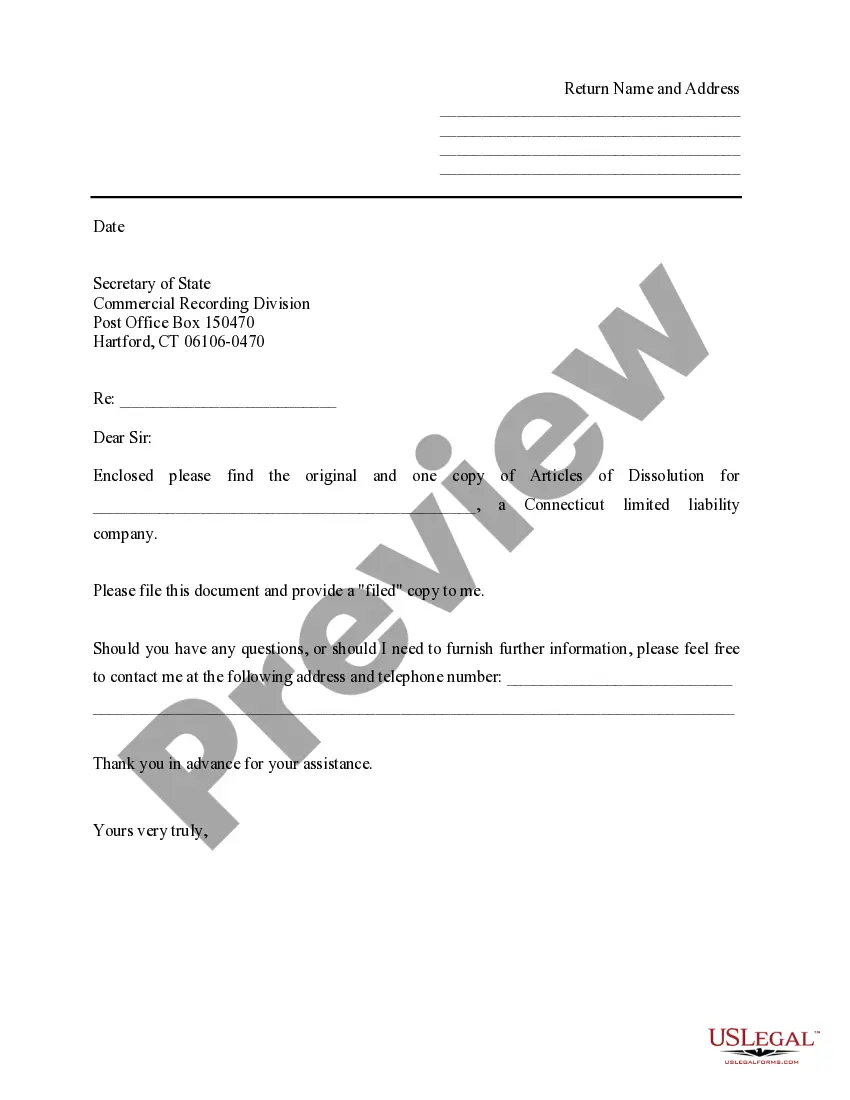
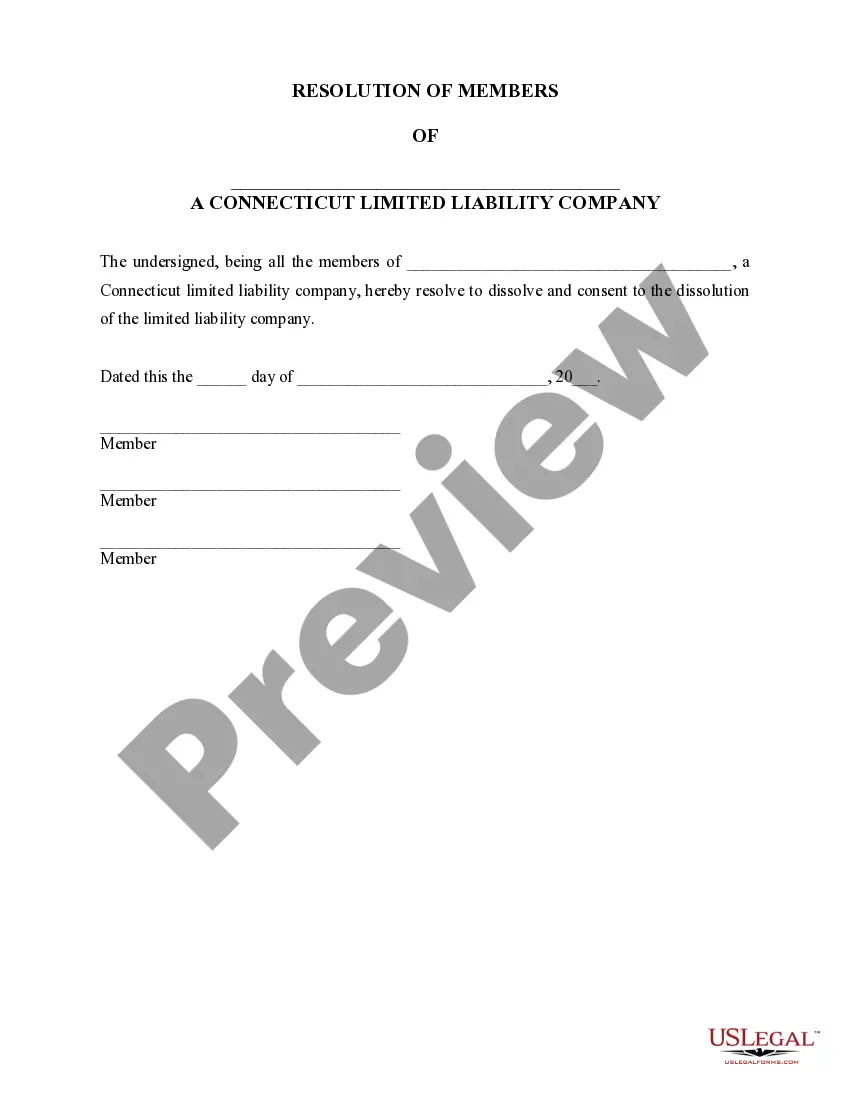
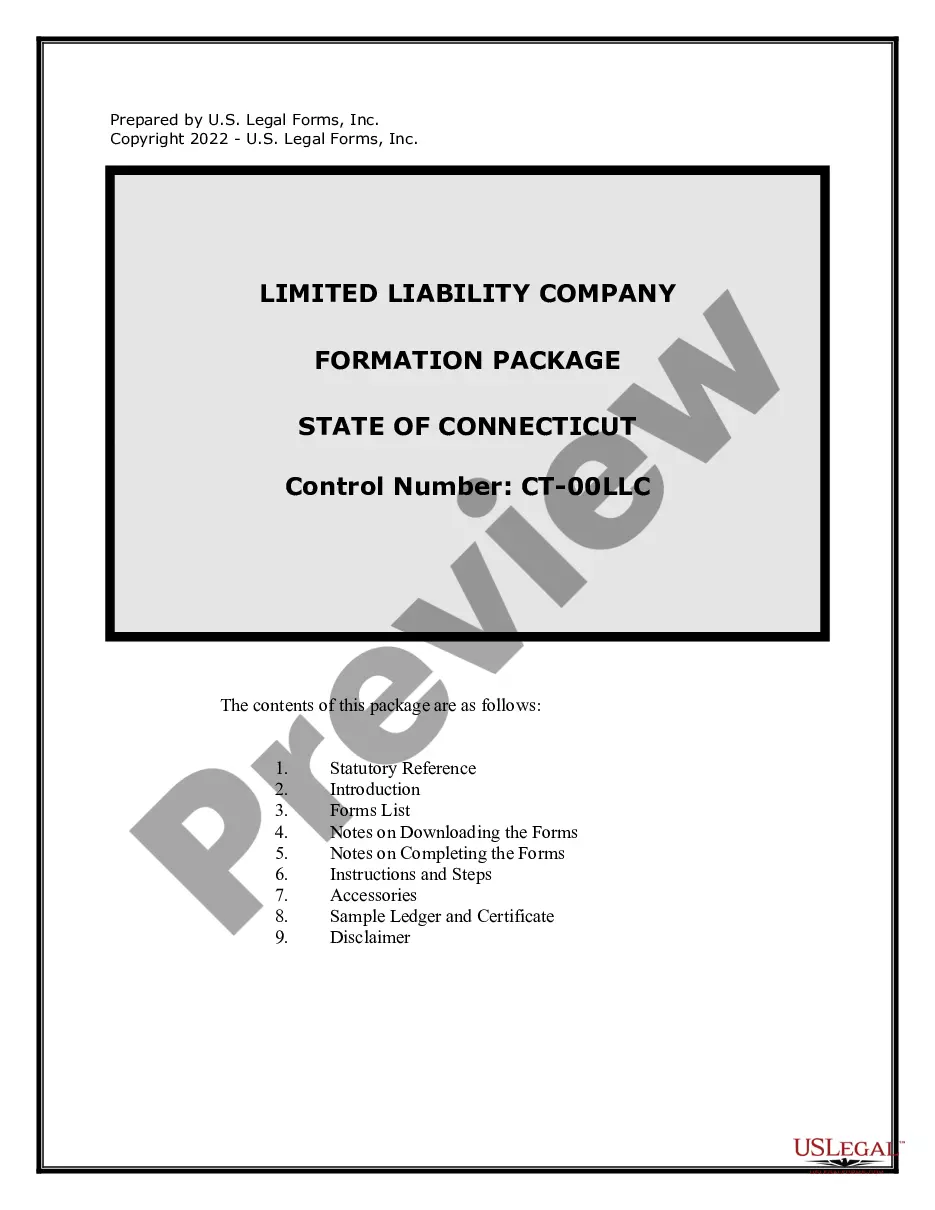
How to fill out Connecticut Dissolution Package To Dissolve Limited Liability Company LLC?
Locating a reliable resource to obtain the latest and pertinent legal samples is half the challenge of navigating bureaucracy.
Identifying the appropriate legal documents requires precision and careful consideration, which is why it is crucial to source Connecticut Separation Laws exclusively from trustworthy providers, such as US Legal Forms. An incorrect template will squander your time and prolong your current situation. With US Legal Forms, you have minimal concerns. You can access and review all the details regarding the document’s applicability and relevance for your circumstances and in your state or locality.
Eliminate the hassle associated with your legal documentation. Explore the vast US Legal Forms library to discover legal samples, verify their relevance to your situation, and download them instantly.
- Utilize the catalog navigation or search feature to find your sample.
- Examine the form’s details to determine if it meets the criteria of your state and county.
- Check the form preview, if available, to confirm that the form is what you are looking for.
- Continue searching and seek the appropriate template if the Connecticut Separation Laws do not fulfill your requirements.
- If you are confident about the form’s applicability, download it.
- If you are a registered user, click Log in to verify and access your selected templates in My documents.
- If you do not have an account yet, click Buy now to acquire the form.
- Choose the pricing plan that fits your needs.
- Proceed to the registration to complete your purchase.
- Finalize your transaction by selecting a payment method (credit card or PayPal).
- Choose the file format for downloading Connecticut Separation Laws.
- Once you have the form on your device, you can edit it with the editor or print it and fill it out manually.
Form popularity
FAQ
Connecticut doesn't require spouses to separate before divorce. But many spouses do separate, or at least consider it. If separation is something you're thinking about, you need to look into whether moving out of the family home?either before or during divorce?is in your best interest.
In Connecticut, a court's decree of separation serves the same essential legal function as a divorce order. The biggest difference between legal separation and divorce in Connecticut is that in the case of a separation, a couple remains married and cannot remarry without divorcing first.
Yes. Under Connecticut law, married couples can obtain a divorce without seeking an assignment of fault. The state's no-fault divorce law allows married couples to file for divorce on the grounds that their relationship is ?irretrievably broken?.
The grounds for legal separation are the same as a divorce in Connecticut, which means you can use no-fault or fault-based grounds. Couples can allege: the marriage is irretrievably broken. the parties have lived separate and apart for a continuous period of 18-months, and there's no chance for reconciliation, or.
In most states, but not all, it's possible to legally separate from your spouse. The process involves filing a petition in court, and leaves you neither married nor divorced?it's a middle ground where you live separate lives and have separate bank accounts but are unable to remarry.