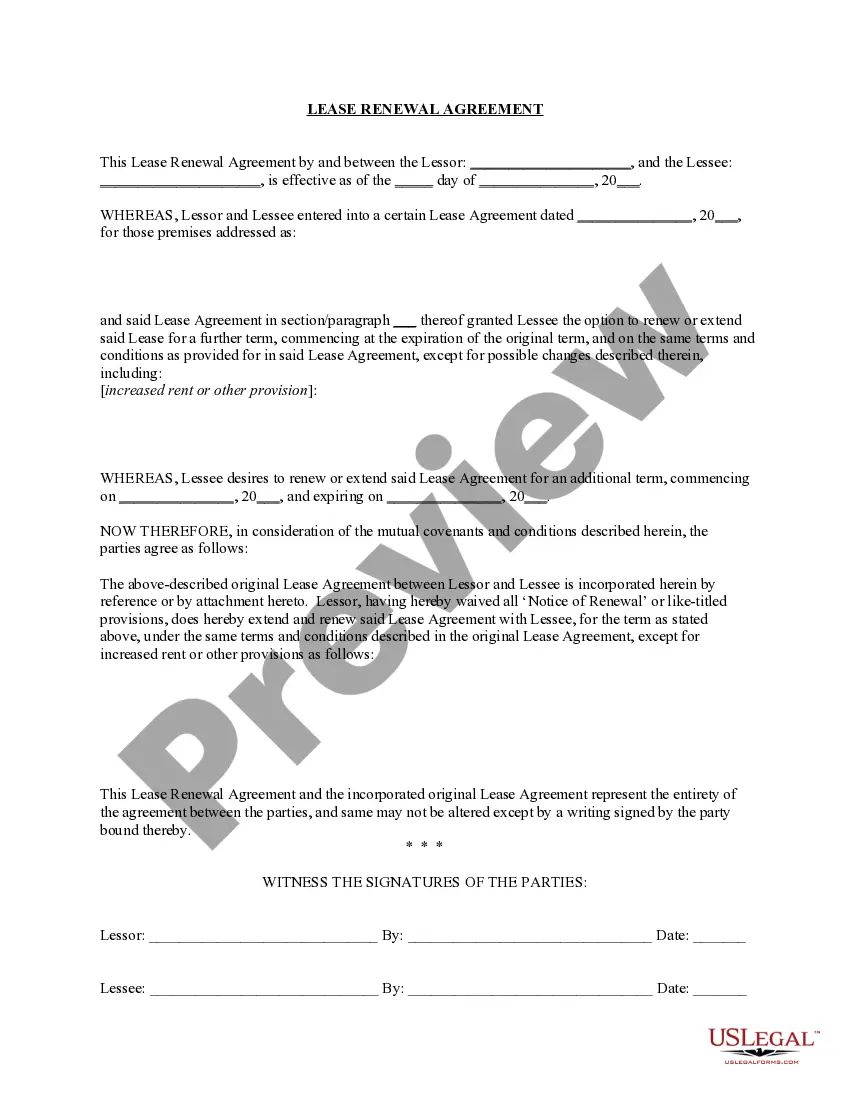
Residential Lease Agreement With Utilities Included
Description
Get your form ready online
Our built-in tools help you complete, sign, share, and store your documents in one place.
Make edits, fill in missing information, and update formatting in US Legal Forms—just like you would in MS Word.
Download a copy, print it, send it by email, or mail it via USPS—whatever works best for your next step.
Sign and collect signatures with our SignNow integration. Send to multiple recipients, set reminders, and more. Go Premium to unlock E-Sign.
If this form requires notarization, complete it online through a secure video call—no need to meet a notary in person or wait for an appointment.
We protect your documents and personal data by following strict security and privacy standards.

Make edits, fill in missing information, and update formatting in US Legal Forms—just like you would in MS Word.

Download a copy, print it, send it by email, or mail it via USPS—whatever works best for your next step.

Sign and collect signatures with our SignNow integration. Send to multiple recipients, set reminders, and more. Go Premium to unlock E-Sign.

If this form requires notarization, complete it online through a secure video call—no need to meet a notary in person or wait for an appointment.

We protect your documents and personal data by following strict security and privacy standards.
Looking for another form?






How to fill out Connecticut Residential Lease Renewal Agreement?
- If you're an existing user, log in to your account and download the necessary template directly by clicking the Download button. Ensure your subscription is active; renew if necessary.
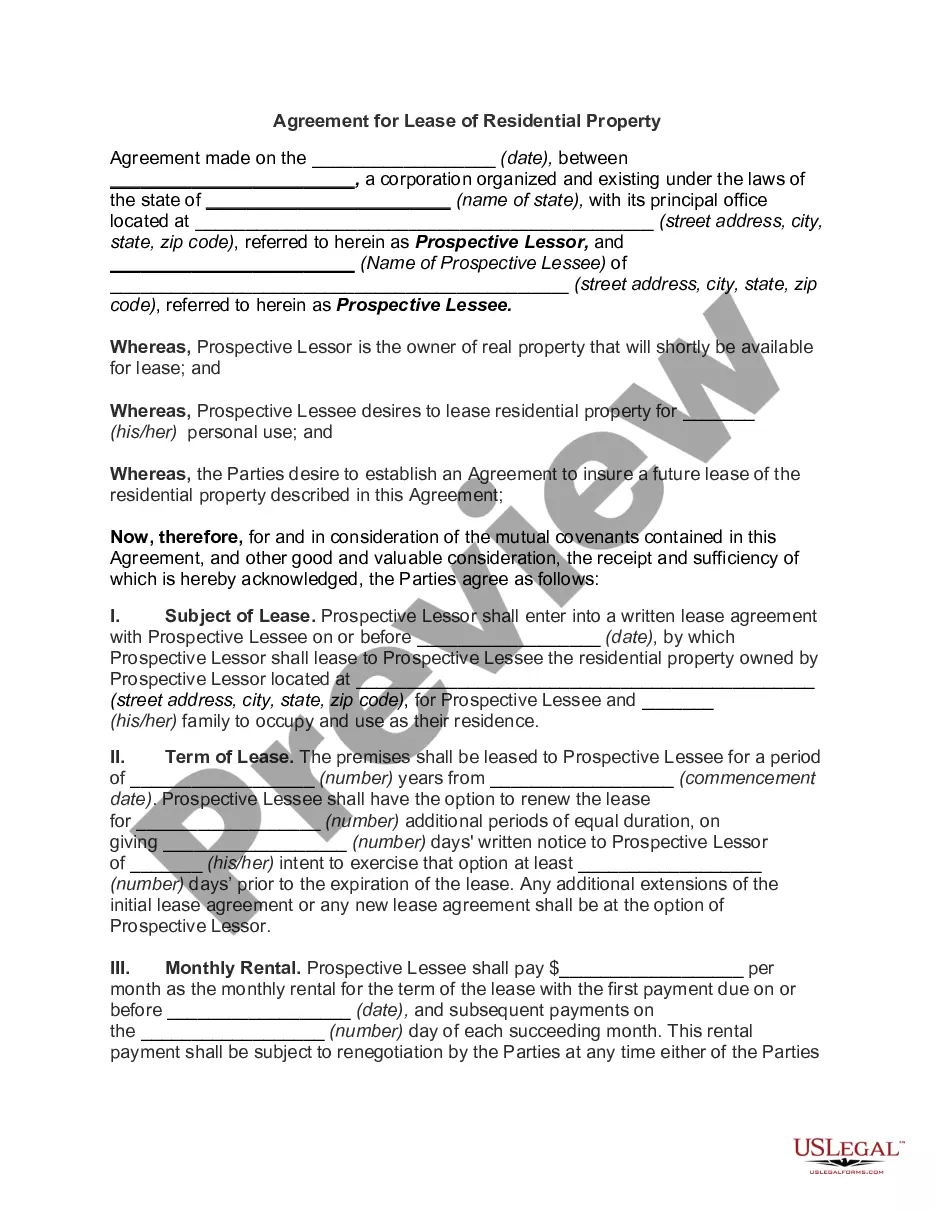
- For new users, first, check the Preview mode and description of the form to confirm it fits your requirements and complies with your local laws.
- If you require a different template, utilize the Search tab to find an alternative that aligns with your needs. Once you identify the correct form, proceed to the next step.
- Purchase the document by clicking the Buy Now button and selecting your preferred subscription plan. Registration is required for access to the complete library.
- Complete your transaction using your credit card or PayPal, and then download the form to your device for easy access and completion. You can revisit it anytime in the My Forms section.
With over 85,000 fillable legal forms and dedicated assistance from premium experts, US Legal Forms stands out as a top choice for securing your residential lease agreement with utilities included.
Start your journey towards peace of mind by accessing US Legal Forms today and streamline your legal documentation process.
Form popularity
FAQ
In a residential lease agreement with utilities included, the landlord typically covers essential services such as water, electricity, and gas. However, it's important to read the lease carefully to confirm which utilities are included. Some agreements may exclude certain services like internet or cable. Always clarify with the landlord to avoid any surprises and ensure a smooth living experience.
Yes, many apartments often feature a residential lease agreement with utilities included as a selling point. This arrangement simplifies budgeting for tenants, as they can avoid unexpected utility bills. While not every rental property will offer this option, it is increasingly common in multi-unit buildings or market-rate apartments. Always verify the specifics to ensure you understand what is included.
A residential lease agreement with utilities included typically outlines the responsibilities of both the landlord and tenant. However, there are certain elements that may not be included, such as maintenance costs for appliance repairs or damage caused by negligence. It's essential to review the lease carefully to understand all terms, duties, and exclusions. Being clear on these points helps in avoiding misunderstandings down the road.
Putting utilities in a tenant's name is straightforward. The tenant should reach out to the local utility companies, provide necessary documentation, and request the transfer. It is vital for both parties to understand the provisions in the residential lease agreement with utilities included, as this clarifies responsibilities and ensures a seamless transition.
To put utilities in your renter's name, have them contact the utility companies directly with their identification and a copy of the lease. Some providers might allow this transfer online, while others may require a visit to their office. Make sure your residential lease agreement with utilities included outlines any details about who handles utility connections; this simplifies the process for everyone.
Typically, the outgoing tenant is responsible for transferring utilities out of their name and informing the utility company. As the new tenant, you then need to initiate the transfer to your name. Always clarify these responsibilities with your landlord when discussing your residential lease agreement with utilities included to avoid any confusion.
You can often arrange utilities before officially signing your lease, but this depends on the specific policies of the service providers in your area. Additionally, some landlords may allow you to set up utilities in advance as part of your residential lease agreement with utilities included. It’s best to check with both the utility companies and your landlord to ensure you comply with any requirements.
In a gross lease, the landlord typically covers all utility expenses as part of the rental agreement. This arrangement is beneficial, as it simplifies your payment process, allowing you to focus on other aspects of your residential lease agreement with utilities included. However, always verify the specific terms of your lease with your landlord.
To put utilities in your name, you should contact your local utility companies directly. Each service provider has a customer service number or website where you can initiate the setup. When preparing to sign your residential lease agreement with utilities included, make sure you have your lease details handy to ensure a smooth transition.
In Alabama, a residential lease agreement with utilities included must comply with specific state laws regarding disclosures and tenant rights. Typically, leases should outline terms related to rent, utilities, and property maintenance. Consult platforms like US Legal Forms for comprehensive templates and legal insights tailored to Alabama.