Tenant Landlord Shut For Foreclosure
Description


Get your form ready online
Our built-in tools help you complete, sign, share, and store your documents in one place.
Make edits, fill in missing information, and update formatting in US Legal Forms—just like you would in MS Word.
Download a copy, print it, send it by email, or mail it via USPS—whatever works best for your next step.
Sign and collect signatures with our SignNow integration. Send to multiple recipients, set reminders, and more. Go Premium to unlock E-Sign.
If this form requires notarization, complete it online through a secure video call—no need to meet a notary in person or wait for an appointment.
We protect your documents and personal data by following strict security and privacy standards.

Make edits, fill in missing information, and update formatting in US Legal Forms—just like you would in MS Word.

Download a copy, print it, send it by email, or mail it via USPS—whatever works best for your next step.

Sign and collect signatures with our SignNow integration. Send to multiple recipients, set reminders, and more. Go Premium to unlock E-Sign.

If this form requires notarization, complete it online through a secure video call—no need to meet a notary in person or wait for an appointment.

We protect your documents and personal data by following strict security and privacy standards.
Looking for another form?









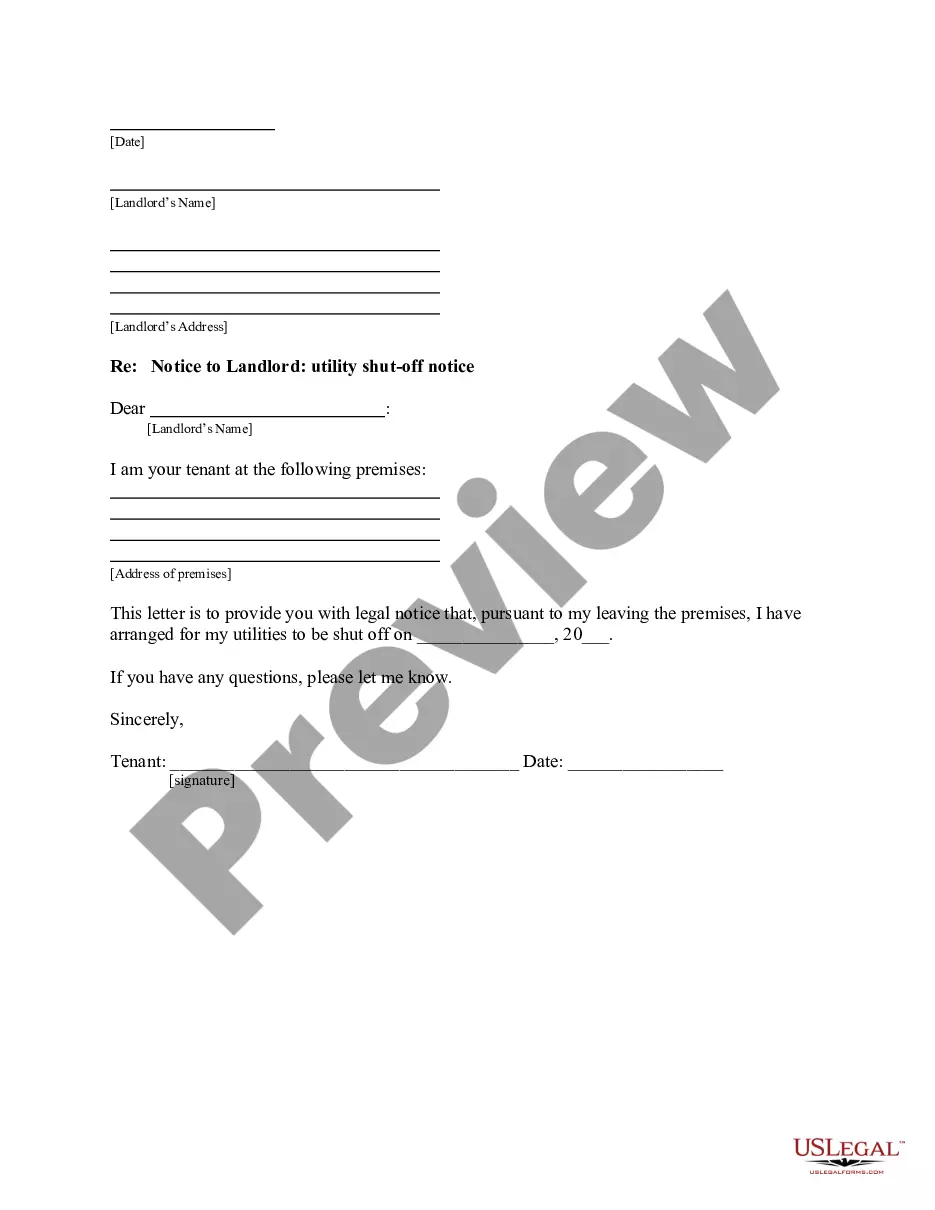
How to fill out Connecticut Letter From Tenant To Landlord - Utility Shut Off Notice To Landlord Due To Tenant Vacating Premises?
- Log into your US Legal Forms account if you're a returning user, ensuring your subscription is active. Download your desired form template directly to your device by clicking the Download button.
- For first-time users, explore the Preview mode and read the form descriptions carefully to confirm you've selected the correct document for your needs and jurisdiction.
- If necessary, utilize the Search feature to find other templates that may be a better fit for your situation.
- Once you've selected an appropriate template, click 'Buy Now' to choose a subscription plan and create an account for access.
- Complete your purchase by entering your credit card information or using PayPal.
- Download the template to your device and visit the 'My Forms' section of your account for future access.
US Legal Forms stands out with its robust collection of over 85,000 customizable legal documents, offering far more than competitors at similar costs. You can also connect with premium legal experts to ensure documents are completed accurately.
Don't let the stress of foreclosure overwhelm you. Get started today with US Legal Forms for a smoother legal process.
Form popularity
FAQ
The Consolidated Appropriations Act of 2021 permanently removed the expiration date of the Protecting Tenants at Foreclosure Act. This change bolsters protections for tenants facing eviction during foreclosure, providing much-needed security for renters. Utilizing resources like US Legal Forms can assist tenants in gaining clarity on their rights regarding landlord shut for foreclosure.
In Connecticut, the foreclosure process typically spans several months, generally ranging from 6 to 12 months, depending on various factors. This timeline can fluctuate based on court schedules and whether the foreclosure is contested by the tenant or landlord. Understanding the timeline helps tenants prepare for possible landlord shut for foreclosure and ensures they can take appropriate action.
The Protecting Tenants at Foreclosure Act is codified under Title 12 U.S. Code § 5220. This act provides legal protections for tenants, ensuring they can remain in their homes for a certain period after their landlord's foreclosure. Knowledge of this provision can empower tenants facing potential landlord shut for foreclosure, allowing them to navigate their rights effectively.
The Tenant Protection Act of 2018 serves to safeguard tenants from unfair eviction during foreclosure proceedings. This law requires landlords to provide notice to tenants when a property is slated for foreclosure, ensuring tenants are informed of their rights. By emphasizing tenant protections, this act minimizes the disruption caused to individuals and families at risk of being affected by landlord shut for foreclosure.
A landlord may put a lien on a tenant's property if there is an outstanding debt or unpaid rent. However, this action can be complicated and often requires legal backing. To prevent such situations from escalating, it is wise to stay informed about your rights and the potential for a tenant landlord shut for foreclosure.
The 120-day rule allows eligible tenants to remain in a foreclosed property for a minimum of 120 days after the foreclosure sale. This rule provides tenants time to find alternative housing, giving them a buffer against the tenant landlord shut for foreclosure. Understanding this timeframe can help you plan your next steps effectively.
When a landlord defaults on their mortgage, it initiates the foreclosure process, which can affect tenants residing in that property. In many cases, tenants may face sudden eviction and lack of notice. One should explore all available options, such as seeking legal assistance or understanding the tenant landlord shut for foreclosure.
Yes, a foreclosure can impact your ability to rent in the future. Landlords often conduct background checks, and a foreclosure may appear on your record, making it harder to secure a lease. Knowing your rights regarding a tenant landlord shut for foreclosure is essential, as some protections may remain in place.
If a landlord fails to inform the lender about renting out their home, they may be violating their mortgage agreement. This situation could lead to serious consequences, including foreclosure, as the lender may see it as a default. Being transparent with your lender can help you avoid a tenant landlord shut for foreclosure down the line.
The Protecting Tenants Against Foreclosure Act is a law designed to safeguard tenants living in properties facing foreclosure. This act ensures that tenants can stay in their homes for a certain period, even if the landlord loses the property. Understanding this act can help you navigate a tenant landlord shut for foreclosure and protect your living situation.