Notice To Landlord For Vacating Flat
Description


Get your form ready online
Our built-in tools help you complete, sign, share, and store your documents in one place.
Make edits, fill in missing information, and update formatting in US Legal Forms—just like you would in MS Word.
Download a copy, print it, send it by email, or mail it via USPS—whatever works best for your next step.
Sign and collect signatures with our SignNow integration. Send to multiple recipients, set reminders, and more. Go Premium to unlock E-Sign.
If this form requires notarization, complete it online through a secure video call—no need to meet a notary in person or wait for an appointment.
We protect your documents and personal data by following strict security and privacy standards.

Make edits, fill in missing information, and update formatting in US Legal Forms—just like you would in MS Word.

Download a copy, print it, send it by email, or mail it via USPS—whatever works best for your next step.

Sign and collect signatures with our SignNow integration. Send to multiple recipients, set reminders, and more. Go Premium to unlock E-Sign.

If this form requires notarization, complete it online through a secure video call—no need to meet a notary in person or wait for an appointment.

We protect your documents and personal data by following strict security and privacy standards.
Looking for another form?










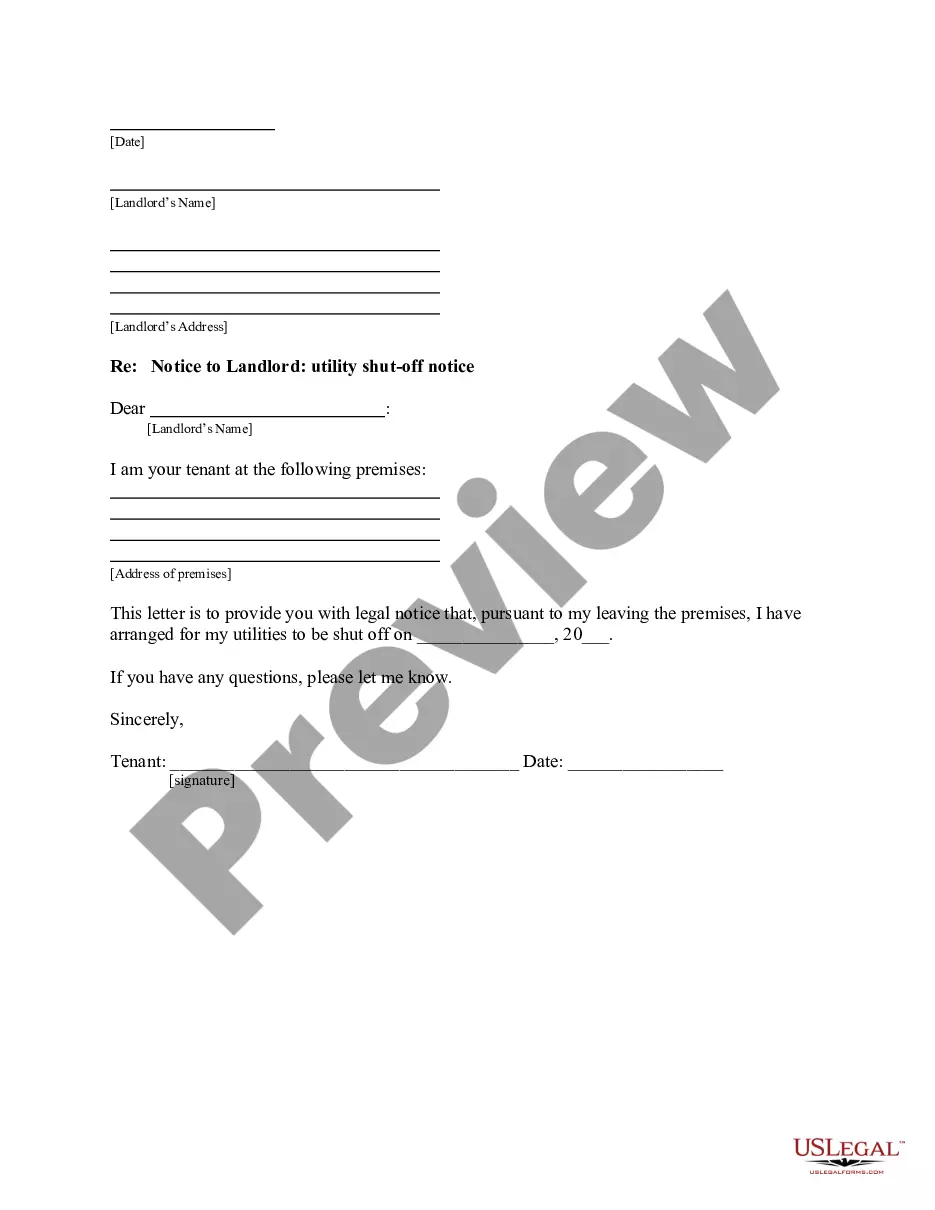
How to fill out Connecticut Letter From Tenant To Landlord - Utility Shut Off Notice To Landlord Due To Tenant Vacating Premises?
- Log into your US Legal Forms account if you are a returning user. Ensure your subscription is active before proceeding.
- If you are a new user, start by exploring the extensive library. Search for 'Notice to landlord for vacating flat' to find the correct form.
- Preview the form to verify it meets your needs and complies with your local jurisdiction's regulations.
- Choose the appropriate subscription plan if you find the desired form and click on 'Buy Now' to proceed.
- Complete your purchase by entering your payment information via credit card or PayPal.
- Download the completed form and save it to your device. You can access it later under the 'My Forms' section of your account.
In conclusion, using US Legal Forms simplifies the process of creating a notice to your landlord. Their vast library and premium expert assistance ensure you have all the resources you need for precise legal documentation.
Start your journey today by visiting US Legal Forms and discover how easy it is to manage your legal needs!
Form popularity
FAQ
Writing a notice to vacate involves several key elements for clarity. First, provide your contact information along with the date at the top. Clearly articulate your decision to vacate, mentioning the desired move-out date, and include your landlord's address to ensure they receive the notice promptly. It's useful to refer to your lease to confirm any notice period requirements.
To craft a notification letter to your landlord, begin by stating your details and the date clearly. Include your landlord’s name and address, and mention the purpose of the letter—specifying it is a notice to landlord for vacating flat. Close with a respectful tone, signing to maintain a professional relationship.
Writing to your landlord about moving out requires a straightforward approach. Start with your full name, the current date, and your address. In the body of the letter, explain that you intend to vacate, specify the move-out date, and politely thank them for their support during your tenancy.
When you need to ask a tenant to move out, begin by expressing appreciation for their time in the property. Politely explain your reasons, whether they relate to personal needs or property management. Make sure to reference the lease agreement terms to provide clarity on the situation.
To write a notice to landlord for vacating flat, start with your address and the date at the top. Clearly state your intention to vacate and provide the move-out date. Include your landlord's name and address below your information, and make sure to sign the letter to give it a personal touch.
Moving out before your lease term ends can have several consequences. You may still be responsible for the remaining rent due until the lease expires. Also, your landlord may pursue legal action or withhold your security deposit. Always provide a notice to landlord for vacating flat, even if you are leaving early, to try and mitigate potential issues with your lease.
If you move out without giving notice, your landlord may keep your security deposit and pursue you for unpaid rent. Additionally, you might face legal issues and a negative rental history. To avoid these complications, always provide a notice to landlord for vacating flat before your intended departure date. It is better to adhere to the terms of your lease to ensure a smooth transition.
Yes, an email can serve as written notice to vacate, but this depends on your lease agreement. Make sure to check the terms outlined in your lease contract since some landlords may require physical documentation. It’s best to clearly state your intent to vacate and the date in the email for smooth processing. Using the right approach in your notice to landlord for vacating flat can help ensure proper communication.
Yes, it is important to inform your landlord if you are not renewing your lease. Providing a notice to landlord for vacating flat helps clarify your intentions and can prevent misunderstandings. Depending on your lease agreement, you may be required to give a specific notice period. Failing to do so may result in complications when you decide to move out.
Not giving a 30-day notice can lead to additional fees or losing your security deposit, depending on your lease agreement. It's important to submit a notice to landlord for vacating flat as required to avoid these penalties. Additionally, your landlord may pursue legal action if you leave without notice. Understanding the terms of your lease helps you navigate the moving process more effectively.