Co Most Form For Nc
Description

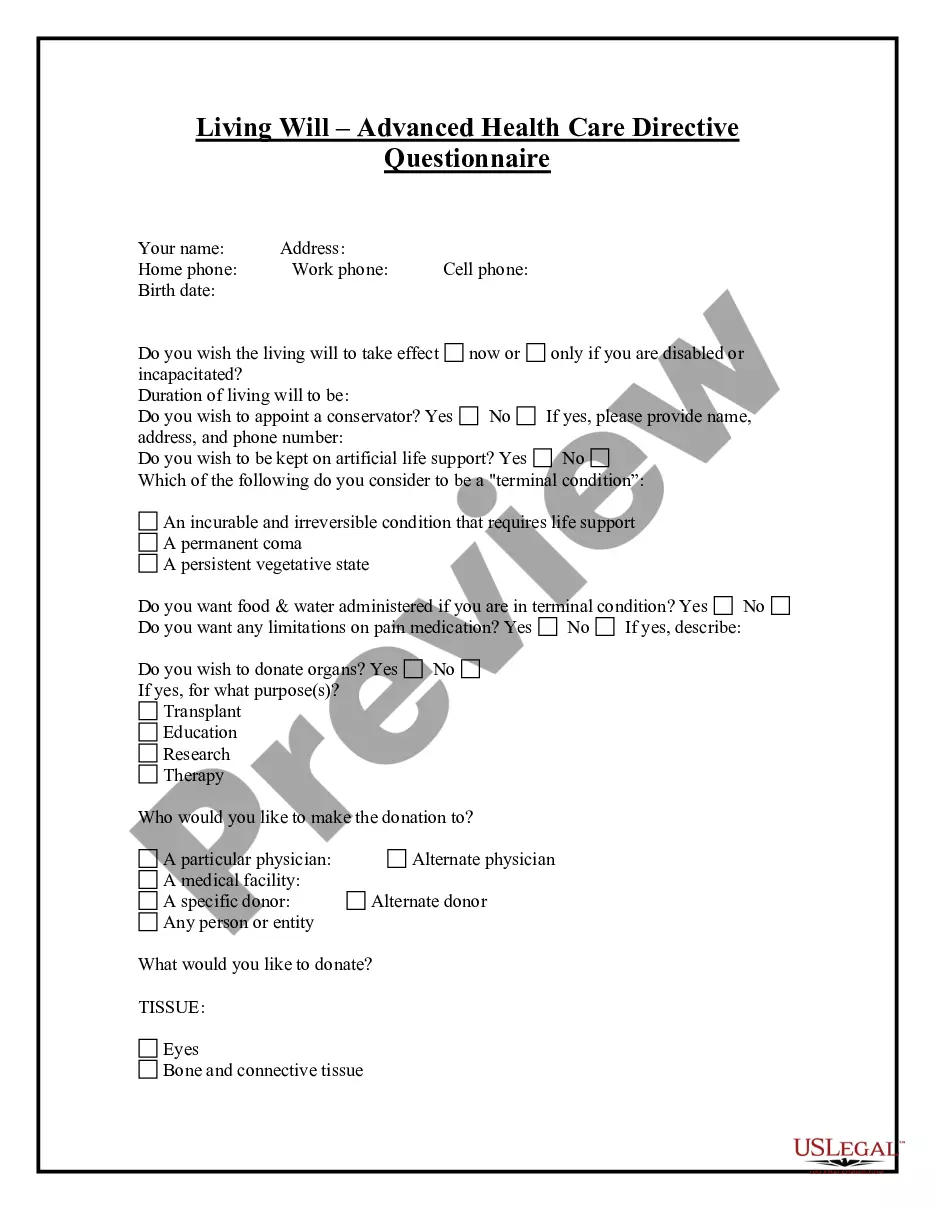


How to fill out Colorado Medical Orders For Scope Of Treatment (MOST)?
Creating legal documents from the ground up can frequently be overwhelming.
Certain situations may necessitate extensive research and significant expenses.
If you’re looking for a more straightforward and economical method of preparing Co Most Form For Nc or any other documentation without having to navigate obstacles, US Legal Forms is always available to assist.
Our online repository of over 85,000 current legal forms encompasses nearly every aspect of your financial, legal, and personal affairs.
Examine the document preview and descriptions to ensure you have located the form you need. Ensure the form you choose meets the standards of your state and county. Select the most appropriate subscription option to acquire the Co Most Form For Nc. Download the file, then complete, certify, and print it out. US Legal Forms has an impeccable reputation and over 25 years of expertise. Join us now and make document completion an easy and efficient process!
- With just a few clicks, you can promptly obtain state- and county-compliant forms carefully assembled for you by our legal professionals.
- Utilize our website whenever you require a dependable and trustworthy service through which you can easily find and download the Co Most Form For Nc.
- If you’re familiar with our website and have already set up an account with us, simply Log In to your account, select the form, and download it or re-download it at any time in the My documents section.
- Don’t have an account? No problem. It requires minimal time to register and discover the library.
- But before proceeding directly to downloading Co Most Form For Nc, follow these suggestions.
Form popularity
FAQ
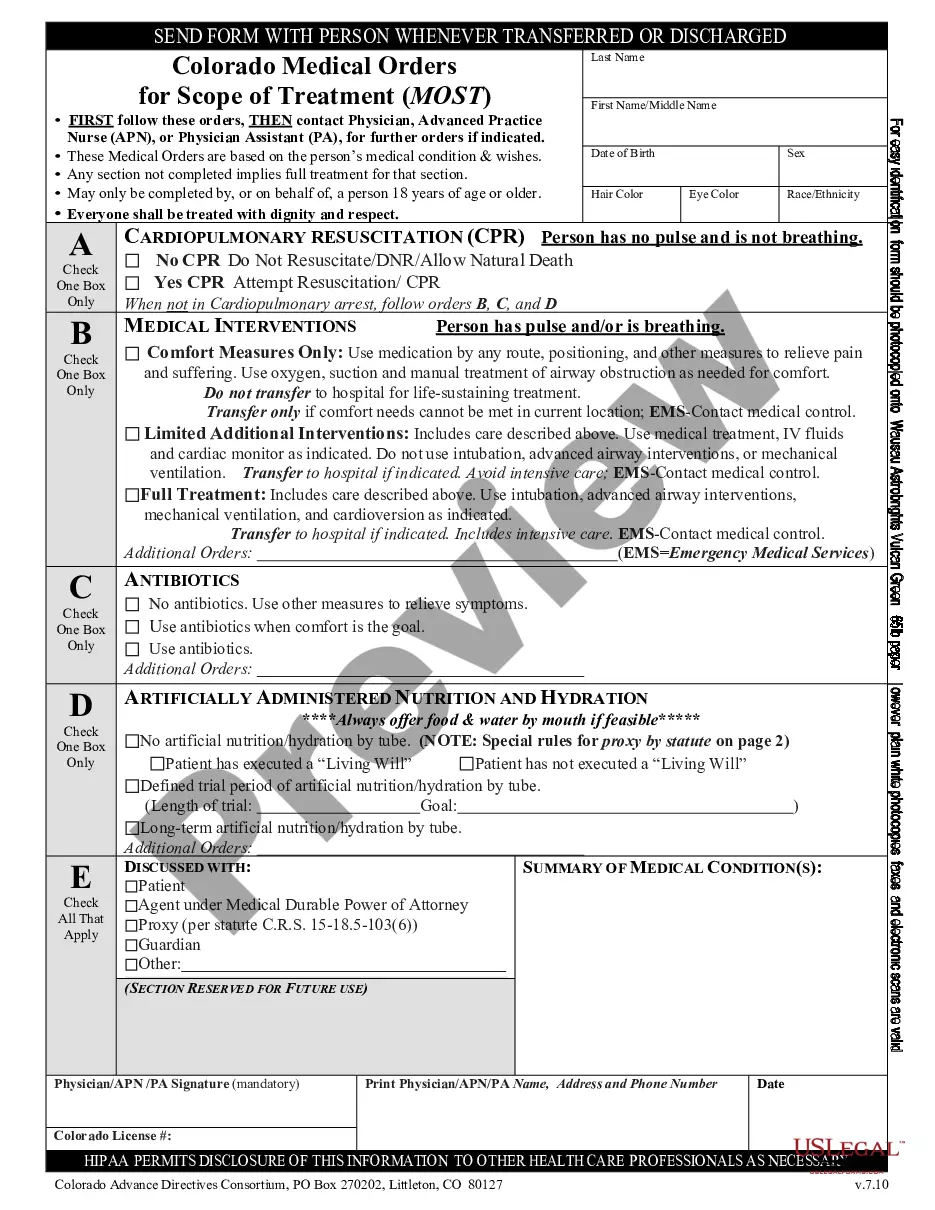
The Medical Orders for Scope of Treatment (MOST) form is a document to record individual current GoC [8] specific to person wishes, choices and preferences for healthcare and guide decision-making in the event of a change of condition that requires decision-making about intervention [9, 10].
The MOST form needs to be completed by both the patient and his/her doctor, advanced practice nurse or physician assistant. The MOST form is a doctor's order regarding end-of-life care.
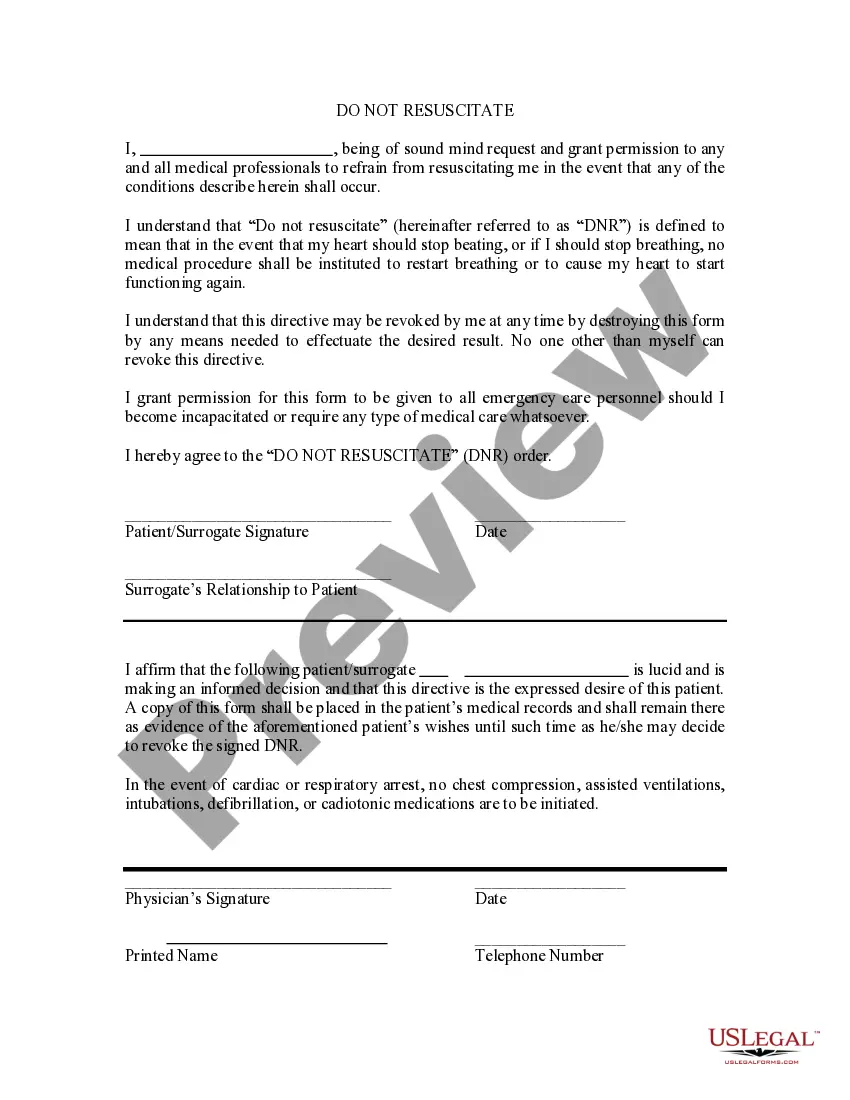
The primary differences between the MOLST form and a DNR are: MOLST covers a variety of end-of-life treatments. A DNR only gives instructions about CPR. The MOLST form can also be used in a community setting where the DNR is intended to be used as a directive in a hospital setting.
MOST is a medical order and must be reviewed and signed by a licensed physician (MD/DO), physician assistant, or nurse practitioner to be valid. Be sure to document the basis for the order in the progress notes of the medical record. Mode of communication (e.g., in person, by telephone, etc.) also should be documented.
The MOST or POLST, like the DNR, indicates if they do or don't want CPR, but it also specifies what type of life-prolonging medical interventions they'd want on top of comfort care, if any; under what circumstances they would want to be moved to a hospital and whether they want a feeding tube and if so, for how long.