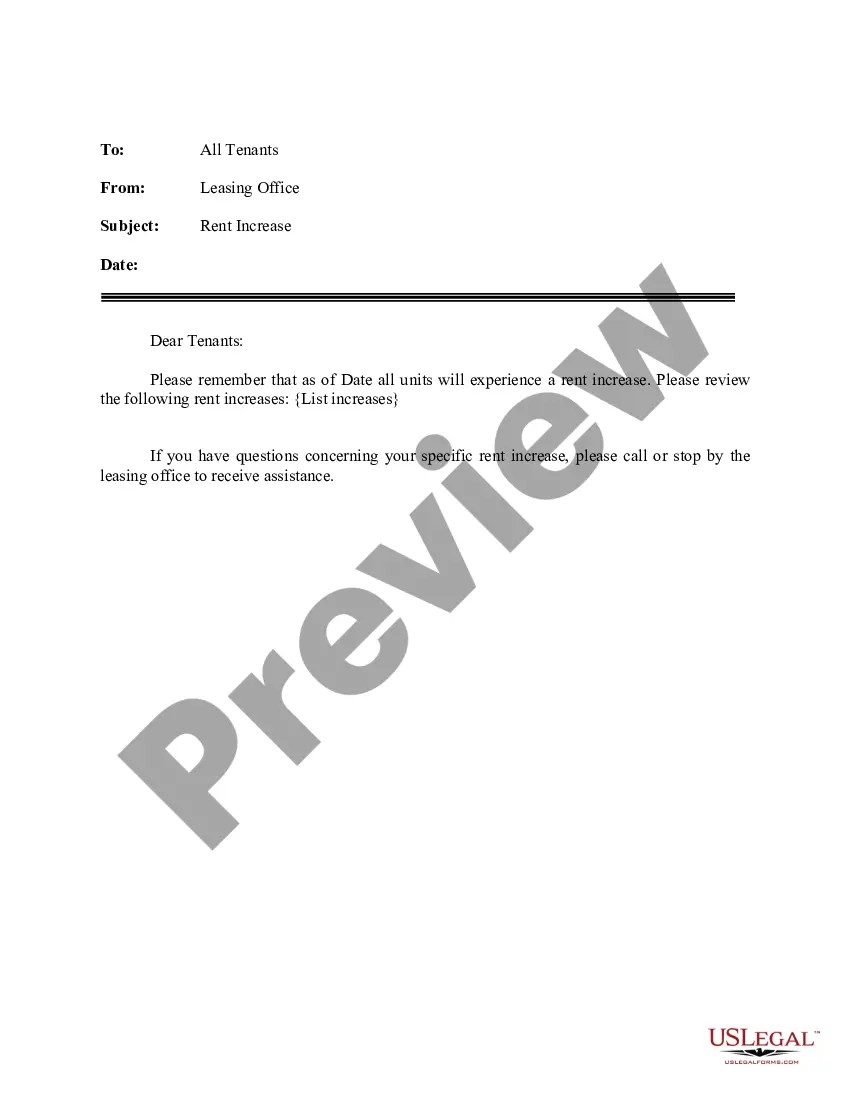
Notice Needed For Rent Increase
Description

Get your form ready online
Our built-in tools help you complete, sign, share, and store your documents in one place.
Make edits, fill in missing information, and update formatting in US Legal Forms—just like you would in MS Word.
Download a copy, print it, send it by email, or mail it via USPS—whatever works best for your next step.
Sign and collect signatures with our SignNow integration. Send to multiple recipients, set reminders, and more. Go Premium to unlock E-Sign.
If this form requires notarization, complete it online through a secure video call—no need to meet a notary in person or wait for an appointment.
We protect your documents and personal data by following strict security and privacy standards.

Make edits, fill in missing information, and update formatting in US Legal Forms—just like you would in MS Word.

Download a copy, print it, send it by email, or mail it via USPS—whatever works best for your next step.

Sign and collect signatures with our SignNow integration. Send to multiple recipients, set reminders, and more. Go Premium to unlock E-Sign.

If this form requires notarization, complete it online through a secure video call—no need to meet a notary in person or wait for an appointment.

We protect your documents and personal data by following strict security and privacy standards.
Looking for another form?
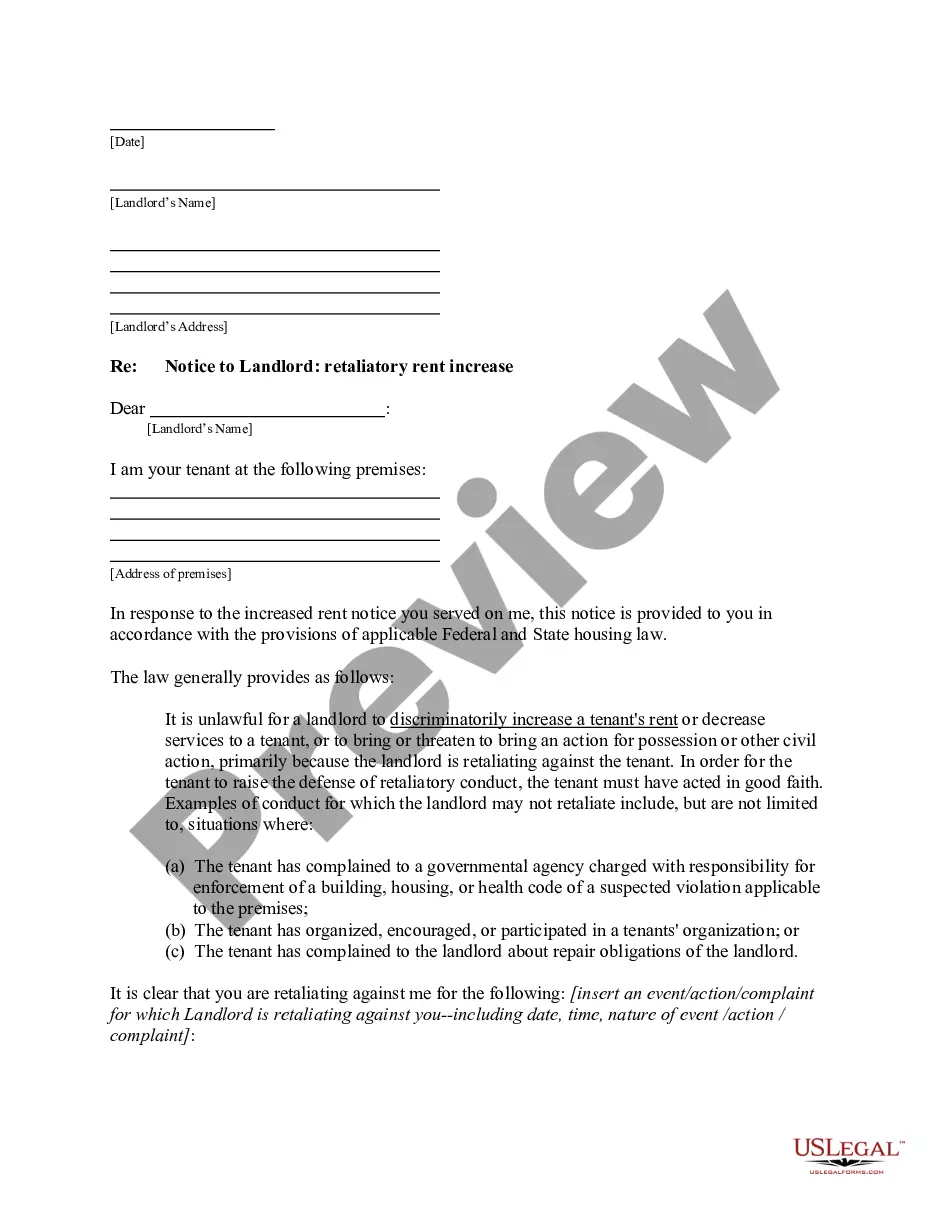
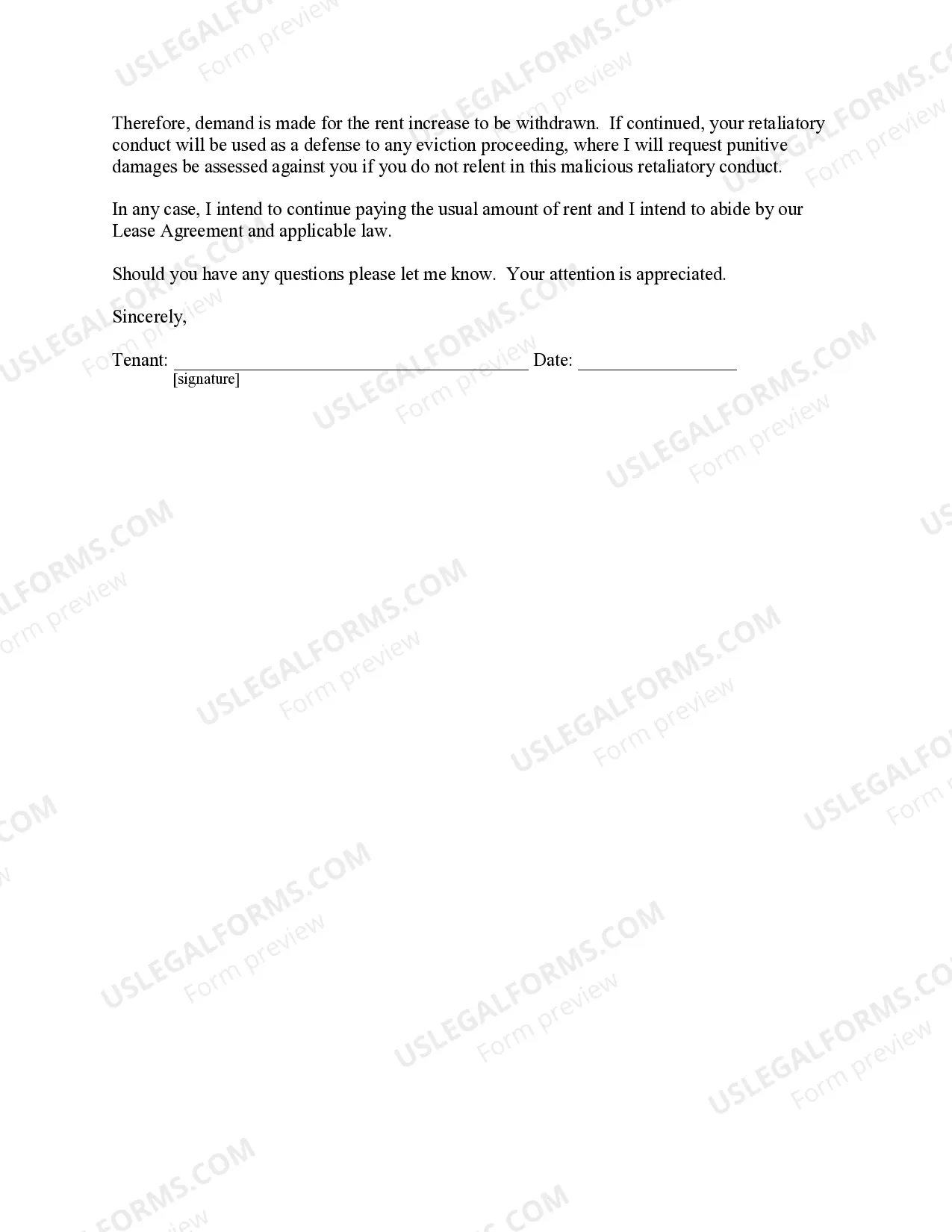
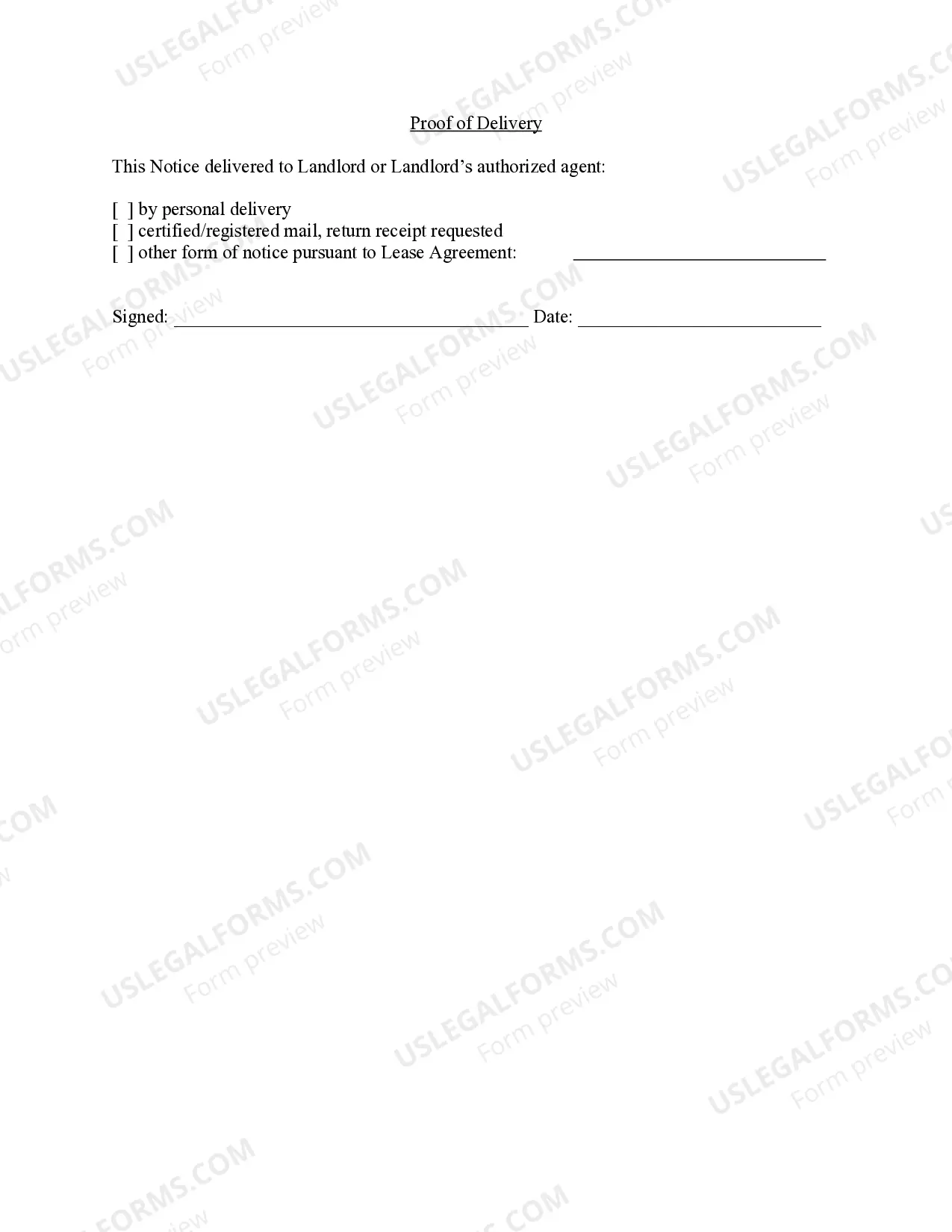
How to fill out Colorado Letter From Tenant To Landlord Containing Notice To Landlord To Withdraw Retaliatory Rent Increase?
- If you are a returning user, log in to your account. Ensure your subscription is active, and if needed, renew it based on your existing payment plan.
- For new users, begin by browsing the Preview mode and reviewing the form description to confirm that it aligns with your specific legal requirements.
- If the template does not meet your needs, use the Search tab to find other relevant documents.
- Select the desired document by clicking the Buy Now button and choose your preferred subscription plan, which allows access to the entire library.
- Complete your purchase by entering your credit card information or using your PayPal account for payment.
- Once the purchase is finalized, download the form and save it to your device. You can also access your documents anytime via the My documents section of your profile.
By utilizing US Legal Forms, you leverage a vast library of over 85,000 legal templates that ensure your documents are not only comprehensive but also tailored to jurisdictional requirements.
Don't delay; streamline your rent increase notice procedure today with US Legal Forms—your reliable partner in legal documentation.
Form popularity
FAQ
In Ohio, landlords also have the flexibility to raise rent without a state-imposed limit. However, they must adhere to local laws and provide tenants with a proper notice needed for rent increase, usually 30 days ahead of the change. If you are unsure about the specific rules that apply to your situation, consulting resources like US Legal Forms can guide you through the process.
In Florida, the law does not set a specific cap on how much a landlord can increase rent. However, landlords must provide tenants with a notice needed for rent increase, which typically requires a minimum of 30 days in advance. It's essential to check local ordinances, as certain cities may impose restrictions on rent increases. Staying informed will help you navigate any changes effectively.
To request a rent increase from your landlord, begin by preparing a discussion about the rental market and similar property rates. Present your case logically and back it up with relevant data. Don't forget to submit a formal notice needed for rent increase, which details your reasoning and the proposed new rent. Ensuring clear communication can lead to a better outcome.
To ask for a rent increase politely, start by scheduling a conversation with your landlord. Clearly express your reasons for the increase, focusing on improvements made or market conditions. Additionally, provide a formal notice needed for rent increase, which outlines the requested amount and effective date. This approach demonstrates respect and professionalism in your request.
To write a letter informing your tenant of a rent increase, clearly state the amount of increase and the new total rent. Include the effective date of the increase, and provide the notice needed for rent increase per your state's laws. A professional tone and clear details help ensure your tenant understands the change and can prepare accordingly.
When discussing a rent increase with your landlord, be polite and prepared. Start by expressing appreciation for your living situation, and then inquire about the reasoning behind the increase. This approach builds a constructive dialogue, allowing you to address any concerns you may have while understanding their perspective.
In Texas, landlords must provide appropriate notice needed for rent increase before raising the rent. Specifically, if your lease is month-to-month, they must give you at least 30 days' notice. If you have a fixed-term lease, the landlord typically cannot raise the rent until the lease ends unless agreed upon in writing.
The law does not specify a maximum percentage for rent increases; however, landlords must provide proper notice needed for rent increase. Many states have guidelines that suggest reasonable increases, often linked to inflation rates. Always check your local laws to understand any limits specific to your area.
The highest a landlord can raise rent often depends on the local rental market and regulations. Some states have rent control laws that limit increases, while others allow landlords to set their rates freely. For clarity, refer to your lease and local laws to understand the allowable limits in your situation.
The most a landlord can increase your rent is typically dictated by state or local laws and may not have a specific limit in some areas. In many cases, landlords must provide a notice needed for rent increase, giving you time to prepare financially. Always consult your lease agreement and local regulations for accurate information.