Letter To A Landlord
Description
Get your form ready online
Our built-in tools help you complete, sign, share, and store your documents in one place.
Make edits, fill in missing information, and update formatting in US Legal Forms—just like you would in MS Word.
Download a copy, print it, send it by email, or mail it via USPS—whatever works best for your next step.
Sign and collect signatures with our SignNow integration. Send to multiple recipients, set reminders, and more. Go Premium to unlock E-Sign.
If this form requires notarization, complete it online through a secure video call—no need to meet a notary in person or wait for an appointment.
We protect your documents and personal data by following strict security and privacy standards.

Make edits, fill in missing information, and update formatting in US Legal Forms—just like you would in MS Word.

Download a copy, print it, send it by email, or mail it via USPS—whatever works best for your next step.

Sign and collect signatures with our SignNow integration. Send to multiple recipients, set reminders, and more. Go Premium to unlock E-Sign.

If this form requires notarization, complete it online through a secure video call—no need to meet a notary in person or wait for an appointment.

We protect your documents and personal data by following strict security and privacy standards.
Looking for another form?









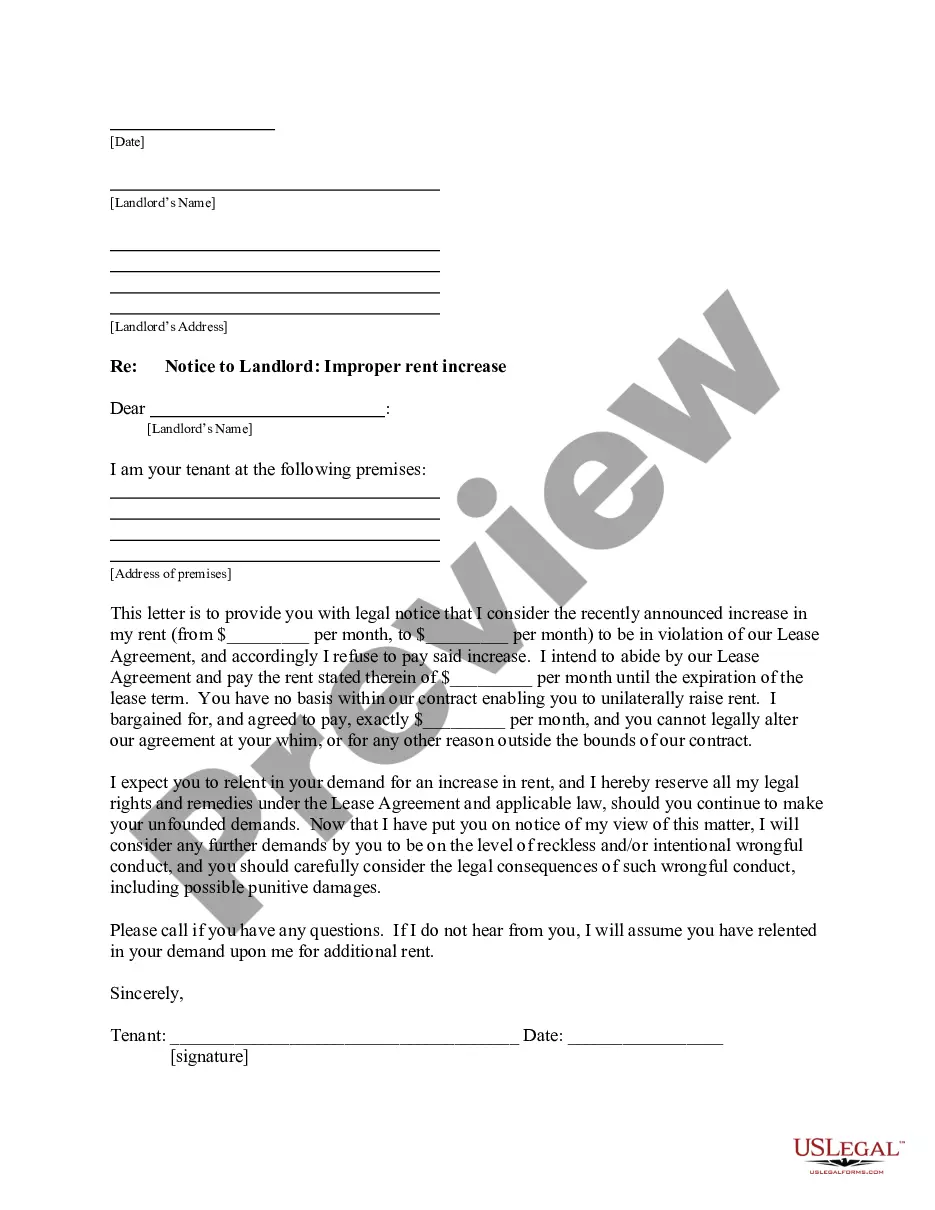
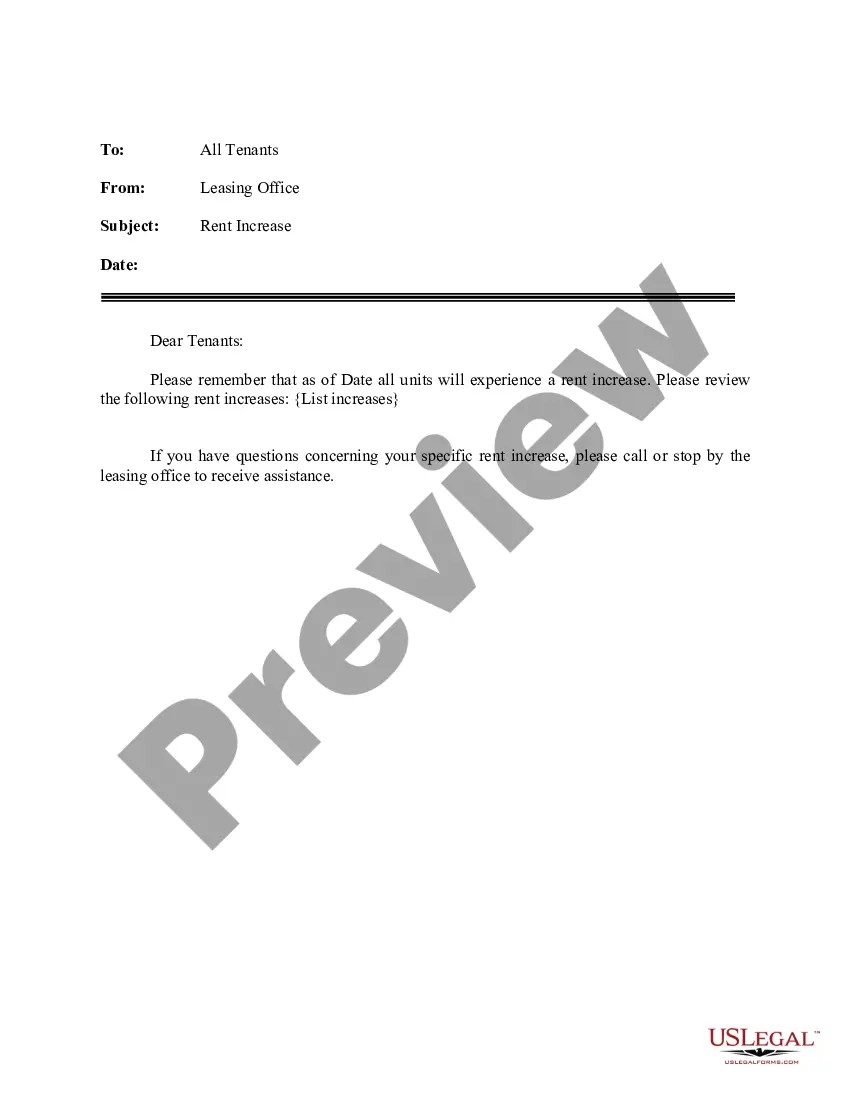
How to fill out Colorado Letter From Tenant To Landlord Containing Notice To Landlord To Withdraw Improper Rent Increase During Lease?
- Start by logging into your account on the US Legal Forms website. If you don’t have an account yet, register for one to gain access to invaluable resources.
- Utilize the search function to find the appropriate 'letter to a landlord' template that aligns with your requirements.
- Review the form preview to ensure it complies with local laws and adequately addresses your situation.
- Choose a subscription plan that fits your needs, then proceed to purchase the document using your credit card or PayPal.
- After the payment, download the completed form to your device and save it for easy access.
- Fill out the letter with pertinent details and send it to your landlord as required.
By utilizing US Legal Forms, you gain access to over 85,000 legal documents that are easy to edit and fill out. Their robust collection ensures you’ll find the right template for your situation.
Don’t wait to communicate effectively with your landlord. Start using US Legal Forms today to create precise and legally sound documents tailored to your needs.
Form popularity
FAQ
Dealing with an irresponsible landlord begins with clear communication. Start by documenting your concerns in a letter to the landlord, outlining the issues and your expectations for resolution. If the problem persists, you may have to consider legal options or seek help from local housing authorities. Using a service like US Legal Forms can help you create the necessary letters to protect your rights.
When writing a letter to a landlord about problems, be specific about the issues you are experiencing. Start by detailing the problem, including when it started and any previous communication regarding the issue. Request timely repairs or solutions, and provide your contact information. This letter should serve as documentation of your request for necessary action.
Writing a letter to your landlord requires clarity and professionalism. Begin by addressing your landlord by name, followed by a polite greeting. Clearly state the purpose of your letter, whether it’s to request repairs, report issues, or inquire about lease terms. Use a respectful tone, and ensure you provide your contact information for easy follow-up.
To write a letter to not get evicted, start by clearly stating your intent to communicate with your landlord. Include your name, address, and any lease details. Explain your situation, express your commitment to resolving any issues, and propose a solution, such as a payment plan. This letter serves as a formal request to maintain your housing while you work through your difficulties.
You can send a message to your landlord through various channels such as email, text, or traditional mail, depending on your landlord's preferred method of communication. If you're sending an email, ensure your subject line is clear and relevant. Always maintain a respectful tone to foster positive communication.
Begin your letter to your landlord with a polite greeting, such as 'Dear Landlord's Name,'. After the greeting, introduce your purpose in a straightforward manner. This approach ensures your message is clear from the start and prepares your landlord for the content that follows.
Writing a notification letter to your landlord involves clearly stating the issue or request you want to address. Start with a polite greeting and explain your situation in detail. It's essential to include relevant dates and any necessary property details, so your landlord fully understands your message.
To get a landlord letter, simply reach out to your landlord and specify the information you need. You can make your request more effective by being polite and concise in your communication. In some cases, it may be helpful to use a document template from USLegalForms to ensure you have all the necessary elements in your request.
When writing an email to your landlord, start with a clear subject line, such as 'Request for Rental Information' or 'Maintenance Issue'. Use a polite greeting, and clearly state your purpose in the first few lines. Make sure to include any necessary details, and close with a courteous sign-off to maintain a respectful tone.
To prove your landlord's ownership, you can start by checking your rental agreement or lease as it should include the landlord's name and contact information. Additionally, public property records can verify ownership details. If you need further assistance, consider reaching out to your local housing authority for guidance.