Colorado Divorce And Child Custody Laws
Description





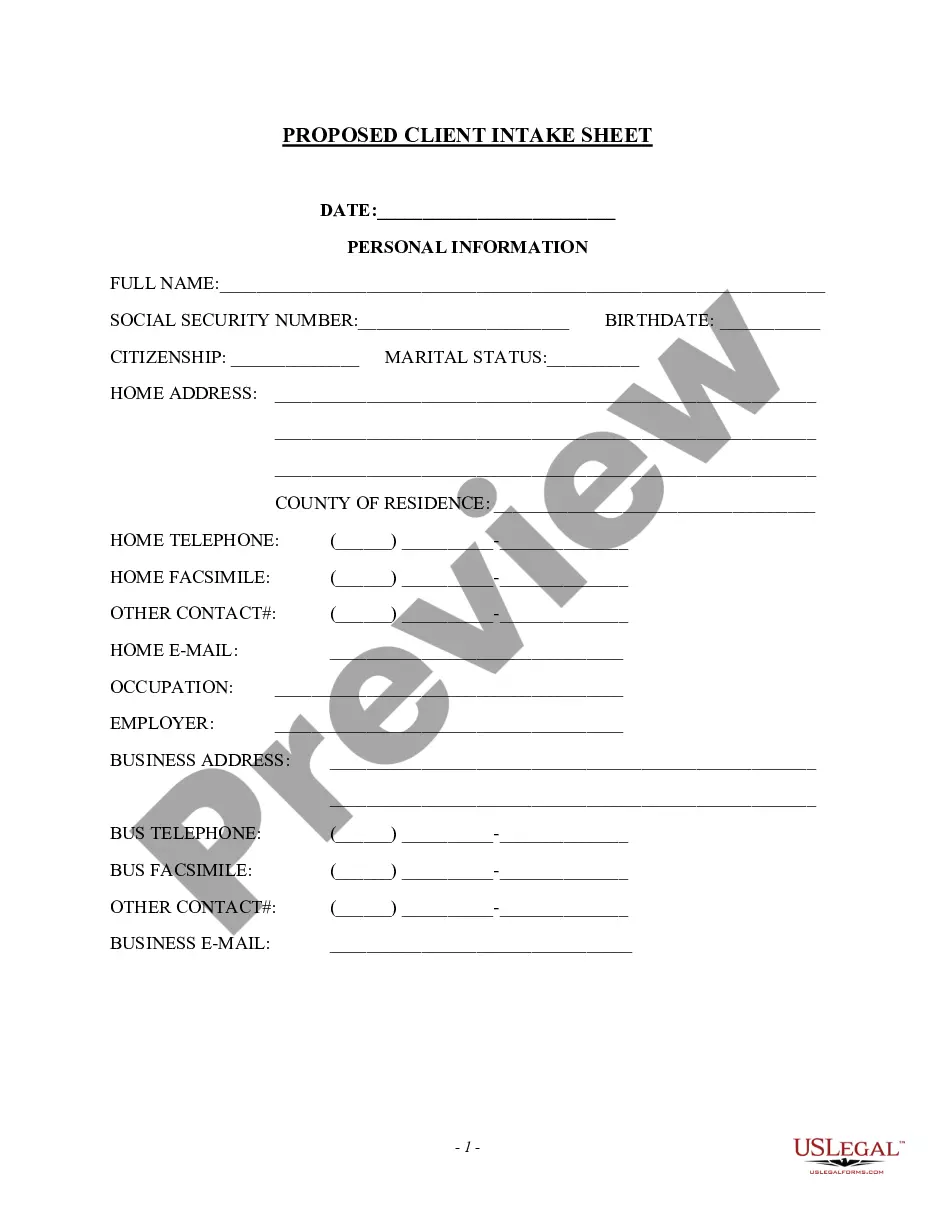
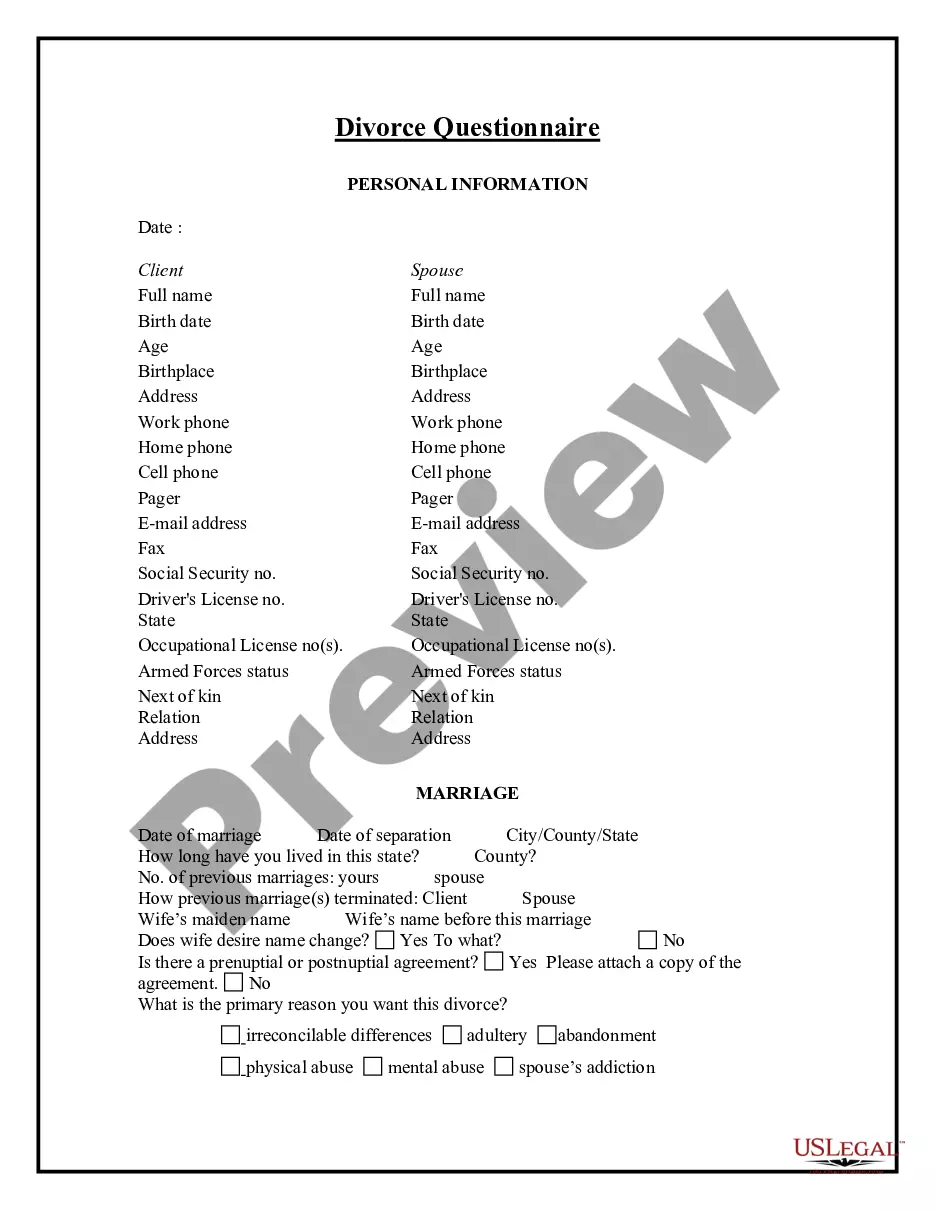

Get your form ready online
Our built-in tools help you complete, sign, share, and store your documents in one place.
Make edits, fill in missing information, and update formatting in US Legal Forms—just like you would in MS Word.
Download a copy, print it, send it by email, or mail it via USPS—whatever works best for your next step.
Sign and collect signatures with our SignNow integration. Send to multiple recipients, set reminders, and more. Go Premium to unlock E-Sign.
If this form requires notarization, complete it online through a secure video call—no need to meet a notary in person or wait for an appointment.
We protect your documents and personal data by following strict security and privacy standards.

Make edits, fill in missing information, and update formatting in US Legal Forms—just like you would in MS Word.

Download a copy, print it, send it by email, or mail it via USPS—whatever works best for your next step.

Sign and collect signatures with our SignNow integration. Send to multiple recipients, set reminders, and more. Go Premium to unlock E-Sign.

If this form requires notarization, complete it online through a secure video call—no need to meet a notary in person or wait for an appointment.

We protect your documents and personal data by following strict security and privacy standards.
Looking for another form?






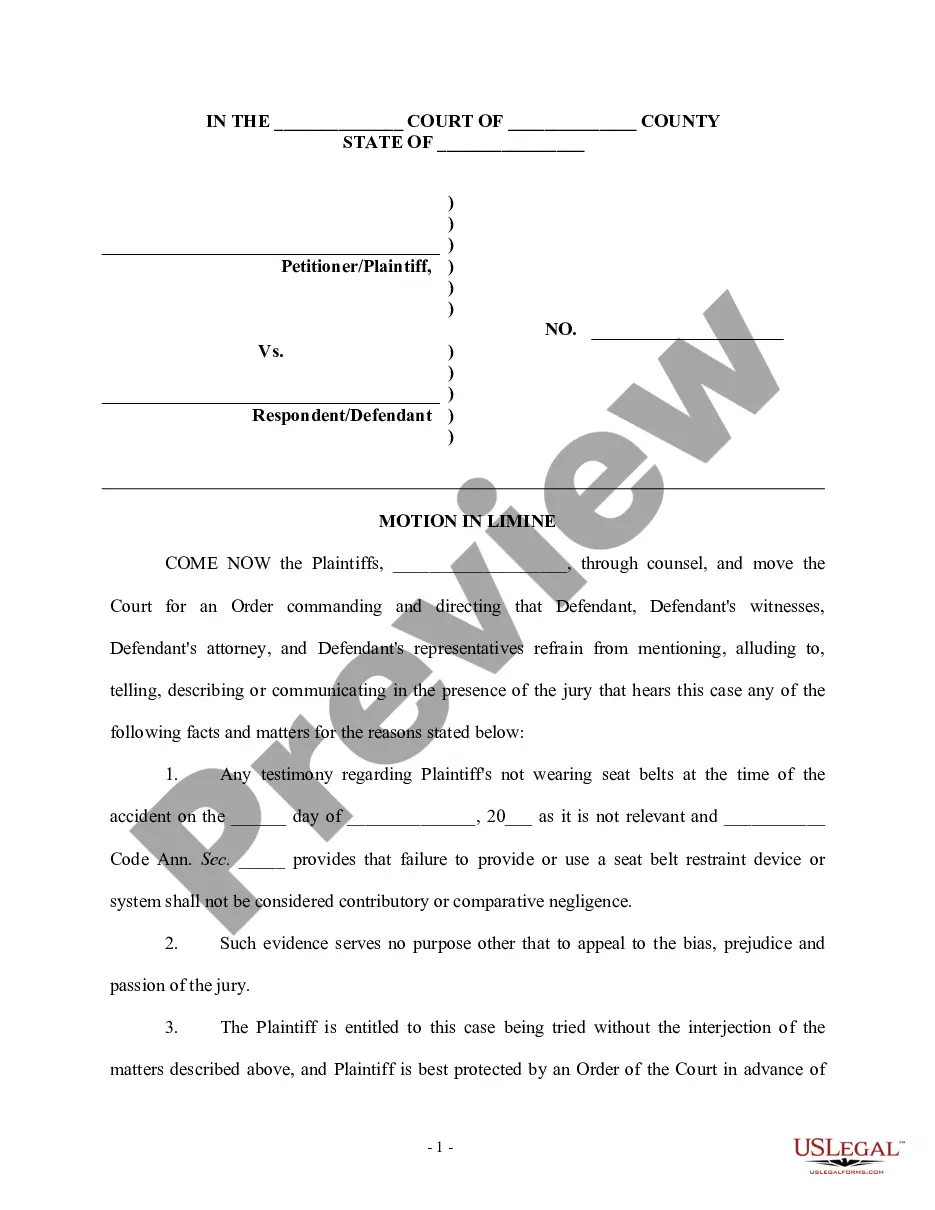
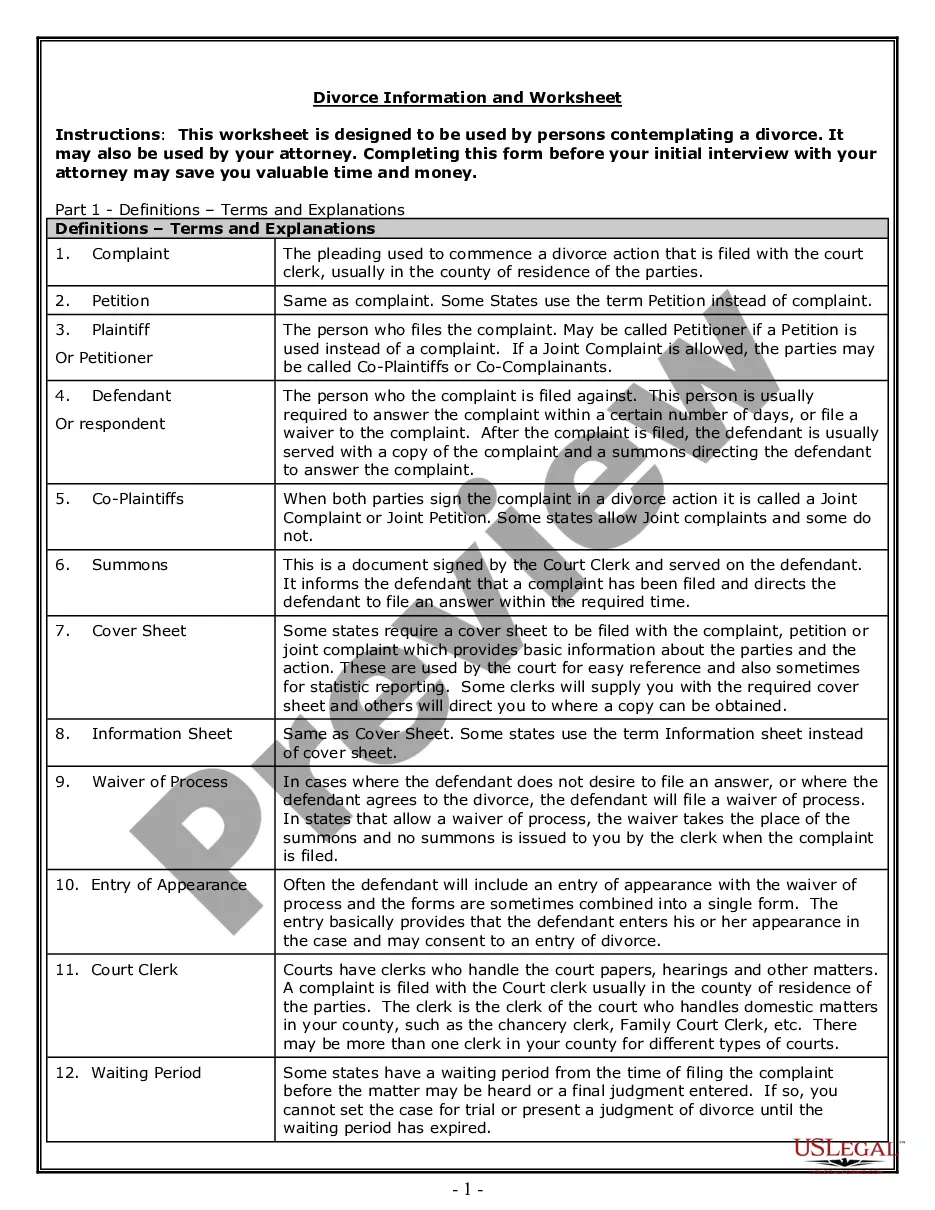
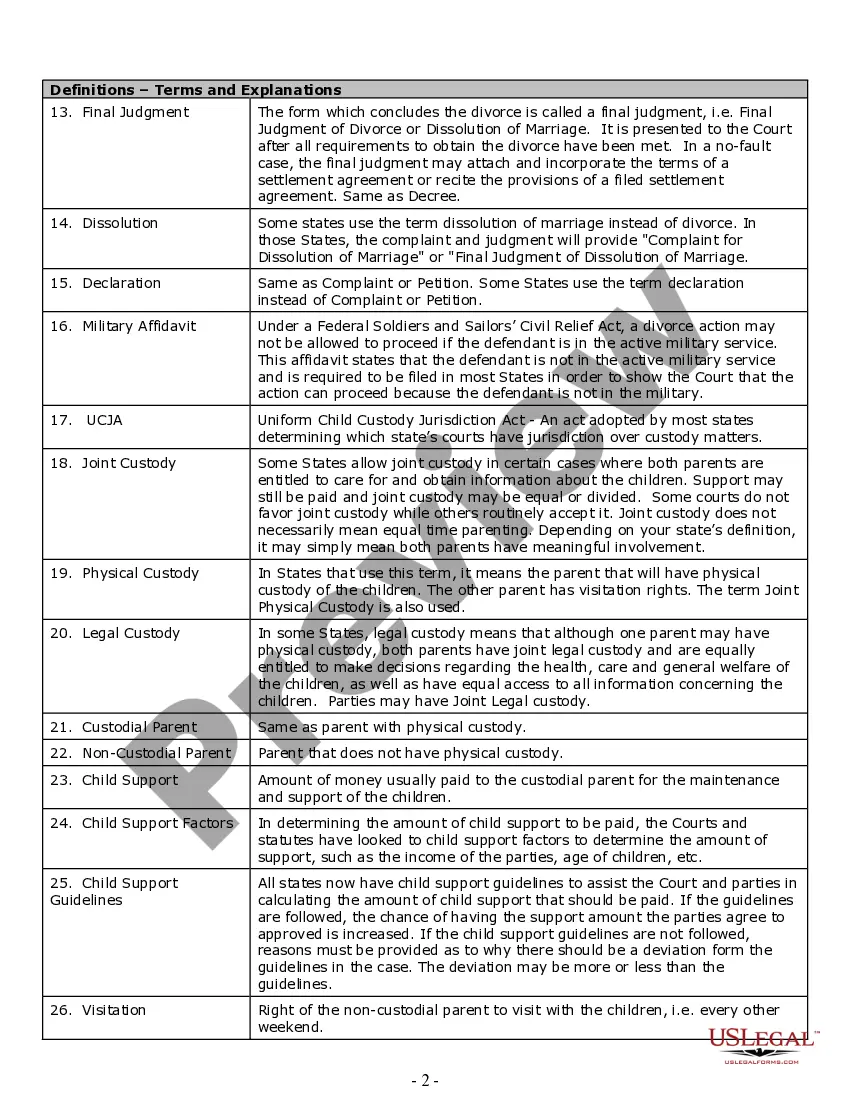
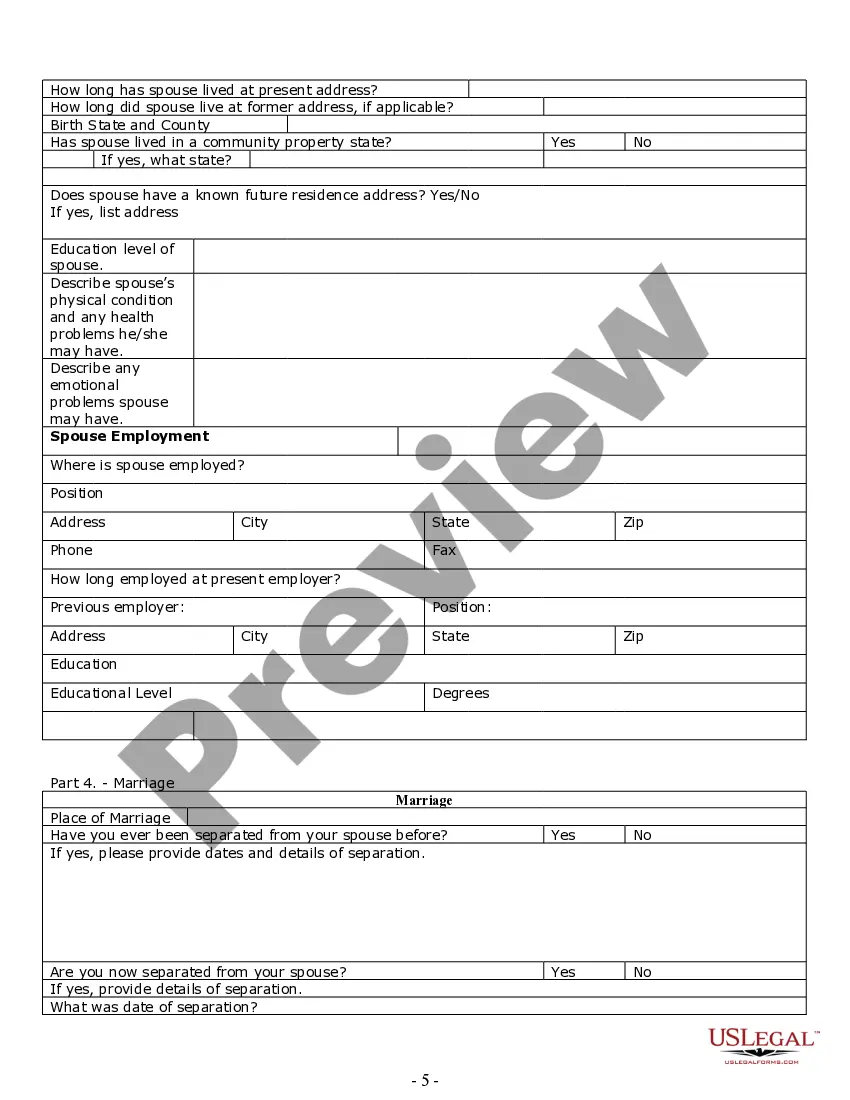
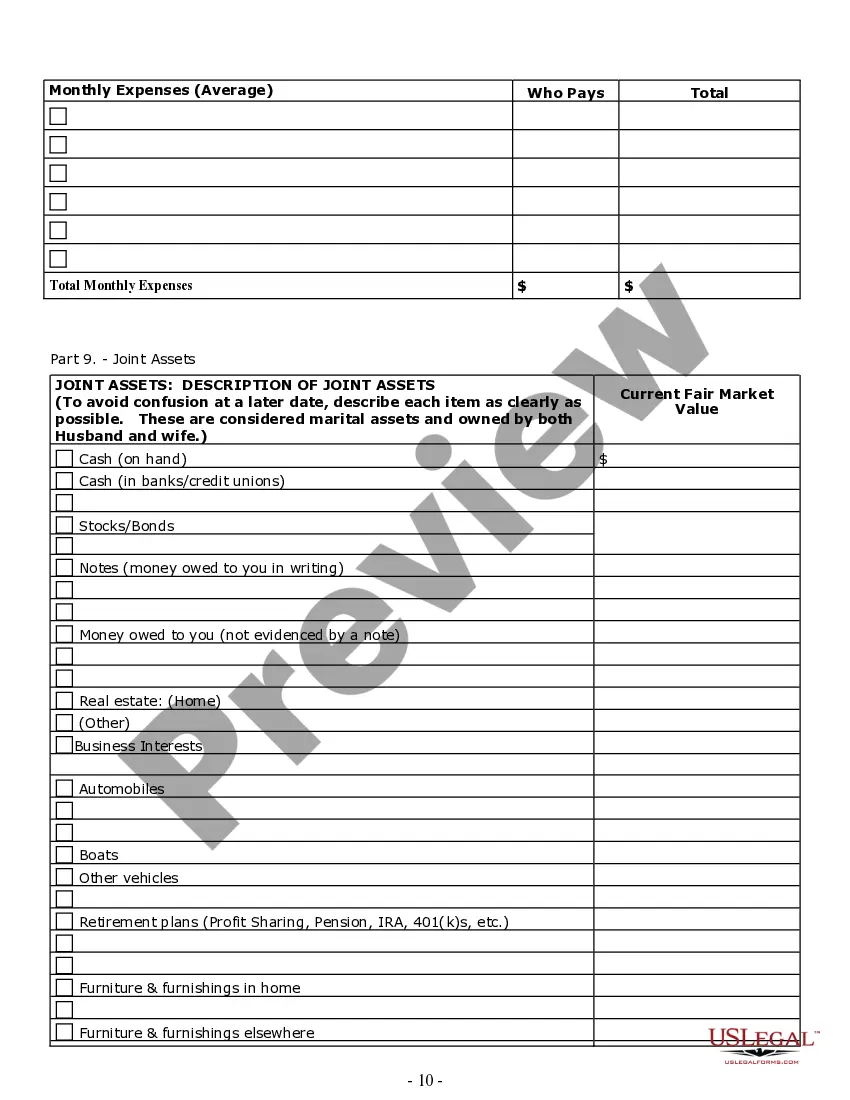
How to fill out Colorado Divorce Worksheet And Law Summary For Contested Or Uncontested Case Of Over 25 Pages - Ideal Client Interview Form?
The Colorado Divorce And Child Custody Regulations you see on this page is a reusable legal framework composed by qualified attorneys in accordance with federal and state statutes and guidelines.
For over 25 years, US Legal Forms has supplied individuals, corporations, and legal practitioners with more than 85,000 authenticated, state-specific documents for any business and personal situation. It’s the quickest, simplest, and most trustworthy method to get the paperwork you require, as the service ensures bank-grade data protection and anti-malware safeguards.
Register for US Legal Forms to have authenticated legal templates for all of life's eventualities readily available.
- Explore the document you require and review it.
- Browse the sample you located and preview it or examine the form description to make sure it fulfills your needs. If it doesn’t, utilize the search feature to find the correct one. Click Buy Now when you have identified the template you seek.
- Register and Log In.
- Select the pricing option that best fits your needs and create an account. Use PayPal or a credit card to make a quick payment. If you already possess an account, Log In and verify your subscription to proceed.
- Obtain the editable template.
- Choose the format you prefer for your Colorado Divorce And Child Custody Regulations (PDF, DOCX, RTF) and download the document onto your device.
- Complete and sign the document.
- Print the template to fill it out manually. Alternatively, use an online multifunctional PDF editor to swiftly and accurately complete and sign your form with an electronic signature.
- Download your documents once again.
- Resave the same document whenever you need it. Access the My documents section in your profile to re-download any previously saved forms.
Form popularity
FAQ
One of the most significant mistakes in a custody battle is failing to put the child's best interests first. Parents might focus on their grievances rather than creating a constructive co-parenting plan. By understanding Colorado divorce and child custody laws and prioritizing the child's well-being, parents can navigate custody battles more effectively and avoid damaging conflicts.
Here's what every debt letter should include: Date of the letter. Lawyer's name, firm, and address. Client's name and address. A subject line that states its purpose. The precise amount the client owed your firm and the date when the payment was due. Instructions on how to pay the debt and the new deadline.
Evidence of debt means a writing that evidences a promise to pay or a right to the payment of a monetary obligation, such as a promissory note, bond, negotiable instrument, a loan, credit, or similar agreement, or a monetary judgment entered by a court of competent jurisdiction.
To take legal action to collect a debt, the creditor (the person or company owed money) files a lawsuit against the debtor (the person who owes the money). Once a debt collection lawsuit is filed with the court, the creditor must give the debtor notice of the lawsuit (service).
Debt collectors are legally required to send you a debt validation letter, which outlines what the debt is, how much you owe and to who, as well as when you need to pay the debt. If you're still uncertain about the debt you're being asked to pay, you can request a debt verification letter to get more information.
The Fair Debt Collection Practices Act (FDCPA) prohibits debt collectors from using abusive, unfair, or deceptive practices to collect debts from you, including: Misrepresenting the nature of the debt, including the amount owed. Falsely claiming that the person contacting you is an attorney.
If you choose not to verify your identity by providing information, like your Social Security number, the debt collector will generally ask you for another form of identification, including: Account number for the debt in question, if you know it. Other contact information, such as your current or previous address.
It's generally easier for first-party creditors to prove you owe a debt. They simply produce the original credit agreement that shows your name and identifying information, like your address and Social Security number.
An effective debt collection letter should include all of the following: The total amount the client owes you. The original date the balance was due. Instructions detailing how to make the overdue payment.