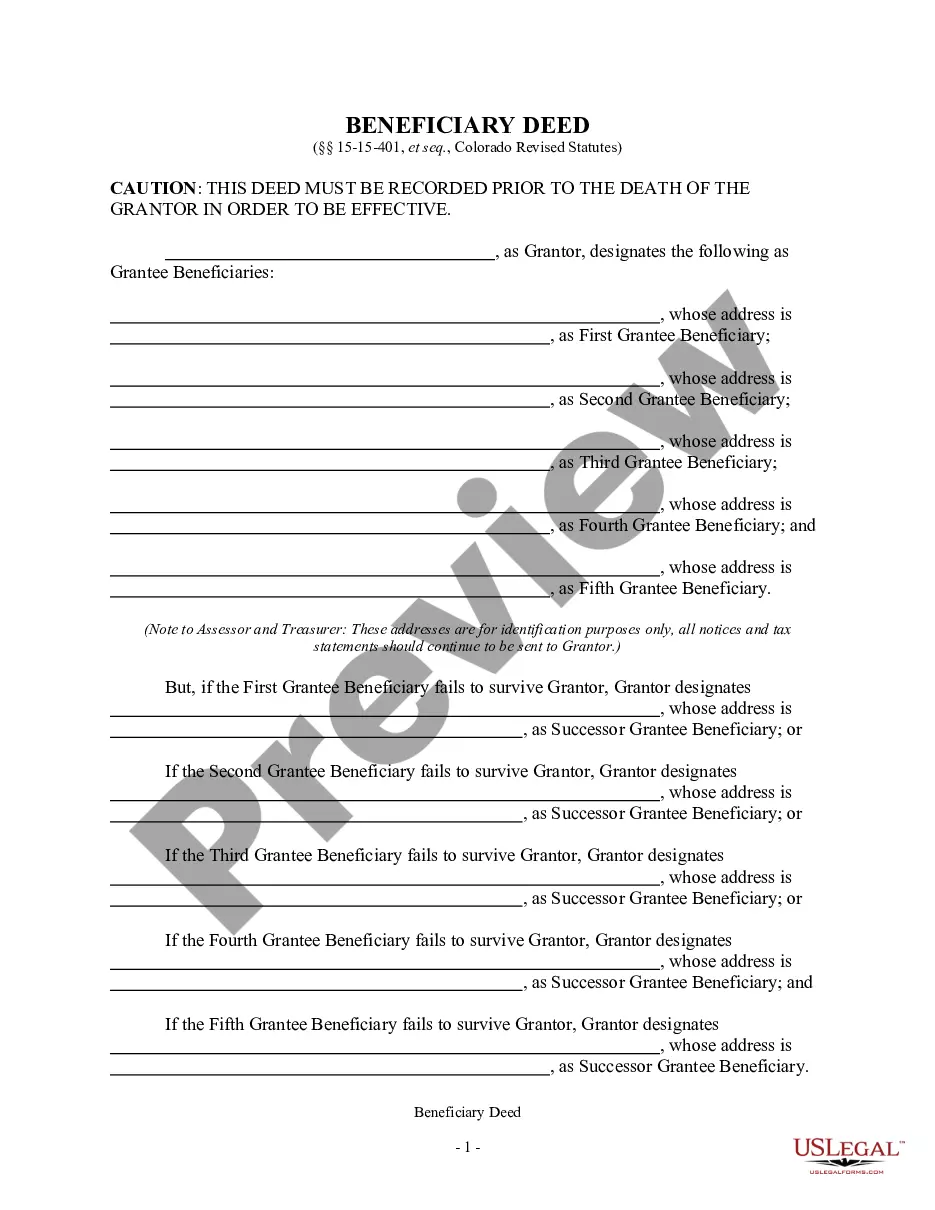
Transfer Tod Beneficiary With A Beneficiary
Description

Get your form ready online
Our built-in tools help you complete, sign, share, and store your documents in one place.
Make edits, fill in missing information, and update formatting in US Legal Forms—just like you would in MS Word.
Download a copy, print it, send it by email, or mail it via USPS—whatever works best for your next step.
Sign and collect signatures with our SignNow integration. Send to multiple recipients, set reminders, and more. Go Premium to unlock E-Sign.
If this form requires notarization, complete it online through a secure video call—no need to meet a notary in person or wait for an appointment.
We protect your documents and personal data by following strict security and privacy standards.

Make edits, fill in missing information, and update formatting in US Legal Forms—just like you would in MS Word.

Download a copy, print it, send it by email, or mail it via USPS—whatever works best for your next step.

Sign and collect signatures with our SignNow integration. Send to multiple recipients, set reminders, and more. Go Premium to unlock E-Sign.

If this form requires notarization, complete it online through a secure video call—no need to meet a notary in person or wait for an appointment.

We protect your documents and personal data by following strict security and privacy standards.
Looking for another form?







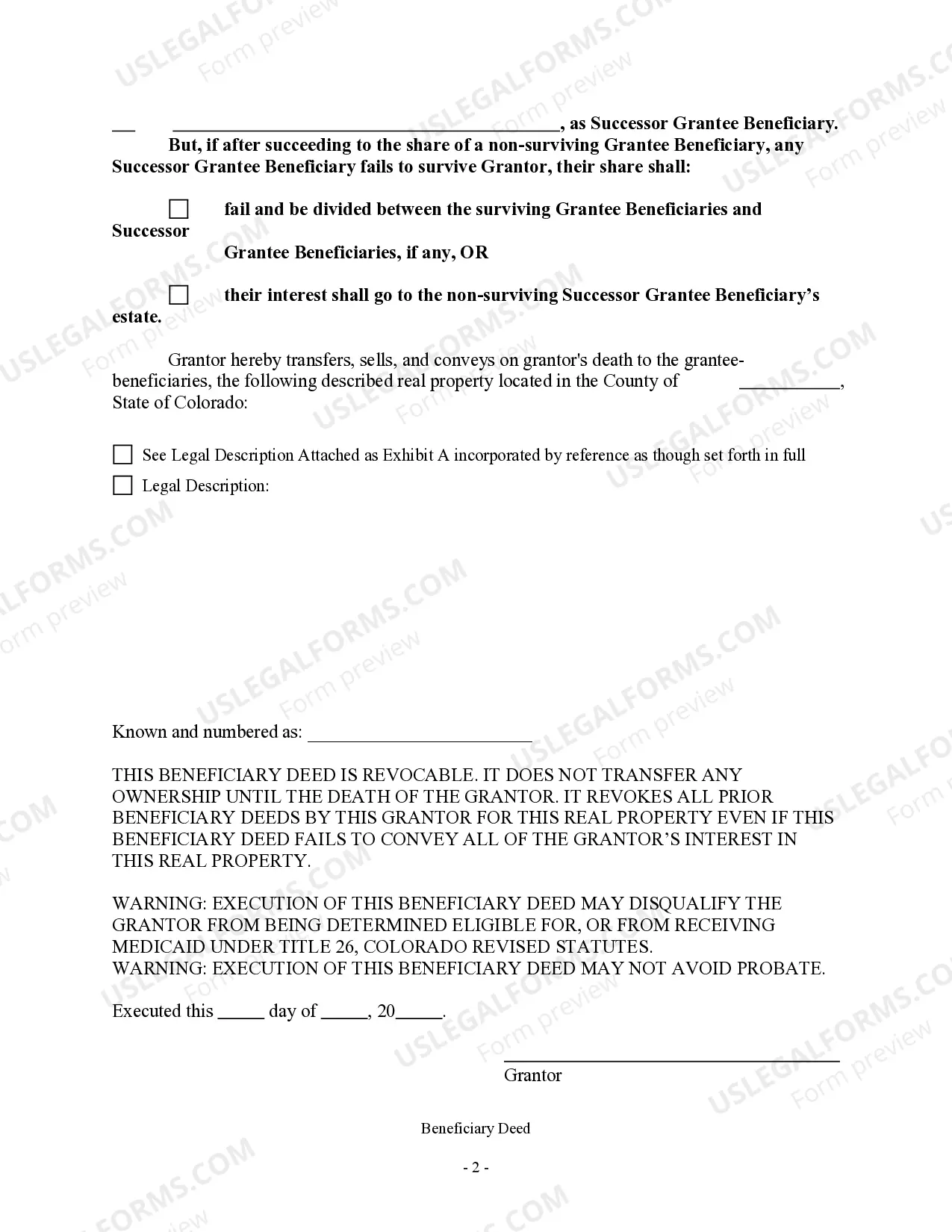
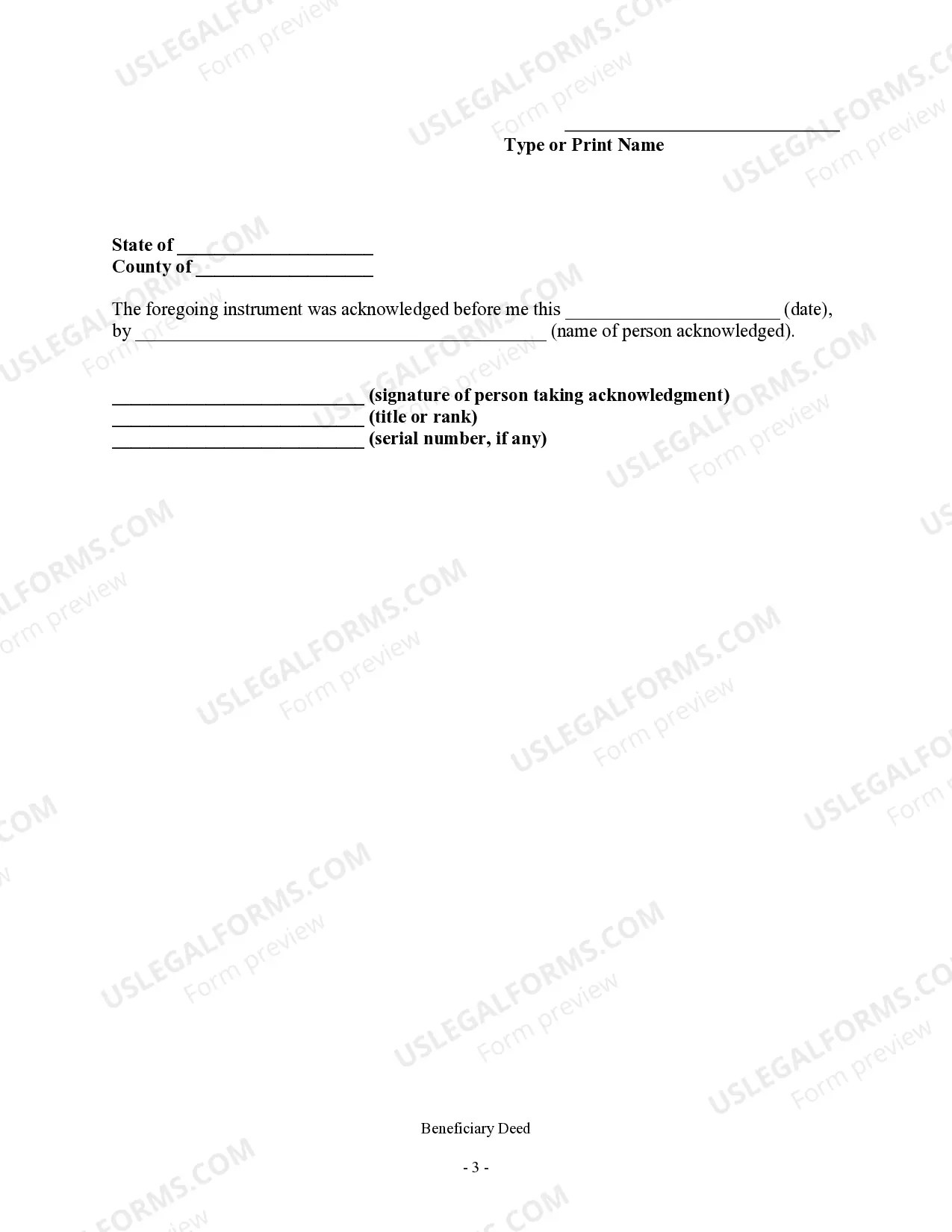
How to fill out Colorado Transfer On Death Deed Or TOD - Beneficiary Deed For Grantor To Five Grantee Beneficiaries?
- If you're a returning user, simply log in to your account and download your desired form template by clicking the Download button. Ensure your subscription is active; otherwise, renew it based on your payment plan.
- For first-time users, start by reviewing the Preview mode and form description to confirm that you've selected the correct document that fits your needs and complies with local regulations.
- If needed, utilize the Search tab to locate an alternate template. If discrepancies arise, ensure to find the right one before proceeding.
- Next, click on the Buy Now button and select your preferred subscription plan; registration is required to access the library's resources.
- Provide your credit card or PayPal details to finalize your purchase.
- Finally, download your document and save it to your device for completion. Access it anytime via the My Forms menu in your profile.
By following these simple steps, you can efficiently transfer a TOD beneficiary with confidence. US Legal Forms not only simplifies the process but also provides access to premium experts who can guide you through document completion.
Start your journey with US Legal Forms today and ensure your legal documents are both accurate and compliant!
Form popularity
FAQ
In most cases, you do not need a lawyer to create a Transfer on Death (TOD) deed, as many states offer simplified forms you can complete yourself. However, if you are unsure about how to transfer a TOD beneficiary with a beneficiary designation or want to ensure everything is legally sound, consulting a legal professional is a wise choice. They can help you navigate potential pitfalls and ensure your intentions are properly documented. Using a platform like US Legal Forms can also provide you with the necessary tools to create a TOD deed efficiently.
You can typically designate multiple beneficiaries on a Transfer on Death (TOD) account, depending on your institution’s rules. When you transfer a TOD beneficiary with a beneficiary designation, clarify the proportion each beneficiary will receive. This freedom allows you to plan extensively and cater to specific family needs or wishes. Be sure to review your institution’s guidelines to stay informed about the limits.
Yes, you can have two beneficiaries on a Transfer on Death (TOD) account. When you designate a Transfer TOD beneficiary with a beneficiary, you can allocate the shares in equal parts, or specify different percentages for each beneficiary. This flexibility allows you to create a tailored approach to asset distribution. Clear communication of your wishes can help prevent misunderstandings among your beneficiaries.
One potential disadvantage of a Transfer on Death (TOD) designation is the lack of control over asset management after your passing. If you suddenly decide to transfer a TOD beneficiary with a beneficiary designation, it can't be easily undone without proper documentation. Additionally, TOD accounts are not subject to probate, which can be a benefit, but this also means that assets cannot be managed by an executor if needed. Understanding these aspects can help you make informed decisions.
When there are two beneficiaries on a life insurance policy, the insurance company typically divides the payout equally between them, unless specified otherwise. If you want to transfer a TOD beneficiary with a beneficiary designation on the policy, outline how the benefits should be distributed. It’s vital to communicate your intentions clearly to prevent disputes among beneficiaries. A well-defined beneficiary arrangement can provide peace of mind for all involved.
Yes, a Transfer on Death (TOD) account can have multiple beneficiaries. When you transfer a TOD beneficiary with a beneficiary designation, each beneficiary will receive their share of the account upon your passing. It's important to clearly specify the percentage each beneficiary will receive to avoid confusion. By designating multiple beneficiaries, you can ensure that your assets are divided according to your wishes.
No, a transfer on death (TOD) designation is not quite the same as a beneficiary designation, even though they share similar purposes. A TOD allows you to transfer specific assets, such as real estate or bank accounts, directly to your beneficiary upon your death, bypassing probate. In contrast, a beneficiary designation typically refers to accounts like life insurance or retirement accounts, outlining who will receive the asset. Both options can create a smoother transition of assets, so consider the benefits of a transfer TOD beneficiary with a beneficiary for your estate planning.
A beneficiary is a person or entity designated to receive assets from an estate or financial account after the owner's death. In contrast, a Tod beneficiary, or transfer on death beneficiary, specifically refers to someone named to receive assets directly upon the death of the account holder, bypassing probate. This method allows for a smooth, quick transfer of assets, enabling you to transfer tod beneficiary with a beneficiary efficiently. Understanding these differences ensures you can make informed decisions about asset transfer and management.
Yes, Transfer TOD beneficiaries can include contingent beneficiaries. This means you can designate secondary individuals to receive the account assets if the primary beneficiary cannot inherit them. Including a contingent beneficiary is a smart move to ensure your assets pass smoothly and according to your wishes. At US Legal Forms, we offer resources to help you set up your Transfer TOD beneficiary designations effortlessly.