Limited Liability Company Vs Limited Liability Partnership
Description

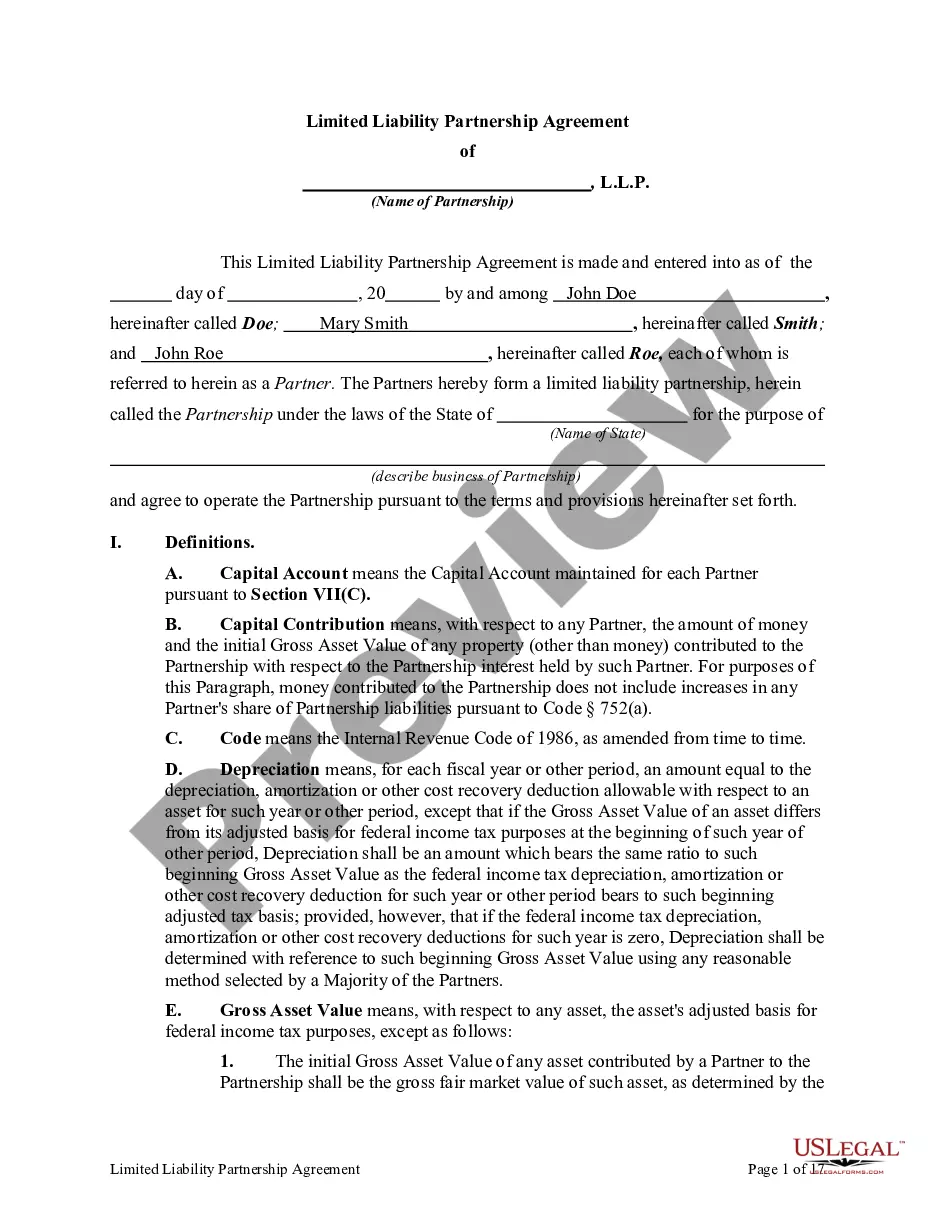
Get your form ready online
Our built-in tools help you complete, sign, share, and store your documents in one place.
Make edits, fill in missing information, and update formatting in US Legal Forms—just like you would in MS Word.
Download a copy, print it, send it by email, or mail it via USPS—whatever works best for your next step.
Sign and collect signatures with our SignNow integration. Send to multiple recipients, set reminders, and more. Go Premium to unlock E-Sign.
If this form requires notarization, complete it online through a secure video call—no need to meet a notary in person or wait for an appointment.
We protect your documents and personal data by following strict security and privacy standards.

Make edits, fill in missing information, and update formatting in US Legal Forms—just like you would in MS Word.

Download a copy, print it, send it by email, or mail it via USPS—whatever works best for your next step.

Sign and collect signatures with our SignNow integration. Send to multiple recipients, set reminders, and more. Go Premium to unlock E-Sign.

If this form requires notarization, complete it online through a secure video call—no need to meet a notary in person or wait for an appointment.

We protect your documents and personal data by following strict security and privacy standards.
Looking for another form?
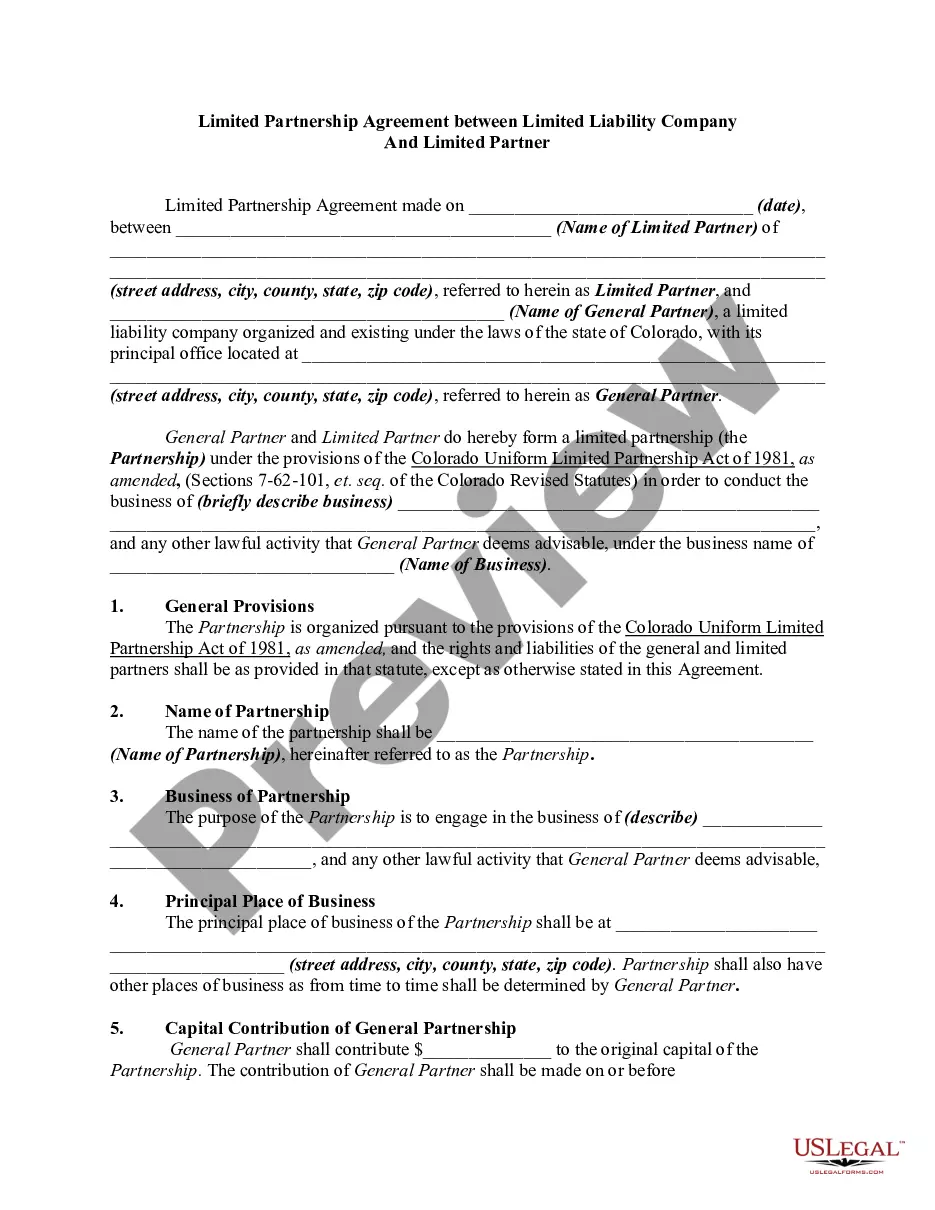
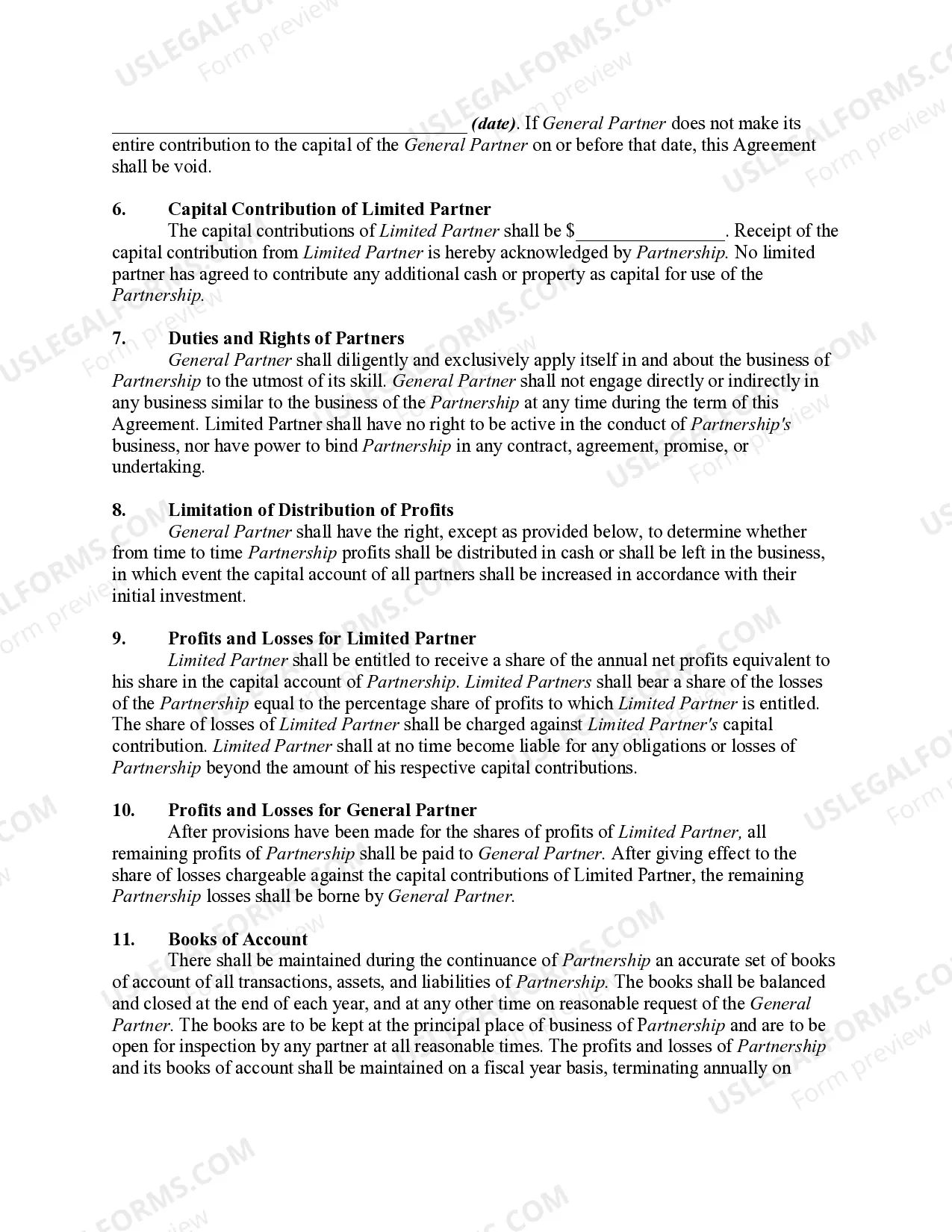
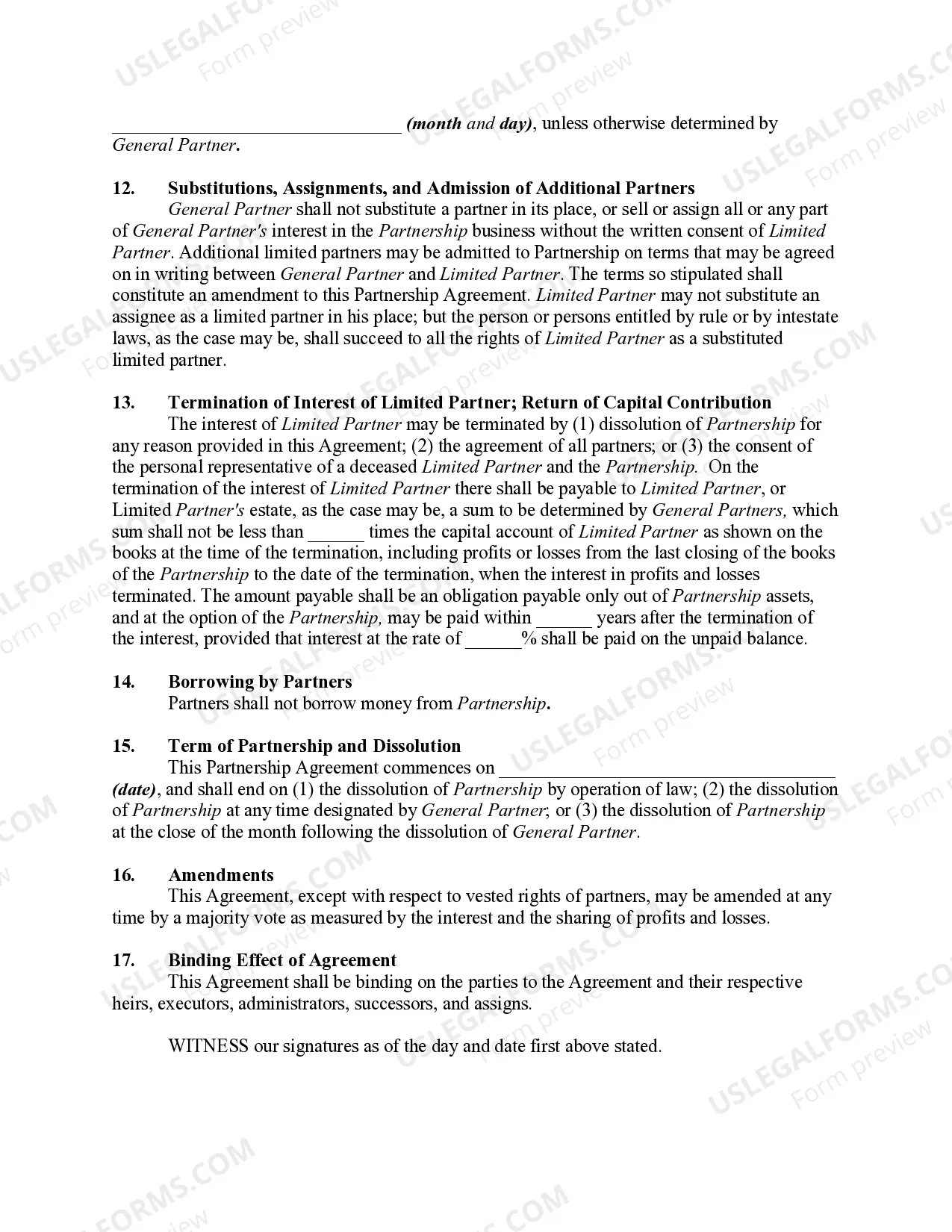
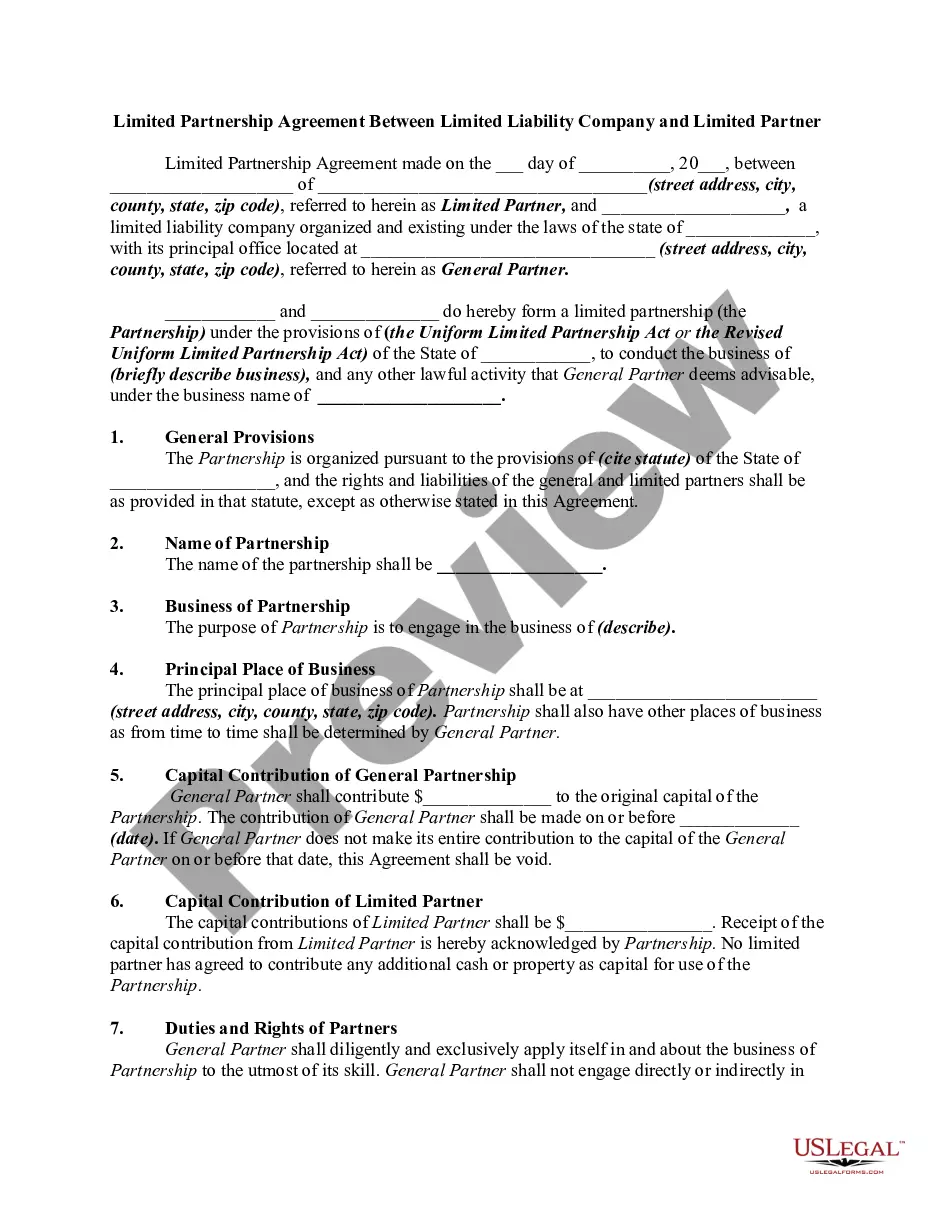
How to fill out Colorado Limited Partnership Agreement Between Limited Liability Company And Limited Partner?
- If you are a returning user, log in to your account and find your desired form template. Ensure your subscription is active; if it’s expired, renew it based on your payment plan.
- For first-time users, start by checking the preview mode and description to confirm that you've selected the right form that aligns with your local jurisdiction's requirements.
- If necessary, search for additional templates using the search function to ensure you've found the most suitable document for your needs.
- Once you've chosen the correct form, click the 'Buy Now' button to select your preferred subscription plan. You'll need to create an account to access the resources.
- Proceed to checkout by entering your payment information via credit card or PayPal to complete your purchase.
- Finally, download your form to your device for completion. You can access it any time under the My Forms section of your profile.
US Legal Forms boasts an extensive collection of over 85,000 fillable and editable legal documents. This robust library often surpasses competitors in both selection and cost-effectiveness.
Take advantage of expert assistance for form completion, ensuring your documents are not only precise but also legally sound. Start your journey to hassle-free legal documentation today!
Form popularity
FAQ
A limited liability limited partnership (LLLP) combines aspects of a limited liability partnership and a limited partnership. It offers limited liability to general partners, which is not available in traditional limited partnerships. This structure grants the benefits of both worlds, providing protection against personal liability while allowing flexibility in management. To navigate the complexities of a limited liability company vs limited liability partnership, consider US Legal Forms for tailored solutions.
Limited liability is a feature that protects personal assets from business debts; however, it is not synonymous with a Limited Liability Partnership. An LLP is a specific business structure that provides limited liability to its partners, but it has its own rules and regulations. Therefore, while limited liability exists within an LLP, limited liability alone does not define this structure. Exploring the distinction between a limited liability company vs limited liability partnership can clarify your understanding of these concepts.
No, a limited liability partnership (LLP) is not the same as a limited liability company (LLC). While both structures offer personal liability protection, they differ in terms of management and taxation. An LLC has a flexible ownership structure, allowing for various member roles, whereas an LLP generally involves partners who share management responsibilities. Understanding the differences between a limited liability company vs limited liability partnership can help you choose the right structure for your business needs.
Yes, a limited liability partnership (LLP) does protect your personal assets from the debts and liabilities of the business. This structure allows partners to conduct business without risking their personal finances, making it an appealing choice for professional groups. When considering whether to establish an LLP or an LLC, it is essential to weigh the benefits of personal asset protection in relation to the limited liability company vs limited liability partnership.
The term 'Ltd' typically refers to limited companies, which provide owners with limited liability protection, while a limited partnership combines at least one general partner with liability and one limited partner, whose liability is capped. This means that limited companies protect all shareholders from personal liability, whereas limited partners in a limited partnership are only liable up to their investment amount. Understanding these differences can guide you when comparing limited liability company vs limited liability partnership.
Using an LLP instead of an LLC can be beneficial for professional groups, like lawyers or doctors, who want to collaborate while sharing liability protection. An LLP allows partners to take active roles in management, which can be crucial for industries where partnership is key. Additionally, LLPs often have fewer restrictions on how business profits are distributed, making them attractive for specific professional practices.
The difference between a limited liability company (LLC) and a limited liability partnership (LLP) mainly centers on ownership and management. An LLC can have individual owners who are not involved in daily operations, while an LLP requires active participation from its partners in managing the business. This distinction can impact liability, taxes, and operational flexibility, so it’s worth considering when deciding between a limited liability company vs limited liability partnership.
A limited liability company (LLC) offers its owners personal liability protection, while a limited liability limited partnership (LLLP) provides similar protection to limited partners only. In an LLLP, one or more partners take on unlimited liability, which differs from an LLC, where all members enjoy liability protection. Knowing the differences between these structures is essential when exploring limited liability company vs limited liability partnership.
The main difference between a limited company and a limited liability partnership (LLP) lies in liability and management. A limited company protects its shareholders from personal liability, while an LLP protects its partners, allowing for shared management and limited personal risk. Understanding the distinction is crucial for determining which structure suits your needs, especially when considering limited liability company vs limited liability partnership.
Choosing a limited partnership (LP) over a limited liability company (LLC) often depends on your business goals. LPs allow for silent partners, who can invest without taking on significant management responsibilities. This can be appealing if you want to attract investors while maintaining control over daily operations. Additionally, the LP structure might provide tax benefits for certain types of businesses.