Ca Form Wills With Trust
Description
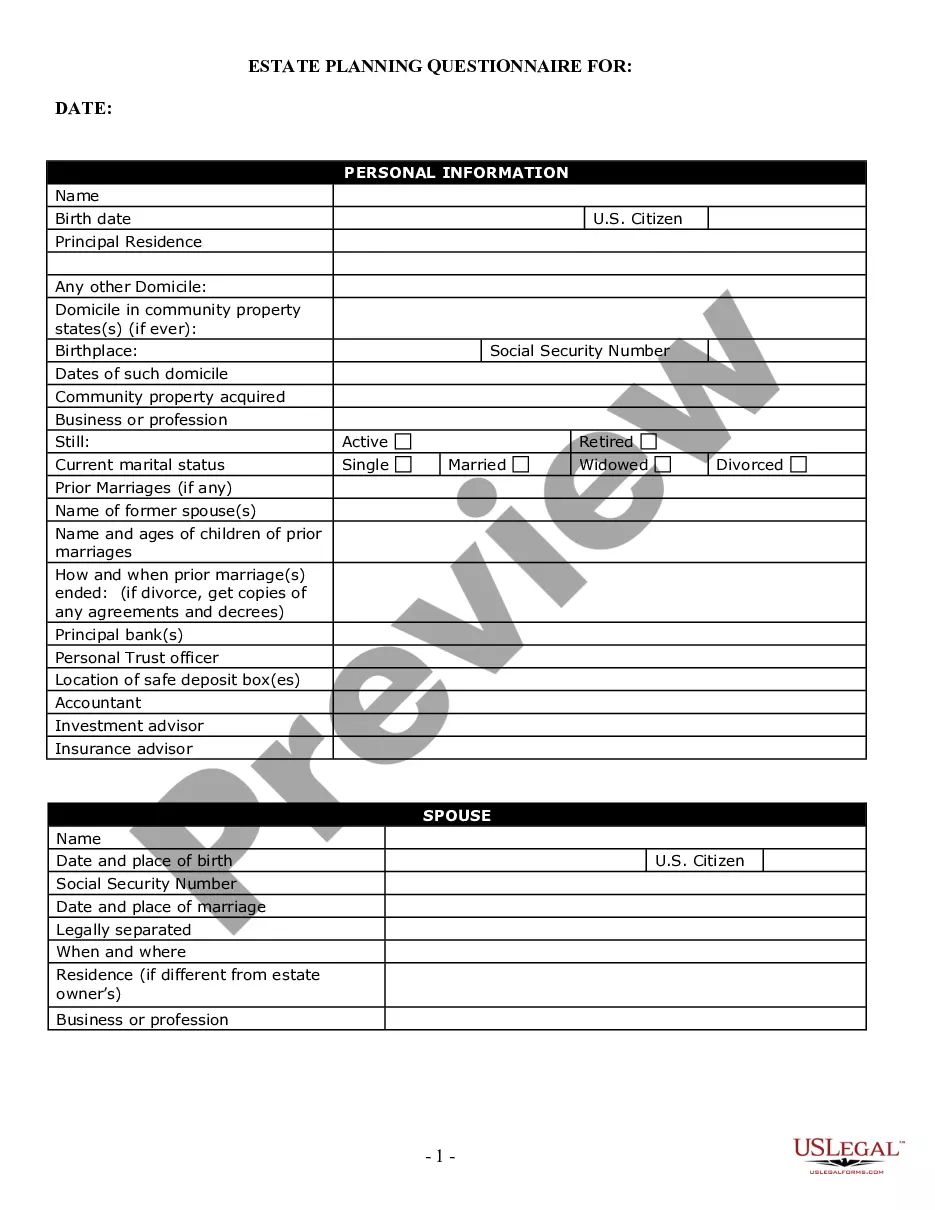
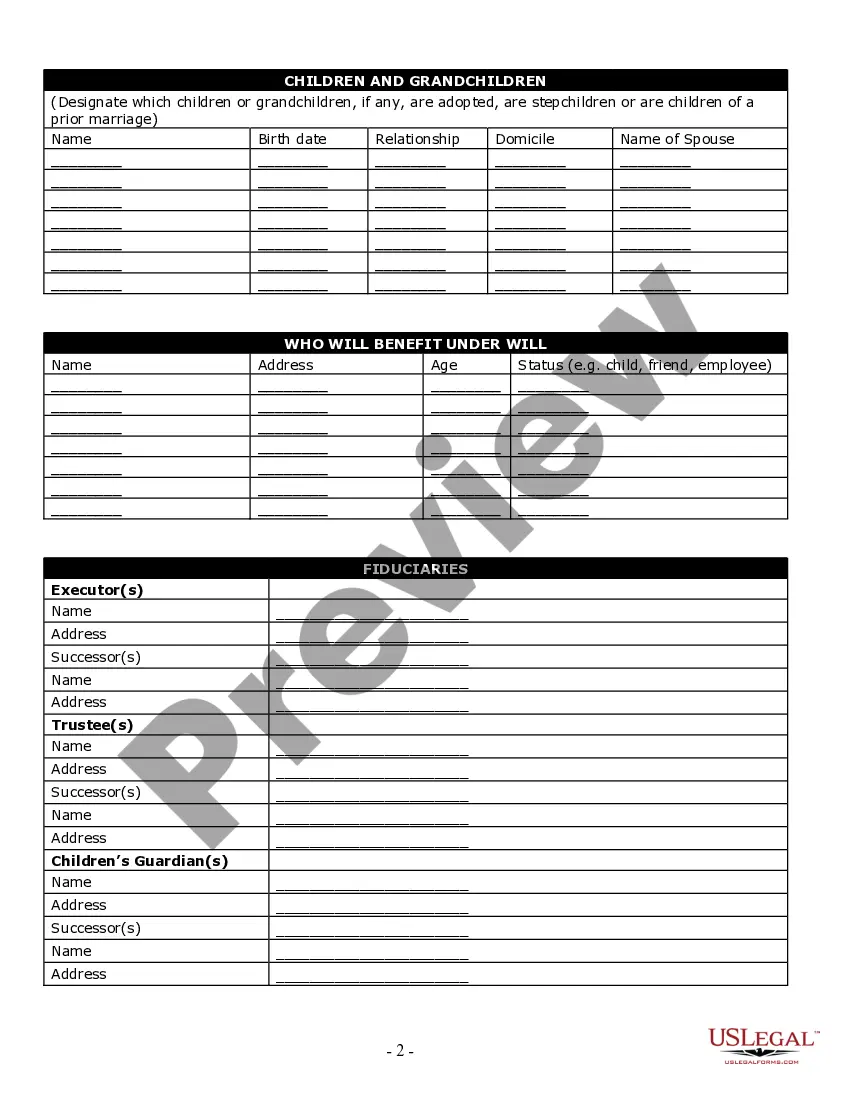
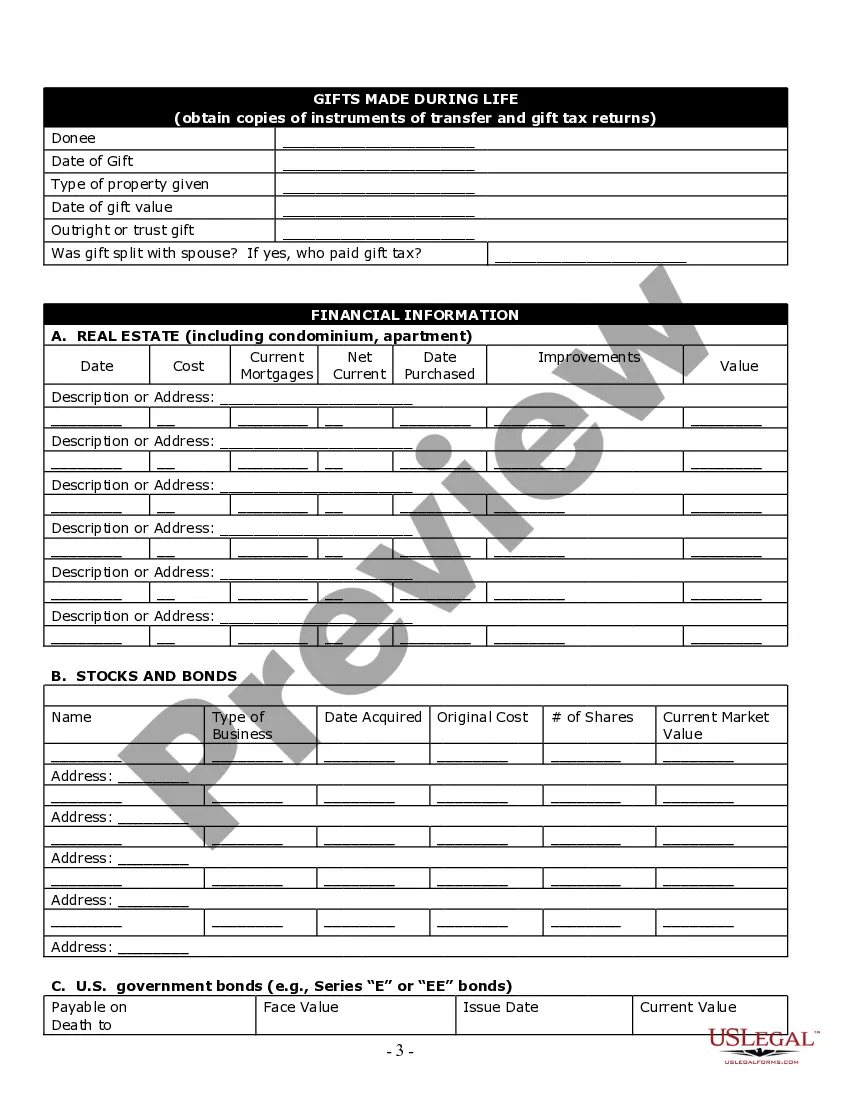
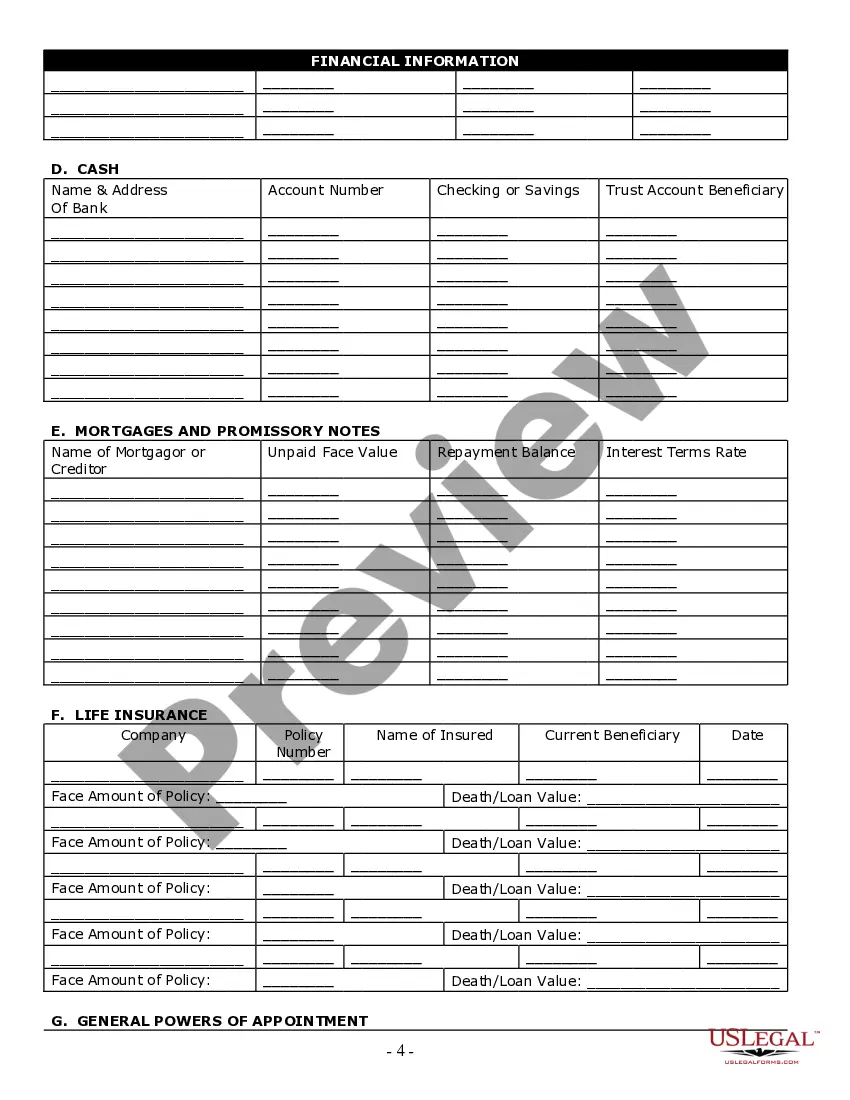

Get your form ready online
Our built-in tools help you complete, sign, share, and store your documents in one place.
Make edits, fill in missing information, and update formatting in US Legal Forms—just like you would in MS Word.
Download a copy, print it, send it by email, or mail it via USPS—whatever works best for your next step.
Sign and collect signatures with our SignNow integration. Send to multiple recipients, set reminders, and more. Go Premium to unlock E-Sign.
If this form requires notarization, complete it online through a secure video call—no need to meet a notary in person or wait for an appointment.
We protect your documents and personal data by following strict security and privacy standards.

Make edits, fill in missing information, and update formatting in US Legal Forms—just like you would in MS Word.

Download a copy, print it, send it by email, or mail it via USPS—whatever works best for your next step.

Sign and collect signatures with our SignNow integration. Send to multiple recipients, set reminders, and more. Go Premium to unlock E-Sign.

If this form requires notarization, complete it online through a secure video call—no need to meet a notary in person or wait for an appointment.

We protect your documents and personal data by following strict security and privacy standards.
Looking for another form?









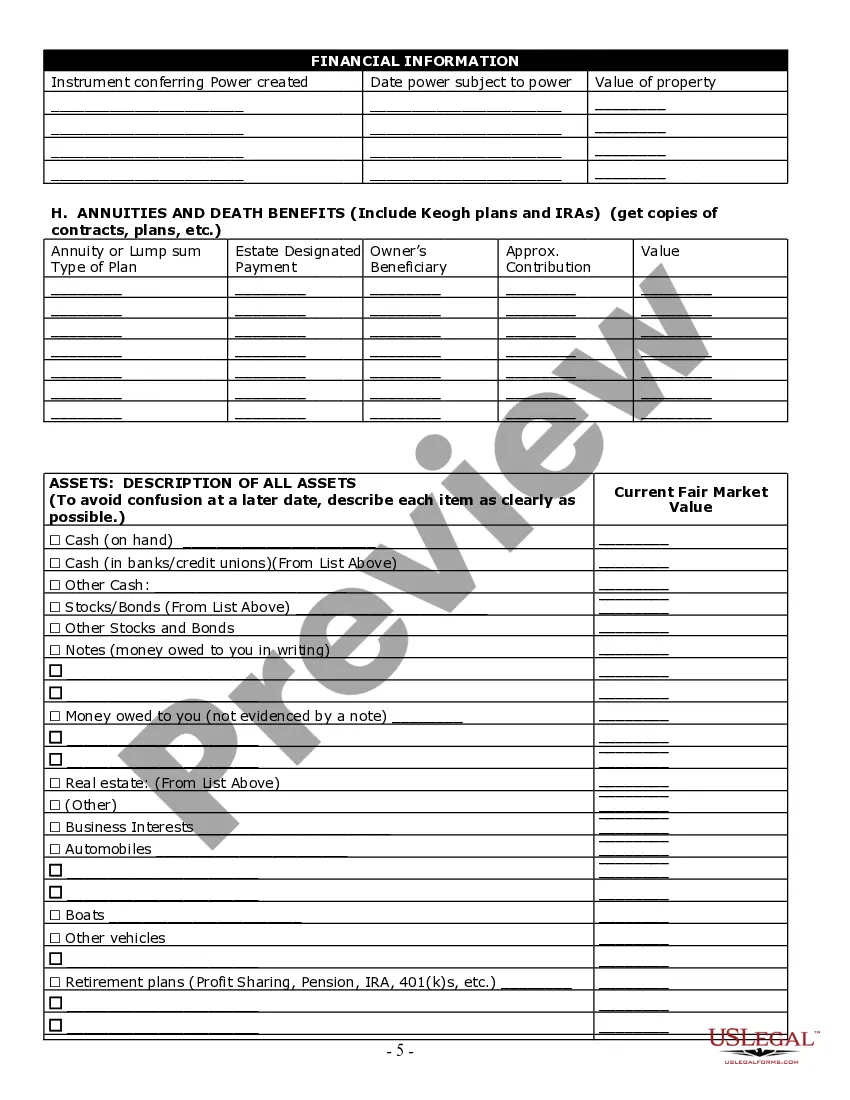
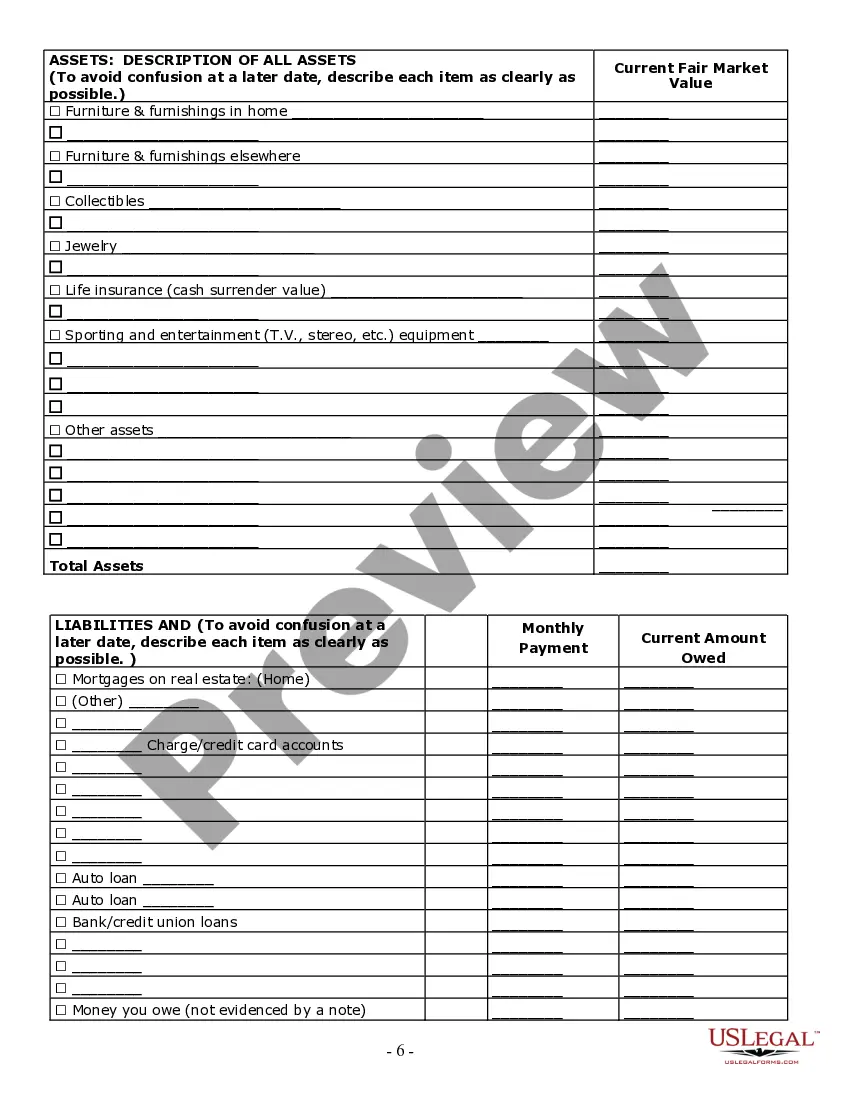
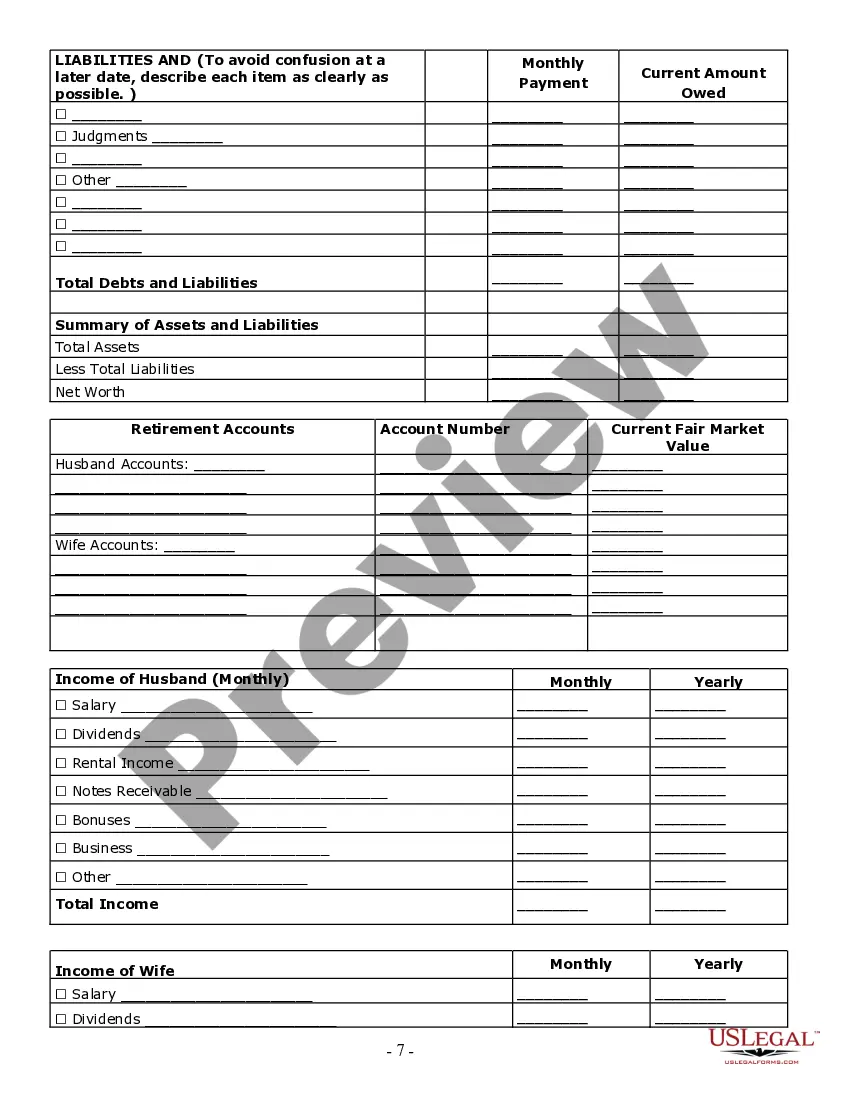
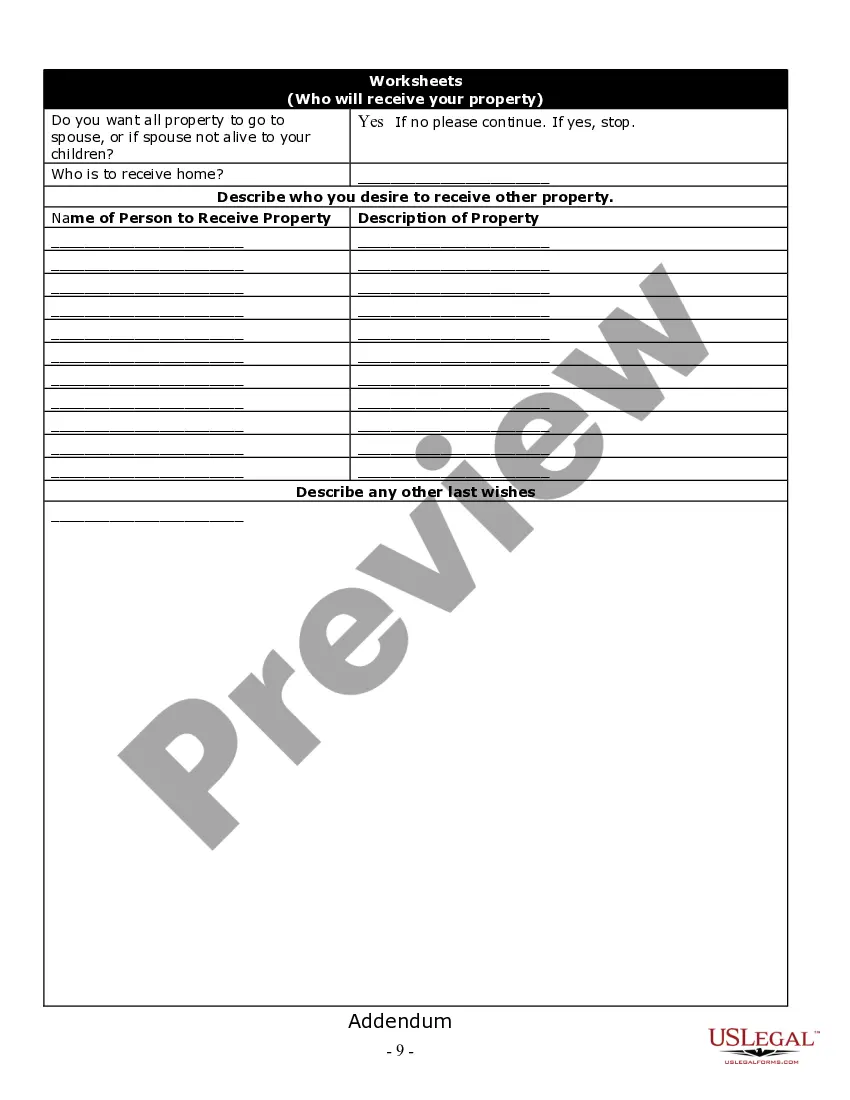
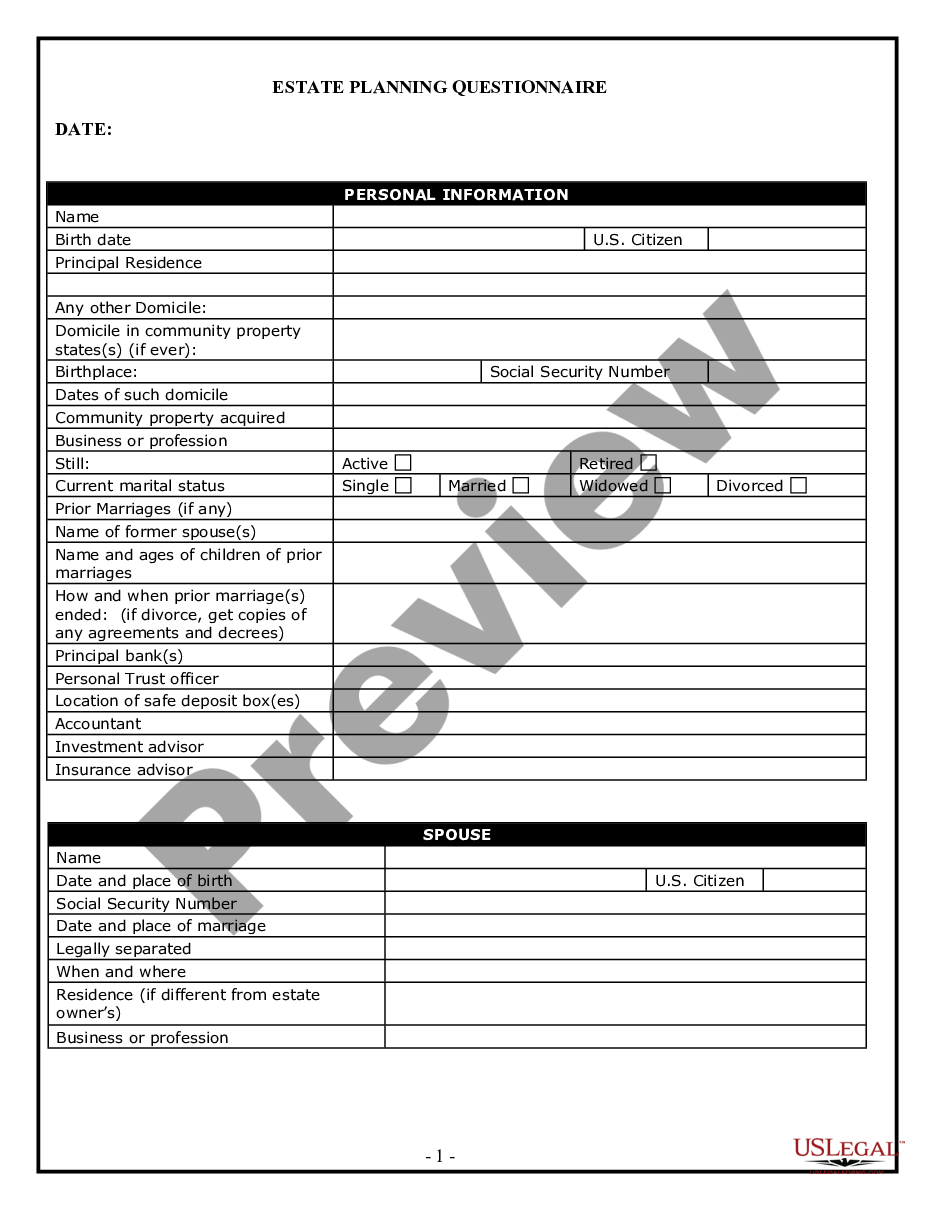
How to fill out California Estate Planning Questionnaire And Worksheets?
It’s clear that you can’t become a legal expert instantly, nor can you learn how to swiftly create Ca Form Wills With Trust without possessing a specialized skill set.
Drafting legal documents is a lengthy endeavor necessitating particular education and expertise. So why not entrust the creation of the Ca Form Wills With Trust to the experts.
With US Legal Forms, one of the most extensive legal document repositories, you can discover everything from court forms to templates for internal business communication.
If you need a different template, start your search again.
Sign up for a free account and choose a subscription plan to purchase the form. Click Buy now. Once the transaction is finished, you can access the Ca Form Wills With Trust, fill it out, print it, and send or mail it to the required individuals or organizations.
- We understand how vital compliance and adherence to federal and local statutes and regulations are.
- That’s why, on our site, all templates are location-based and current.
- Here’s how to start with our platform and obtain the document you need in just minutes.
- Locate the document you require by utilizing the search feature at the top of the page.
- Preview it (if this option is available) and read the accompanying description to determine if Ca Form Wills With Trust is what you’re looking for.
Form popularity
FAQ
Are distributions from a trust taxable to the recipient in California? Generally speaking, distributions from trusts are considered income and, therefore, may be subject to taxation depending on the type of trust and its purpose. The trust beneficiaries are those liable for the distributions from a trust.
How to create a living trust in California Take stock of your assets. ... Choose a trustee. ... Choose your beneficiaries. ... Draw up your Declaration of Trust. ... Consider signing your trust document in front of a notary public. ... Transfer your property to the trust.
California has high probate fees for people who only have a will. Without a trust, your beneficiaries will have to pay these fees. The probate fees are based on a percentage of the value of your estate. For instance, the first $100,000 of an estate is subject to a 4% probate fee.
Still, if beneficiaries can prove the decedent was in the process of transferring assets to a trust when they died, a trust instrument may override a will.
A will cannot override a trust that already exists, nor can it distribute or manage property already held in an existing trust. If a trust exists and holds its assets, those assets belong to the trust itself. They are not part of your estate and, as a result, are not subject to the terms of your will.