Legal Planning Estate For Attorneys
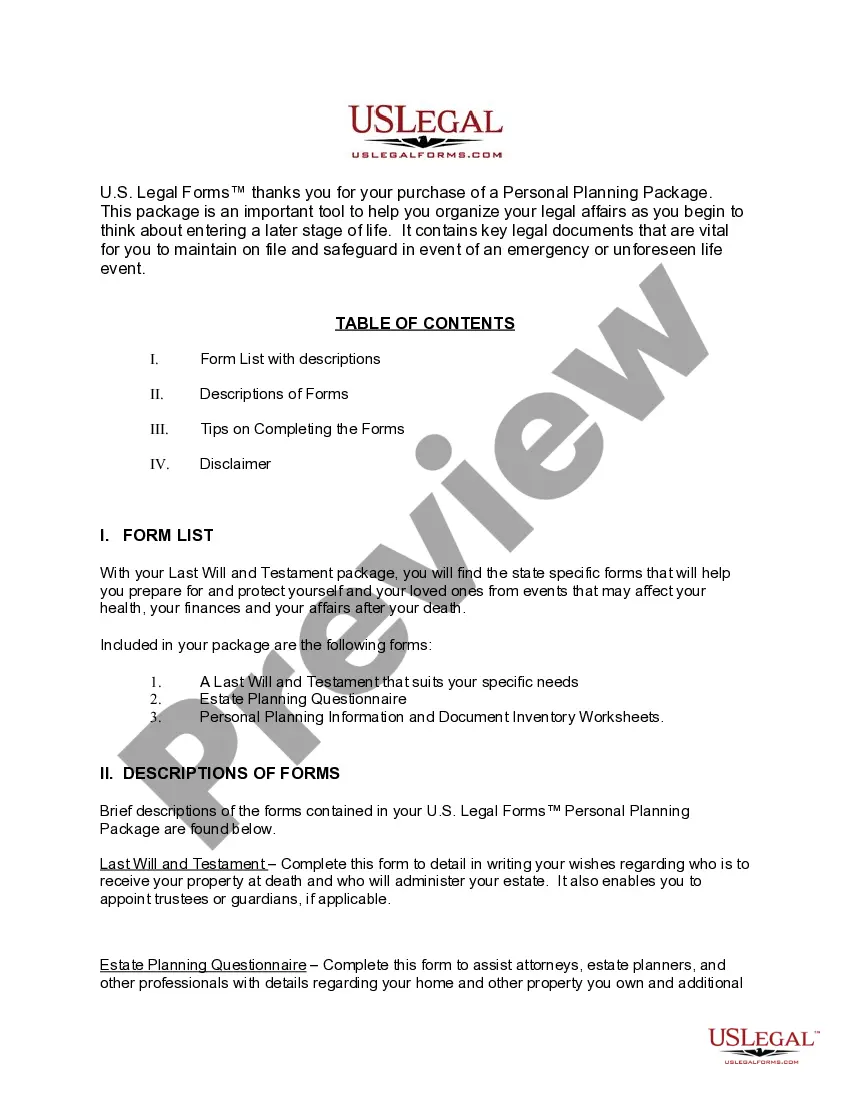
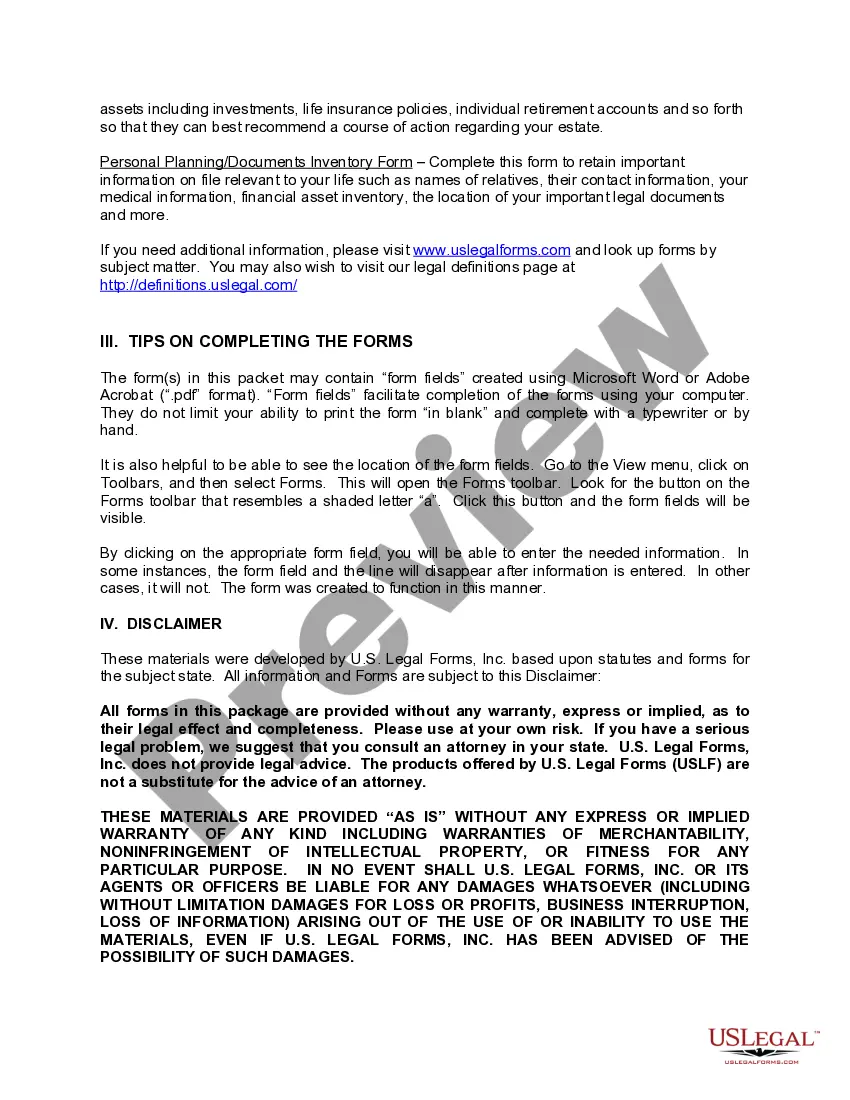
Description


Get your form ready online
Our built-in tools help you complete, sign, share, and store your documents in one place.
Make edits, fill in missing information, and update formatting in US Legal Forms—just like you would in MS Word.
Download a copy, print it, send it by email, or mail it via USPS—whatever works best for your next step.
Sign and collect signatures with our SignNow integration. Send to multiple recipients, set reminders, and more. Go Premium to unlock E-Sign.
If this form requires notarization, complete it online through a secure video call—no need to meet a notary in person or wait for an appointment.
We protect your documents and personal data by following strict security and privacy standards.

Make edits, fill in missing information, and update formatting in US Legal Forms—just like you would in MS Word.

Download a copy, print it, send it by email, or mail it via USPS—whatever works best for your next step.

Sign and collect signatures with our SignNow integration. Send to multiple recipients, set reminders, and more. Go Premium to unlock E-Sign.

If this form requires notarization, complete it online through a secure video call—no need to meet a notary in person or wait for an appointment.

We protect your documents and personal data by following strict security and privacy standards.
Looking for another form?







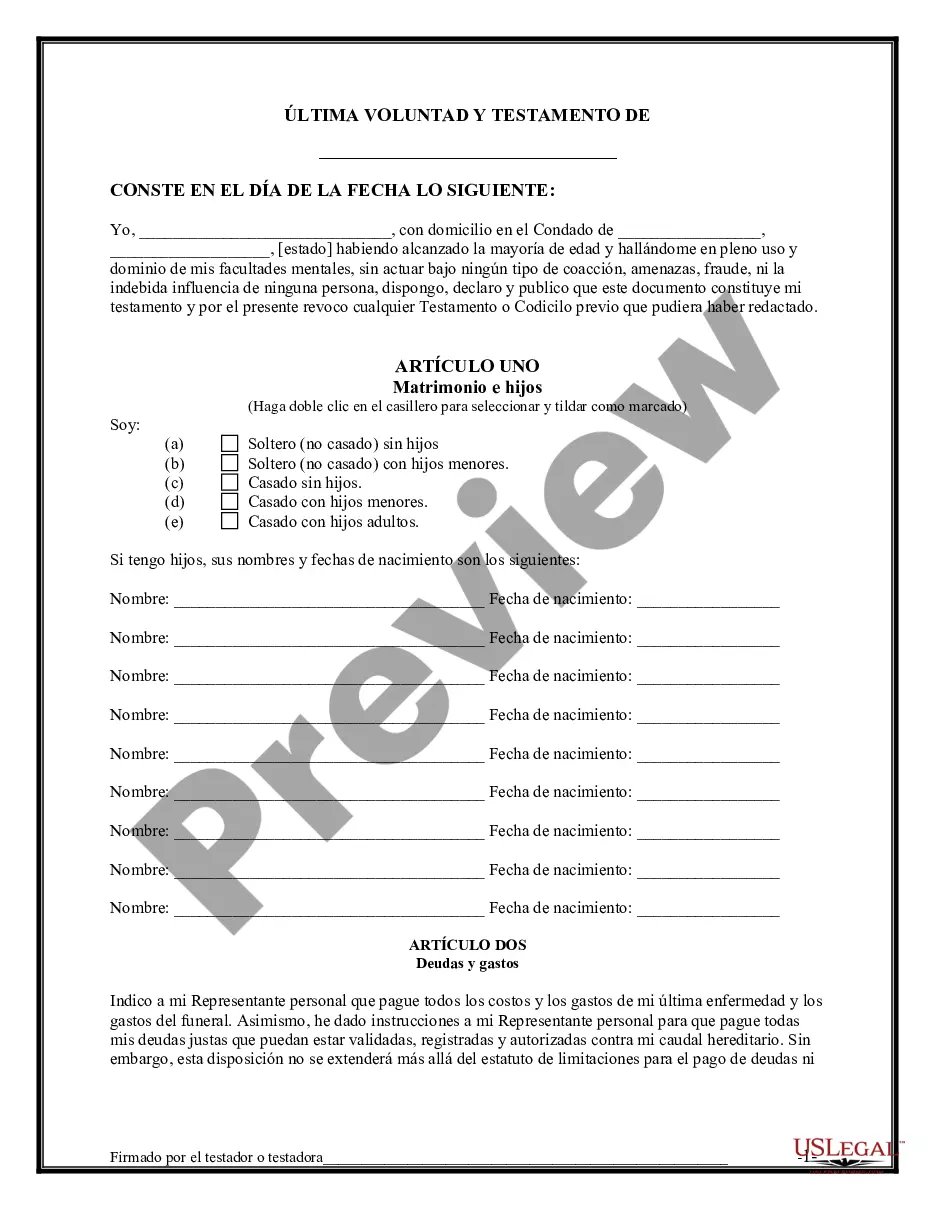
How to fill out California Last Will And Testament Package?
- If you are an existing user, log in to your US Legal Forms account and download the necessary template by clicking the Download button. Ensure your subscription is active; if not, renew it.
- For first-time users, begin by checking the Preview mode and the description of the form to confirm it meets your needs and jurisdiction requirements.
- If the form you reviewed is not suitable, use the Search tab to find a different template that matches your criteria.
- Once you've located the correct document, click the Buy Now button and select your preferred subscription plan. You will need to create an account to access the full library.
- Proceed with the payment by entering your credit card information or using your PayPal account to finalize the purchase.
- Download the completed form to your device. You can access it anytime via the My Forms menu within your account.
By following these steps, attorneys can effortlessly obtain legal documents that meet their clients' needs, ensuring accuracy and compliance.
Experience the convenience of US Legal Forms today and simplify your legal planning estate process!
Form popularity
FAQ
In legal planning estate for attorneys, the 5 D's of estate planning are disability, divorce, death, donations, and development. These concepts illustrate the critical aspects individuals must consider when creating a robust estate plan. By addressing these factors, attorneys can better prepare their clients for life's uncertainties and protect their interests. Recognizing how each of these D's can impact an estate plan encourages thorough planning to avoid future complications.
Yes, a lawyer can administer an estate, serving as the legal representative to manage the estate's affairs after an individual has passed away. When it comes to legal planning estate for attorneys, having a lawyer handle the administration process helps ensure compliance with legal requirements and aids in navigating complex issues. They will oversee the distribution of assets, settle debts, and handle any disputes that arise, making the process smoother for the beneficiaries.
In the context of legal planning estate for attorneys, the seven steps of the planning process encompass establishing goals, compiling essential documents, evaluating your asset portfolio, appointing a trusted individual to handle your affairs, crafting the required legal documents, putting your plan into action, and scheduling regular check-ups. Each of these steps contributes to a solid foundation for a successful estate plan, ensuring that your wishes are honored. Engaging with a knowledgeable attorney can provide clarity throughout this crucial process.
When engaging in legal planning estate for attorneys, understanding the seven steps in the estate planning process is crucial. These steps involve defining your objectives, collecting important documents, analyzing your assets, selecting an executor, drafting necessary plans, executing your estate planning documents, and conducting regular reviews. Following these organized steps leads to a thorough estate plan that provides peace of mind for you and your family.
The seven steps in the estate planning process typically include defining your goals, gathering necessary documents, assessing your assets, choosing a personal representative, drafting essential documents, implementing your plan, and reviewing periodically. This process helps ensure a comprehensive legal planning estate for attorneys that addresses your unique situation. By following these steps, attorneys can better assist clients in creating effective estate plans that reflect their wishes and protect their loved ones.
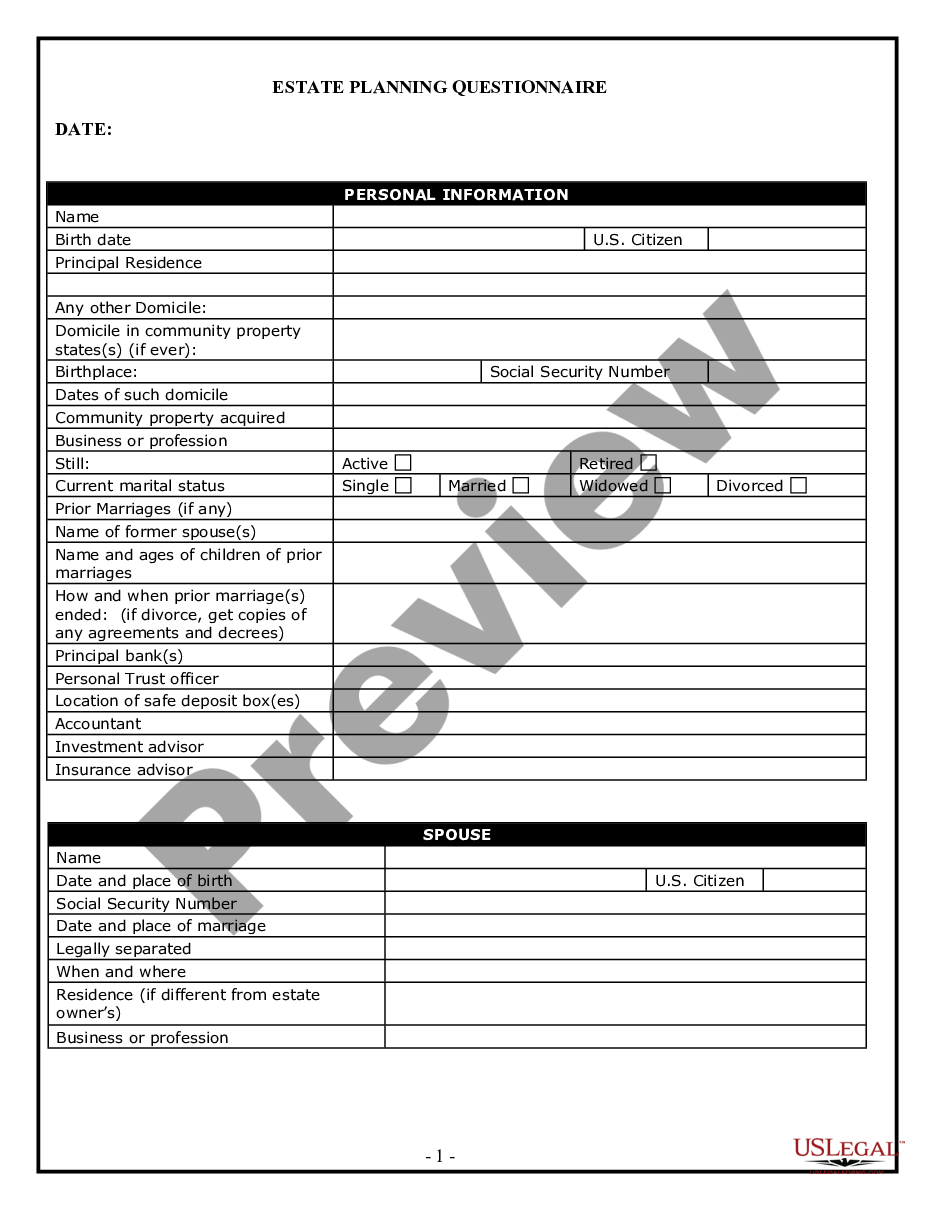
An estate planner requires comprehensive information to provide legal planning estate for attorneys. Important details include your financial situation, family dynamics, and specific goals for your estate. You should also share any existing wills, trusts, or legal documents. By sharing this information openly, your estate planner can tailor a strategy that aligns with your unique needs and aspirations, ensuring peace of mind.
For effective legal planning estate for attorneys, you need essential details such as a list of your assets, liabilities, and personal information. Additionally, consider beneficiaries, guardianship preferences for minors, and your healthcare directives. This thorough preparation helps streamline the estate planning process, ensuring your wishes are honored. Using platforms like US Legal Forms can simplify gathering all necessary information and creating your estate plan.
Typically, it takes about seven years to become an estate lawyer: four years for your bachelor’s degree and three years for law school. After formal education, passing the bar exam is crucial to practice. If you focus on legal planning estate for attorneys throughout your education, you'll be better prepared for your career. Dedication to this area can speed up your learning curve and expertise in estate matters.
You need a Juris Doctor (JD) degree to practice as an estate planning attorney. Before applying to law school, attaining a bachelor's degree is essential. Specializing in estate planning during law school enhances your understanding of legal planning estate for attorneys. This educational pathway equips you with the necessary skills to serve clients effectively.
To become an estate planning lawyer, start by earning a bachelor's degree, preferably in a related field. Next, attend law school and specialize in estate planning during your studies. After obtaining your law degree, you must pass the bar exam in your state. Having expertise in legal planning estate for attorneys will give you an edge in this competitive field.