Power Health Law For Limits
Description

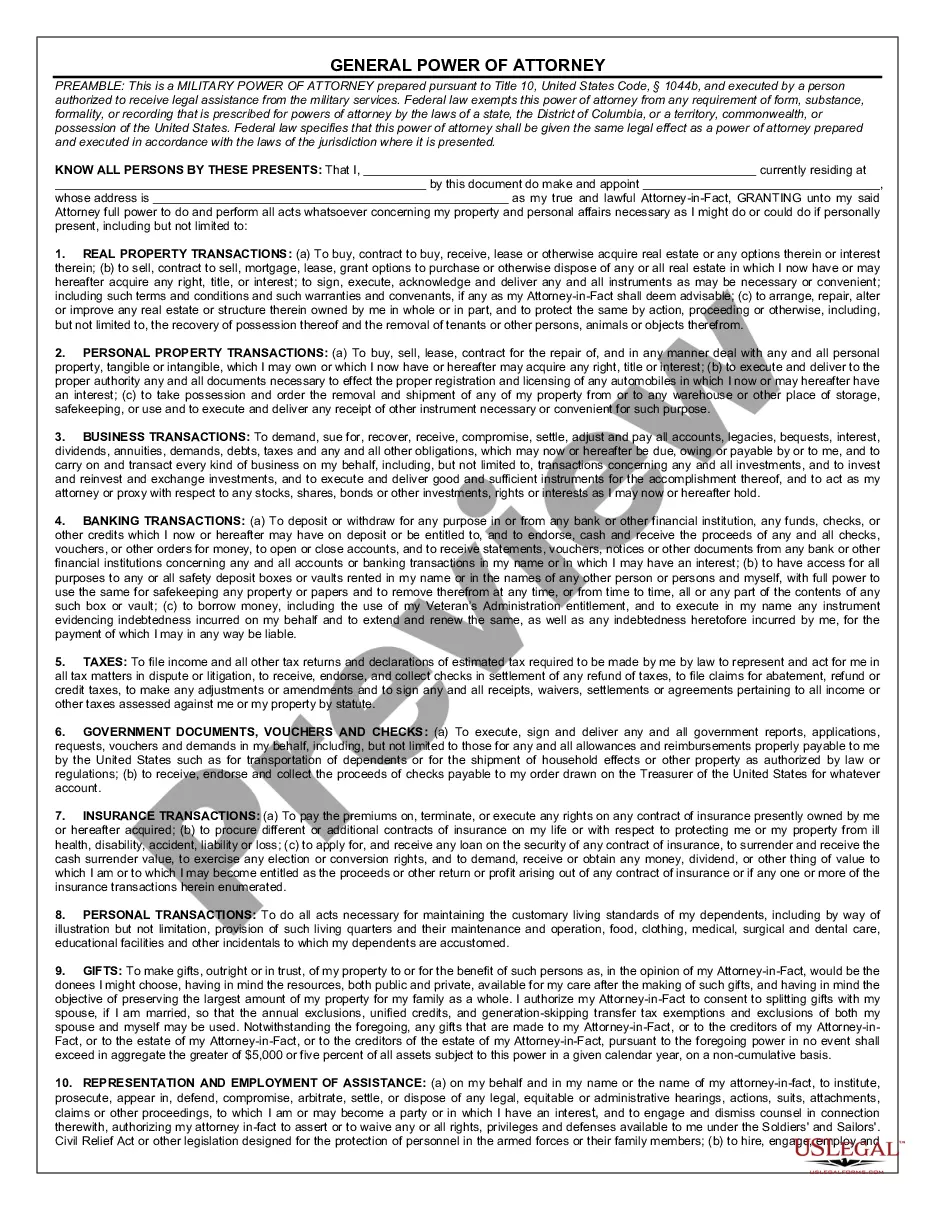
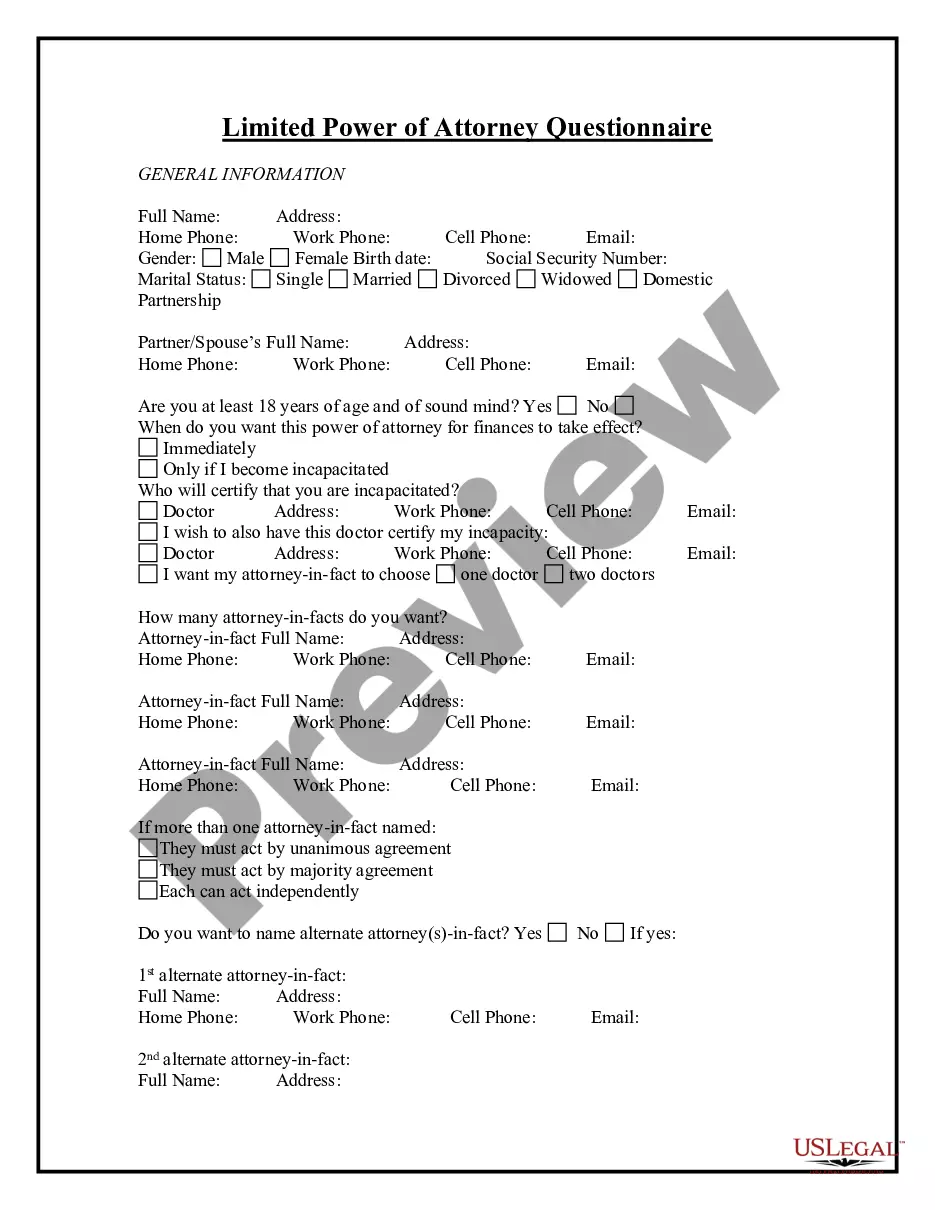
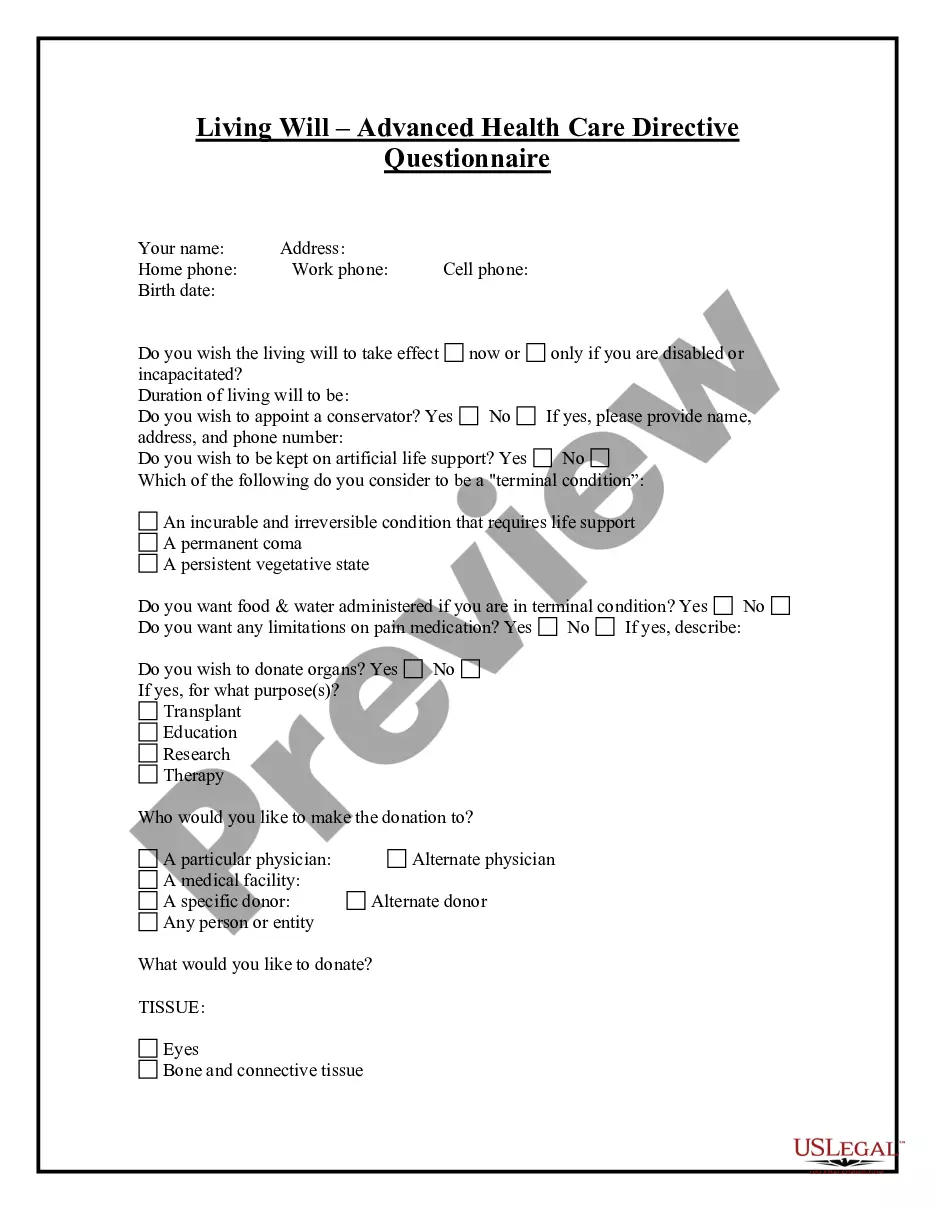
Get your form ready online
Our built-in tools help you complete, sign, share, and store your documents in one place.
Make edits, fill in missing information, and update formatting in US Legal Forms—just like you would in MS Word.
Download a copy, print it, send it by email, or mail it via USPS—whatever works best for your next step.
Sign and collect signatures with our SignNow integration. Send to multiple recipients, set reminders, and more. Go Premium to unlock E-Sign.
If this form requires notarization, complete it online through a secure video call—no need to meet a notary in person or wait for an appointment.
We protect your documents and personal data by following strict security and privacy standards.

Make edits, fill in missing information, and update formatting in US Legal Forms—just like you would in MS Word.

Download a copy, print it, send it by email, or mail it via USPS—whatever works best for your next step.

Sign and collect signatures with our SignNow integration. Send to multiple recipients, set reminders, and more. Go Premium to unlock E-Sign.

If this form requires notarization, complete it online through a secure video call—no need to meet a notary in person or wait for an appointment.

We protect your documents and personal data by following strict security and privacy standards.
Looking for another form?








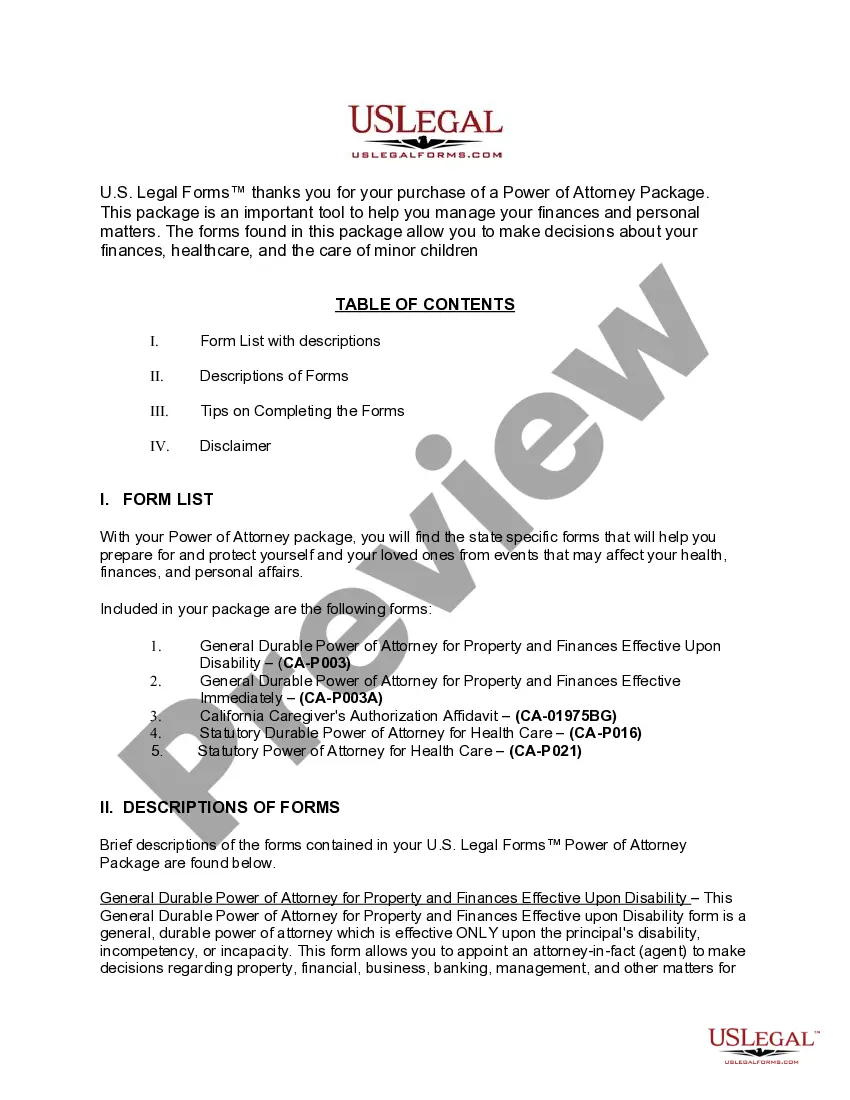
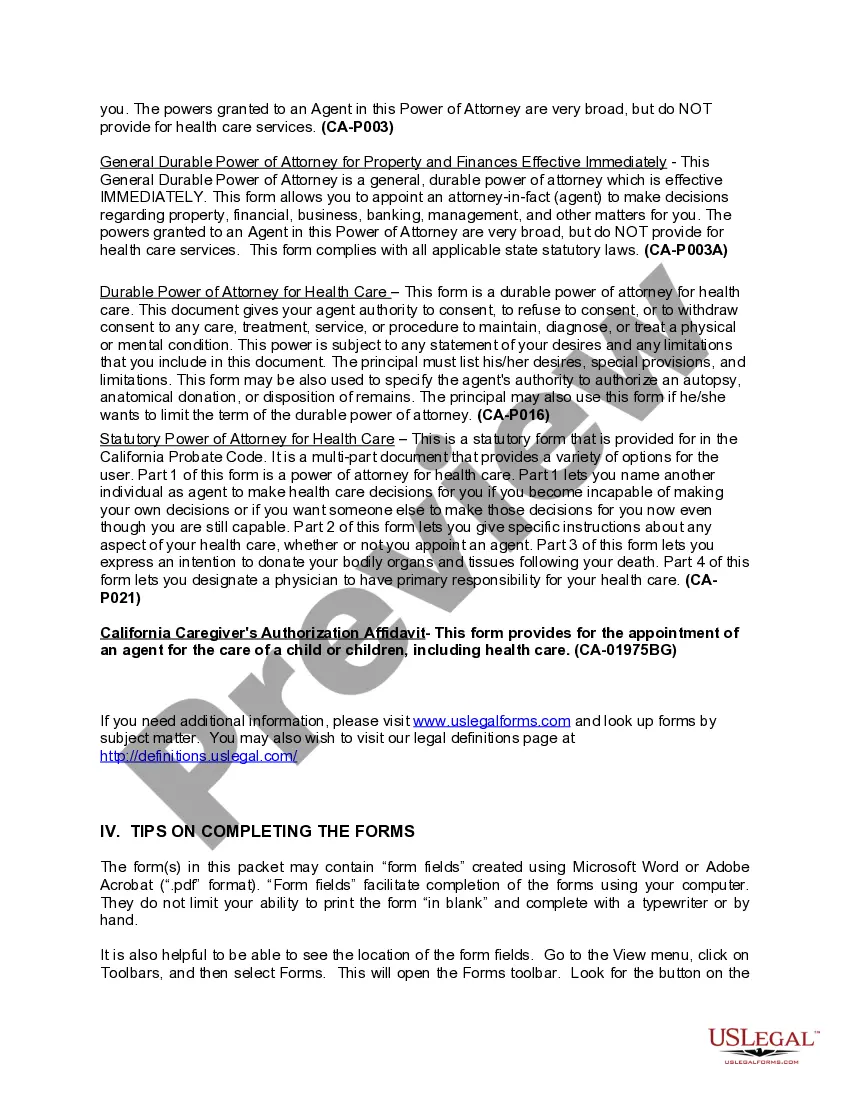
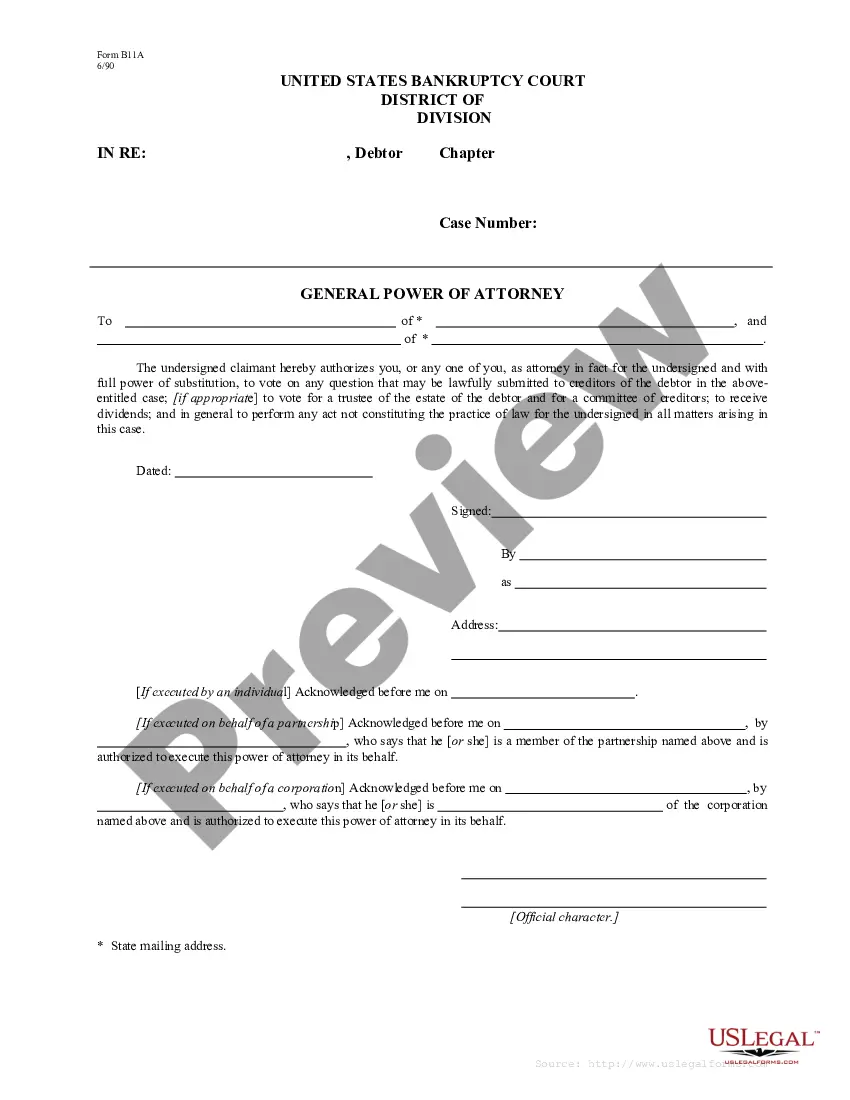
How to fill out California Power Of Attorney Forms Package?
Creating legal documents from the beginning can occasionally be daunting.
Certain situations may require extensive research and significant financial investment.
If you’re looking for a simpler and more cost-effective method of preparing Power Health Law For Limits or any other documentation without unnecessary hurdles, US Legal Forms is always accessible.
Our online repository of over 85,000 current legal documents covers nearly every facet of your financial, legal, and personal affairs.
Examine the form preview and descriptions to confirm that you have located the document you need. Ensure that the form you choose adheres to the regulations and laws of your state and county. Select the most appropriate subscription plan to acquire the Power Health Law For Limits. Download the file, then complete, validate, and print it out. US Legal Forms has an impeccable reputation and over 25 years of expertise. Join us now and transform document execution into a simple and efficient process!
- With just a few clicks, you can quickly access state- and county-specific templates meticulously crafted by our legal experts.
- Utilize our website whenever you require dependable and trustworthy services through which you can effortlessly find and download the Power Health Law For Limits.
- If you’re familiar with our services and have previously established an account with us, simply Log In to your account, choose the template, and download it or re-download it anytime later in the My documents section.
- Not registered yet? No problem. It takes minimal time to sign up and explore the library.
- However, before proceeding to download Power Health Law For Limits, heed these suggestions.
Form popularity
FAQ
Examples of product rule of limits ing to the product rule, lim x ? n f ( x ) ? lim x ? n g ( x ) = lim x ? n ( f ( x ) ? g ( x ) ) . The limit of the product of the functions, which is 2x, exists at x = 1. That limit is 2.
What is Limit? Let y = f(x) as a function of x. If at a point x = a, f(x) takes indeterminate form, then we can consider the values of the function which is very near to a. If these values tend to some definite unique number as x tends to a, then that obtained a unique number is called the limit of f(x) at x = a.
Example: Evaluating a Limit Using Limit Laws We need to keep in mind the requirement that, at each application of a limit law, the new limits must exist for the limit law to be applied. limx??3(4x+2)=limx??34x+limx??32Apply the sum law. =4?limx??3x+limx??32Apply the constant multiple law.
Hear this out loud PauseThe Power Rule for Exponents: (am)n = am*n. To raise a number with an exponent to a power, multiply the exponent times the power. Negative Exponent Rule: x?n = 1/xn. Invert the base to change a negative exponent into a positive.
Power law for limits states that the limit of the nth power of a function equals the nth power of the limit of the function. Root law for limits states that the limit of the nth root of a function equals the nth root of the limit of the function.