Company Pay Advance Withdrawal
Description
Get your form ready online
Our built-in tools help you complete, sign, share, and store your documents in one place.
Make edits, fill in missing information, and update formatting in US Legal Forms—just like you would in MS Word.
Download a copy, print it, send it by email, or mail it via USPS—whatever works best for your next step.
Sign and collect signatures with our SignNow integration. Send to multiple recipients, set reminders, and more. Go Premium to unlock E-Sign.
If this form requires notarization, complete it online through a secure video call—no need to meet a notary in person or wait for an appointment.
We protect your documents and personal data by following strict security and privacy standards.

Make edits, fill in missing information, and update formatting in US Legal Forms—just like you would in MS Word.

Download a copy, print it, send it by email, or mail it via USPS—whatever works best for your next step.

Sign and collect signatures with our SignNow integration. Send to multiple recipients, set reminders, and more. Go Premium to unlock E-Sign.

If this form requires notarization, complete it online through a secure video call—no need to meet a notary in person or wait for an appointment.

We protect your documents and personal data by following strict security and privacy standards.
Looking for another form?








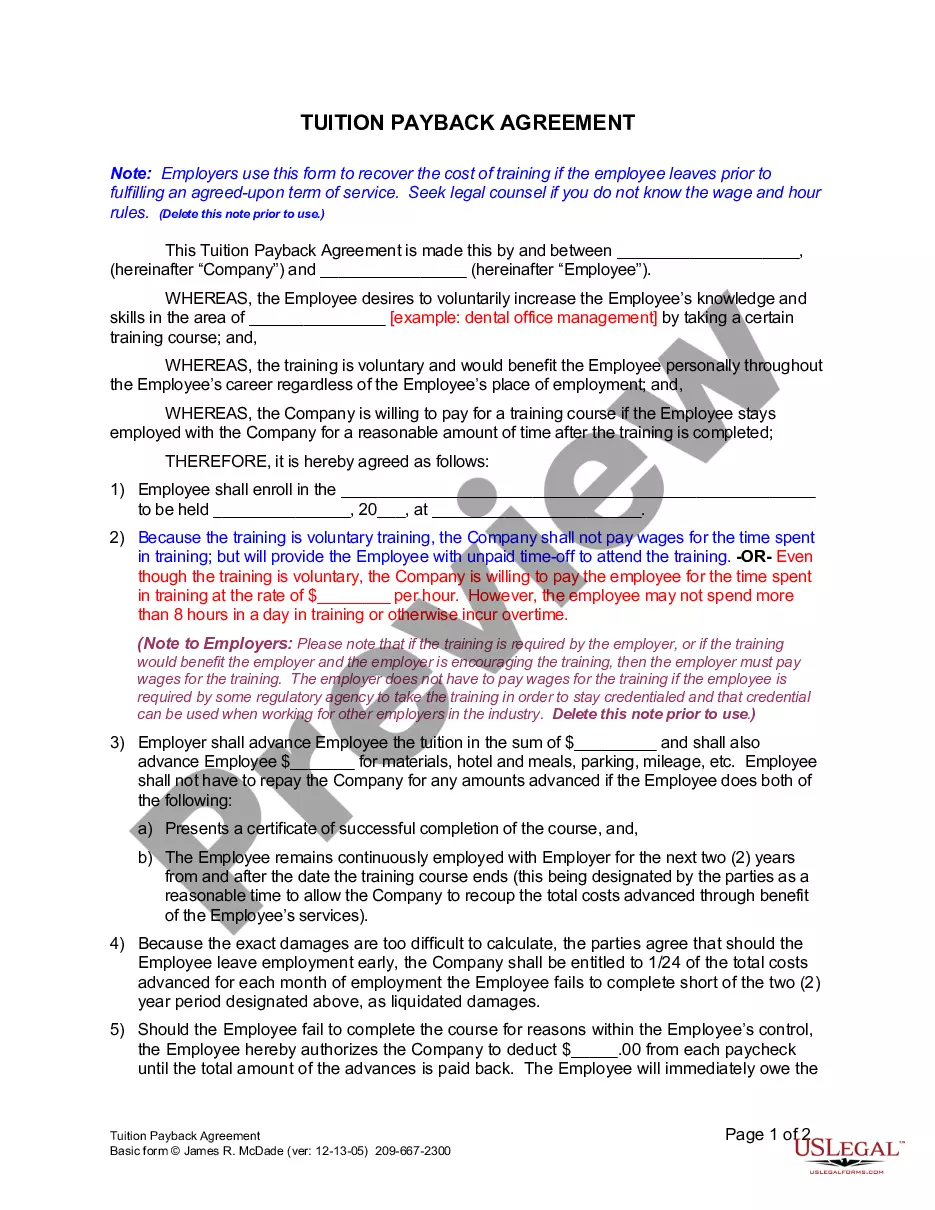
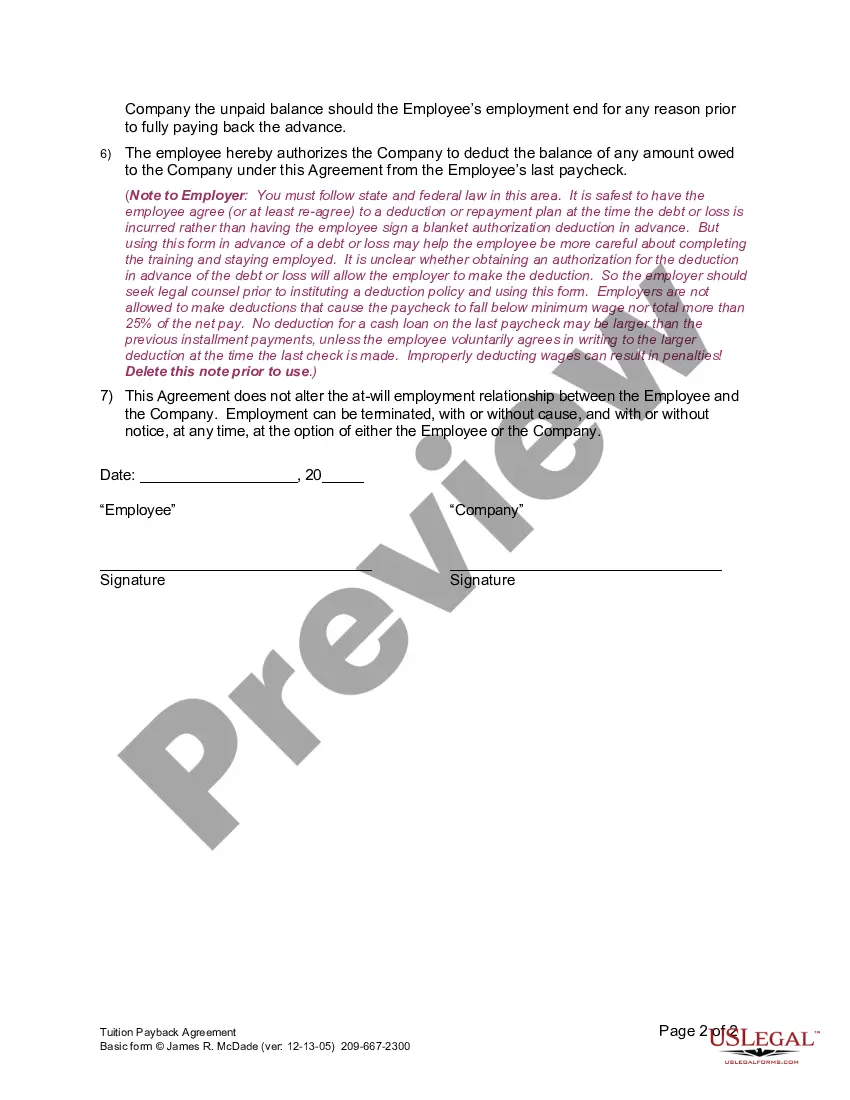
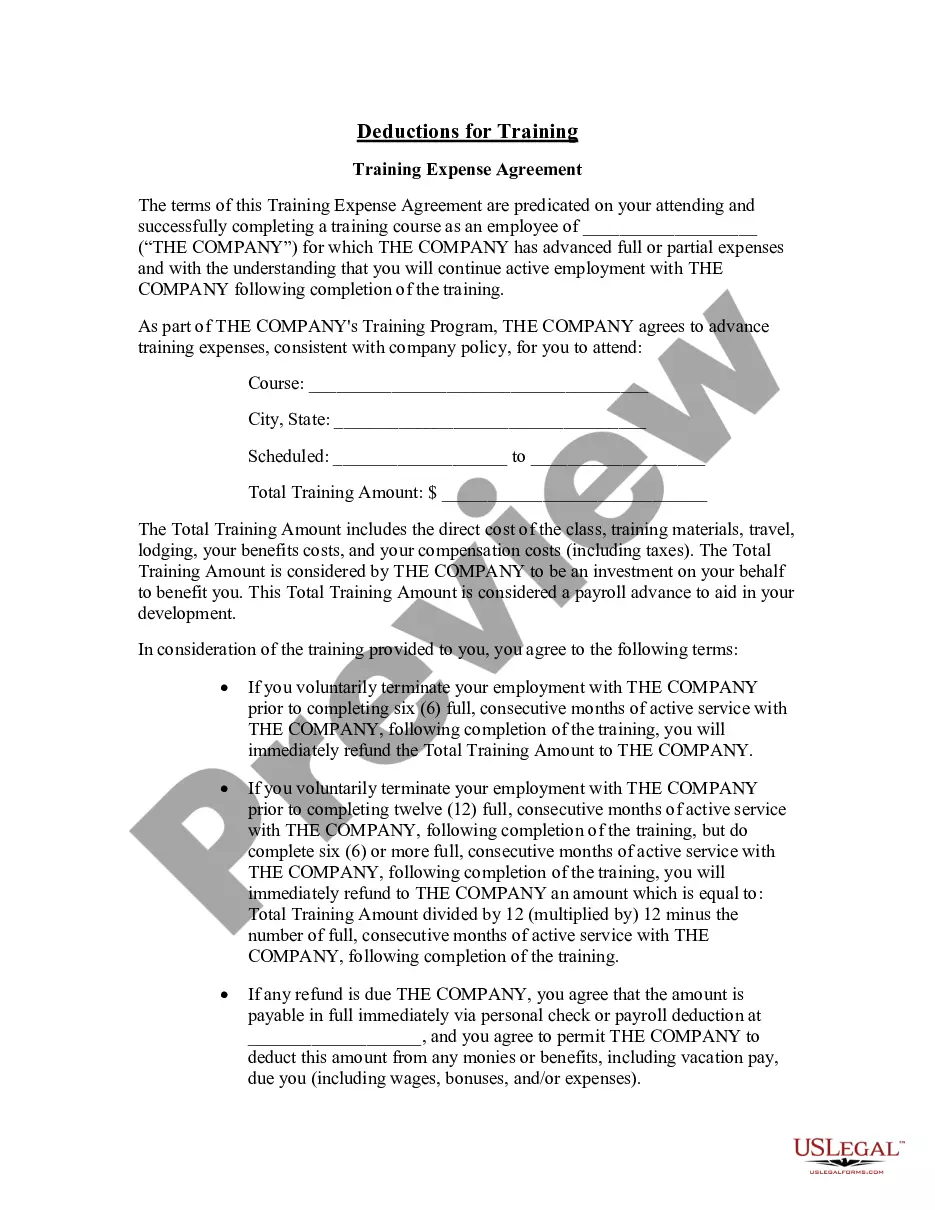
How to fill out California Tuition Payback Agreement?
Legal documentation handling can be exasperating, even for skilled experts.
When searching for a Corporate Pay Advance Withdrawal and lacking the time to invest in finding the correct and current version, the procedures may become overwhelming.
Obtain a valuable resource library of articles, guides, and materials pertinent to your circumstances and needs.
Conserve time and effort searching for the documents you require, and make use of US Legal Forms’ advanced search and Review feature to find Corporate Pay Advance Withdrawal and obtain it.
Ensure that the document is accepted in your state or county. Select Buy Now when you are prepared. Choose a subscription plan. Select the format you need, and Download, complete, eSign, print, and send your document. Take advantage of the US Legal Forms online catalog, backed by 25 years of experience and reliability. Transform your routine document management into a seamless and user-friendly process today.
- In case you have a subscription, Log In to the US Legal Forms account, search for the form, and obtain it.
- Check the My documents tab to inspect the documents you have previously saved and manage your folders as you wish.
- If this is your inaugural experience with US Legal Forms, create an account and gain unrestricted access to all benefits of the library.
- Here are the steps to undertake after downloading the document you require.
- Confirm it is the correct form by previewing it and reviewing its details.
- Access state- or county-specific legal and business forms.
- US Legal Forms addresses all requirements you may have, from personal to corporate documents, in a single location.
- Utilize sophisticated tools to fill out and manage your Corporate Pay Advance Withdrawal.
Form popularity
FAQ
Generally, a company cannot withdraw a paycheck after it has been issued unless there is a legitimate reason. This could include errors in payroll processing. Understanding the implications of company pay advance withdrawal can help both employees and employers navigate any potential issues effectively.
Yes, payroll advances are legal, provided they comply with local labor laws. Companies must clearly outline their policies regarding advance payments. Ensuring compliance is essential when offering company pay advance withdrawal options.
To advance payment means to provide funds to someone ahead of their scheduled payment due date. Businesses often use this to support employees facing financial needs. The option for company pay advance withdrawal can provide a safety net for employees during tough times.
Asking for a company pay advance withdrawal can feel daunting, but it is generally acceptable. Open communication with your employer demonstrates your initiative and can pave the way for a smoother conversation about your financial needs. Many companies recognize that unexpected expenses arise, and a pay advance can help employees manage those situations effectively. Just be sure to present your request clearly and professionally to facilitate understanding and foster strong relationships in the workplace.
To qualify for a hardship distribution, a 401(k) participant must meet two criteria. First, they must have an ?immediate and heavy financial need.? Second, the distribution must be limited to the amount ?necessary to satisfy? the financial need.
However, you should know these consequences before taking a hardship distribution: The amount of the hardship distribution will permanently reduce the amount you'll have in the plan at retirement. You must pay income tax on any previously untaxed money you receive as a hardship distribution.
A hardship distribution is a withdrawal from a participant's elective deferral account made because of an immediate and heavy financial need, and limited to the amount necessary to satisfy that financial need. The money is taxed to the participant and is not paid back to the borrower's account.
Key Takeaways. If you're younger than 59½ and suffering financial hardship, you may be able to withdraw funds from your retirement accounts without incurring the usual 10% penalty. Not all hardships qualify, however, and you're still responsible for paying income tax on the withdrawal.
How to Make a 401(k) Hardship Withdrawal. To make a 401(k) hardship withdrawal, you will need to contact your employer and plan administrator and request the withdrawal. The administrator will likely require you to provide evidence of the hardship, such as medical bills or a notice of eviction.