Working Hours And Overtime Policy
Description
Get your form ready online
Our built-in tools help you complete, sign, share, and store your documents in one place.
Make edits, fill in missing information, and update formatting in US Legal Forms—just like you would in MS Word.
Download a copy, print it, send it by email, or mail it via USPS—whatever works best for your next step.
Sign and collect signatures with our SignNow integration. Send to multiple recipients, set reminders, and more. Go Premium to unlock E-Sign.
If this form requires notarization, complete it online through a secure video call—no need to meet a notary in person or wait for an appointment.
We protect your documents and personal data by following strict security and privacy standards.

Make edits, fill in missing information, and update formatting in US Legal Forms—just like you would in MS Word.

Download a copy, print it, send it by email, or mail it via USPS—whatever works best for your next step.

Sign and collect signatures with our SignNow integration. Send to multiple recipients, set reminders, and more. Go Premium to unlock E-Sign.

If this form requires notarization, complete it online through a secure video call—no need to meet a notary in person or wait for an appointment.

We protect your documents and personal data by following strict security and privacy standards.
Looking for another form?
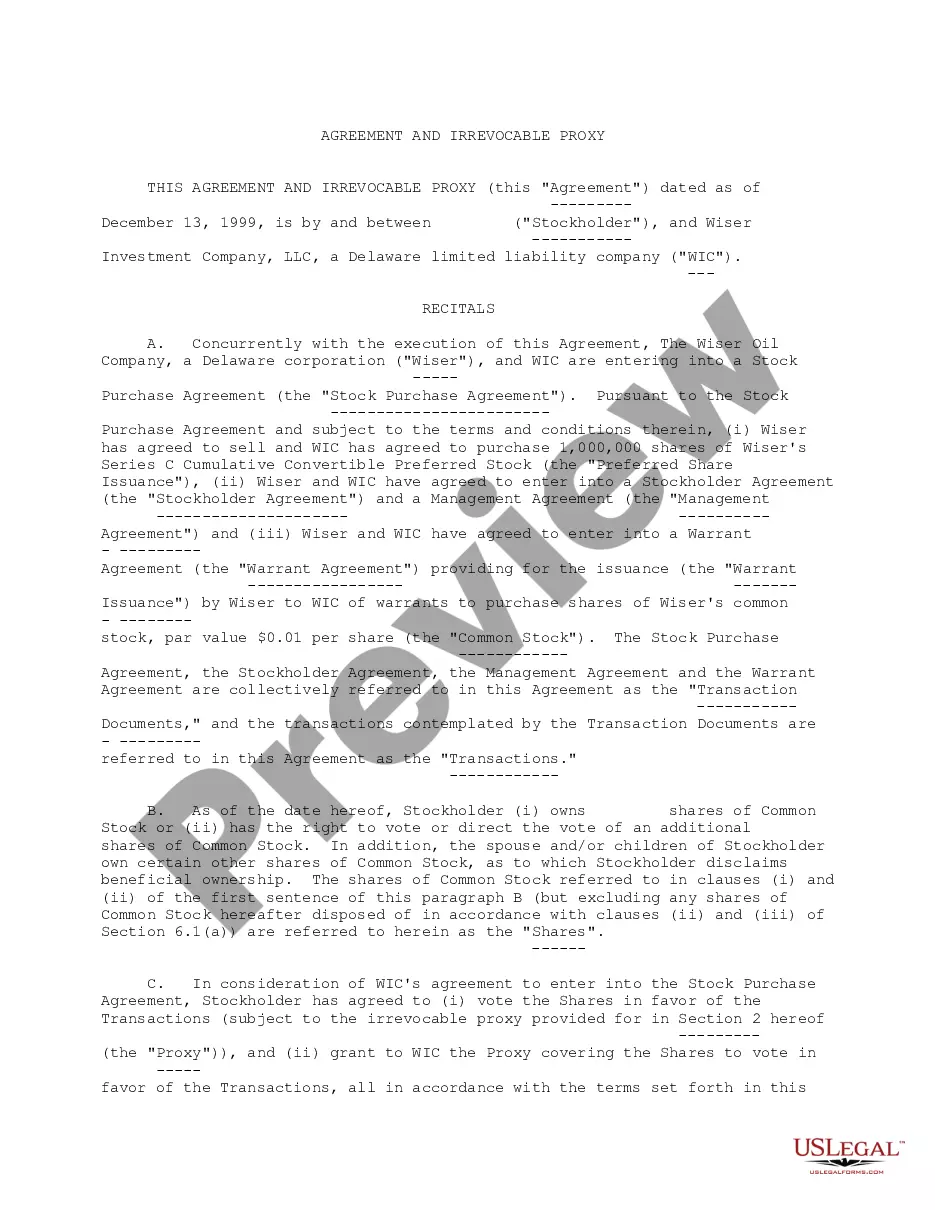
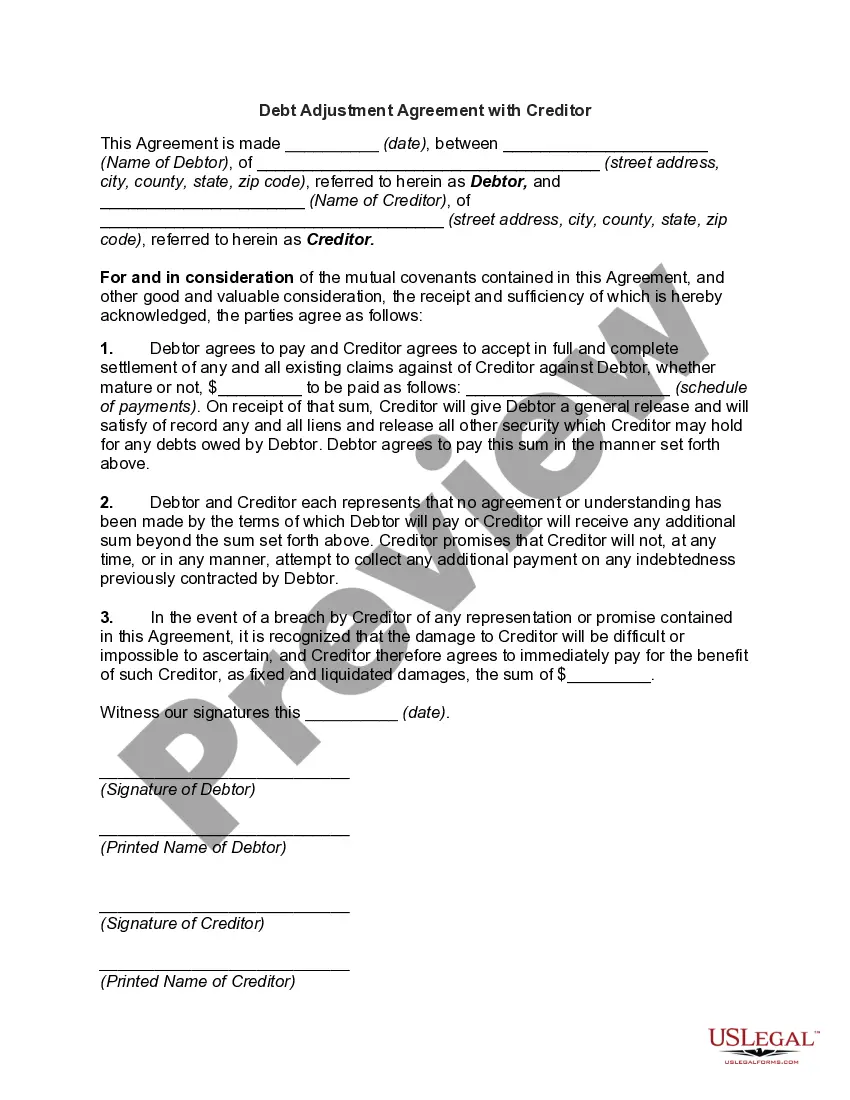

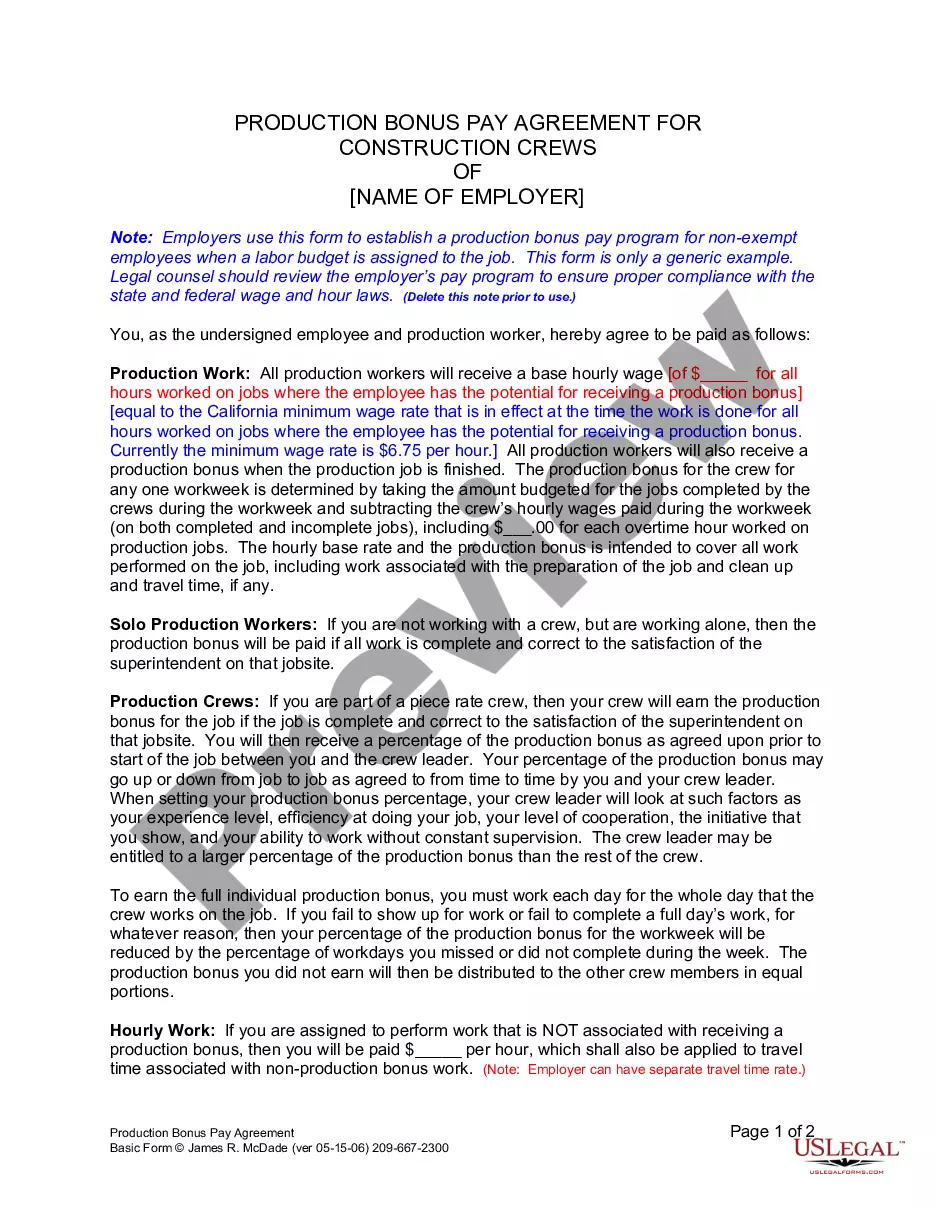
How to fill out California Production Bonus Pay Agreement For Construction?
It’s clear that you cannot become a legal expert instantly, nor can you discover how to swiftly create a Working Hours And Overtime Policy without possessing a specific set of abilities.
Assembling legal documents is a lengthy endeavor that necessitates particular training and expertise. So why not entrust the formulation of the Working Hours And Overtime Policy to the professionals.
With US Legal Forms, one of the most comprehensive legal document repositories, you can find anything from court documents to templates for internal corporate communication.
If you need additional forms, initiate your search again.
Register for a complimentary account and select a subscription plan to purchase the template.
- We recognize how crucial compliance and adherence to federal and state regulations are.
- That’s why, on our site, all forms are jurisdiction-specific and current.
- Here’s how to start using our platform and obtain the document you need in just minutes.
- Locate the form you require using the search bar at the top of the webpage.
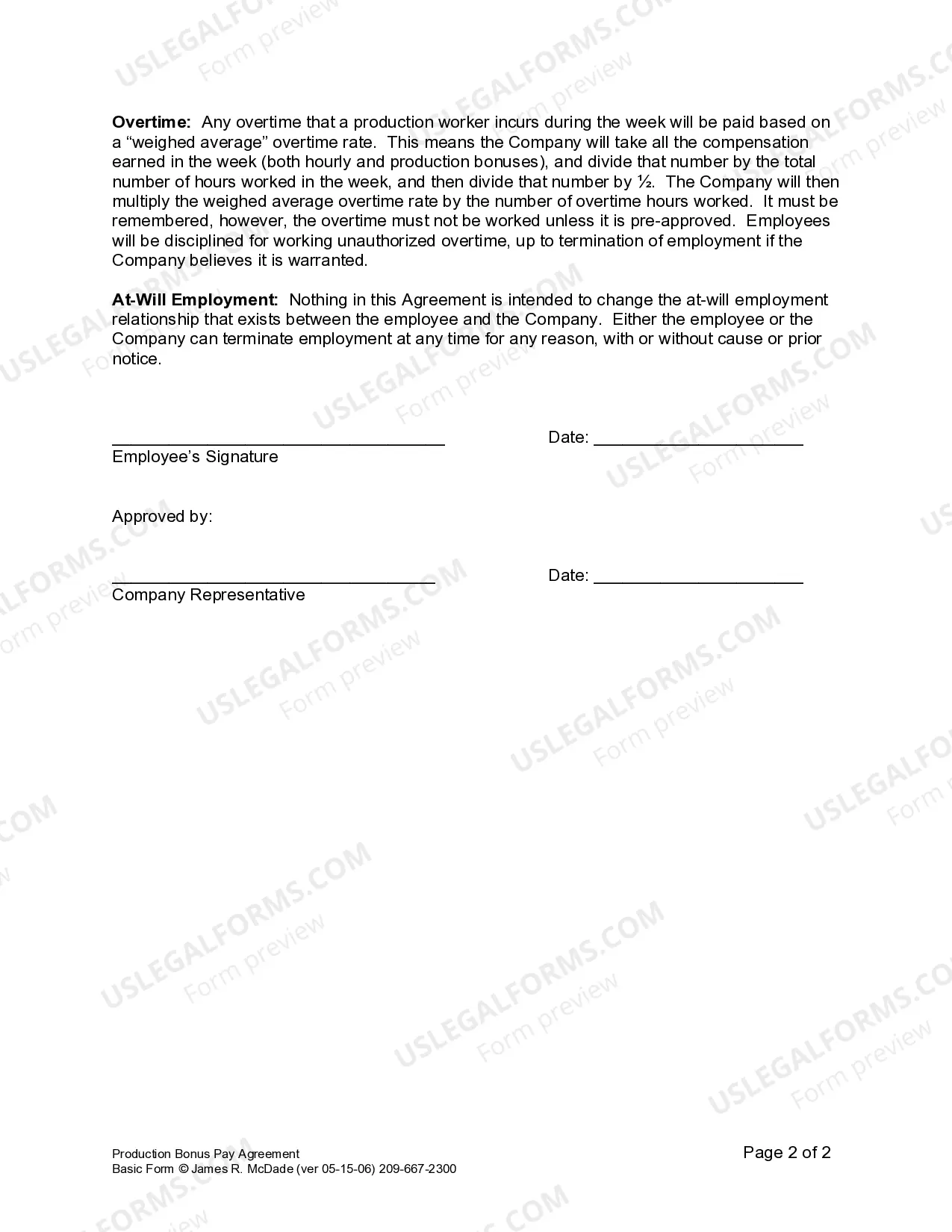
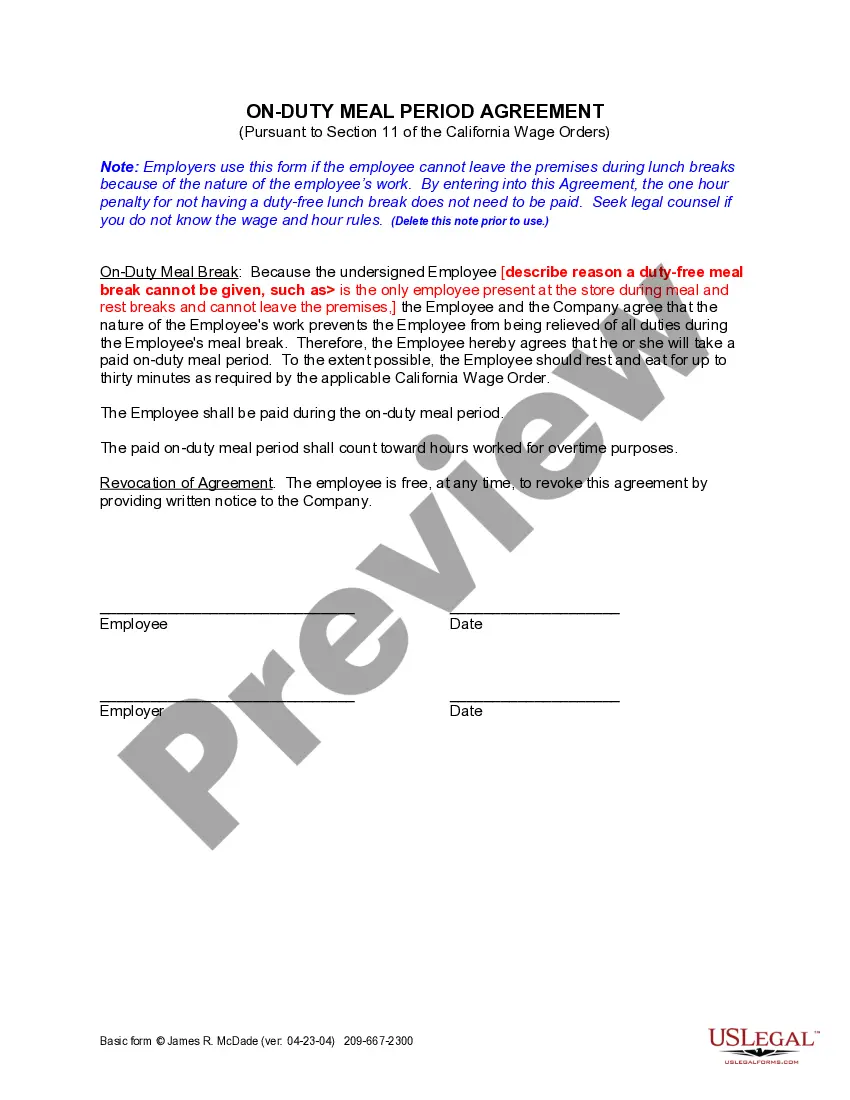
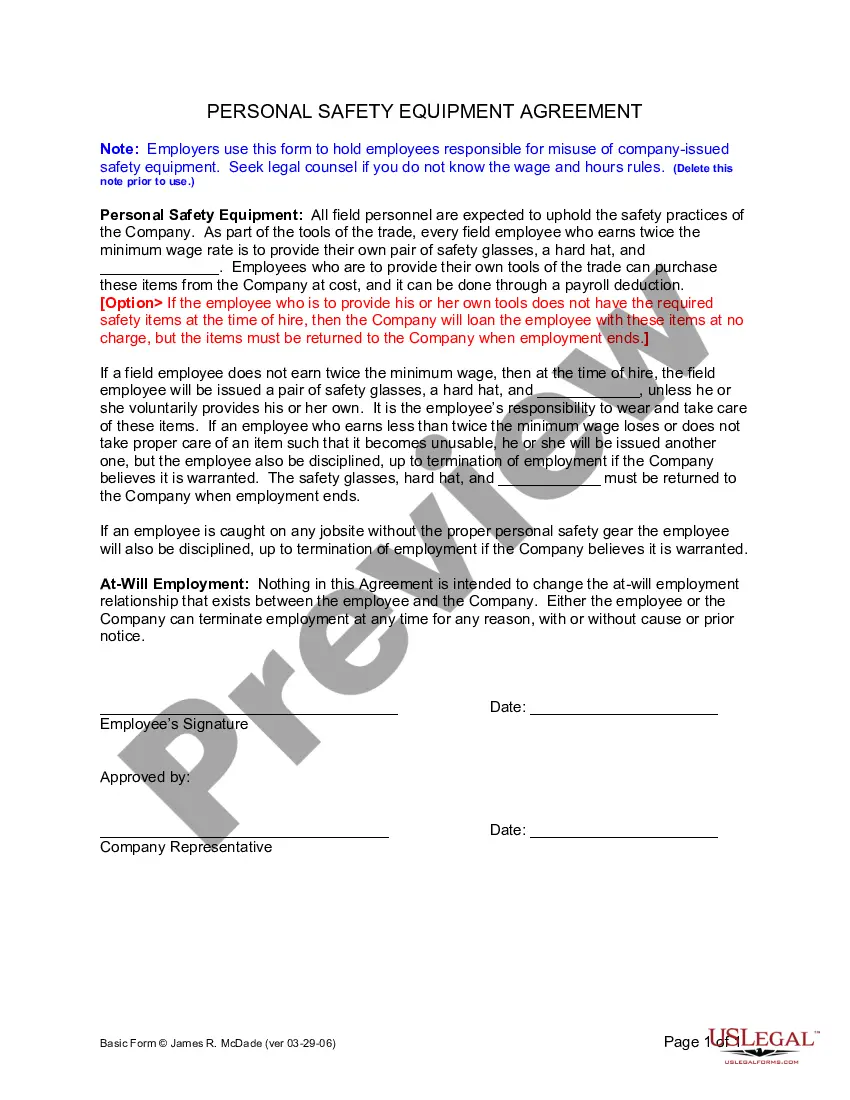
- Preview it (if this option is available) and review the accompanying description to ascertain if the Working Hours And Overtime Policy is what you seek.
Form popularity
FAQ
To qualify for overtime under the working hours and overtime policy, employees typically need to work over 40 hours in a single workweek. It's important to understand that this threshold can vary by state or company policy. If you find yourself unsure about your specific situation, US Legal Forms can help clarify your rights and obligations, ensuring you stay informed about the regulations that apply to you. By understanding these guidelines, you can better manage your working hours and enjoy fair compensation for your extra efforts.
Creating an effective overtime policy involves clearly defining how overtime will be calculated and when it is applicable. It's essential to communicate this policy to employees to avoid confusion and ensure everyone understands their rights. Incorporating key elements of the working hours and overtime policy will help align your business practices with legal requirements. For a comprehensive approach, consider using the resources available on the uslegalforms platform, which can guide you in drafting a compliant policy.
The rules of overtime generally require that employees earn time-and-a-half for hours worked beyond 40 in a week. Certain exemptions apply depending on job duties and salary thresholds. Familiarizing yourself with your company's working hours and overtime policy will help you understand how these rules apply to your situation.
A straightforward overtime policy may state that employees earn 1.5 times their regular hourly wage for each hour worked beyond 40 hours in a workweek. The policy can also clarify how employees should report their hours and the approval process for overtime work. Such clarity helps both employees and management understand expectations regarding working hours and overtime policy.
The Occupational Safety and Health Administration (OSHA) does not set specific work hours but has guidelines to ensure worker safety during their hours. Employers should establish a working hours and overtime policy that includes measures to prevent fatigue and long shifts. By adhering to OSHA guidelines, businesses can reduce the risk of accidents and create a safer workplace. For detailed templates and compliance resources, uslegalforms can assist you in developing an effective policy.
The 4 hour rule in Connecticut states that employers must allow employees to take a break after four consecutive hours of work. This policy aims to ensure workers remain refreshed and productive. When implementing your working hours and overtime policy, remember that including such breaks can improve employee satisfaction and performance. For tailored guidance, consider using uslegalforms to create a compliant policy that meets local regulations.
Overtime hours ? which the Department of Labor considers any hours worked outside a full-time, 40-hour week ? aren't taxed more. When running hourly payroll, you'll withhold the same taxes from an employee's overtime wages that you would from their regular wages.
What is the formula to calculate overtime pay? ing to the FLSA, the formula for calculating overtime pay is the nonexempt employee's regular rate of pay x 1.5 x overtime hours worked. This calculation may differ in states that have requirements, such as double time, which are more favorable to the employee.
The overtime policy should include: Definition of ?standard working hours? and what qualifies as ?overtime? Classification of employees as exempt or non-exempt ing to overtime pay laws. Procedures for recording overtime and ensuring accurate compensation.
When You're Still Overspending. Once that extra money starts pouring in, an employee might start spending more than they normally do. Excess spending is actually a common thing when a person is faced with a sudden surplus of cash. If you catch yourself doing this, working overtime might not be for you.