Job Ranking
Description
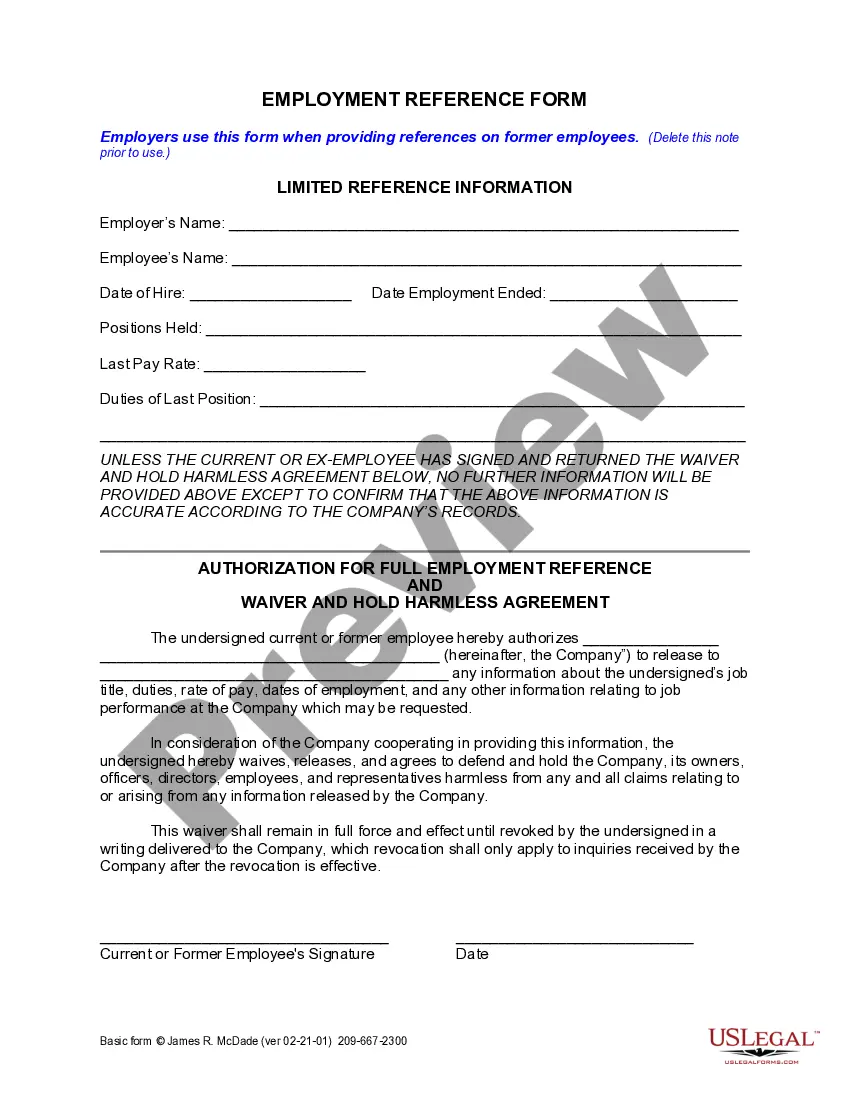
Get your form ready online
Our built-in tools help you complete, sign, share, and store your documents in one place.
Make edits, fill in missing information, and update formatting in US Legal Forms—just like you would in MS Word.
Download a copy, print it, send it by email, or mail it via USPS—whatever works best for your next step.
Sign and collect signatures with our SignNow integration. Send to multiple recipients, set reminders, and more. Go Premium to unlock E-Sign.
If this form requires notarization, complete it online through a secure video call—no need to meet a notary in person or wait for an appointment.
We protect your documents and personal data by following strict security and privacy standards.

Make edits, fill in missing information, and update formatting in US Legal Forms—just like you would in MS Word.

Download a copy, print it, send it by email, or mail it via USPS—whatever works best for your next step.

Sign and collect signatures with our SignNow integration. Send to multiple recipients, set reminders, and more. Go Premium to unlock E-Sign.

If this form requires notarization, complete it online through a secure video call—no need to meet a notary in person or wait for an appointment.

We protect your documents and personal data by following strict security and privacy standards.
Looking for another form?


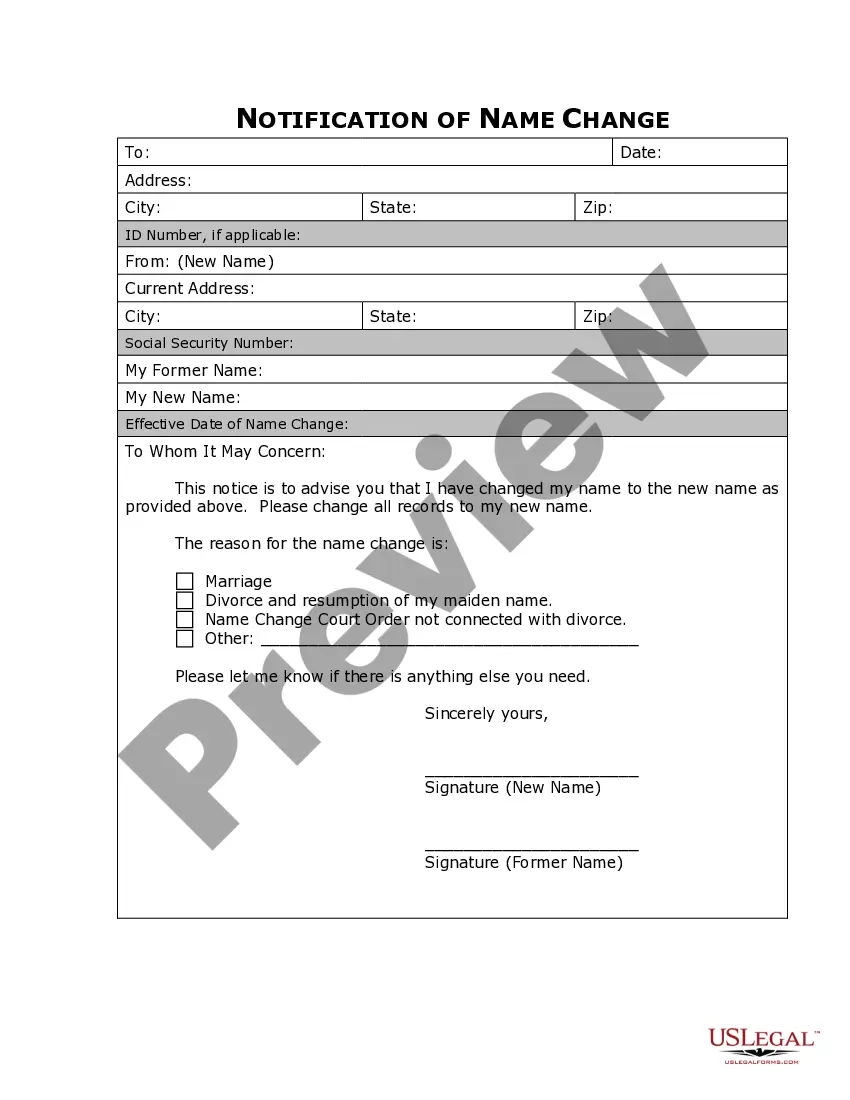




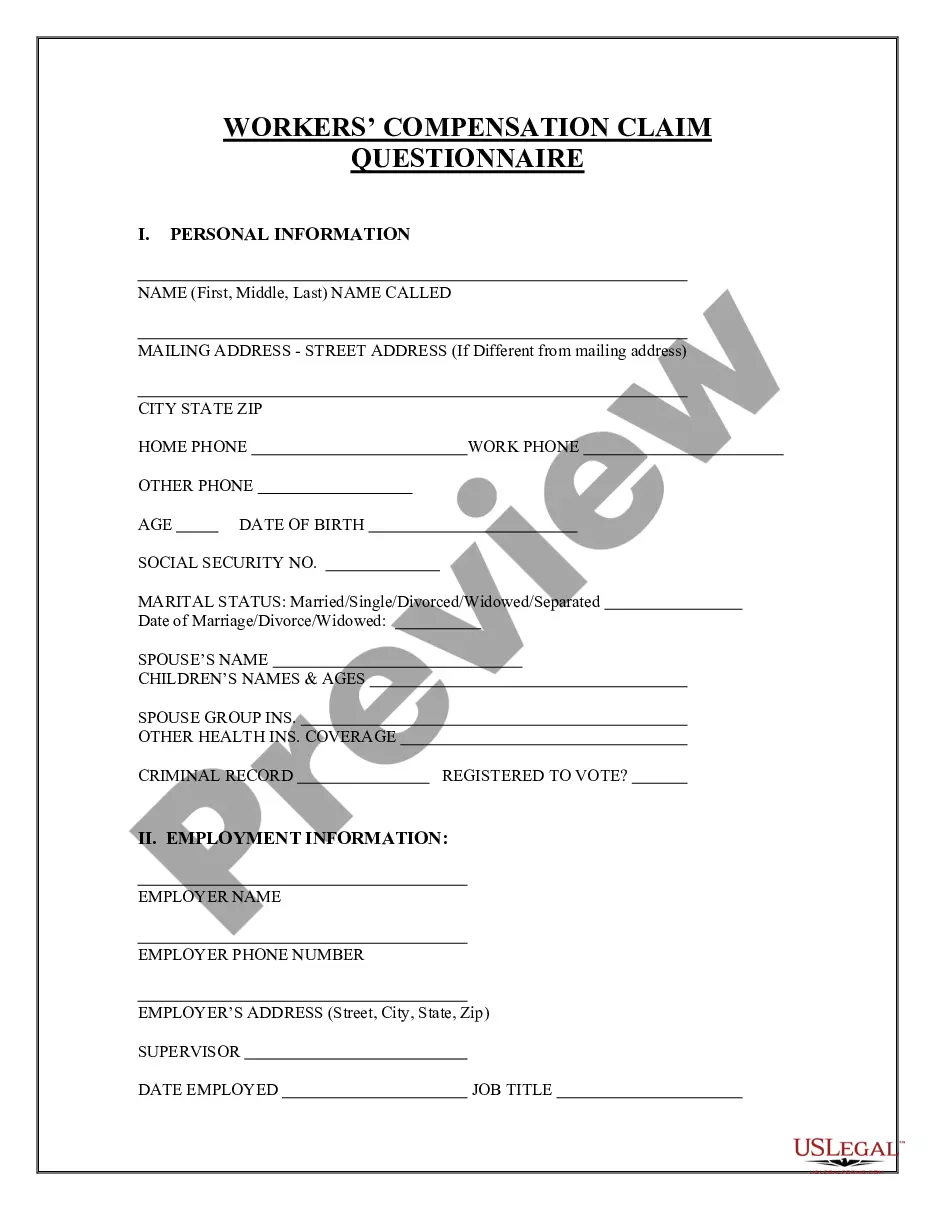
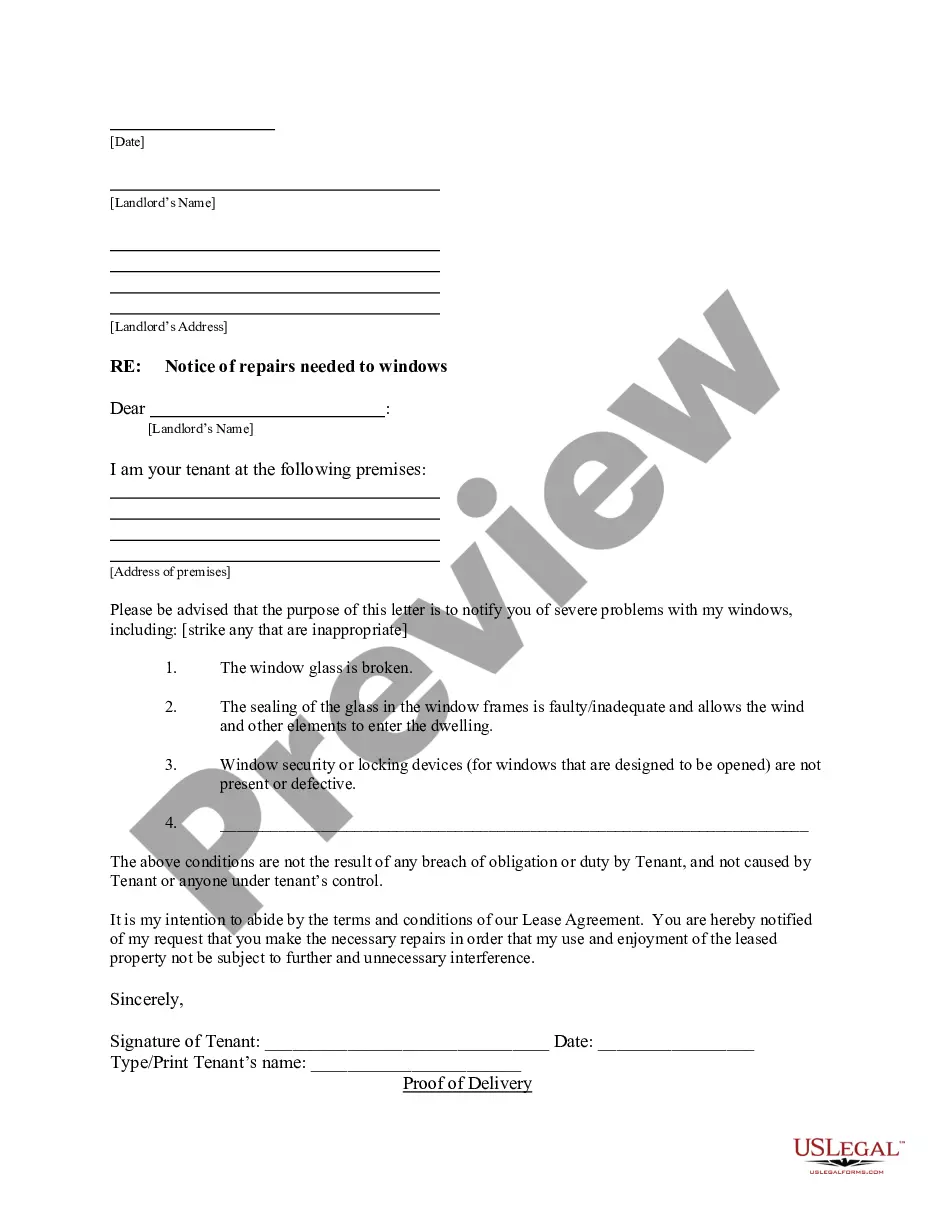

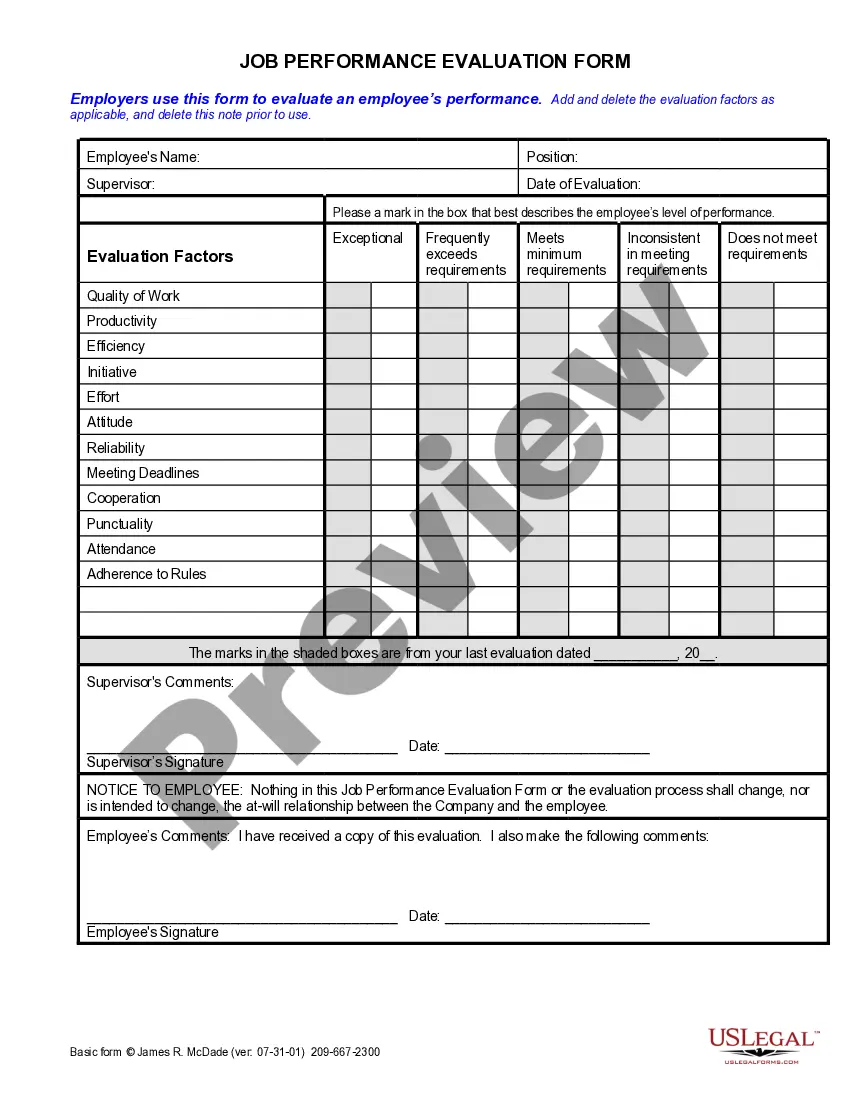
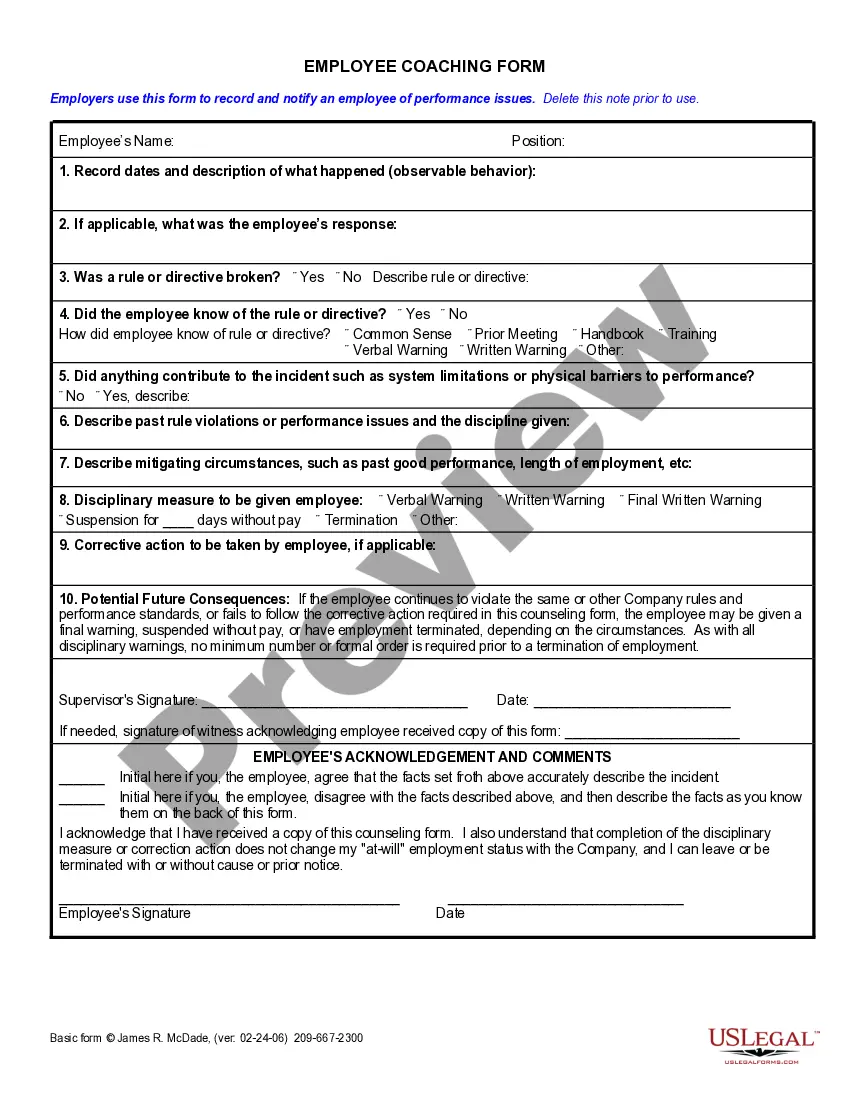
How to fill out California Job Performance Evaluation Form?
- If you're a returning user, log into your account and download the necessary form template by clicking the Download button. Ensure your subscription is active; renew it if required.
- For first-time users, start by checking the Preview mode and form description to verify that you've selected the correct document that aligns with your jurisdiction.
- If you need a different form, utilize the Search tab to find the appropriate template. Confirm it matches your criteria before proceeding.
- Purchase the document by clicking the Buy Now button and selecting your preferred subscription plan. You will need to create an account for full access.
- Complete your purchase by entering your payment information, either credit card details or through your PayPal account.
- Finally, download your form. Save the template on your device and access it anytime via the My Forms menu in your profile.
By following these steps, you can easily navigate the extensive resources that US Legal Forms provides. This ensures that you have the right legal documents at your disposal, saving you time and effort.
Start your journey today by accessing the vast collection of legal forms that US Legal Forms has to offer—your source for reliable and accurate legal documentation!
Form popularity
FAQ
Several IT jobs can offer a salary of $200,000 or more annually. Positions such as software architect, data scientist, and IT manager often rank among the highest in job ranking. These roles typically require robust technical skills and an understanding of business processes. Investing in your education and gaining relevant experience can lead you toward these lucrative career paths.
Making $200,000 a year is quite uncommon. According to job ranking statistics, only about 1-2% of all workers reach this income level. This income often reflects high-demand skills and significant experience in a particular field. Therefore, pursuing education or specialized training can greatly enhance your chances of reaching this financial milestone.
In employment, rank signifies the level of authority or seniority held by an employee within an organization. It impacts decision-making power, salary, and recognition. Understanding rank is crucial for employees seeking advancement, as a well-defined job ranking system supports career development and organizational structure.
Job titles typically follow a hierarchy that reflects the level of responsibility, such as entry-level, mid-level, and senior positions. Common orders include header titles like assistant, manager, director, and executive. Adhering to a structured job ranking system helps maintain clarity and transparency in an organization's workforce.
Job ranking refers to the process of evaluating and ordering jobs based on predetermined criteria. It allows organizations to prioritize positions according to their contribution to business goals. By utilizing job ranking, companies can ensure that compensation and advancement opportunities reflect the true value of each position.
A job title identifies a specific role within an organization, while rank refers to the level of importance or seniority associated with that title. Understanding both job title and rank is essential for determining responsibilities and communication within teams. Accurate job ranking allows organizations to establish career paths and progression for employees.
The job ranking method is a qualitative analysis tool used to categorize positions based on their importance and complexity. By comparing job descriptions, you can create a hierarchy that reflects the organization’s structure. This method not only aids in establishing fair compensation but also enhances organizational clarity. We recommend exploring templates and guidelines on US Legal Forms to implement this job ranking method efficiently.
The five levels of jobs typically include entry-level, intermediate, senior, managerial, and executive. These levels represent the increasing complexity and responsibility associated with various positions. Understanding these job rankings is crucial, as it helps in career development and recruitment. US Legal Forms provides comprehensive resources for defining and structuring these job levels effectively.
To rank a job, you need to evaluate various factors, including job responsibilities, required skills, and market value. Start by analyzing the specific requirements of the position and how it compares to similar roles in the industry. This process helps you determine the job's place within your organization. Utilizing tools and resources like US Legal Forms can simplify this job ranking process significantly.
The four career types usually includes conventional, investigative, artistic, and enterprising. Conventional careers often involve structured tasks and organization, while investigative roles focus on research and analysis. Artistic careers emphasize creativity, and enterprising careers involve leadership and initiative. Understanding these types can enhance job ranking and help individuals align their strengths with career opportunities.