California Pay Deduction For Employees
Description
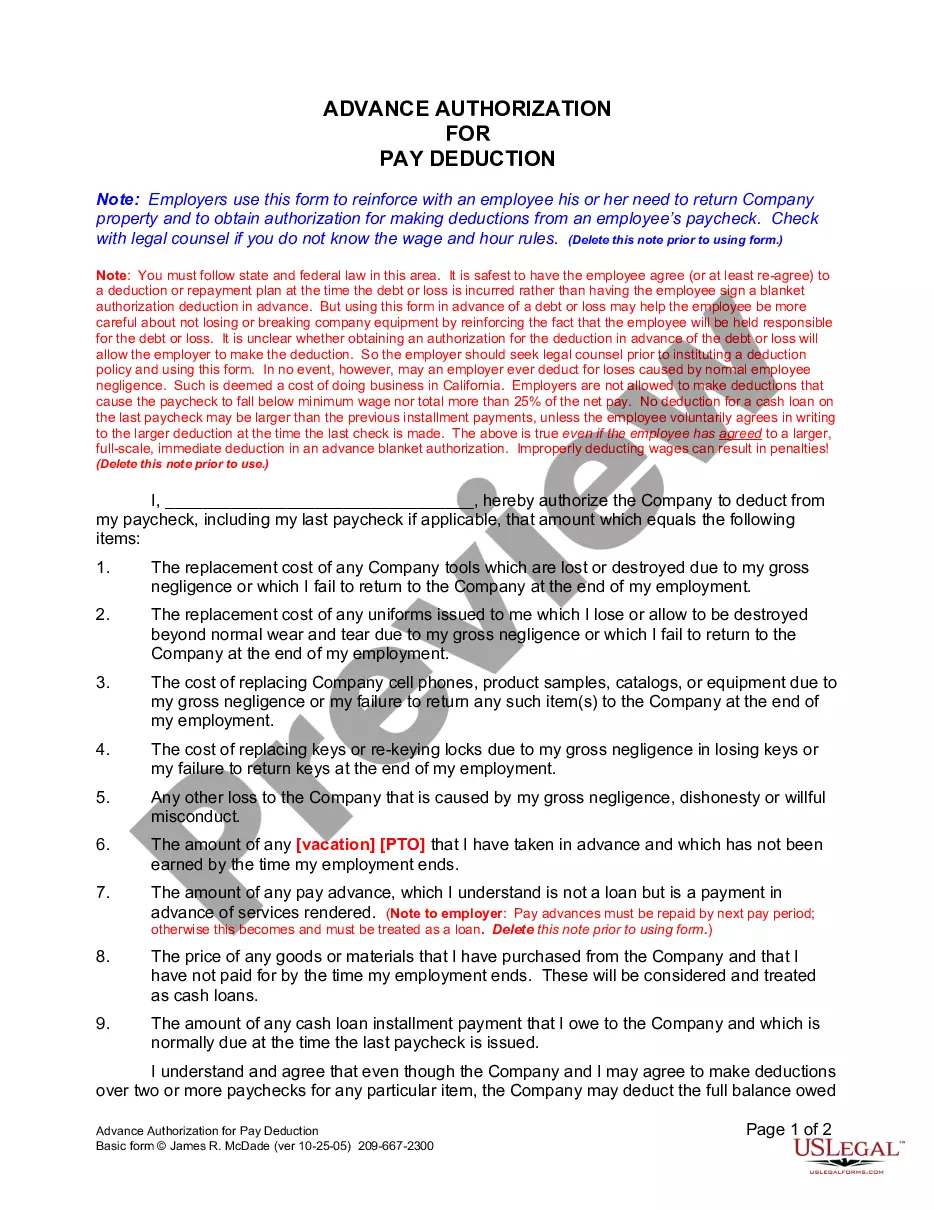
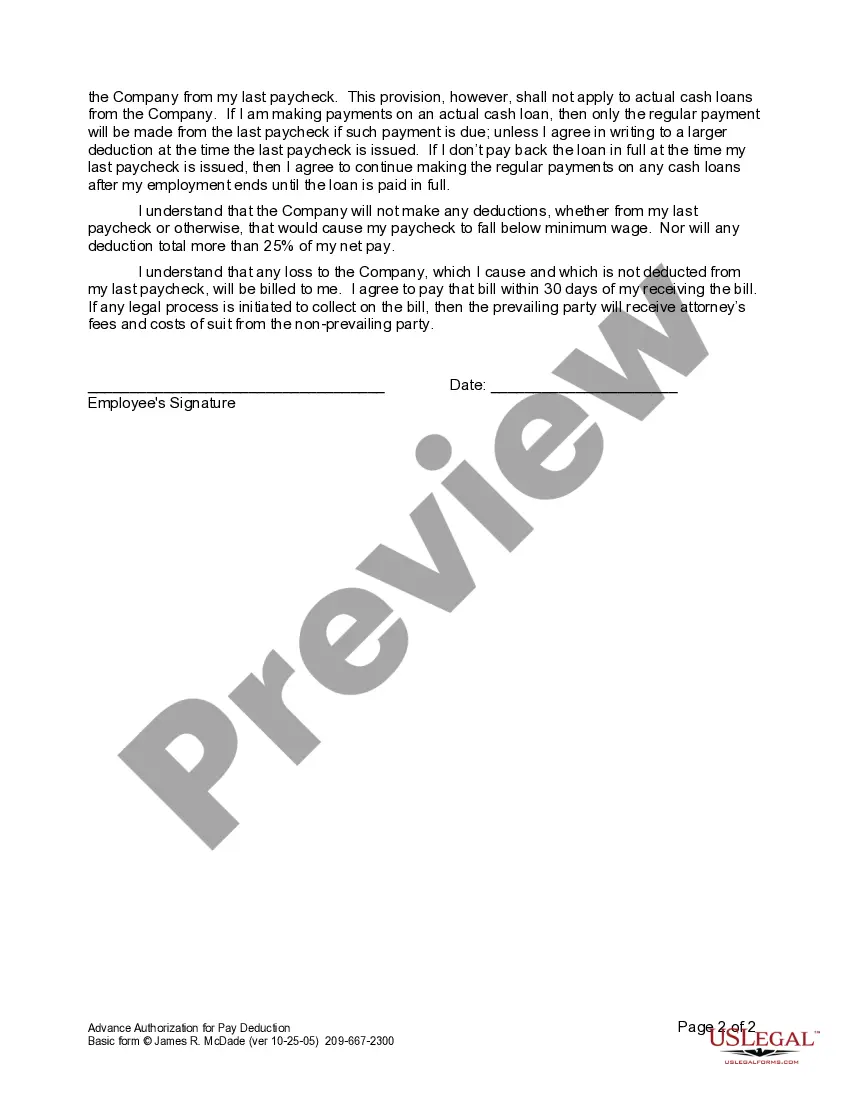
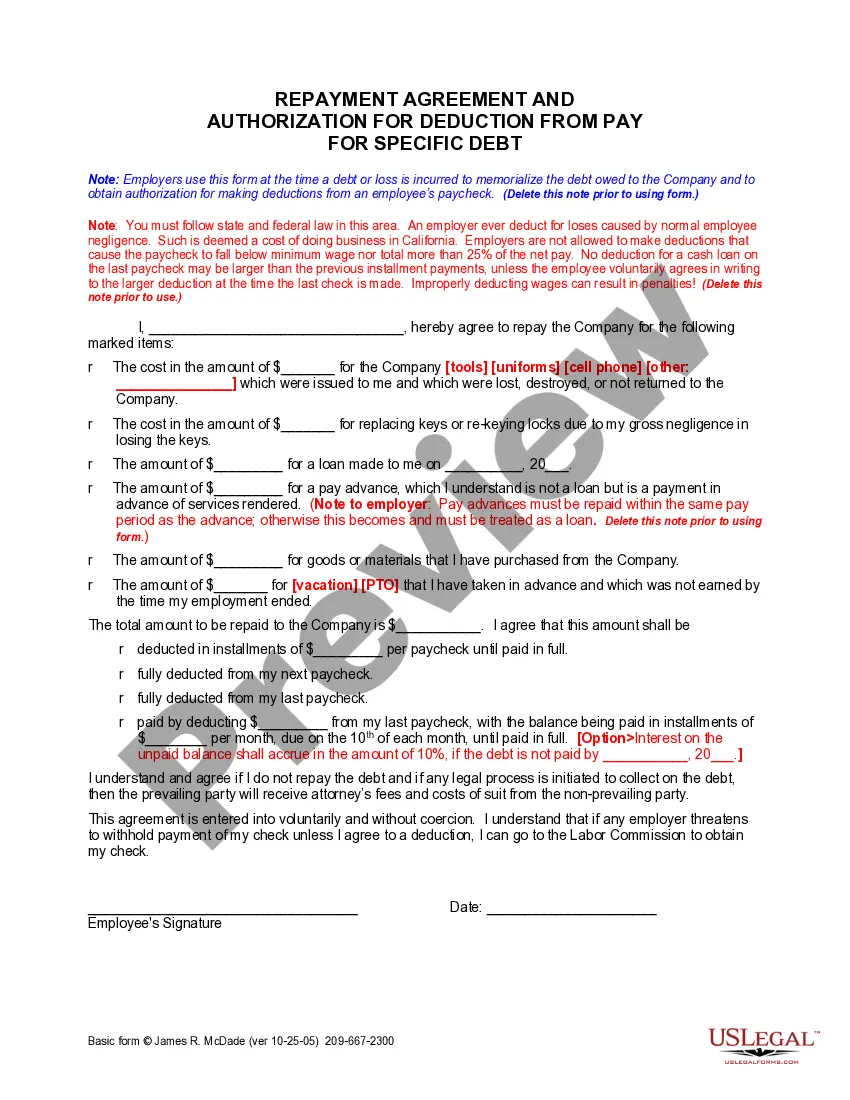
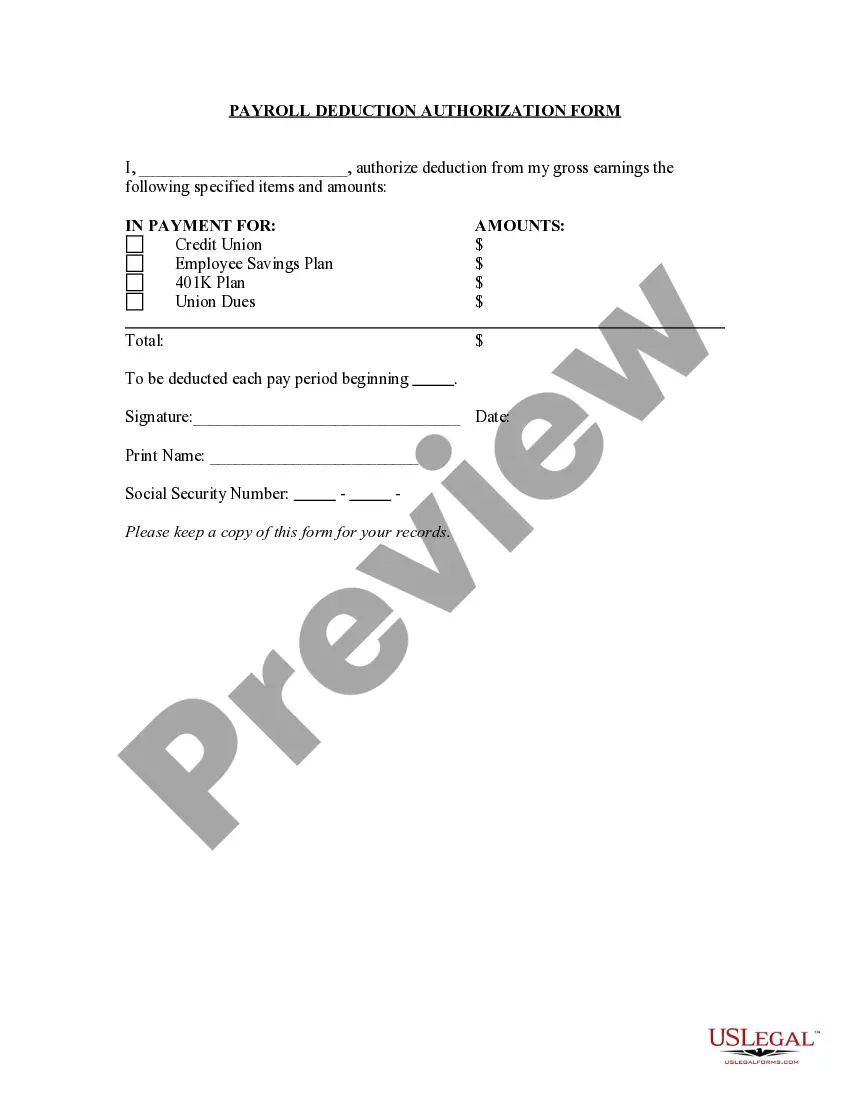
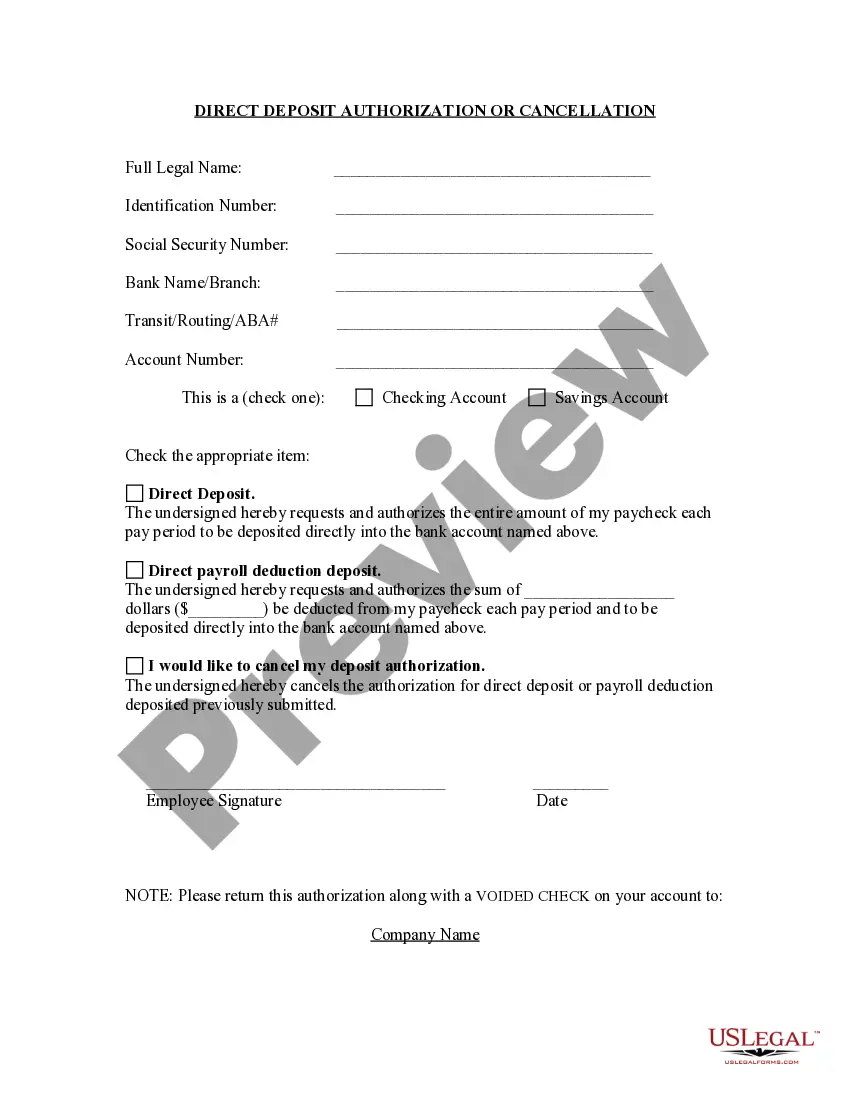
Get your form ready online
Our built-in tools help you complete, sign, share, and store your documents in one place.
Make edits, fill in missing information, and update formatting in US Legal Forms—just like you would in MS Word.
Download a copy, print it, send it by email, or mail it via USPS—whatever works best for your next step.
Sign and collect signatures with our SignNow integration. Send to multiple recipients, set reminders, and more. Go Premium to unlock E-Sign.
If this form requires notarization, complete it online through a secure video call—no need to meet a notary in person or wait for an appointment.
We protect your documents and personal data by following strict security and privacy standards.

Make edits, fill in missing information, and update formatting in US Legal Forms—just like you would in MS Word.

Download a copy, print it, send it by email, or mail it via USPS—whatever works best for your next step.

Sign and collect signatures with our SignNow integration. Send to multiple recipients, set reminders, and more. Go Premium to unlock E-Sign.

If this form requires notarization, complete it online through a secure video call—no need to meet a notary in person or wait for an appointment.

We protect your documents and personal data by following strict security and privacy standards.
Looking for another form?


How to fill out California Advance Authorization For Pay Deduction?
The California Salary Deduction For Workers you observe on this site is a reusable formal framework crafted by expert attorneys in accordance with federal and local regulations.
For over 25 years, US Legal Forms has supplied individuals, organizations, and legal practitioners with more than 85,000 validated, state-specific documents for any business and personal needs. It’s the quickest, most straightforward, and most dependable means to acquire the documents you require, as the service assures bank-level data protection and anti-malware safeguards.
Subscribe to US Legal Forms to have authenticated legal documents for all of life’s events at your convenience.
- Search for the record you need and examine it.
- Review the example you looked for and assess it or check the form description to confirm it suits your requirements. If it doesn’t, use the search feature to locate the correct one. Click Buy Now once you have identified the template you require.
- Register and Log Into your account.
- Pick the pricing plan that meets your needs and set up an account. Utilize PayPal or a credit card for a quick payment. If you already possess an account, Log In and verify your subscription to continue.
- Acquire the editable template.
- Select the format you prefer for your California Salary Deduction For Workers (PDF, Word, RTF) and save the document onto your device.
- Fill out and sign the paper.
- Print the template to fill it out by hand. Alternatively, make use of an online multi-functional PDF editor to swiftly and accurately complete and sign your form with an electronic signature.
- Download your documents once again.
- Utilize the same record again whenever necessary. Access the My documents tab in your profile to redownload any previously saved documents.
Form popularity
FAQ
From a paycheck in California, you'll find deductions for federal and state income taxes, Social Security, and Medicare. Additional deductions may include health insurance premiums, contributions to retirement accounts, and garnishments if applicable. Understanding the California pay deduction for employees assists workers in budgeting their finances and planning for their expenses. For a clearer picture, consider using resources like US Legal Forms for guidance on managing these deductions.
Payroll taxes for employees in California typically include a combined federal income tax, state income tax, and contributions to Social Security and Medicare. The rate for Social Security is 6.2% up to a wage limit, and Medicare is 1.45% with no wage limit. It's essential to understand California pay deduction for employees, as these taxes will significantly affect your overall compensation. Utilizing tools like US Legal Forms can ensure your payroll calculations remain accurate and in compliance.
California standard deductions vary based on filing status and are updated annually to reflect changes. For the 2023 tax year, the standard deduction for single filers is over $4,200, while married couples filing jointly receive an amount that doubles this figure. Knowing the California pay deduction for employees can help in estimating tax liabilities and enhancing financial planning. Always check recent updates as these amounts may change.
In California, payroll deductions for employees include federal and state taxes, Social Security, and Medicare contributions. Employers may also deduct amounts for benefits like health insurance, retirement plans, and wage garnishments. Understanding California pay deduction for employees helps you anticipate your take-home pay effectively. Always review your paycheck for accuracy and compliance with state regulations.
Paying under the table is generally illegal in California. This practice circumvents tax obligations and labor laws, which also affects employee rights regarding California pay deduction for employees. If you are considering such an arrangement, it is crucial to understand that doing so can lead to hefty penalties for both employers and employees. Ensuring compliance with state laws protects your rights and ensures fair compensation for your work.
To file a California wage claim, start by collecting all relevant documents, such as pay stubs, time cards, and any correspondence with your employer regarding pay. You can then complete the wage claim form available on the California Department of Industrial Relations website. Once you submit the form, be sure to keep a copy for your records, as it outlines your claims related to California pay deduction for employees. If you require assistance, consider using US Legal Forms, which offers resources and templates to guide you through the process.
Payroll deductions occur automatically during the payroll processing cycle, where specific amounts are withheld from gross wages based on established guidelines. Employers calculate these deductions according to federal and state regulations, ensuring they align with the California pay deduction for employees. Integrating reliable payroll software can simplify this process significantly.
A common payroll deduction is a withholding for federal and state taxes, which is mandatory for all employees. Additionally, contributions to retirement plans or health insurance premiums are also typical deductions. Knowing about various deductions, including California pay deduction for employees, can help you make informed financial choices.
The amount deducted from a paycheck in California varies based on factors such as the employee's earnings and tax situation. Common deductions include federal and state taxes, Social Security, and Medicare contributions. It's important to understand the specific California pay deduction for employees to budget accurately and anticipate take-home pay.
Recording payroll deductions involves maintaining precise payroll records that reflect each employee's deductions. Employers should document the amount deducted, the reason for the deduction, and any relevant employee details. This method not only ensures compliance with California pay deduction for employees but also simplifies any future audits.