Small Estate In Maryland
Description
Get your form ready online
Our built-in tools help you complete, sign, share, and store your documents in one place.
Make edits, fill in missing information, and update formatting in US Legal Forms—just like you would in MS Word.
Download a copy, print it, send it by email, or mail it via USPS—whatever works best for your next step.
Sign and collect signatures with our SignNow integration. Send to multiple recipients, set reminders, and more. Go Premium to unlock E-Sign.
If this form requires notarization, complete it online through a secure video call—no need to meet a notary in person or wait for an appointment.
We protect your documents and personal data by following strict security and privacy standards.

Make edits, fill in missing information, and update formatting in US Legal Forms—just like you would in MS Word.

Download a copy, print it, send it by email, or mail it via USPS—whatever works best for your next step.

Sign and collect signatures with our SignNow integration. Send to multiple recipients, set reminders, and more. Go Premium to unlock E-Sign.

If this form requires notarization, complete it online through a secure video call—no need to meet a notary in person or wait for an appointment.

We protect your documents and personal data by following strict security and privacy standards.
Looking for another form?


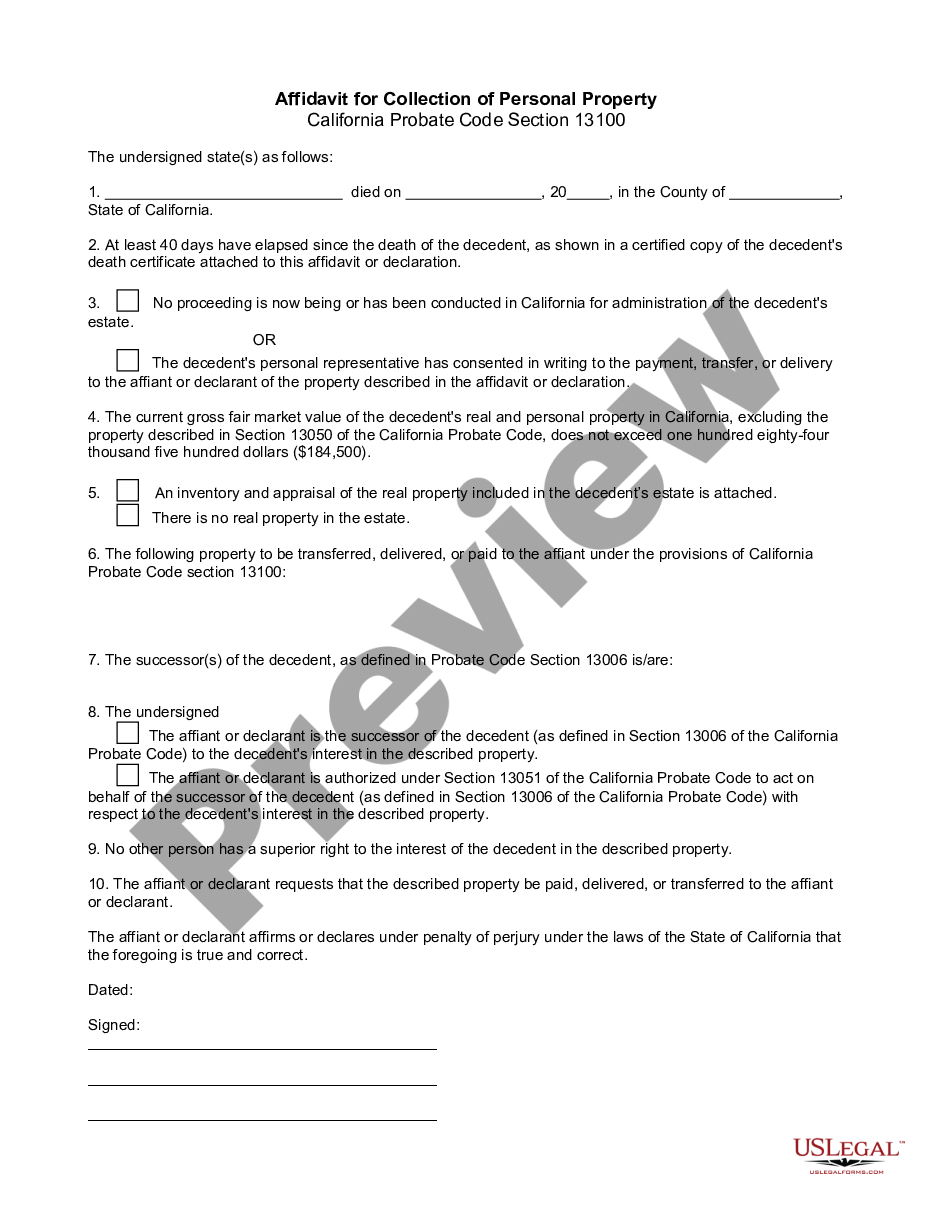
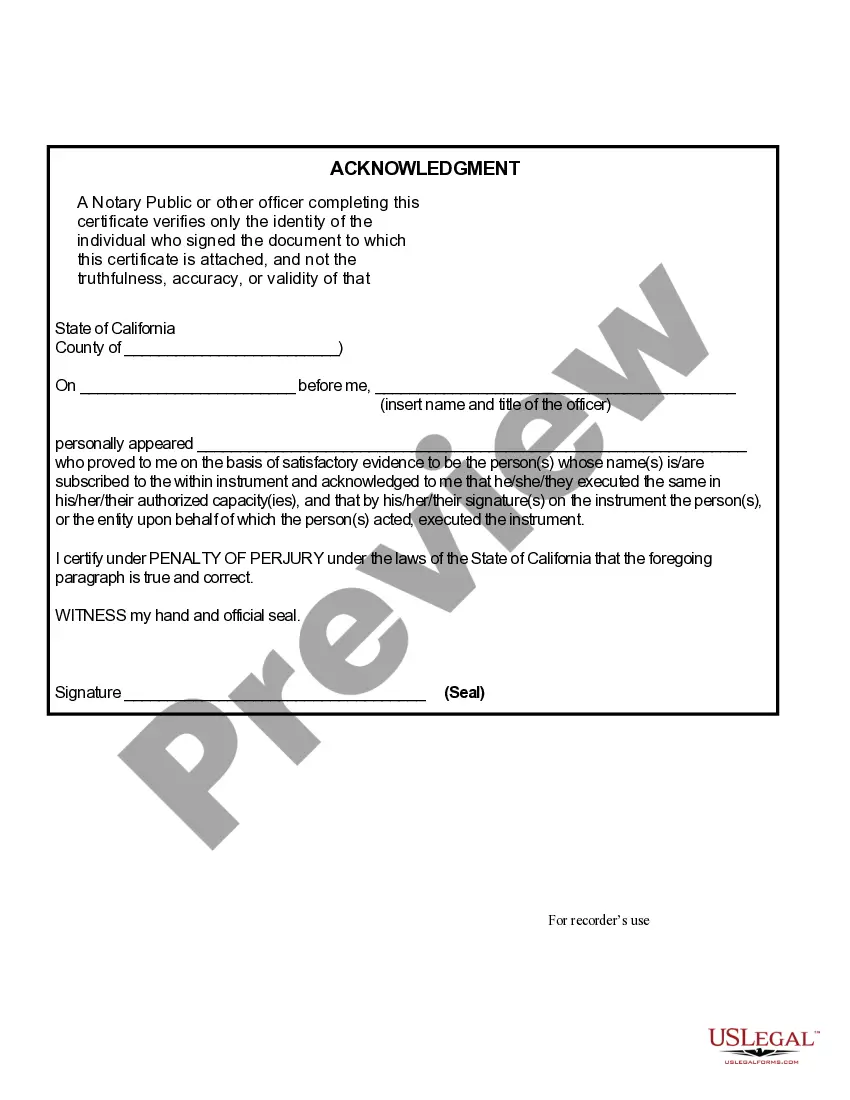
How to fill out California Affidavit For Collection Of Personal Property - Probate Code Section 13100 - Small Estates Under $208,850?
Acquiring legal templates that comply with federal and state regulations is essential, and the web provides numerous alternatives to choose from.
However, what’s the benefit of wasting time searching for the appropriate Small Estate In Maryland example online if the US Legal Forms online repository already has such templates gathered in one place.
US Legal Forms is the largest online legal database featuring over 85,000 fillable templates created by attorneys for various professional and personal situations.
Examine the template using the Preview option or via the text description to ensure it meets your requirements.
- They are simple to navigate with all documents categorized by state and intended use.
- Our experts stay updated with legislative changes, ensuring your documents are current and compliant when obtaining a Small Estate In Maryland from our site.
- Acquiring a Small Estate In Maryland is fast and straightforward for both existing and new users.
- If you possess an account with an active subscription, Log In and download the form sample you need in your desired format.
- If you are a newcomer to our site, follow the steps outlined below.
Form popularity
FAQ
Maryland does impose an inheritance tax on estates, including small estates. However, surviving spouses and certain other beneficiaries may qualify for exemptions, reducing or eliminating the tax burden. It is important to understand the specifics of the inheritance tax in Maryland when dealing with a small estate to ensure compliance and to maximize the benefits to the heirs.
The timeline for settling a small estate in Maryland can vary, but generally, it can be completed within a few months. The process begins once the necessary paperwork is filed, typically with a petition for the small estate process, which can take up to 30 days for the court to approve. Once approved, heirs can distribute assets fairly quickly, making the small estate process in Maryland relatively streamlined compared to larger estates.
In Maryland, a small estate refers to an estate that falls below a specific value threshold, which is currently set at $50,000 for personal property and $100,000 for real property. This classification allows for simpler probate processes, making it easier for heirs to claim the assets without extensive court involvement. Understanding what constitutes a small estate in Maryland helps you navigate the legal landscape more efficiently, allowing for quicker access to your loved one’s assets.
The small estate affidavit in Maryland allows for the distribution of assets without going through formal probate for estates valued at $50,000 or less. This document can be used by beneficiaries to claim property, making the inheritance process quicker and simpler. It streamlines access to the decedent's assets, which is especially beneficial for families managing small estates in Maryland. Always consider consulting with professionals to ensure compliance.
In Maryland, not all small inheritances are taxable. If the estate value is under $50,000, generally, you will not owe any inheritance tax. Keep in mind that certain circumstances could alter this classification, so it is essential to review each case carefully. For clarity, utilizing resources like uslegalforms can streamline this process.
A small estate in Maryland is generally defined as an estate valued at $50,000 or less, excluding real estate. This classification simplifies the probate process and often allows for faster distribution of assets. In contrast, a regular estate requires a more comprehensive probate process, which can be lengthy and complex. Understanding these differences can help you navigate estate management more efficiently.
In Maryland, the minimum estate value subject to inheritance tax is $50,000. This means that if the total value of the estate is below this threshold, you won’t owe any inheritance tax. For estates valued above this amount, tax rates may apply based on the relationship to the decedent. Therefore, handling a small estate in Maryland can provide some financial relief.
A small estate in Maryland is generally defined as an estate with a total value of less than $50,000 in personal property or less than $100,000 in real estate. Qualifying as a small estate simplifies the probate process, which can save time and reduce costs for your heirs. Knowing how your estate qualifies allows you to plan effectively for the future. Leverage uslegalforms to help navigate your small estate's requirements.
Certain assets are exempt from probate in Maryland, including life insurance policies, retirement accounts with designated beneficiaries, and property held in joint tenancy. These assets can pass directly to the named beneficiaries without going through probate, which can expedite the distribution process. If you are structuring a small estate in Maryland, understanding these exemptions will be crucial. For more clarity, consider utilizing the resources available at uslegalforms.
In Maryland, an estate typically needs to exceed $50,000 in personal property or $100,000 in real estate for probate to be necessary. If your estate’s value falls below these figures, it may qualify as a small estate in Maryland. This qualification can save time and resources during the estate settlement process. You might find it beneficial to consult uslegalforms for tailored guidance.